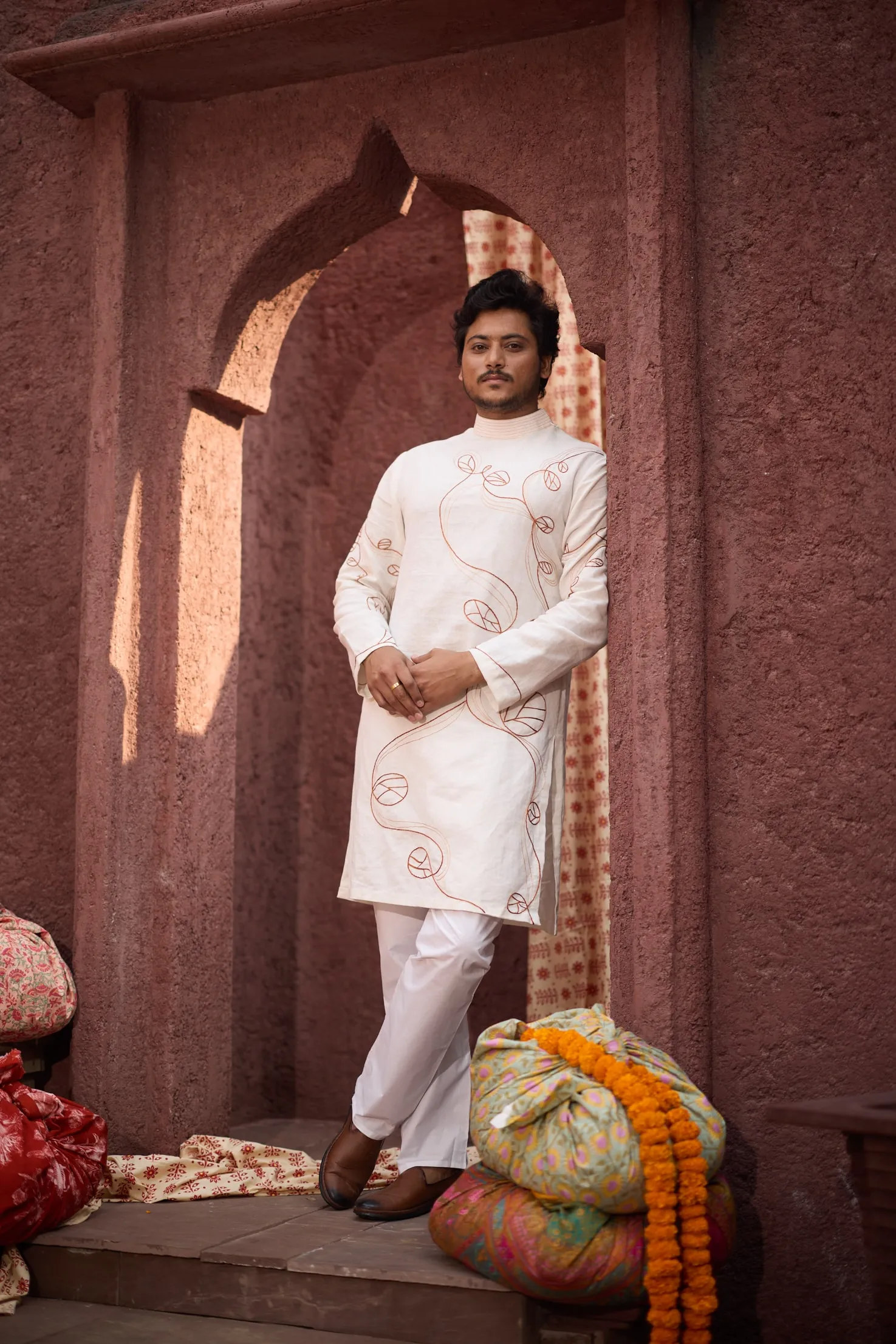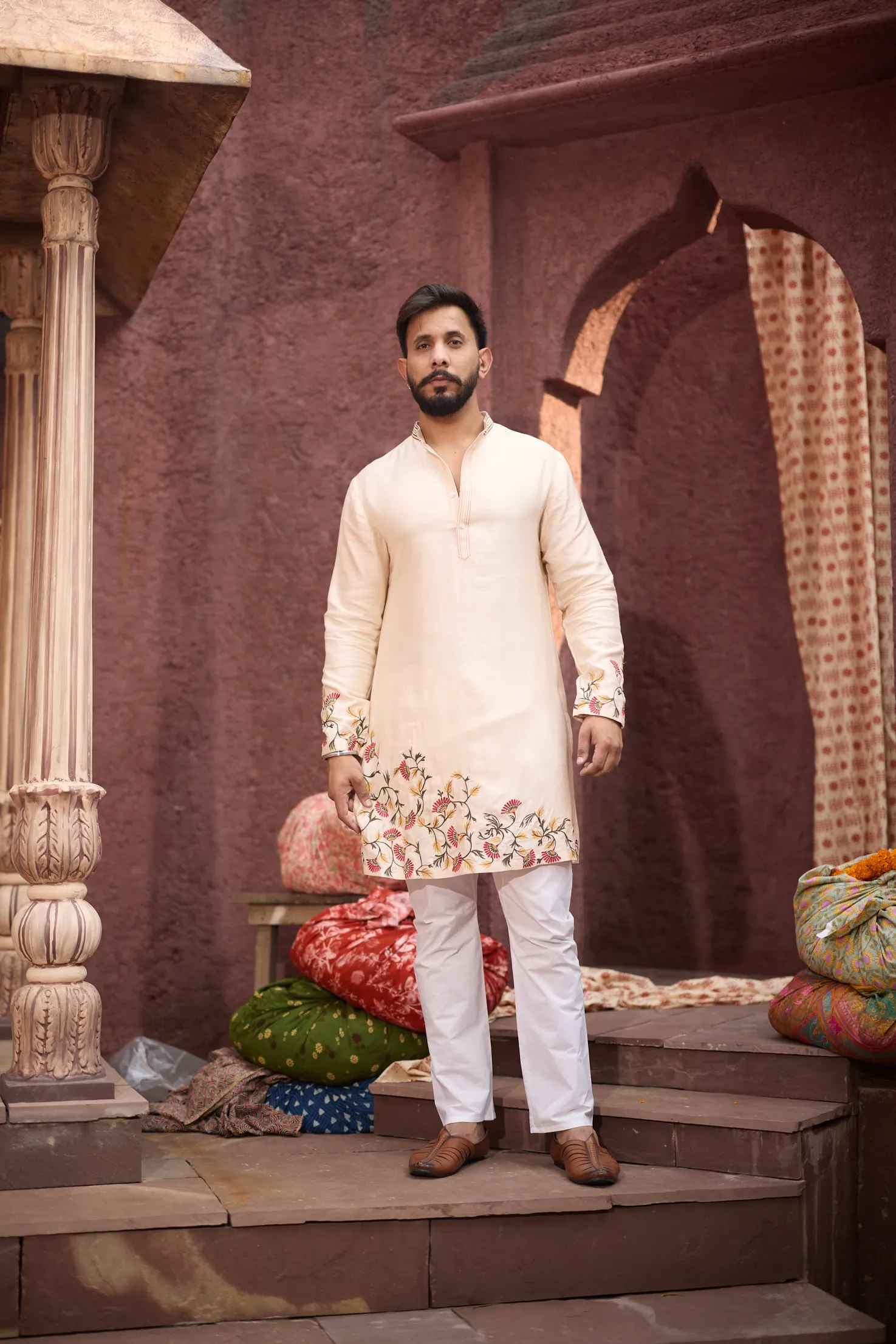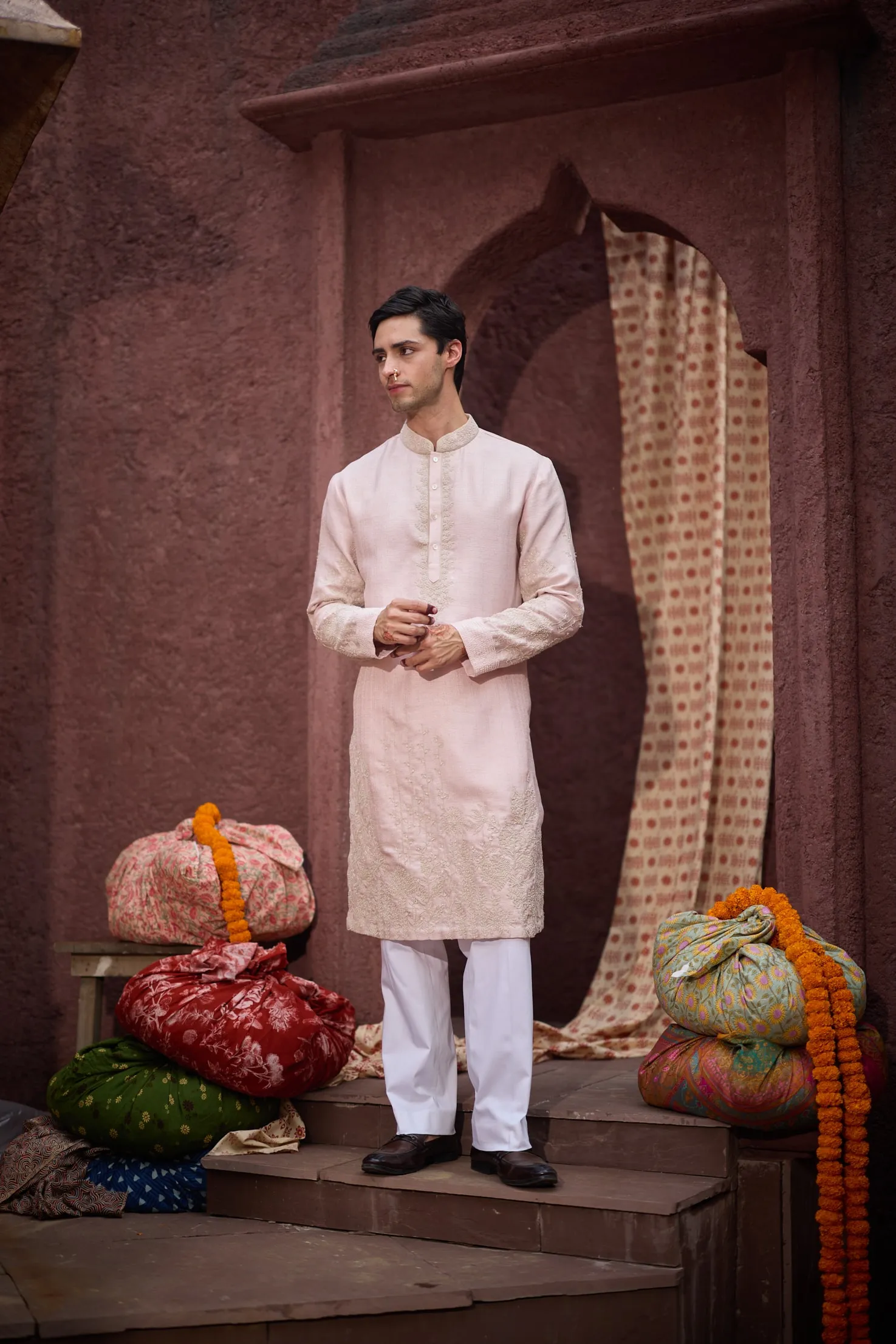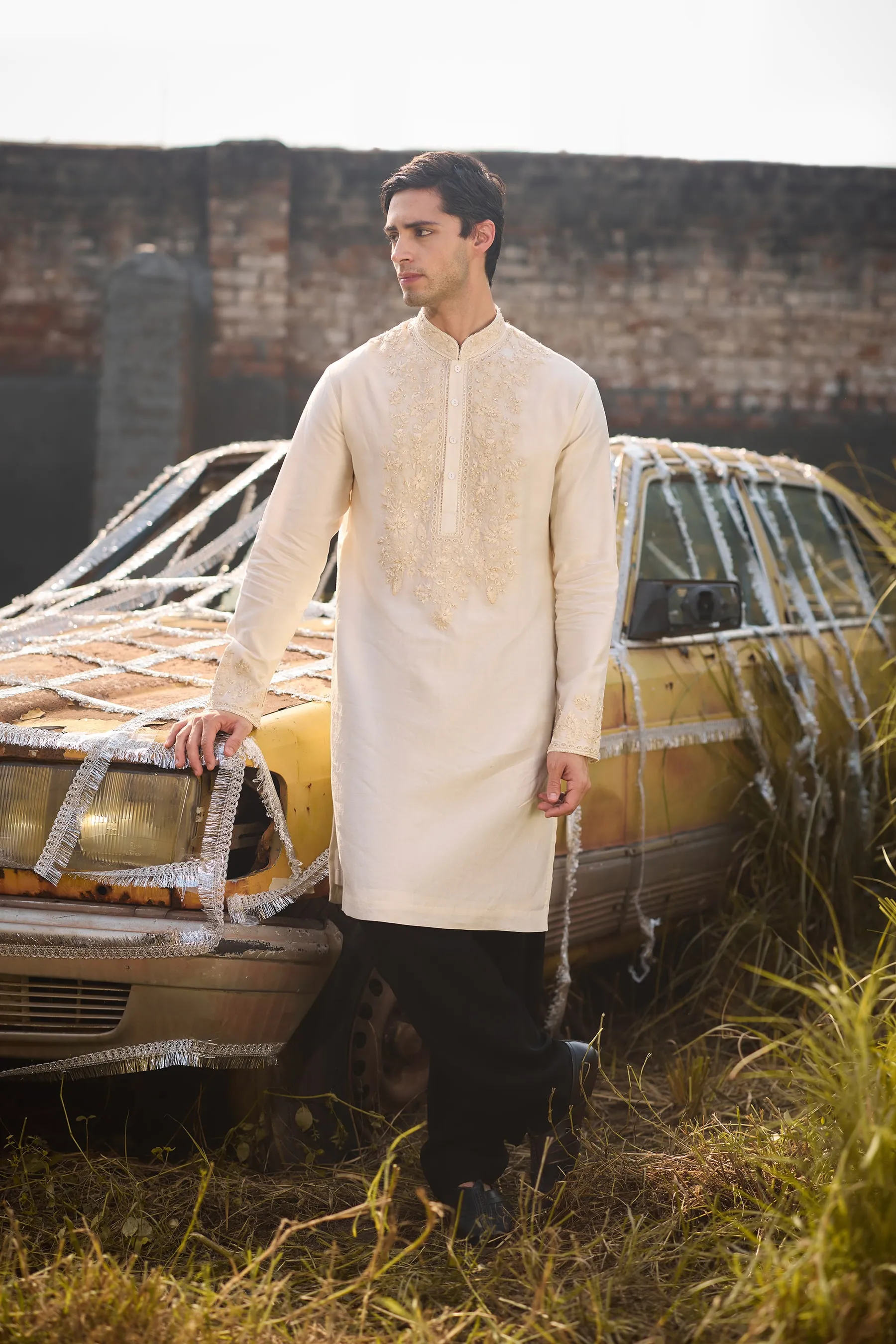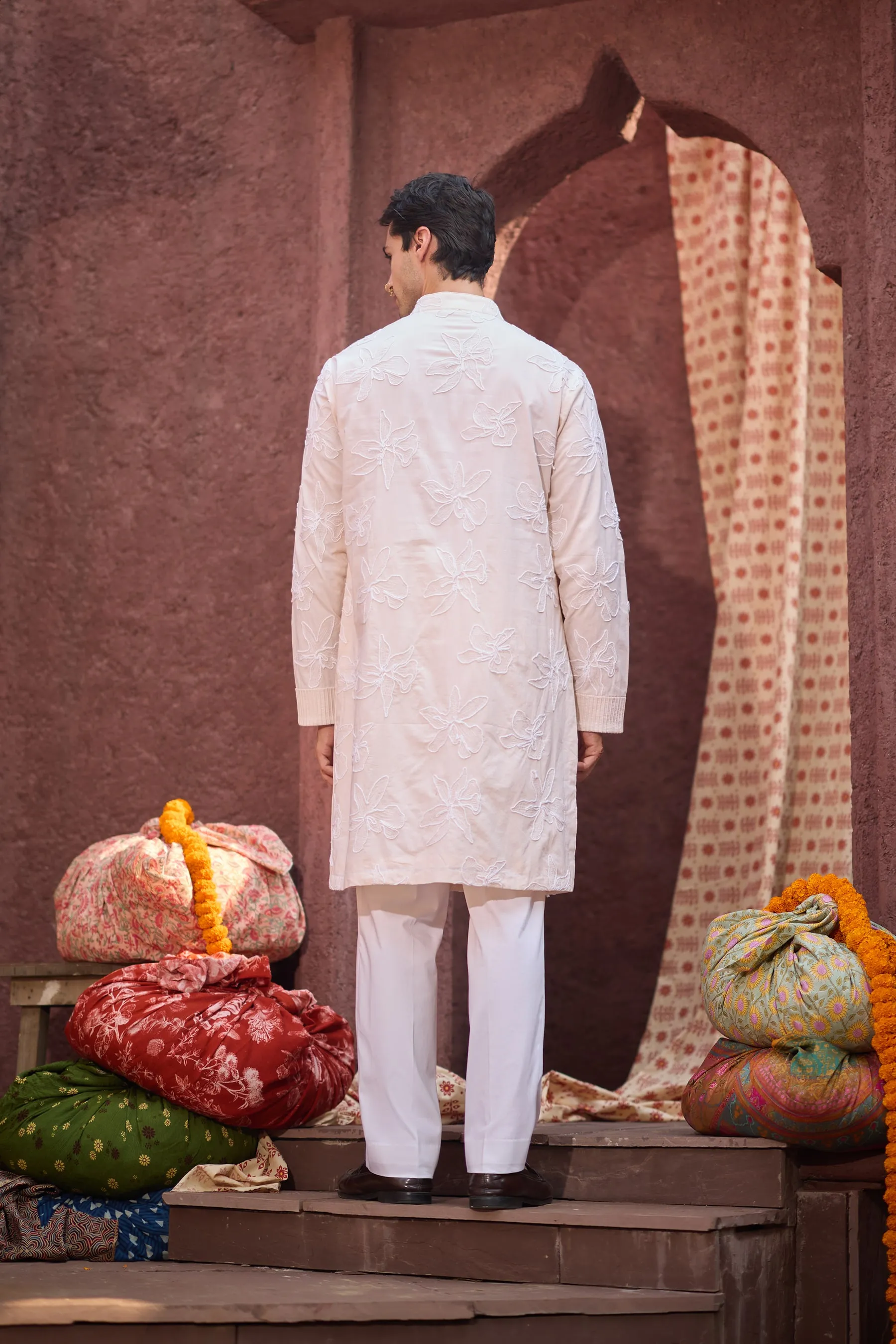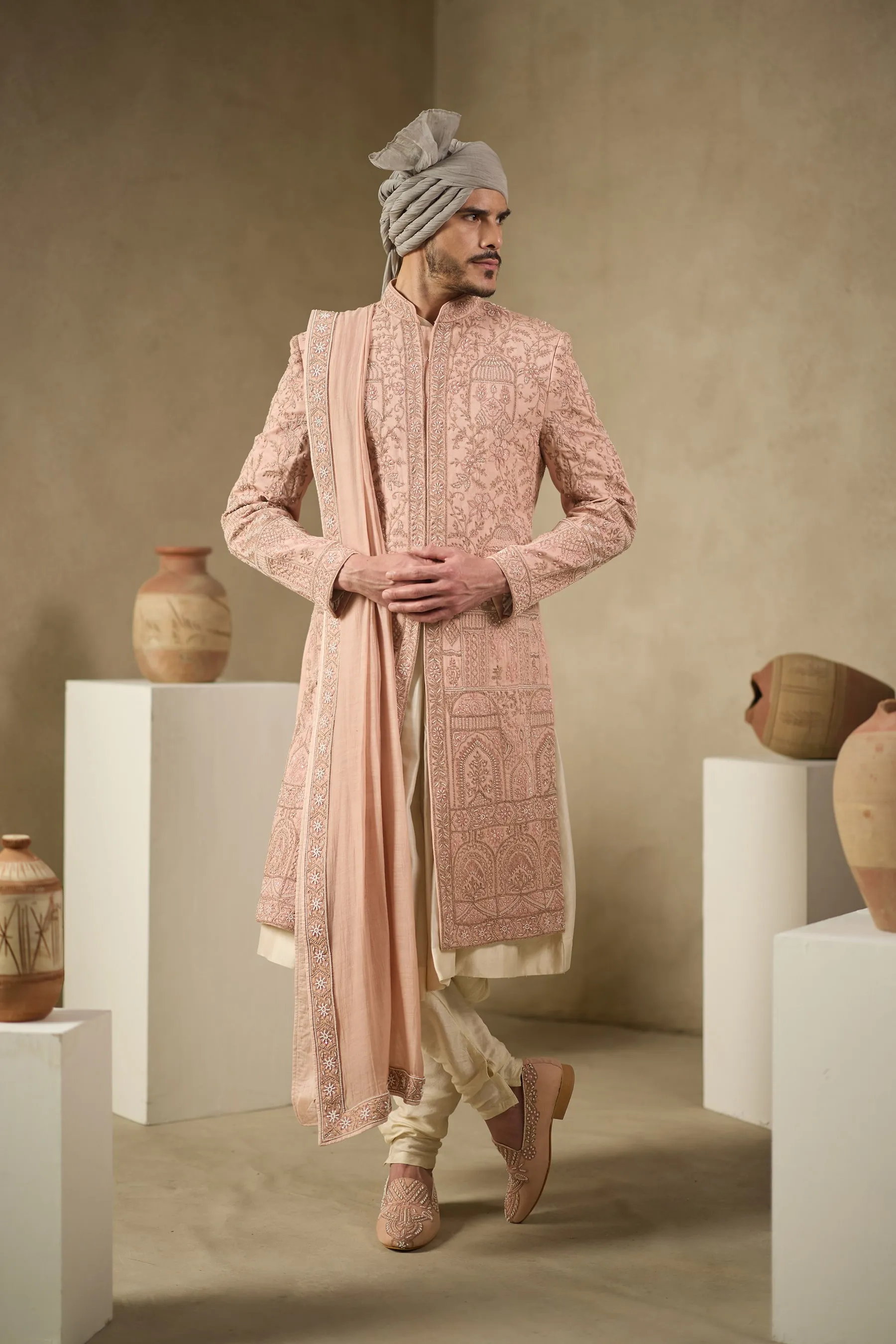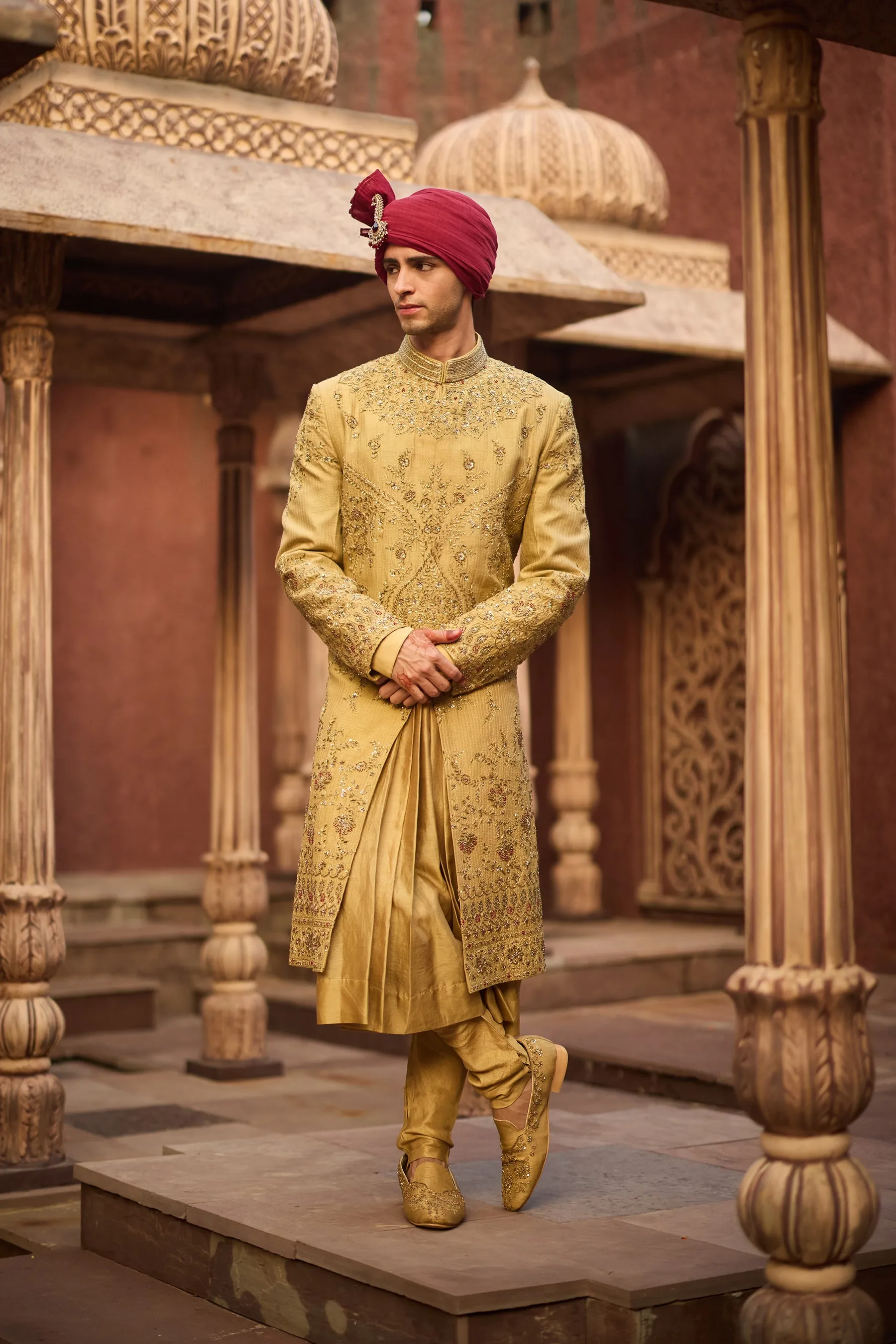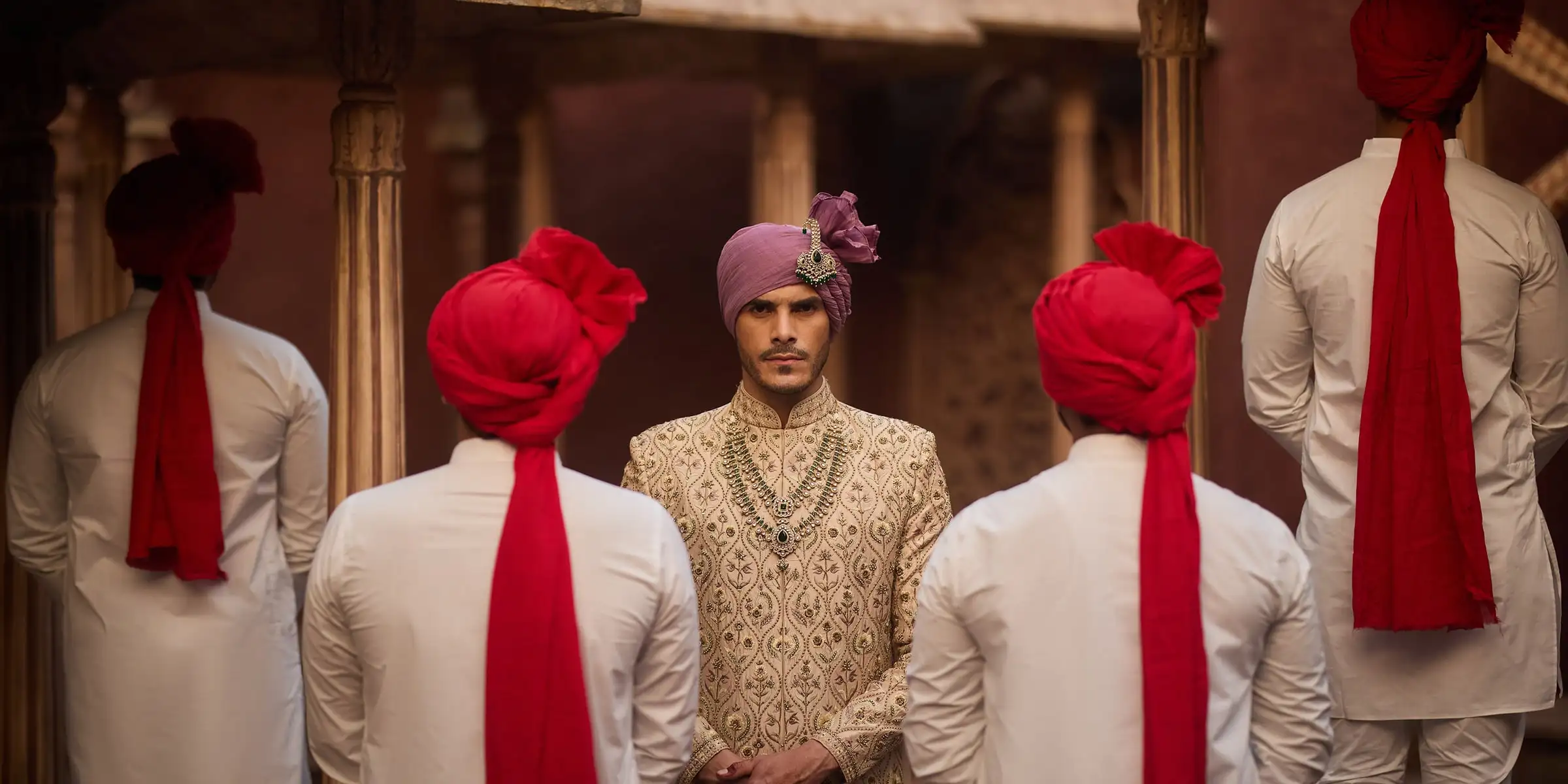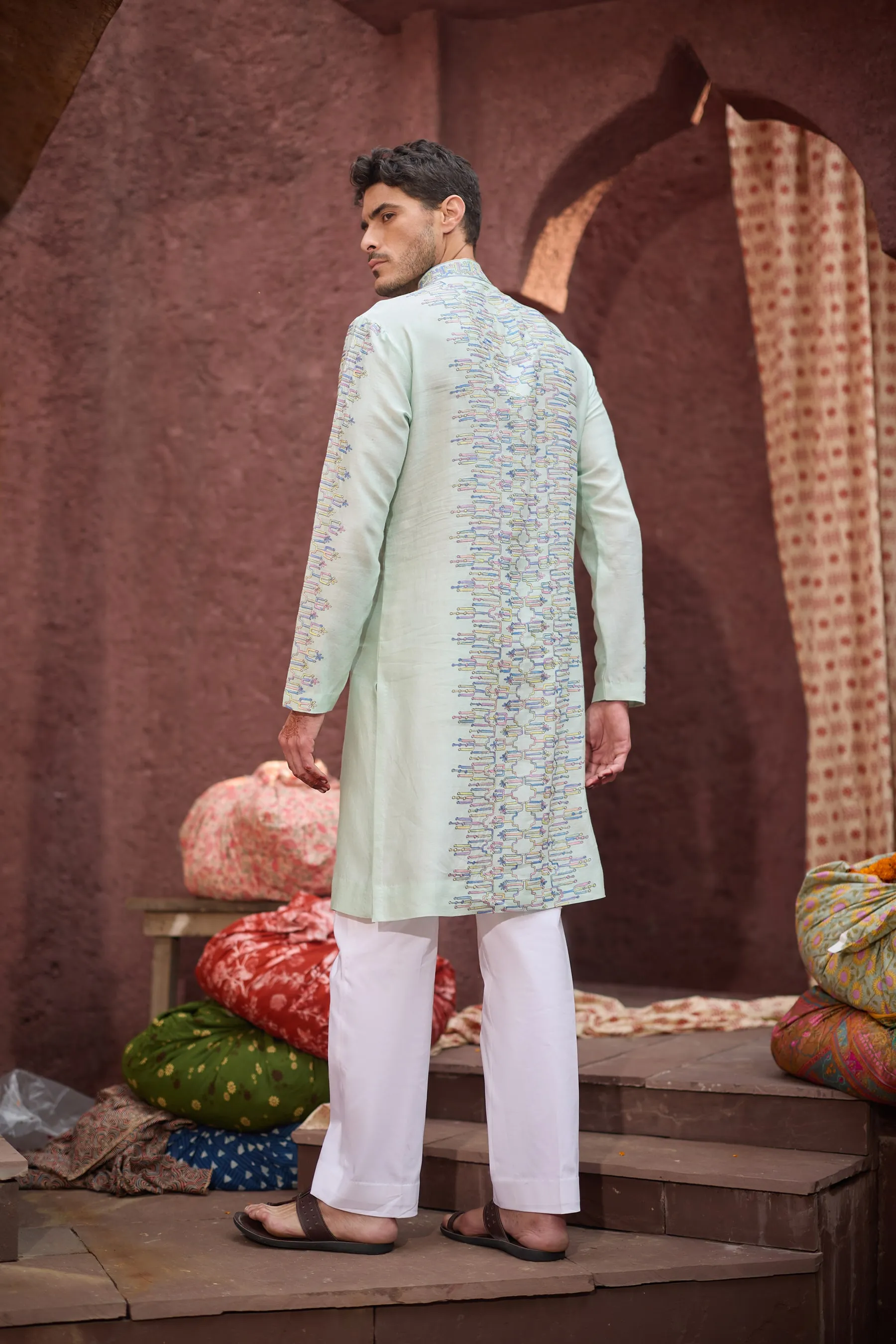
A summer wedding in India is a test of endurance. The baraat moves in the afternoon sun, the pheras run beside a fire, the hall fills with people and the groom wears the heaviest outfit of his life. Many grooms remember the day through a haze of perspiration, and the photographs show it. It does not have to be so. With the right fabric, construction, colour and planning, a groom can look composed and feel comfortable even at forty degrees. This guide explains how to dress for a summer wedding, from fabric and colour to construction, accessories, grooming and timing.
It complements our guide to the winter wedding groom outfit and the broader overview of what the groom wears at each ceremony. For travel to a hot destination, see the destination wedding groom outfit guide.
Why summer weddings are hard on the groom
Three factors combine to make summer weddings demanding.
- Heat and humidity. Indian summers, from April to June and parts of the pre-monsoon, often exceed forty degrees, and humidity makes it worse. The body cools by evaporation, and a heavy outfit blocks it.
- Layers and structure. A sherwani is a layered garment: kurta, churidar, lining, interfacing, embroidery, and sometimes a stole and a safa. Each layer adds heat.
- Long, scheduled events. The baraat, the milni, the pheras and the photographs run for hours, with little time to cool down.
The answer is not to give up formality, but to choose materials and construction that work with the climate.
Choose breathable fabrics
Fabric is the single biggest factor in comfort. In summer, choose natural, open weaves.
- Cotton-silk combines the breathability of cotton with the lustre of silk. It is a favourite for summer sherwanis, kurtas and jackets.
- Linen-silk is light and airy with a natural texture that photographs well. It creases, but a relaxed finish is part of its charm.
- Fine cotton and muslin are the coolest, particularly for kurtas and linings.
- Light raw silk (a lighter weight, such as a 40 to 60 gram) holds its shape and breathes better than heavy dupion.
- Chanderi and Maheshwari are traditional light fabrics, delicate and elegant.
- Linen blends offer structure with ventilation.
Avoid heavy brocade, thick velvet, stiff polyester blends, dense wool and anything with a rubbery lining. Beautiful in winter, they are unbearable in heat.
Choose light, heat-reflecting colours
Colour affects temperature and the visible effect of perspiration.
- Ivory, cream and white reflect heat and look fresh. They show marks but not heavy sweat stains. See our Safed Bel in white and Kinara in cream.
- Pastels such as mint, blush, powder blue and lemon are cool and photogenic. The Pudina in mint and Gulkand in blush are made for warm days.
- Sand, champagne and pale gold suit traditional ceremonies without heaviness.
- Mid-tones such as dusty rose and sage hide perspiration better than very pale colours.
- Avoid black, navy and deep maroon in the sun; they absorb heat and show chalky salt marks.
If you wear a dark colour for the evening reception, choose a lightweight fabric and a half-lined jacket.
Construction: what to ask your tailor
Two outfits made from the same fabric can feel very different, depending on construction. Ask your tailor about the following.
- Half-lined or unlined jackets. A full lining adds heat. A half-lining (in the shoulders and sleeves) keeps the shape and reduces weight.
- A breathable lining, such as cotton, cupro or Bemberg, rather than polyester.
- Minimal interfacing, and a lightweight, soft canvas. Heavy structure suits winter, not summer.
- Ease in the right places, so the fabric does not cling. A little extra room across the chest and back allows air to circulate.
- Underarm vents or gussets, which improve comfort and reduce strain.
- A looser, longer kurta under the sherwani, in a fine cotton.
- Lighter embroidery, which reduces weight and stiffness. Dense zardozi is heavy.
A good atelier will adapt a design to the weather. At ours, we routinely make a summer version of a sherwani with a lighter fabric, a half lining and softer interfacing.
Silhouettes for a summer groom
The kurta set
A kurta with churidar or straight trousers is the coolest formal option. In fine cotton-silk with a tonal embroidery, it looks refined enough for a daytime ceremony. See our kurta set collection.
The Nehru jacket
A sleeveless or half-sleeved Nehru jacket over a kurta adds polish and a layer of texture without much heat. It is easy to remove between events. Browse the Nehru jacket collection.
The unlined bandhgala
A bandhgala made from a light fabric without a full lining is smart and cool, and well suited to a summer reception. See the bandhgala collection.
The lightweight sherwani
A sherwani in cotton-silk or light raw silk, half-lined, with restrained embroidery, can be worn for the baraat and pheras. If you want a sherwani, our sherwani collection pieces can be made in lighter fabrics on request. See our guide to sherwani vs achkan vs bandhgala for how the silhouettes compare in warmth.
Layers you can remove
Plan outfits as layers. A kurta and trousers form the base, a jacket or sherwani goes on for the ceremony and photographs, and comes off between events. A stole or dupatta can be added or removed to suit the moment.
Event-by-event strategy
Haldi and mehendi
Daytime, outdoors and playful: choose cotton or cotton-silk kurtas in light colours, with minimal embroidery. See the haldi outfit guide and the mehendi outfit guide.
Roka and engagement
A kurta set or a kurta with a light Nehru jacket in a pastel colour. See the engagement outfit guide and the roka outfit guide.
Sangeet
An evening event, often indoors with air conditioning. A bandhgala or Indo-Western set in a light-to-mid colour and a breathable fabric works well. See the sangeet outfit guide.
Baraat and pheras
The hardest. Use a lightweight sherwani or a kurta with a jacket, a safa in light cotton and a plan for shade. See the baraat outfit guide and the pheras outfit guide.
Reception
In an air-conditioned hall, a bandhgala or tuxedo is comfortable, but keep the fabric light for the entry and photographs. See the reception outfit guide.
Keeping cool: practical tactics
Fabric and construction do most of the work, but a few tactics help.
- Wear a thin, moisture-wicking undershirt in cotton or bamboo, in a colour close to your skin tone.
- Use antiperspirant, applied the night before and again in the morning, not deodorant alone.
- Drink water regularly, and add electrolytes on very hot days.
- Eat light, and avoid heavy, oily food before the baraat.
- Stay in the shade, and ask someone to hold an umbrella during the baraat.
- Use a cooling towel or a handheld fan, tucked in a pocket.
- Dress as late as possible, and keep the outfit in an air-conditioned room until the last moment.
- Carry a spare shirt or kurta for changing between events.
- Take short breaks in air conditioning between rituals and photographs.
If the baraat is long, consider arriving at the venue in an air-conditioned car and walking the final stretch.
Headwear, footwear and accessories
- Safa or turban: a light cotton or voile safa in a pale colour. Heavy brocade turbans trap heat. Ask for a half-lined or unlined one.
- Stole or dupatta: choose cotton-silk or chanderi, not heavy silk.
- Mojaris: soft, breathable leather with a cushioned sole. Break them in beforehand.
- Socks: thin, moisture-wicking and the same colour as your churidar.
- Jewellery: keep it light; heavy necklaces and metal brooches get hot.
- Sunglasses: useful for outdoor events, to be removed for photographs.
Grooming for summer
Grooming helps you look fresh.
- Skin: use sunscreen and a light moisturiser, and avoid heavy products that shine.
- Hair: use a light product, since sweat and wax mix poorly.
- Beard: trim it a few days before, so it looks neat but not freshly shaved, which can irritate in heat.
- Oil control: blotting papers keep shine under control for photographs.
- Fragrance: choose a light, fresh scent, applied sparingly.
Planning, timeline and care
For a summer wedding, the lead time is the same as for any made-to-measure outfit, with extra attention to fabric selection.
| When | What to do |
|---|---|
| 12 weeks before | Choose silhouettes and light fabrics; discuss construction with the atelier. |
| 10 weeks before | Measurements and fabric swatches in daylight. |
| 8 weeks before | Place the order. |
| 4 to 5 weeks before | First fitting; check ease and ventilation. |
| 2 weeks before | Second fitting; test in warm conditions if possible. |
| 1 week before | Final fitting; steam and pack. |
Read more in made-to-measure timelines. After the wedding, clean the outfit promptly, since perspiration stains set over time. Air it, brush it and store it in a breathable bag. A lightweight outfit made well will serve for many summers.
Coordinating the family
The groom’s father, brother and friends feel the heat too. Share fabric and construction tips with them, and choose a shared palette of light colours. Our guides to the father of the groom’s outfit, groom’s brother’s outfit and groomsmen outfits include fabric advice, and the male guest guide is good to share with guests.
A closer look at summer fabrics: how they behave in heat
Choosing a fabric by name is not enough; it helps to know how each behaves when worn for ten hours in the heat.
Cotton-silk
A blend of cotton and silk, usually with a slight sheen. It absorbs moisture better than pure silk, drapes well and takes embroidery cleanly. It creases moderately and recovers with steaming. It is the most reliable summer fabric for a sherwani or kurta, and it works in both daytime and evening light.
Linen and linen-silk
Linen is the coolest of the formal fabrics: the weave is open and the fibre wicks moisture away. Pure linen creases deeply, which is part of its appeal in a relaxed setting, but it can look careless at a formal baraat. Linen-silk keeps the airiness and adds a smoother finish, with fewer creases. It suits beach and garden weddings.
Light raw silk and tussar
Raw silk has body and texture, and holds structure for a sherwani. Choose a light weight. Tussar has a natural golden tone and a slightly coarse hand, and it breathes better than pure mulberry silk. Both look rich in photographs without being heavy.
Chanderi and Maheshwari
These handwoven fabrics from Madhya Pradesh are light, translucent and elegant, often with a fine zari border. They suit kurtas, stoles and unlined jackets, and carry a sense of heritage.
Fine Egyptian or Pima cotton
For kurtas and shirts, a high thread-count cotton is soft, breathable and quick to dry. It is the best choice for the layer closest to the skin.
What to avoid
Heavy dupion silk, velvet, thick brocade, wool and polyester blends are best avoided in summer. If a heavier fabric is part of the design, such as velvet for a reception, keep the construction as light as possible and ask for a full cotton lining.
Indoor versus outdoor: reading the venue
The same summer day can feel completely different depending on the venue, and your outfit should respond.
- Air-conditioned banquet halls can be very cold. A jacket or stole, which seemed unnecessary on the walk in, becomes welcome. Dress in removable layers.
- Open lawns and terraces are warm, often breezy, and shaded only in patches. Choose the lightest fabrics and ask where the shade will fall during the ceremony.
- Mandaps with a sacred fire raise the temperature further, and you may sit close to the flame for an hour. A light, non-synthetic fabric is safer, since synthetic fibres melt and cling.
- Temples and gurdwaras are often cooler inside, with marble floors, but the walk from the car in direct sun can be hot. Plan shoes that are easy to remove and a route in the shade.
- Heritage hotels and palaces have thick stone walls that stay cool; courtyards, however, hold the heat. Ask the planner about the timeline of each space.
Walk through the venue or ask the planner for photographs of each space, and estimate how long you will spend in each. It lets you choose outfits, layers and breaks with confidence.
If you are unsure how an outfit will feel, ask the atelier for a fabric swatch and wear it against your forearm for an afternoon in the sun. Fabrics that feel cool and dry after an hour outdoors will do the same on the wedding day, and the test costs nothing.
The groom’s emergency kit for a hot day
A few small items, kept by a trusted relative, rescue many a hot afternoon.
- A spare kurta or shirt in the same colour.
- A cooling towel and a few blotting papers.
- A small handheld fan or a portable mist spray.
- Water and electrolyte sachets.
- Safety pins, a lint roller and a stain pen.
- A spare pair of socks and a pair of comfortable slip-on shoes for between events.
- Antiperspirant and a light fragrance for a quick refresh.
- A small umbrella for shade during the baraat.
None of these takes more than a few minutes to assemble, and having them on hand means that a hot, long day is a pleasure, not an ordeal.
Common mistakes to avoid
- Choosing heavy fabric for the sake of richness. Richness can come from embroidery and colour, not weight.
- A full lining in polyester. It traps heat.
- A tight fit. Ease circulates air.
- Dark colours in the sun.
- Dressing too early. Delay as much as possible.
- Forgetting water and shade.
Frequently asked questions
What fabric is best for a summer sherwani?
Cotton-silk, linen-silk and light raw silk with a breathable lining.
What colours stay coolest?
Ivory, pastel and sand.
Can I wear a sherwani?
Yes, in a light fabric with half-lined construction; otherwise choose a kurta set or a light jacket.
What time should the baraat be?
Early morning or late afternoon.
Final thoughts
A summer groom does not have to choose between comfort and elegance. Light fabric, thoughtful construction, a cooler palette and a smart plan make both possible. If you are planning a summer wedding, book an appointment and we will help you build an outfit that stays sharp from the first ritual to the last.
Shop the looks
Browse the kurta set collection, the Nehru jacket collection and the haldi and mehendi edit, or the baraat and pheras edit for lightweight sherwanis.