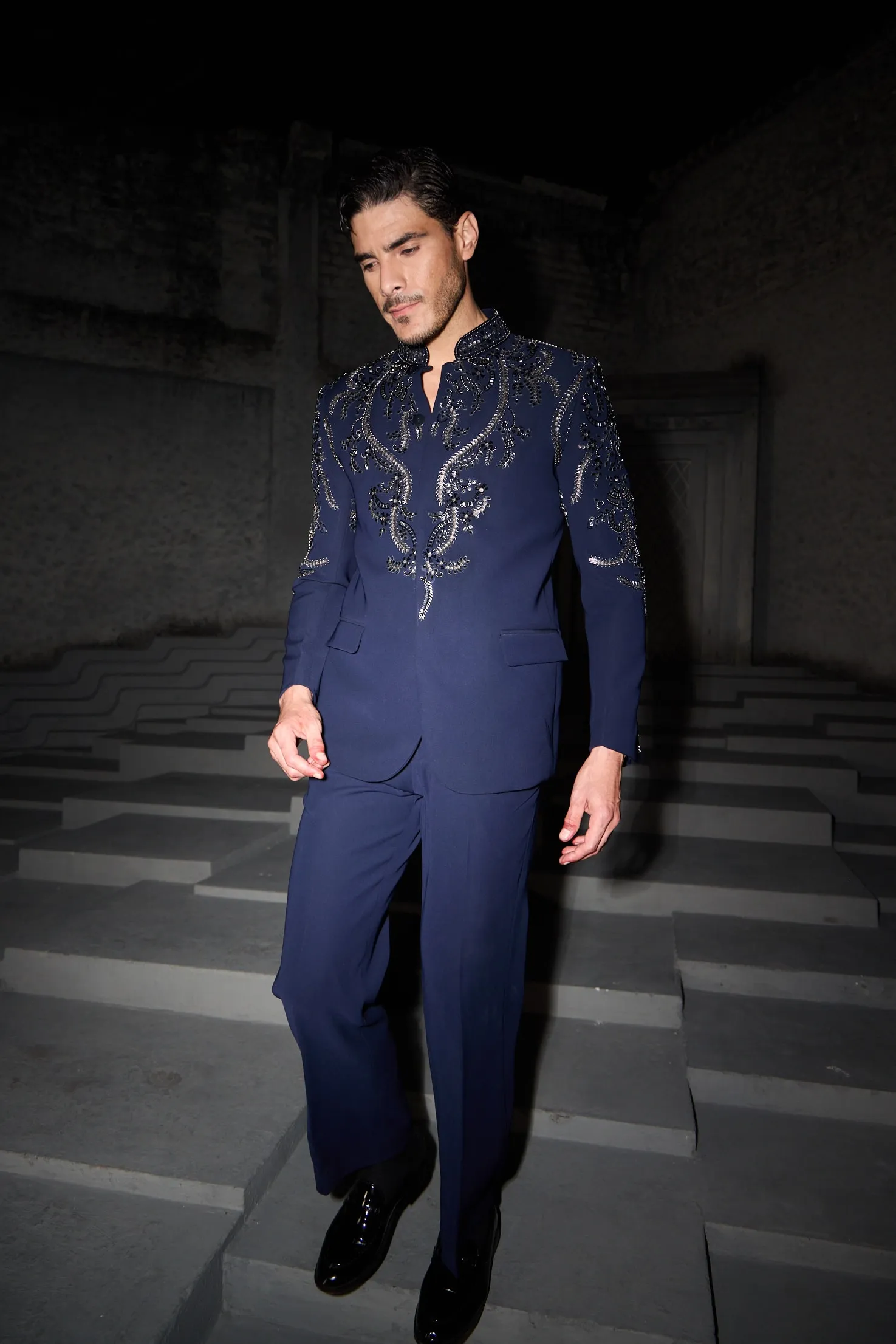
The father of the groom has a particular place at an Indian wedding. He receives the bride’s family at the milni, leads the family in the baraat, performs rituals, introduces relatives, hosts the reception and gives blessings. He is a host and an elder, and his clothing should reflect that: dignified, comfortable and coordinated with his son and the rest of the family. This guide sets out what the father of the groom should wear at each ceremony, how to choose colours and fabrics, and how to coordinate without overshadowing the groom.
For the whole wedding schedule, see what the groom wears at each ceremony. Our baraat and pheras, roka and sagai and reception collections include pieces that suit fathers and elders.
The father’s role, and what the outfit should do
The father of the groom is both a participant and a host. In practice that means:
- Standing and greeting for long periods, especially at the milni and the reception.
- Performing rituals, which may involve sitting, bending and offering.
- Being photographed in family groups, in many different combinations.
- Representing the family, so his appearance reflects the family’s standing and taste.
The outfit should be dignified, comfortable and slightly more reserved than the groom’s. It should not compete with him, but it should look considered and well tailored.
Ceremony by ceremony
Roka and engagement
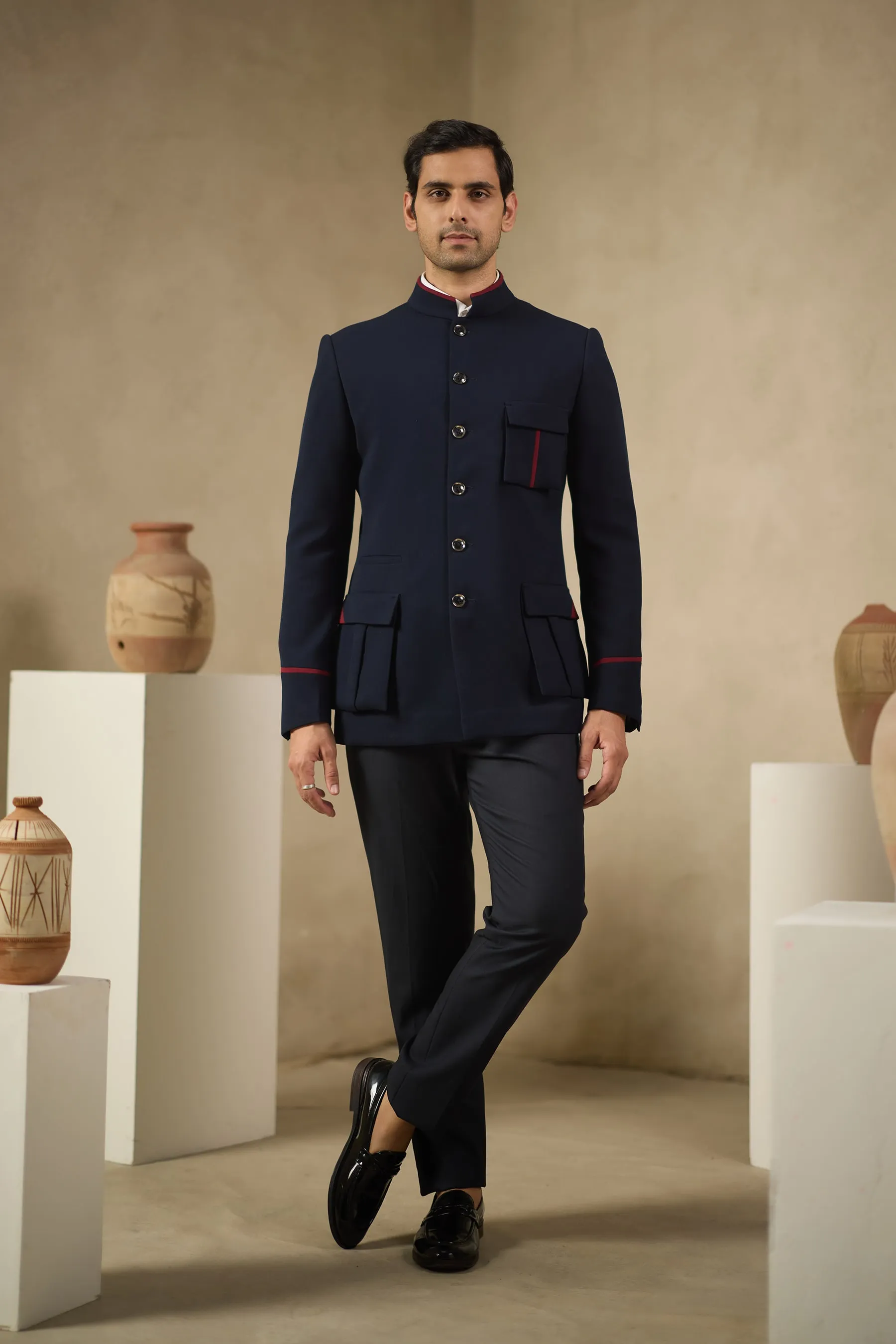
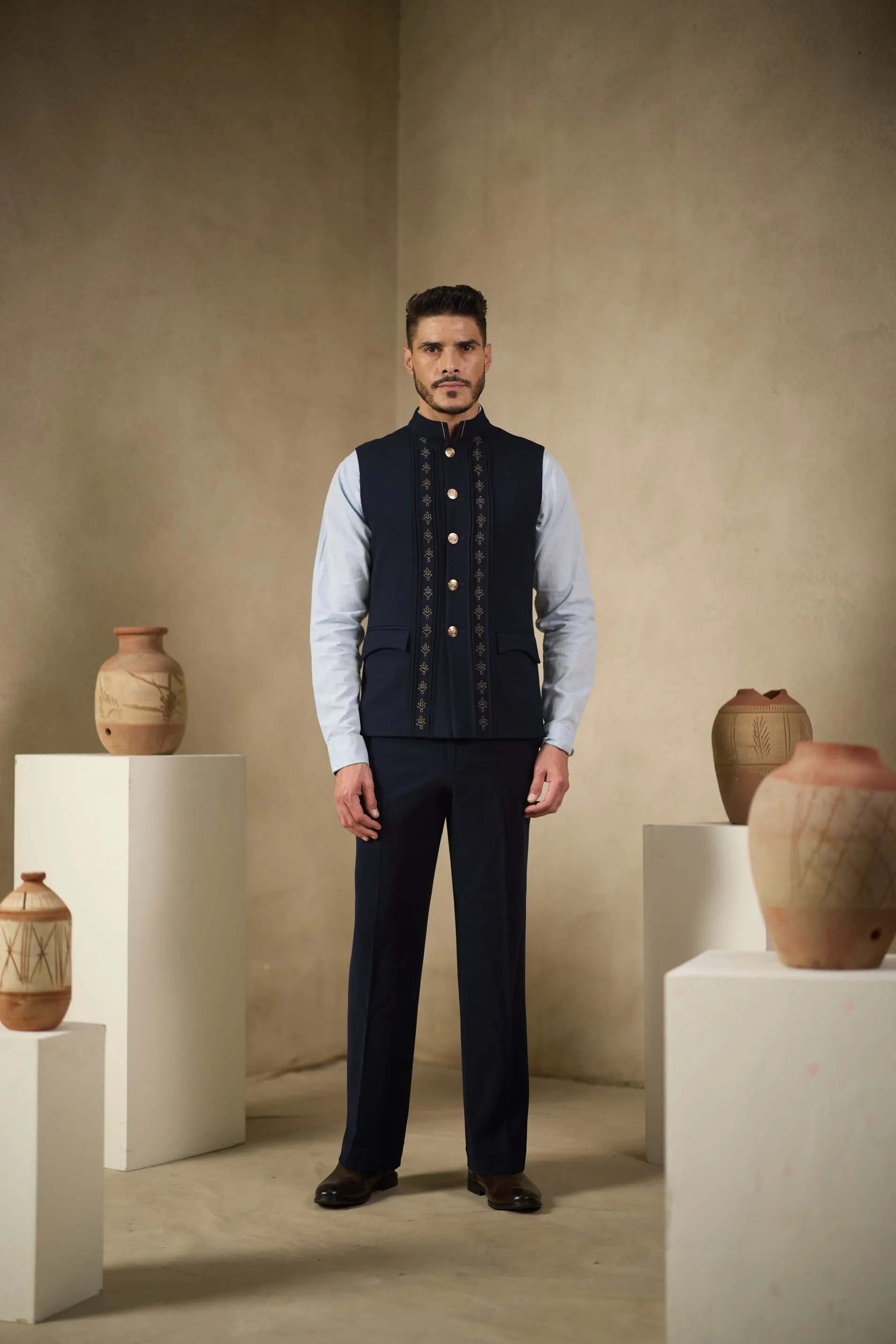
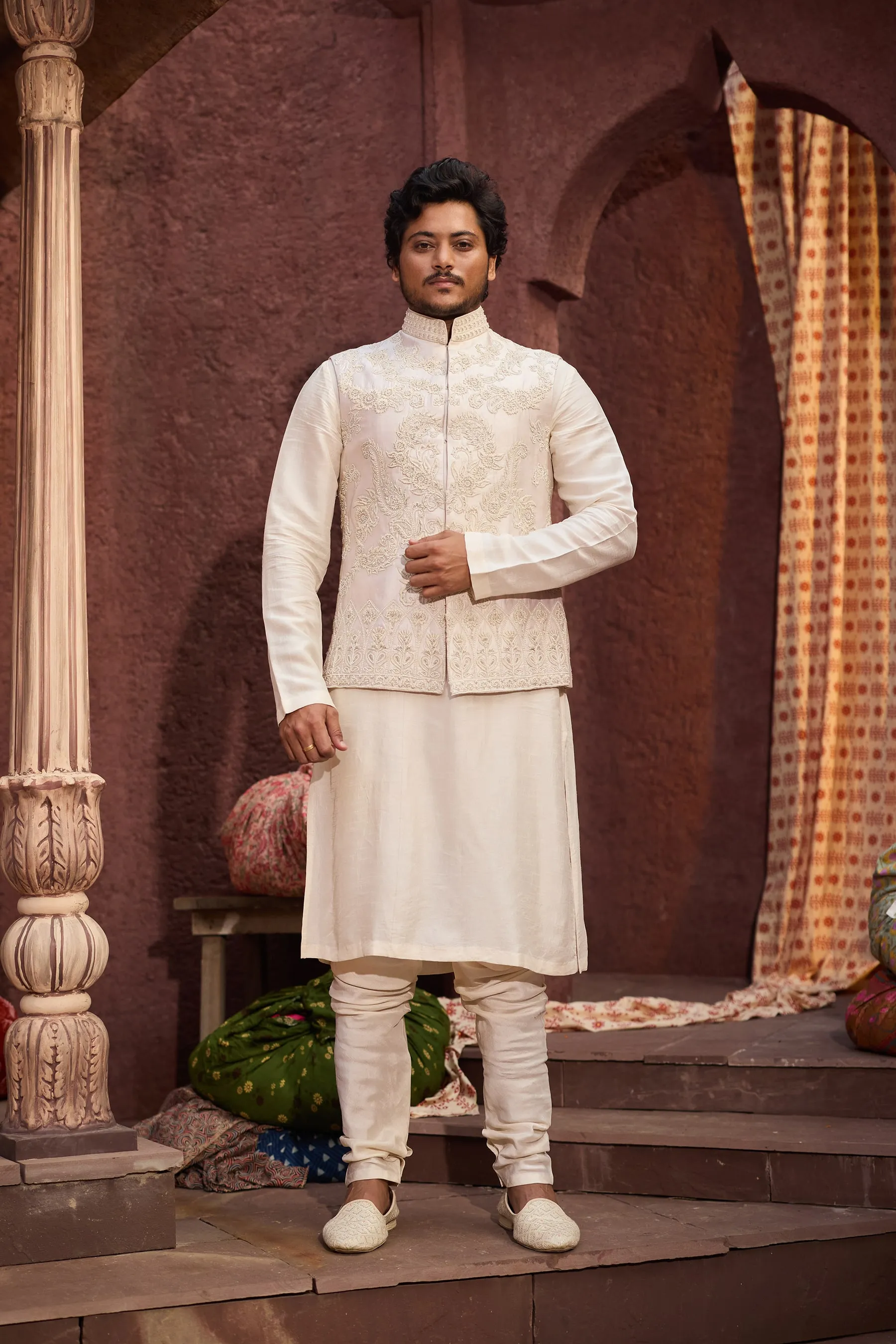
A bandhgala, an achkan or a kurta with a Nehru jacket in a refined, subdued colour. Ivory, grey, navy or sand work well. Our Samundar and Jodhpur bandhgalas in navy and Nawab Nehru jacket in navy are examples. See our guides to the roka outfit and the engagement outfit.
Haldi and mehendi
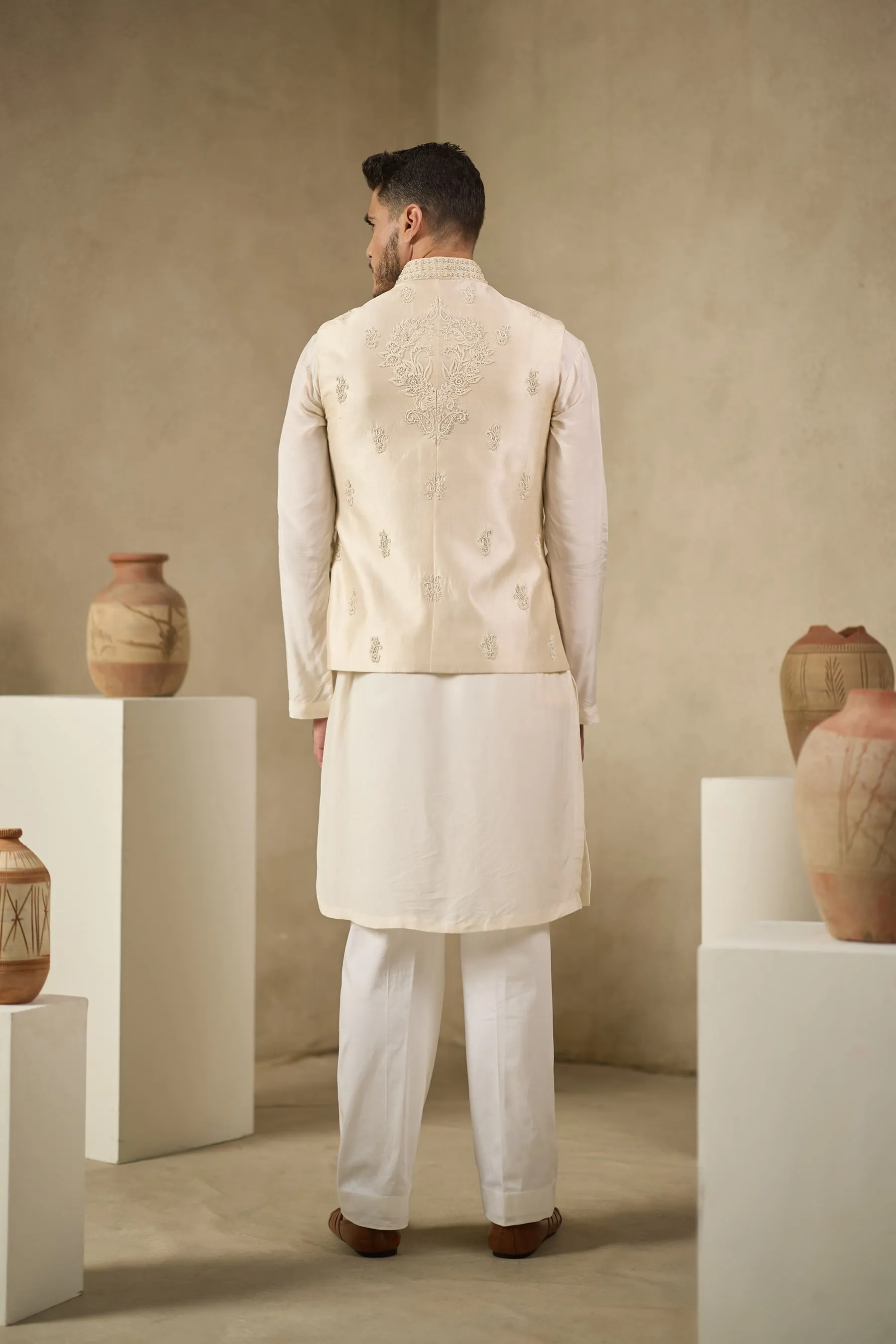
A light kurta set in cream, pastel or soft yellow, perhaps with a Nehru jacket. The ceremony is warm and playful; choose breathable fabrics. Our Heer Nehru jacket in ivory layers well. See our guides to the haldi outfit and the mehendi outfit.
Sangeet
A bandhgala, a velvet jacket or a rich kurta with a jacket in a deep colour. The sangeet is festive, and the father is often invited to dance. Choose a fit that allows it.
Baraat and pheras
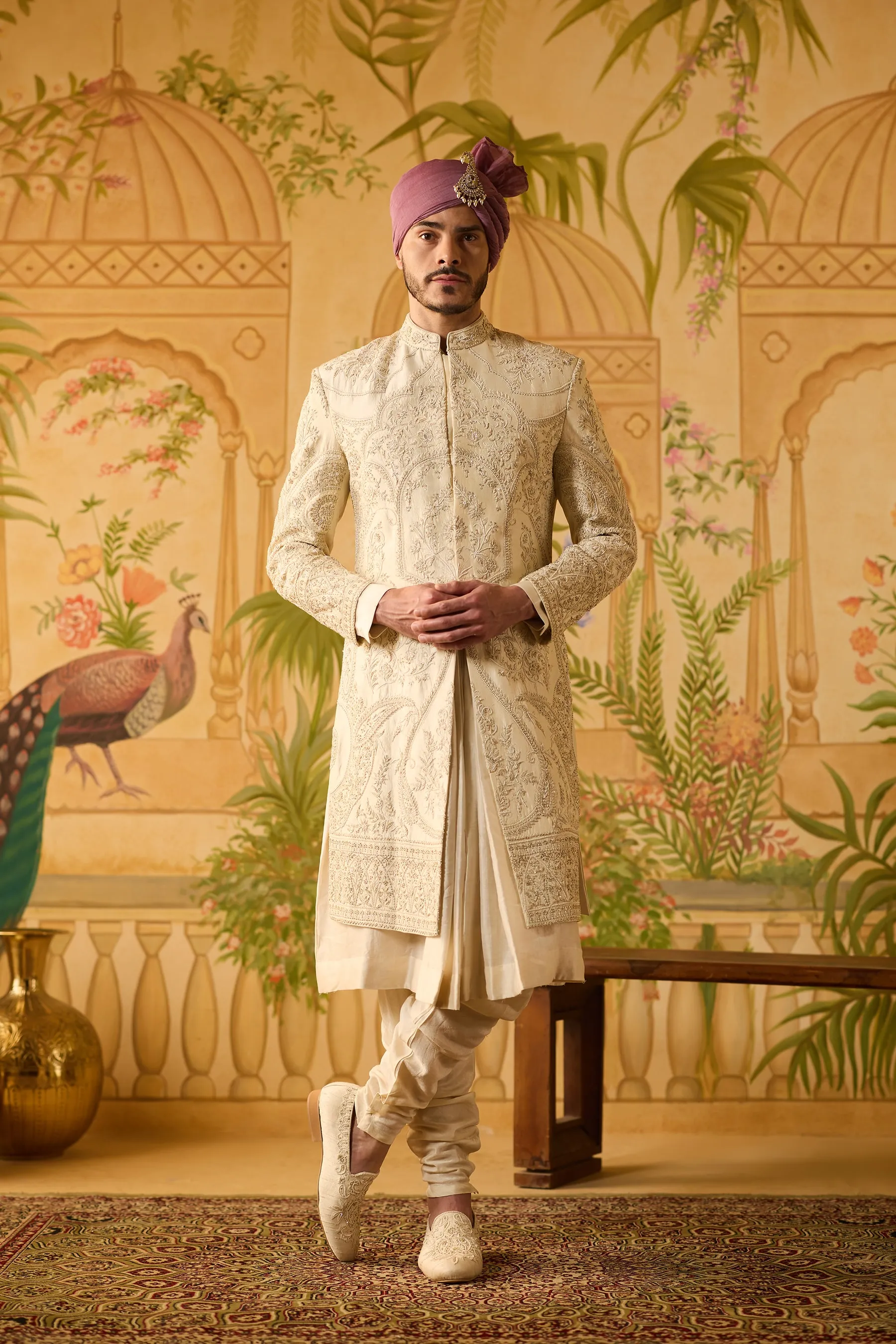
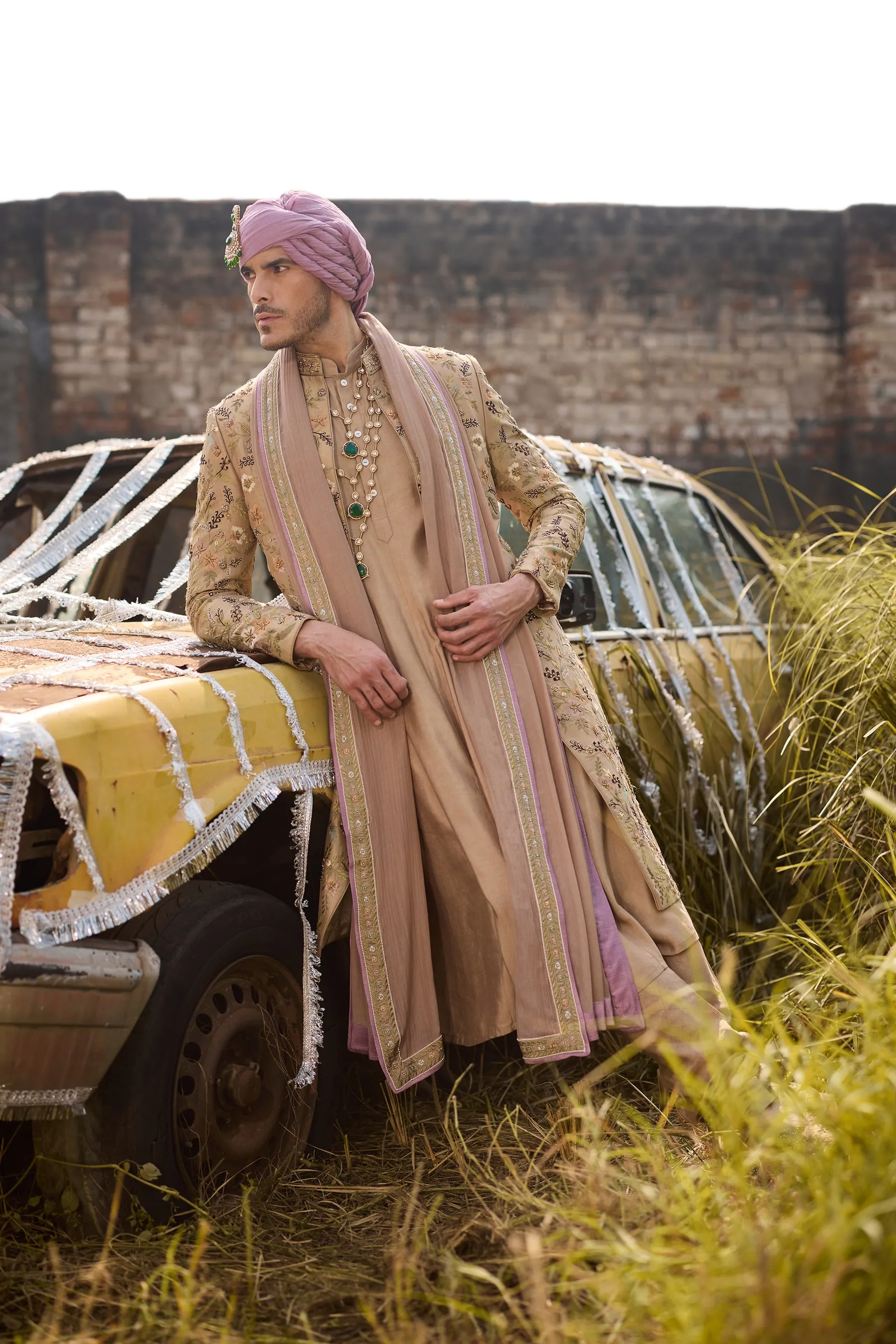
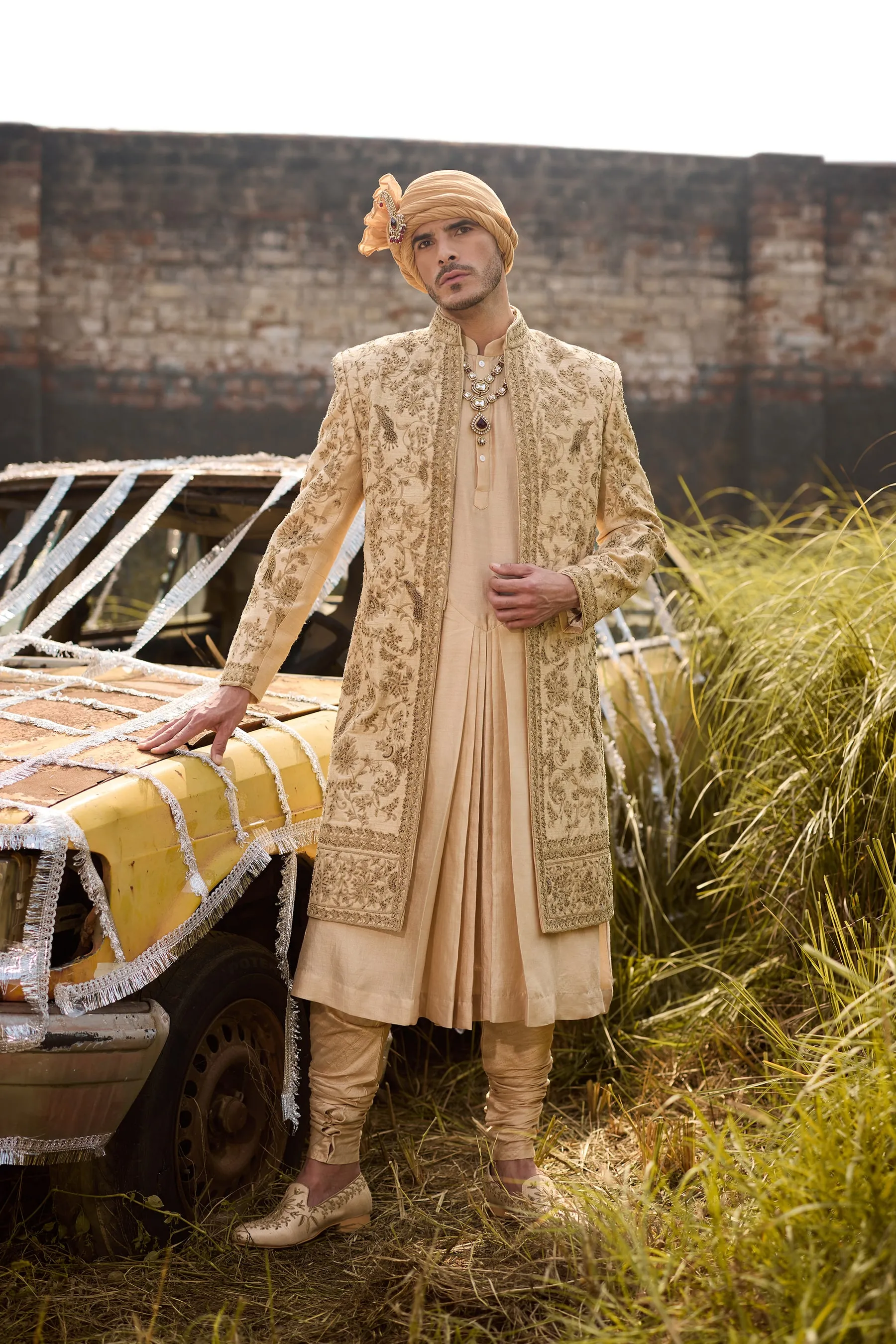
A sherwani in a lighter or simpler style than the groom’s, or a refined achkan. Ivory, champagne, muted gold, sand or soft pastel suit well. Our Leher in ivory and Bahar in sand gold are examples, in simpler forms than the groom’s choice. Pair with juttis and, if the family expects it, a safa or turban. See our guides to the baraat outfit and the pheras outfit.
Reception
A bandhgala in navy, charcoal or deep green, or an achkan. See our guide to the reception outfit for the groom, whose principles apply.
Choosing colours that suit the father and the family
Complement the groom
The father’s colour should relate to the groom’s without matching. If the groom wears ivory and gold, the father might wear champagne, sand or a soft grey. If the groom wears midnight navy, the father might wear charcoal or a lighter navy.
Consider the mother of the groom
The parents are often photographed together. Ask what the mother is wearing and choose a complementary tone. A saree or lehenga in rose, gold or green pairs well with ivory, champagne or navy.
Avoid competing shades
Avoid very bright or very shiny colours that draw attention away from the groom. Avoid colours that are traditionally reserved for the bride or associated with mourning in your community.
Consider age and complexion
Soft, warm neutrals suit most complexions and are flattering with silver or grey hair. Very pale colours can wash out; very dark colours can look severe in daylight. A mid-tone in a rich fabric is generally the most flattering.
Silhouettes and fabrics for the father
- Bandhgala. Formal, comfortable and versatile. Fine wool or wool-silk in navy, charcoal or ivory. See the bandhgala collection.
- Achkan. Slim, traditional and dignified. Silk blend or fine wool. See the achkan collection and our guide to sherwani vs achkan vs bandhgala.
- Kurta with a Nehru jacket. A classic for daytime and family functions. See the Nehru jacket collection.
- Sherwani. For the baraat and pheras, simpler than the groom’s.
- Kurta set. For informal events and family pujas.
For fabric, choose breathable natural fibres: fine wool, cotton-silk, silk blends and linen blends for warm weather. A canvas front gives structure, and a comfortable lining reduces heat. For seasonal advice, see our guides to the summer wedding groom outfit and the winter wedding groom outfit.
Fit, comfort and practical points
Fathers often attend long days with little time to sit. A few practical points:
- Comfortable shoes. Choose cushioned juttis or leather loafers, broken in.
- Easy waist and seat. Sitting through long rituals demands a trouser or churidar that does not pinch.
- Breathable lining. A long, warm day calls for cotton or cupro lining.
- Pockets that work. A father often carries a phone, handkerchief, glasses and keys. Ask your tailor for secure inner pockets.
- Easy dressing. Avoid outfits with many tiny buttons if help is not available.
- Warm layers for cool evenings. A light shawl or stole is useful.
If the father has a particular posture, mobility need or health consideration, tell the tailor; a good atelier will adjust the cut accordingly.
Safa, stole and accessories
- Safa or turban. Traditional in many families for the baraat, milni and pheras. Choose a colour that complements the family palette. Sikh fathers wear their dastar as usual, in a colour chosen with the groom’s.
- Stole or shawl. A stole in a coordinated colour adds dignity and warmth.
- Mala or chain. A simple pearl or gold mala is traditional.
- Watch and ring. Understated and classic.
- Pocket square. A silk pocket square on a jacket is a small touch of polish.
- Footwear. Juttis or mojaris for a sherwani or achkan; leather loafers or oxfords for a bandhgala.
Coordinating with the whole family
The family photographs are among the most treasured, so coordination matters.
- With the groom. Related colours, a simpler cut.
- With the mother and sisters. Complementary palettes, planned together.
- With the brothers and groomsmen. See our guides to the groom’s brother’s outfit and groomsmen outfits.
- With the bride’s family. At the milni, the two families meet, and a harmonious palette looks gracious.
Questions fathers often ask
Should I wear the same outfit to the baraat and the pheras?
Many fathers do, changing the safa or stole. If the baraat is long and the pheras is at night, a change can be welcome.
Do I need to wear new clothes?
Not necessarily. A well-made bandhgala or achkan you already own may suit some events, but for the wedding itself, a new, well-fitted outfit is a mark of respect.
How formal should I be at the haldi?
Light and relaxed: a kurta set in a soft colour. Save the heavier outfits for later.
Can I wear a suit?
At the reception or sangeet, a tailored suit is acceptable in many families, though a bandhgala feels more fitting. At the ceremonies, Indian formal wear is usually expected.
Mistakes to avoid
- Matching the groom exactly.
- Choosing a heavily embroidered outfit that overshadows him.
- Wearing unbroken shoes.
- Leaving fittings until the last week.
- Forgetting to coordinate with the mother of the groom.
- Ignoring weather and venue.
What the father of the groom does at each ceremony, and how the outfit supports it
Understanding the father’s duties helps in choosing an outfit that works at every step.
Welcoming the guests
At the roka, engagement and reception, the father greets guests at the entrance, shakes hands and embraces relatives. A neat collar, a composed silhouette and comfortable shoes let him stand for an hour or more.
The milni
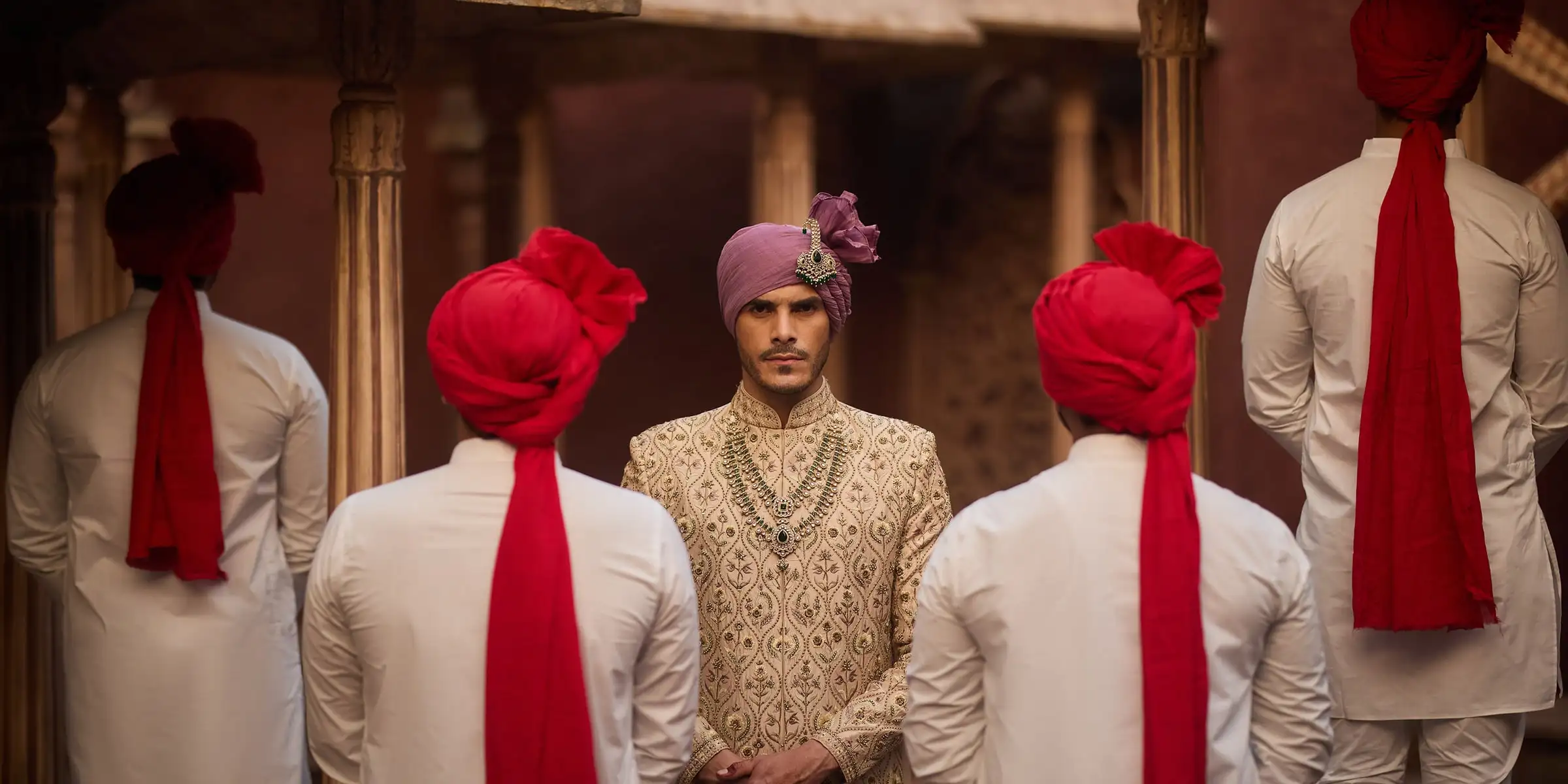
When the baraat arrives, the fathers of both families meet in the milni, exchanging garlands and gifts. The groom’s father is in the first line of the procession and is photographed closely. A refined outfit with a stole or safa looks respectful and dignified.
Pheras and rituals
The groom’s father sits near the mandap during the ceremony and may take part in certain rituals. Sitting cross-legged, standing and bending are all required. A cut with room in the thigh and seat is important.
Reception hosting
At the reception, the father stands near the stage or the entrance, introduces guests and may give a speech. A bandhgala or achkan with a handkerchief or pocket square is practical and smart.
Farewell and vidaai
At the vidaai, the bride’s departure, the groom’s father stands with the family to receive the couple. A calm, warm presence matters more than ornamentation.
Outfit ideas for fathers by style
The traditional father
An ivory or champagne achkan with churidar, juttis and a stole. A safa in a colour that complements the groom’s. Dignified, classic and timeless.
The modern father
A navy or charcoal bandhgala with a white shirt, tailored trousers and leather loafers. Smart, comfortable and easy to wear again.
The relaxed father
A kurta set in a soft colour with a Nehru jacket and mojaris. Easy and elegant for daytime functions.
The regal father
A lighter sherwani in muted gold or sand with a stole and a kundan mala. Rich and warm, but still simpler than the groom’s.
Looking after the outfit during a long wedding week
A father may wear several outfits over several days, and a little care keeps each fresh.
- Hang each outfit as soon as it is taken off, on a shaped hanger.
- Steam rather than iron silk and embroidery.
- Rotate shoes so each pair has time to air.
- Keep a spare handkerchief and a stain pen in the jacket.
- Pack a garment bag with tissue paper if travelling.
- Label each outfit with the ceremony so nothing is mixed up in the rush.
A note on dressing together as a family
Many families like to dress together in a coordinated palette, and it can be one of the loveliest parts of the wedding. A simple approach is to choose a palette of three or four colours, assign them to different ceremonies and let each family member choose a version that suits them. For example, the father in navy, the groom in ivory and the brother in charcoal for the reception; for the haldi, the father in cream, the groom in blush and the brother in mint. Planning together, early, avoids last-minute clashes and creates photographs that look cohesive.
Fabrics for an older groom’s father: comfort without compromise
Fathers of the groom are often in their fifties, sixties or older, and comfort is as important as appearance. A few fabric points:
- Fine wool and wool-silk hold their shape and breathe well, and look dignified in navy, charcoal and ivory.
- Cotton-silk and linen-silk are light and cool for warm weather. They crease a little, which many people find acceptable.
- Silk blends give a gentle sheen that suits an achkan or sherwani. Choose a matte finish rather than a high shine.
- Avoid stiff, heavily embellished fabrics that restrict movement. A little embroidery at the collar and cuff is plenty.
- Choose a soft, breathable lining, such as cotton or cupro, that is kind to the skin.
If the father has sensitive skin, ask for the neckline and cuffs to be lined with a soft fabric, and avoid itchy wools next to the neck.
Considering posture, mobility and comfort
A good tailor will adjust a garment to the wearer’s posture and mobility. For fathers, three areas matter.
- The shoulders and back. Rounded shoulders, a forward posture or a broad back each call for a different pattern. A fitting is the only way to get this right.
- The waist and seat. Sitting for long periods calls for a trouser with enough room and a waistband that does not dig in. An elasticated or adjustable waist inside a trouser can be discreet and kind.
- The legs and feet. Long standing can cause tired legs; choose cushioned footwear and consider whether support socks would help.
If the father has had surgery, uses a stick or has any mobility need, mention it at the first fitting. Details such as a slightly longer jacket, a wider cuff or an easier closure make a big difference on the day.
The father’s outfit and the bride’s family
The two families meet formally at the milni and at the wedding. How the father of the groom dresses sets a tone of respect and warmth. A few ways to make a good impression:
- Dress at the same level of formality as the bride’s father, or one step above if the bride’s family is hosting.
- Avoid showing excessive wealth. A tasteful, well-made outfit is more gracious than the most elaborate one.
- Pay attention to the bride’s family’s customs. If they favour certain colours or practices, accommodate them.
- Be punctual and composed. A calm demeanour in a well-fitted outfit says more than ornament.
A short conversation with the bride’s father about the schedule and any dress preferences is always welcome, and it helps the two families feel like one.
Fathers across regions and traditions
Expectations for the groom’s father vary by community, and it helps to know what is usual in yours.
- Punjabi and Sikh families. The father often wears a bandhgala, achkan or kurta with a jacket, with a turban in a coordinated colour. At the Anand Karaj, a clean, modest outfit and a well-tied dastar are customary. See our guide to the Sikh wedding groom outfit.
- Marwari and Rajasthani families. A rich achkan or sherwani with a safa in a regional style is common, and the palette is often warm and regal.
- Gujarati and Marathi families. A kurta with a jacket or an achkan in a light, auspicious colour; for traditional ceremonies, a dhoti-style bottom may be preferred.
- Bengali families. A silk or cotton panjabi with a dhoti, often with a shawl. See our guide to the Bengali groom’s wedding outfit, which applies equally to the father.
- South Indian families. A veshti with an angavastram or a silk shirt is traditional. See our guide to South Indian groom wedding attire.
- Muslim families. A sherwani, achkan or kurta with a jacket, sometimes with a topi or turban. See our guide to the nikah and walima groom outfit.
If your family belongs to more than one tradition, or the bride’s family follows a different custom, a short conversation with the elders will help you choose an outfit that respects both. A father who makes the effort is always appreciated.
Shop the father’s look
- Samundar, a navy bandhgala with a classic structure.
- Jodhpur, a navy bandhgala with a refined collar.
- Nawab, a navy Nehru jacket for family functions.
- Heer, an ivory Nehru jacket for daytime events.
- Leher, an ivory sherwani for the wedding day.
- Bahar, a sand gold sherwani with a warm, restrained palette.
All pieces are made to measure with two fittings and hand finishing.
Final thoughts
The father of the groom sets the tone of the family at the wedding. A dignified, comfortable, well-fitted outfit in a considered colour shows pride and respect without drawing attention from the groom. Choose a classic silhouette, refined fabrics and a palette that complements the family, and allow time for fittings. When you are ready, book a fitting and we will plan the father’s outfits alongside the groom’s.