The roka is where two families say yes. In many Hindu and Sikh families it is the formal announcement that a match has been agreed: a short ceremony, often at home or in a small venue, with blessings, sweets, gifts and the exchange of rings or tilak in some traditions. It is smaller than the engagement and nowhere near as lavish as the wedding, but it is the first time both families are in a room together, and the groom is the person everyone is looking at. The outfit therefore has to do a particular job: look respectful, composed and modern, without looking like wedding day.
If you are planning the whole wedding, our guide to what the groom wears at each ceremony places the roka among the other functions, and our roka and sagai collection shows the pieces we make for it.
What is a roka, and how formal is it?
“Roka” literally means “to stop”, and it signals that both families have agreed to the match and that the couple will not seek other proposals. In Punjabi, Haryanvi, Rajasthani and many North Indian families, it is a distinct ceremony, often followed or combined with the sagai (engagement). In other regions the same step may be called nischayam, sakhar puda, mangni or tilak.
The format varies widely:
- A small home ceremony. Parents, siblings and close relatives gather, the families exchange gifts and sweets, and the groom is applied a tilak.
- A semi-formal lunch or dinner. A restaurant, banquet room or garden with 30 to 100 guests, a short ritual and photographs.
- A combined roka and engagement. A larger function with rings, music and a more festive dress code.
Because the formality varies, the first step is to ask your family and the bride’s family what to expect. The second is to dress one step more formal than you think, because a roka is a moment you will see in photographs for decades.
The right level of formality
The roka sits between everyday smart and full wedding. A good rule: dress as you would for a significant family occasion, not as you would for the wedding itself. That means tailoring that fits exactly, a colour that suits the daylight and the room and detail that is refined rather than heavy.
A full, heavily embroidered sherwani is usually too much and may feel as if you are pre-empting the wedding. A casual kurta-pyjama is usually too little. The sweet spot is a bandhgala, a good kurta with a Nehru jacket, a light achkan or a smart Indo-Western set.
The best outfit options for a roka
The bandhgala (Jodhpuri suit)
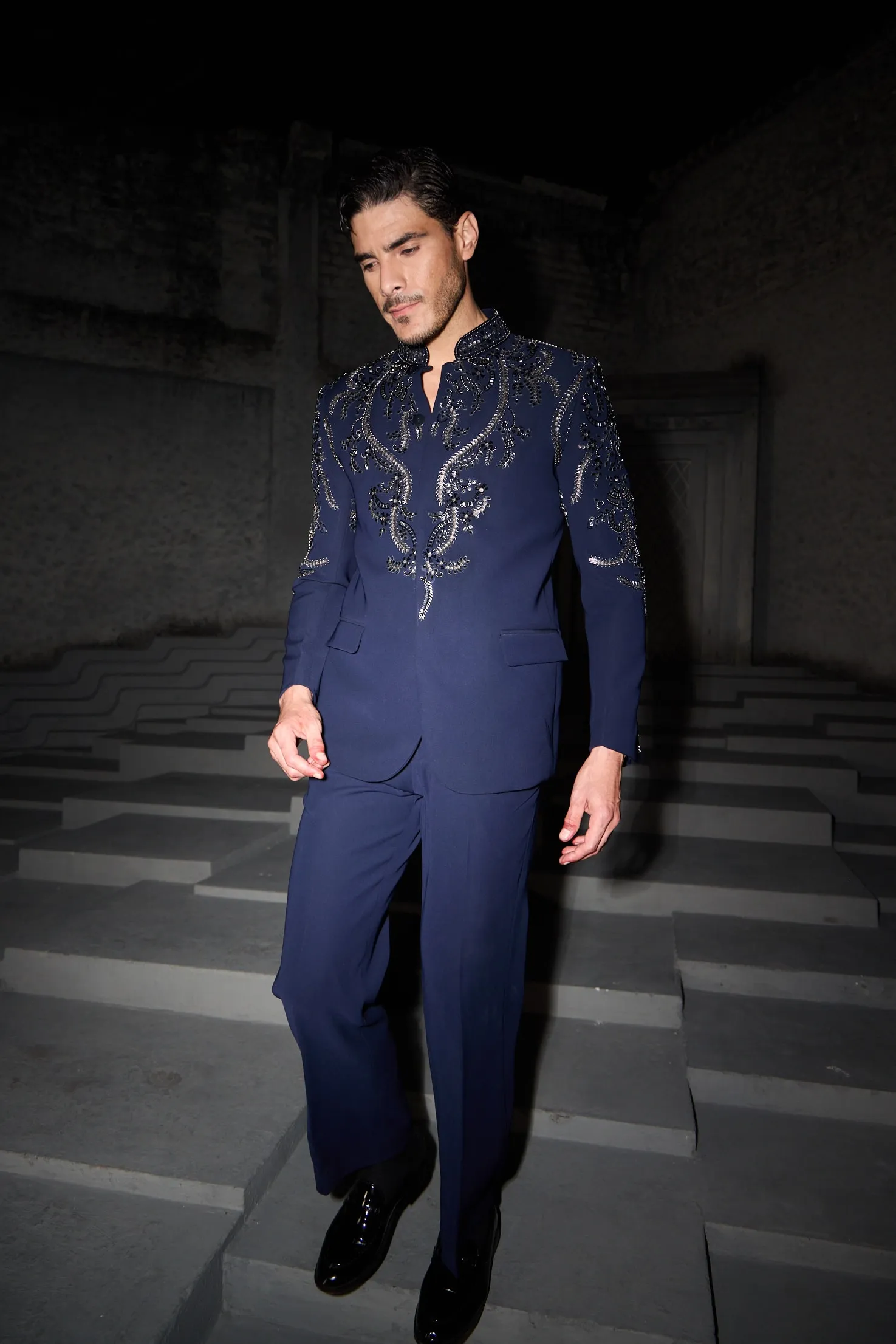
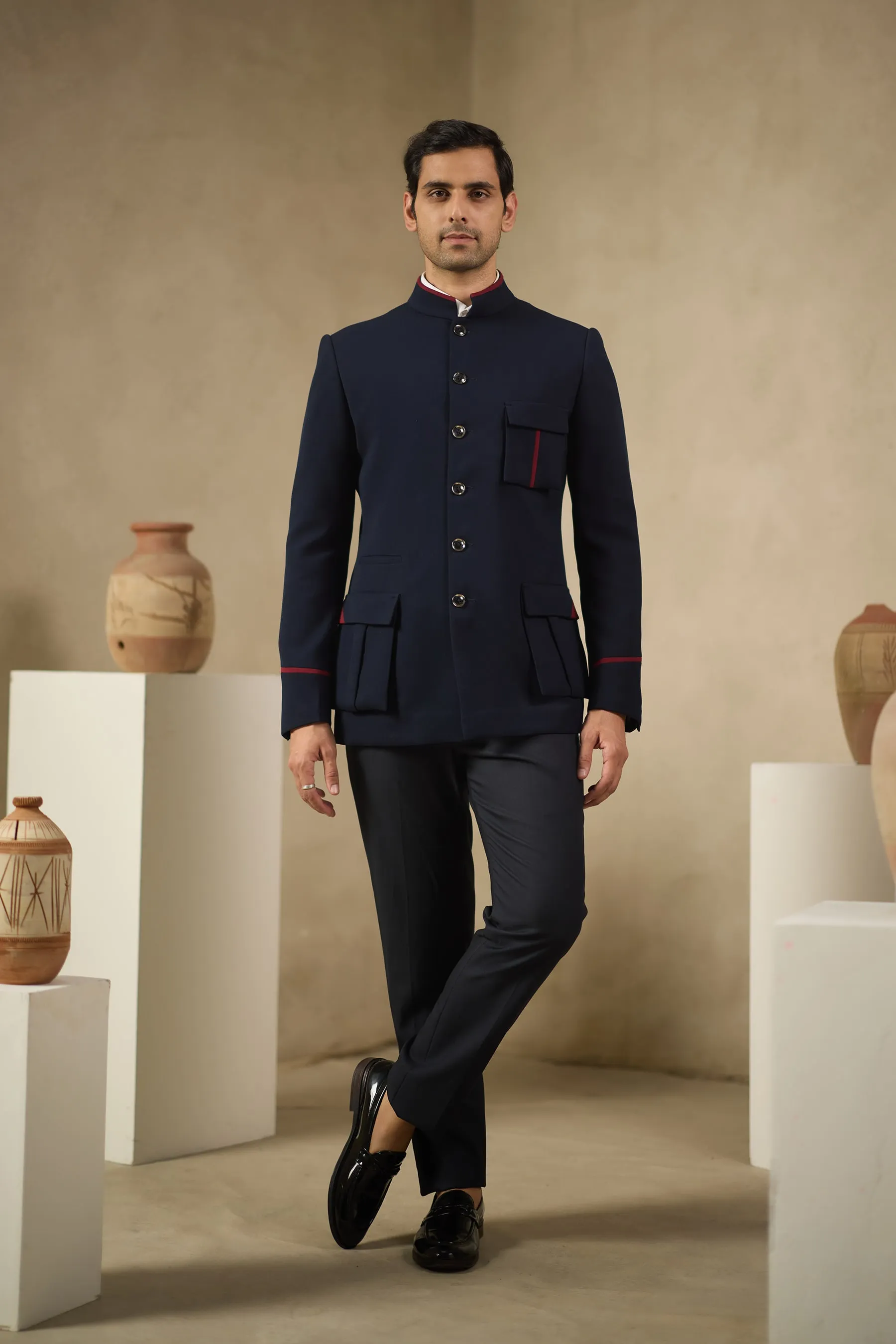
A bandhgala is a closed-collar jacket worn with matching or contrasting trousers. It is the single most reliable roka outfit: formal, comfortable and distinctly Indian. Choose navy, charcoal, ivory or a soft grey for a daytime ceremony. Our Samundar and Jodhpur bandhgalas in navy are examples, cut with a clean line and a well-set collar. See the bandhgala collection and our guide to sherwani vs achkan vs bandhgala.
A refined kurta set
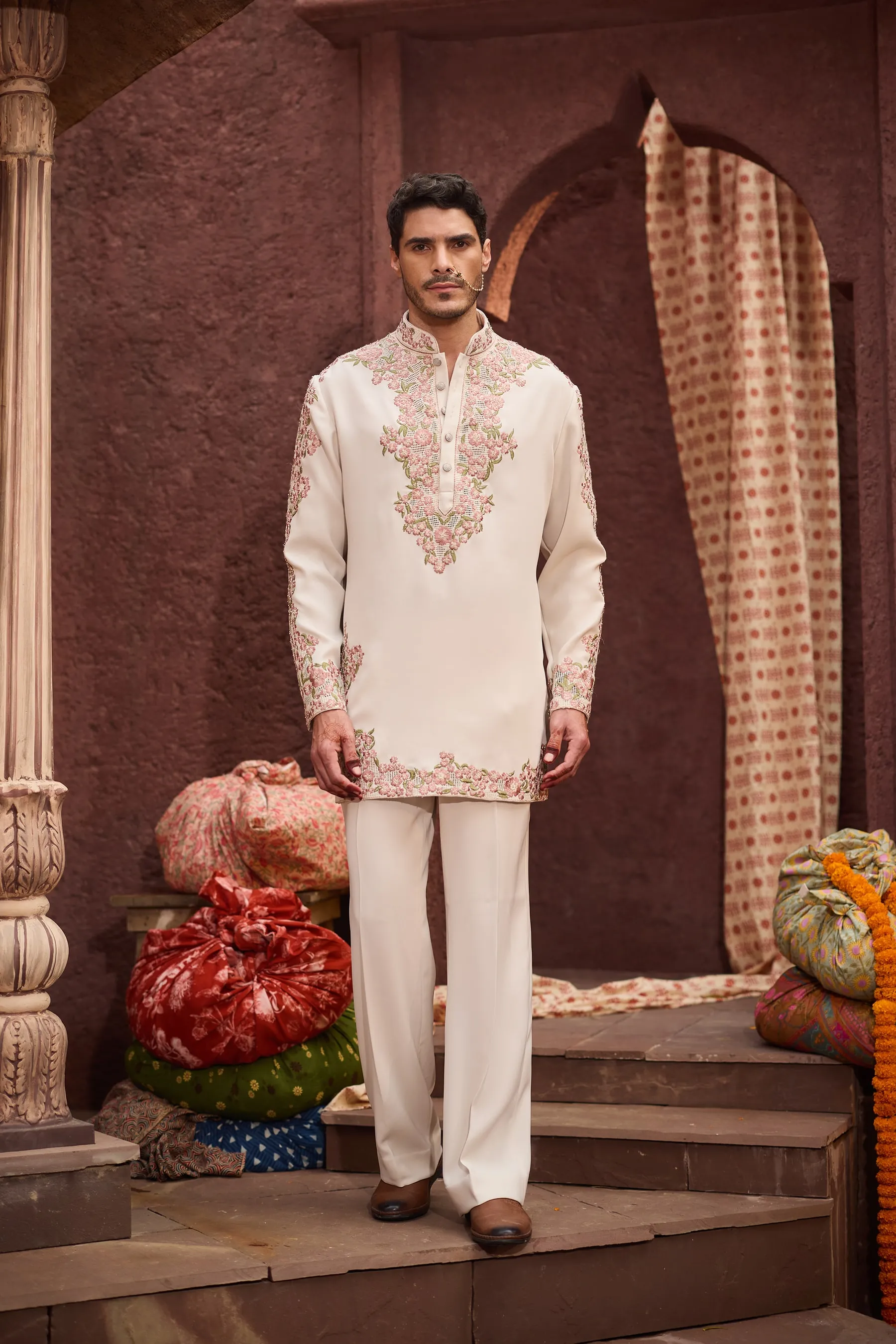
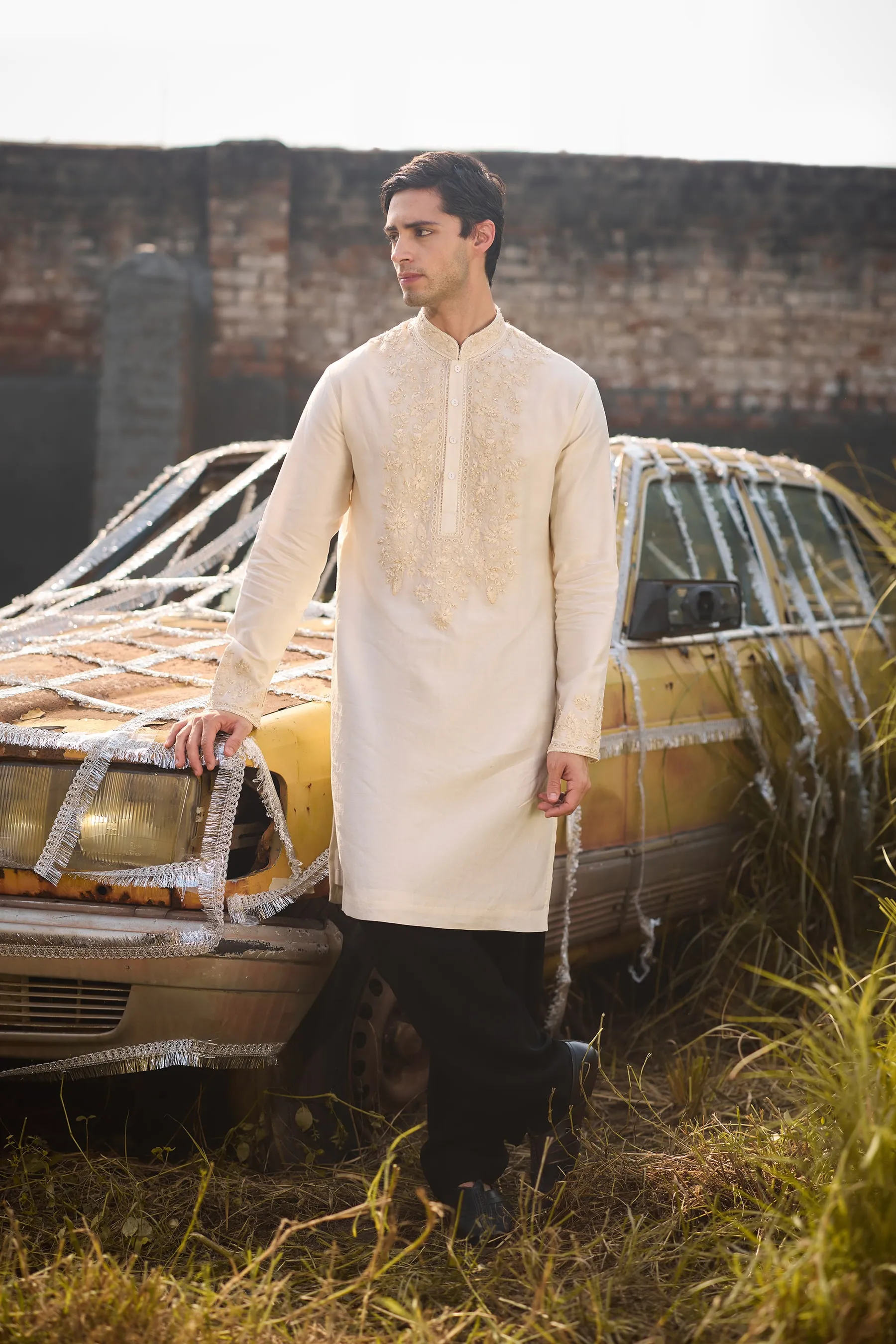
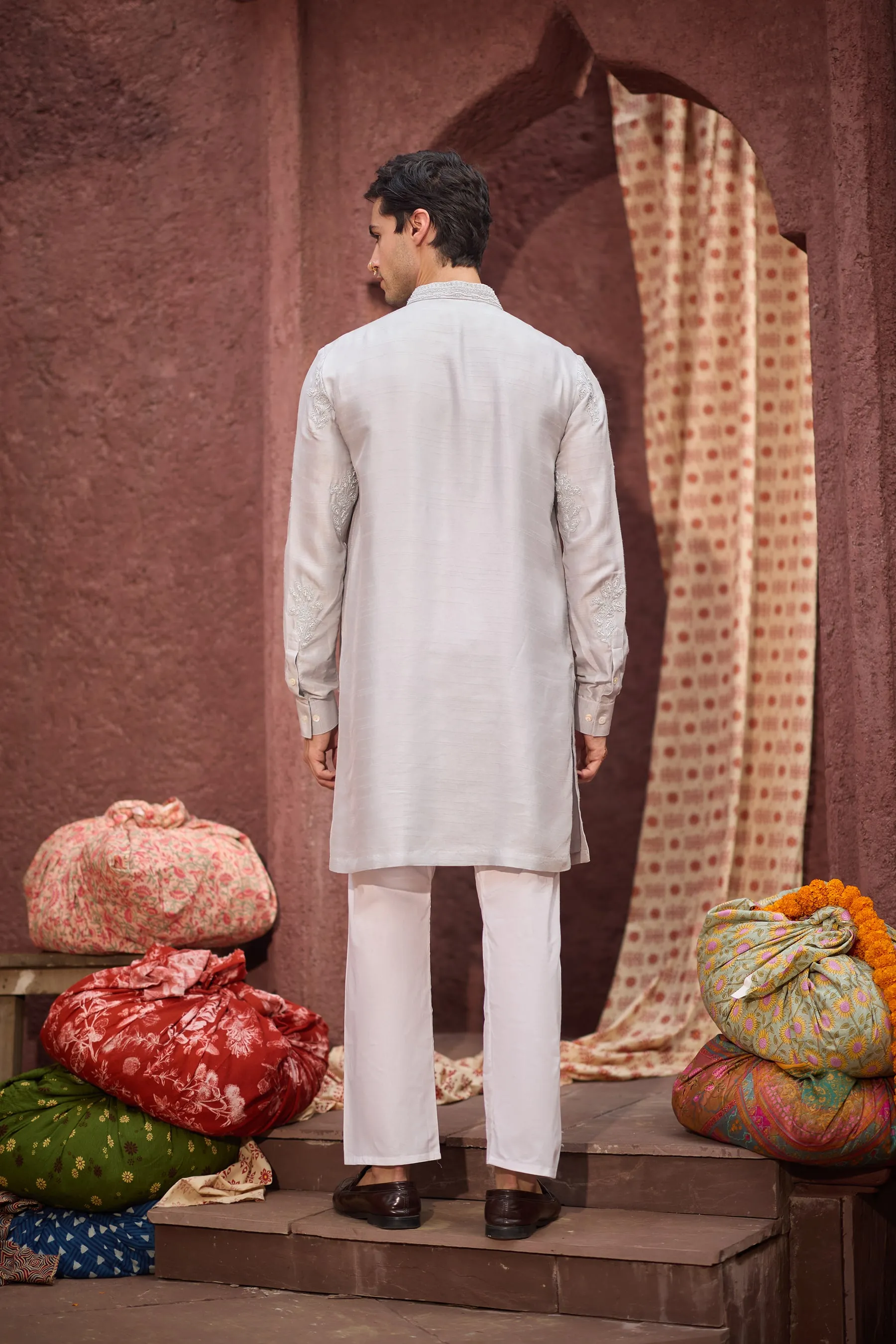
A well-cut kurta set with subtle embroidery in a sophisticated colour is entirely appropriate, and often preferred by grooms who want to be comfortable. Our Seemab in silver grey and Gulab Kinari in ivory are examples. Choose a longer kurta with a defined collar and quiet embroidery, and pair with tailored trousers or churidar.
A kurta with a Nehru jacket
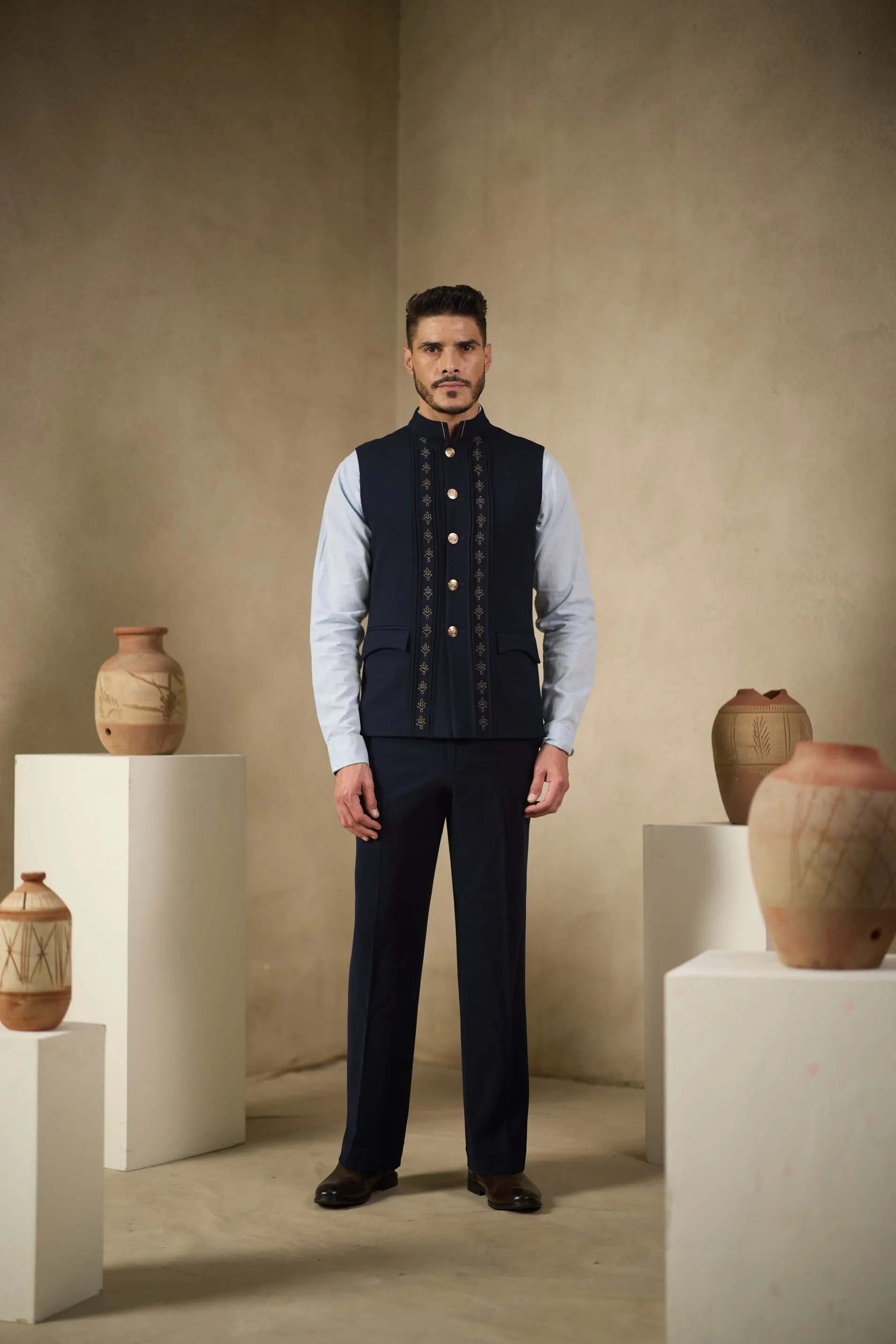
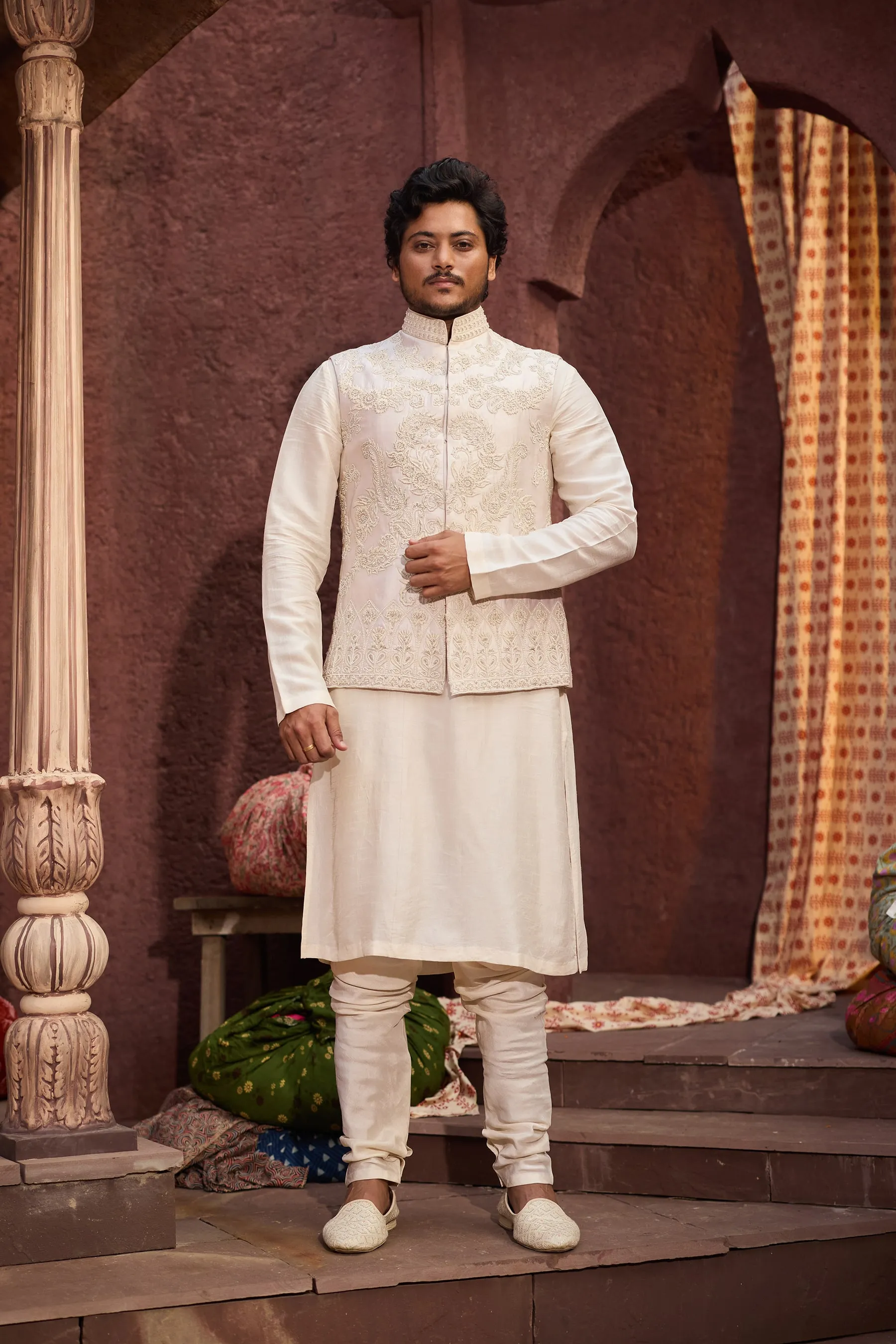
Adding a jacket gives a family-occasion polish. Our Nawab Nehru jacket in navy over an ivory kurta is a classic. For a warmer look, a jacket in a sand or soft gold tone over an ivory kurta works well. See our Nehru jacket collection.
A smart Indo-Western set
If your family is modern in outlook, a tailored Indo-Western set (a long jacket or a bandi with a fine shirt and trousers) is stylish and comfortable. See the Indo-Western collection.
A light achkan
An achkan is a knee-length, close-fitted coat with a closed neck. It is more formal than a bandhgala but less heavy than a sherwani, and it is the ideal choice if your family expects traditional dress. Choose ivory, champagne or a soft pastel in a fine cloth, with restrained embroidery.
Colours for the roka
The roka is typically held in daylight or in warm interior light, and photographs often include gifts, sweets, flowers and the bride’s outfit. Choose colours that are calm, confident and flattering.
- Ivory and cream. Timeless and respectful. Works in every family and photographs beautifully. Our Ujala kurta set in cream is a good starting point.
- Silver grey and soft grey. Modern and understated; flattering with most skin tones.
- Navy. Strong, formal and flattering. Navy works well with gold, ivory or a pastel shirt.
- Powder blue, sage and soft blush. Fresh, contemporary and not heavy.
- Deeper tones: maroon, bottle green. Possible for an evening roka, but keep them for later in the day.
Avoid: pure black (too sombre in many families), bright red (often associated with the bride) and heavy metallics.
Fabrics for a roka outfit
- Fine wool and wool blends for a bandhgala or jacket: structured, breathable and crisp.
- Cotton-silk and silk blends for kurtas and achkans: soft sheen without being heavy.
- Linen blends for warm weather, if the family is relaxed about creases.
- Textured weaves and jacquards for subtle pattern without embroidery.
A good fabric should look refined in daylight, hold its shape through a day of sitting and standing and feel comfortable across hours of greetings and photographs.
What the families expect
The roka is as much about the families as about the couple, so a few cultural points are worth knowing.
- Respect and humility. The groom is expected to appear modest and attentive, touching elders’ feet and receiving blessings. An outfit that is neat and understated reinforces that impression.
- Gifts and sweets. The groom’s family often brings gifts; the bride’s family offers sweets and returns gifts. You will be seated for part of this exchange, so comfort matters.
- Tilak or ring exchange. In some families the groom wears a tilak, a small mark of kumkum or sandalwood. A light collar or a kurta that does not stain easily is useful.
- Photographs. Both families will take formal group photos. A well-fitted jacket and a clean collar give you confidence in each one.
If you are marrying into a family with strong traditions, ask which colours are considered auspicious or inauspicious for the occasion. In some communities, black is avoided at celebrations; in others, white is reserved for mourning. A simple question can prevent an awkward moment.
Coordinating with your family and the bride
The roka is a family photograph, so coordination matters.
- With the bride. Ask her colour palette. If she wears a pastel lehenga or suit, an ivory, navy or silver grey outfit is a safe pairing. If she wears a rich jewel tone, a lighter neutral balances it.
- With your parents and siblings. A tonal palette is better than matching. For example, you in navy, your father in ivory, your brother in grey. Our guides to the father of the groom’s outfit and the groom’s brother’s outfit have more ideas.
- With the setting. A garden roka invites lighter colours; an indoor evening roka can take deeper ones.
Styling details: footwear, accessories and grooming
Footwear
For a bandhgala or Nehru jacket, polished leather loafers or oxfords in black, brown or tan. For a kurta set or achkan, mojaris or juttis in a complementary colour. Break in new shoes before the day, since you will be standing and sitting for hours.
Safa, stole or pocket square
A roka rarely calls for a safa, but a stole in a contrasting colour or a pocket square adds polish. A small brooch on a jacket is a refined touch.
Jewellery
A watch, a ring and a simple chain are usually enough. If you wear a mala, keep it understated.
Grooming
A fresh haircut a few days before, a neat beard and a good shave make the biggest difference. Keep skincare simple; a lightly moisturised face looks better in photographs than a heavily treated one.
Roka outfit ideas by style
The traditional groom
An ivory or champagne achkan with churidar, juttis and a pocket square. Formal and respectful.
The modern professional
A navy bandhgala with a white shirt, matching trousers and black loafers. Sharp and comfortable.
The relaxed groom
A silver grey or cream kurta set with a Nehru jacket and mojaris. Elegant without being stiff.
The fashion-forward groom
An Indo-Western set in sage or charcoal, with a fine shirt, tailored trousers and loafers. Contemporary and distinctive.
What to wear if the roka and sagai are combined
When the roka and engagement are combined, the event is usually a little more festive, with rings, music and a larger guest list. In that case, you can add a bit more richness: a bandhgala in a deeper colour, an achkan with more embroidery or a jacket with a patterned lining. Keep it lighter than your wedding outfit. For more on the engagement look, see our guide to the engagement outfit for the groom.
Planning and fit
A roka is often arranged on shorter notice than the wedding. If you are having the outfit made to measure, begin as early as you can. Our atelier works to eight to ten weeks from the first fitting, with two fittings so we can refine the shoulders, sleeve and length. If your roka is sooner, speak to the concierge about what can be arranged. For the full process and a timeline, see how to plan a made-to-measure wedding outfit.
When you try on the outfit, check:
- Shoulder seams sit at the edge of your shoulders.
- The collar closes comfortably without gaping or pinching.
- Sleeves end at the wrist bone, showing a little shirt cuff if there is a shirt.
- The jacket or kurta length is flattering and covers the seat.
- You can sit comfortably for an hour without the garment pulling.
Mistakes to avoid
- Wearing a wedding sherwani. Too formal and may overshadow the actual wedding.
- Choosing a trendy colour you will not like later. Classic colours age better.
- Wearing unbroken new shoes. You will be on your feet.
- Skipping the fitting. A roka is photographed up close.
- Ignoring family customs. A quick conversation avoids misunderstandings.
- Forgetting the weather. A heavy jacket in a hot, crowded room is unpleasant.
Making the roka outfit work again
A good roka outfit should not be a one-off. A navy bandhgala works for engagements, formal dinners and festive occasions. An ivory kurta set with a jacket serves for pujas, Diwali and family weddings. When you choose, think about how often you could wear each piece afterwards, and choose the one that will earn its place.
Regional roka traditions and the outfit that fits each
“Roka” is a North Indian word, but nearly every community has an equivalent first ceremony, and each has its own expectations of the groom.
Punjabi roka
In a Punjabi family the roka is often a warm, communal event. The bride’s family may visit the groom’s home (or the reverse) with gifts, sweets, dry fruits and clothing. The groom is applied a tilak and given a shagun. A bandhgala, a kurta with a jacket or a light achkan suits well. Sikh grooms may wear a turban in a colour that complements the outfit.
Haryanvi and Rajasthani roka
These ceremonies tend to be formal and family-centred. A Rajasthani groom might wear a bandhgala (the Jodhpuri coat is, after all, from Rajasthan) or an achkan, often with a safa in a regional style. Colours often lean towards rich, warm tones, but ivory and cream are universally appropriate.
Gujarati and Marathi equivalents
In Gujarat the ceremony may be called gol dhana (the jaggery and coriander ritual) and in Maharashtra the sakhar puda. Both involve sweets and gifts, and both call for a neat, modest kurta or kurta with a jacket in a light, auspicious colour.
Bengali and Odia aashirbaad
The aashirbaad is a formal blessing, often held at the groom’s and bride’s homes in turn. The groom typically wears a silk or cotton panjabi with a dhoti or tailored trousers.
South Indian nischayam
In Tamil, Telugu, Kannada and Malayali weddings, the formal engagement is a significant event with its own customs. A groom often wears a veshti or mundu with a silk upper garment. If you prefer a Western-Indian approach, an ivory kurta with a gold-bordered stole works well.
Whatever the tradition, the principle holds: dress with the care and respect the family expects, and ask in advance if you are unsure.
What to carry and prepare on the day
A roka is a short event, but there are a few practical items that make it smoother.
- A handkerchief for the tilak and for warm rooms.
- A small pouch with a mirror, comb and lip balm.
- Shoes that slip on and off easily, because some ceremonies are held in a home where shoes are removed.
- Socks without holes or heavy patterns, if you are visiting a home.
- A change of shirt or kurta, in case of spills at the meal.
- A phone with a charged battery and a friend to hold it while you are seated for the ritual.
- A small gift or sweets, as your family advises.
Common roka questions answered
Should the groom wear a turban or safa at the roka?
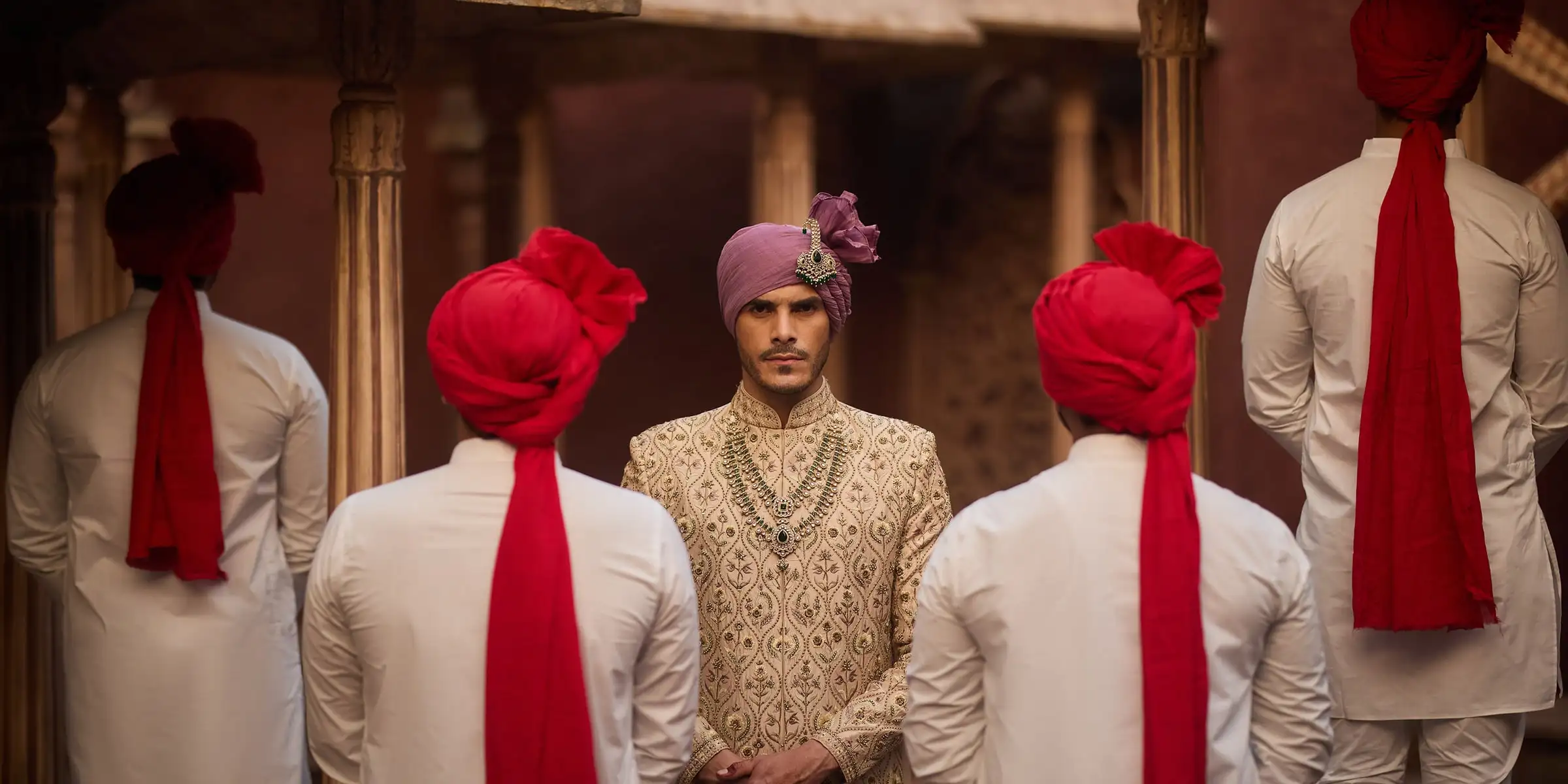
In most families, no. The safa is a wedding-day accessory. A Sikh groom will wear his turban as usual, and may choose a colour that suits the outfit. If your family or community has a tradition, follow it.
Should I wear the colour the bride’s family has asked for?
If the bride’s family has expressed a colour preference, accommodating it is a gracious gesture, as long as it suits you. If they have not, choose a colour that is neutral and flattering.
Is it appropriate to wear the same outfit to the roka and the engagement?
If the two events are on the same day, yes. If they are separate, many grooms wear different outfits, but a bandhgala worn with a change of shirt and accessories is a good compromise.
What if the roka is held over video call?
Some families hold a virtual roka. Dress from the waist up as you would in person: a collared bandhgala or a kurta with a jacket looks sharp on camera. Avoid very fine patterns, which can create a moiré effect on video, and pay attention to lighting.
What should the groom’s brother and father wear?
Slightly simpler than the groom, in a coordinated palette. See our guides to the groom’s brother’s outfit and the father of the groom’s outfit.
Shop the roka look
- Seemab, a silver grey kurta set with understated embroidery.
- Gulab Kinari, an ivory kurta set in a fine, light cloth.
- Ujala, a cream kurta set for a bright, composed look.
- Samundar, a navy bandhgala with a clean line.
- Jodhpur, a navy bandhgala with a classic collar.
- Nawab, a navy Nehru jacket to wear over an ivory kurta.
See the bandhgala, kurta set and Nehru jacket collections. Every piece is made to measure.
Final thoughts
A good roka outfit is composed, modern and respectful. Choose a colour that suits the light and the family, keep the embroidery quiet and the fit exact, and wear shoes you are comfortable in. If you want help choosing, book a fitting and we will plan the roka look alongside the rest of the wedding.