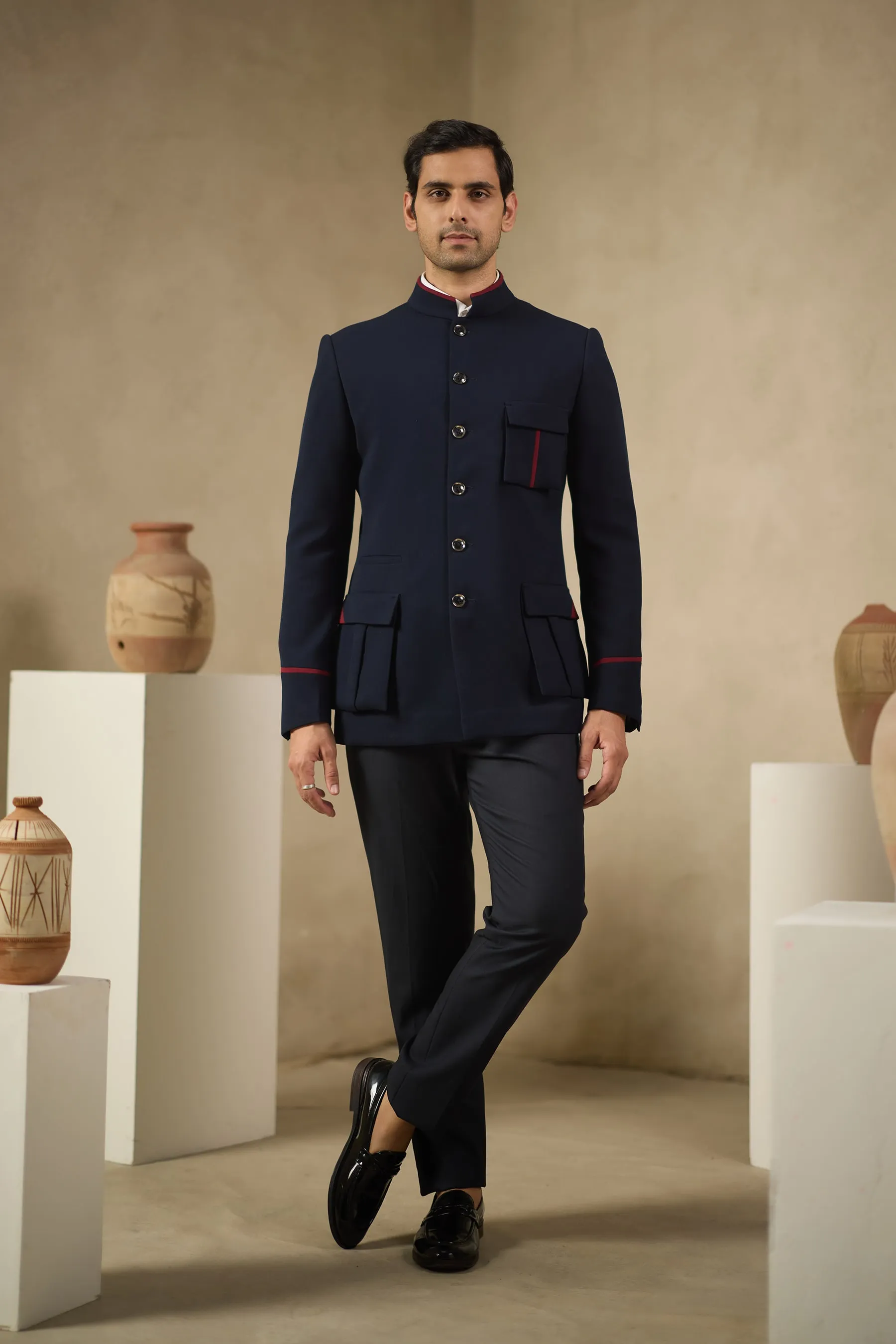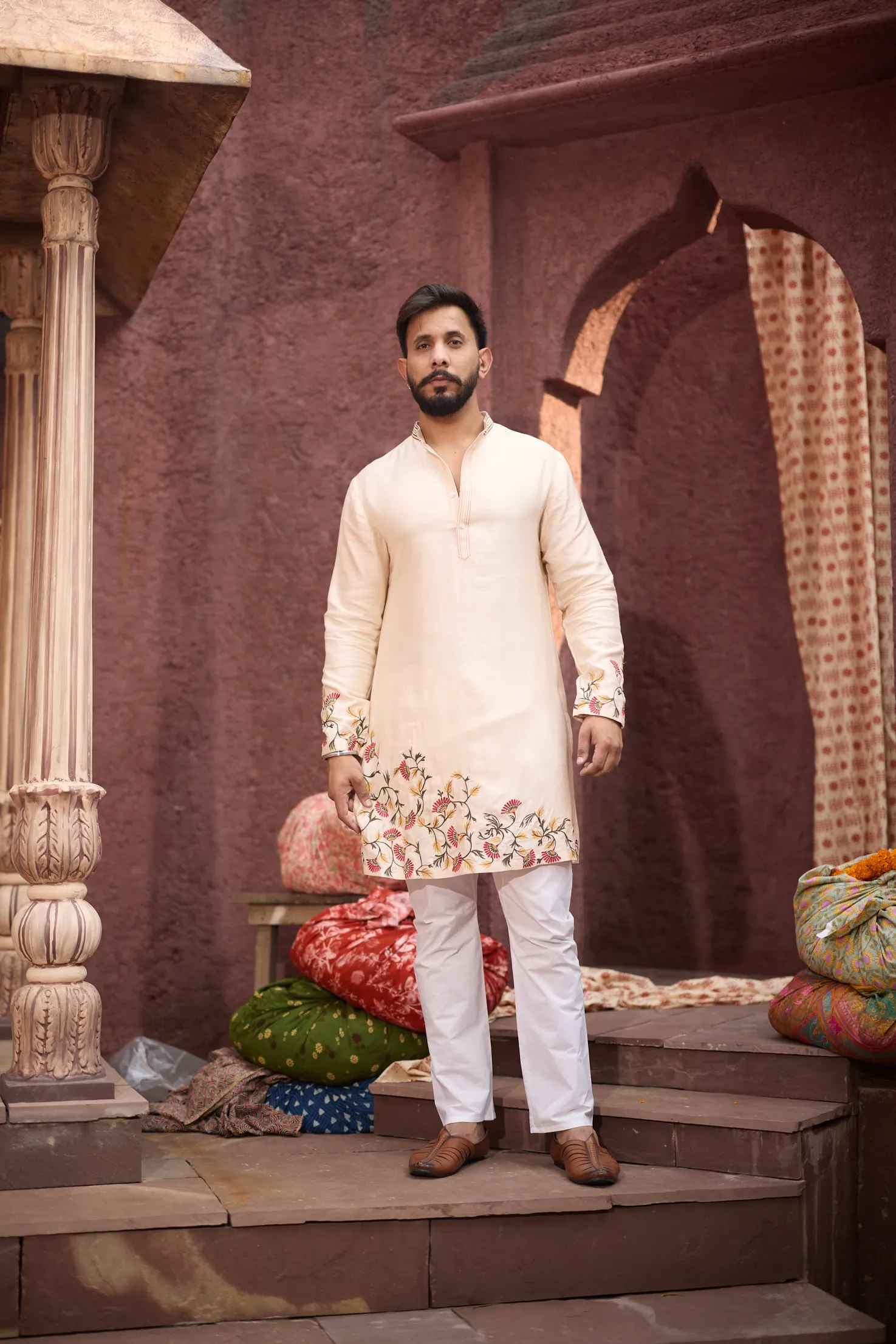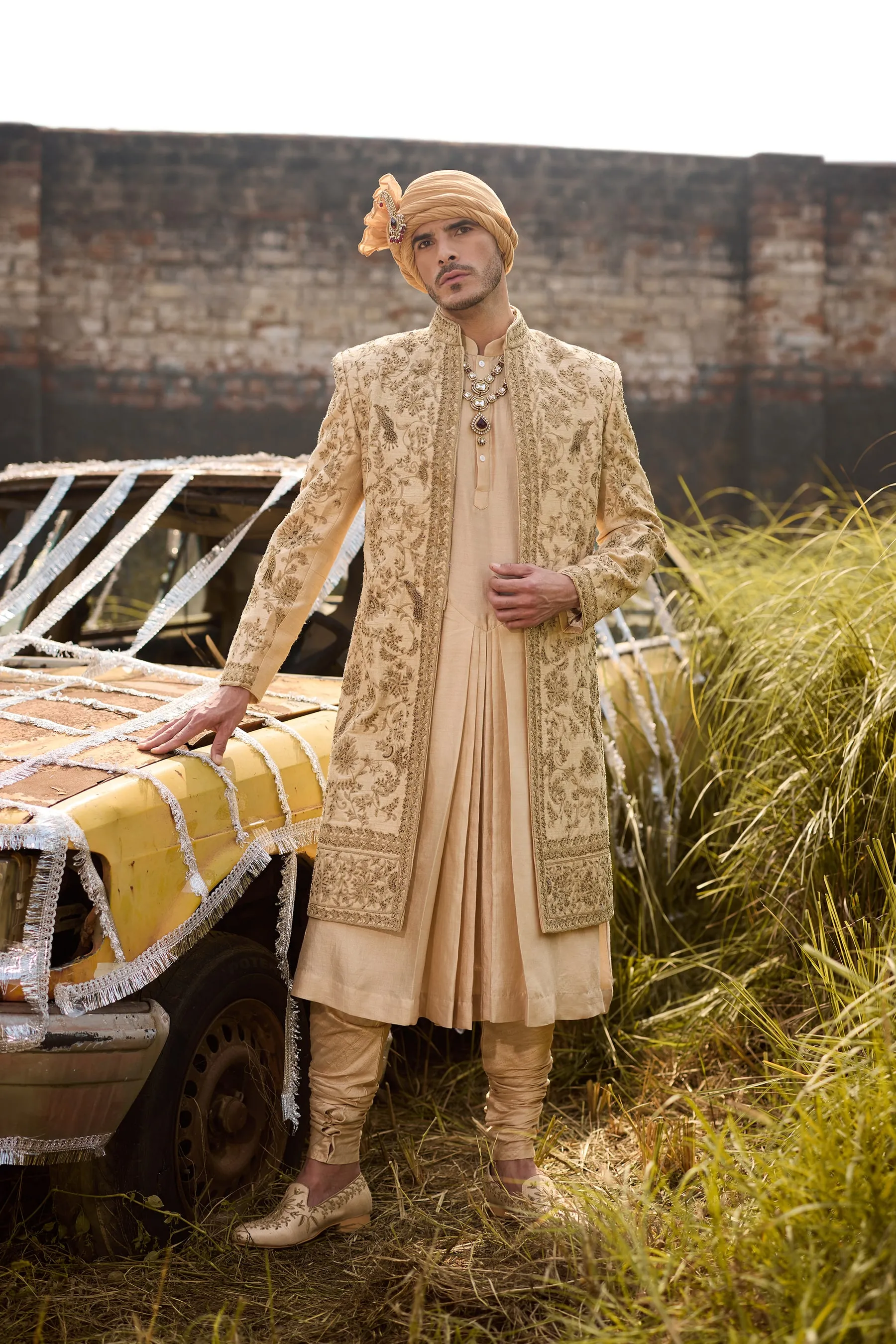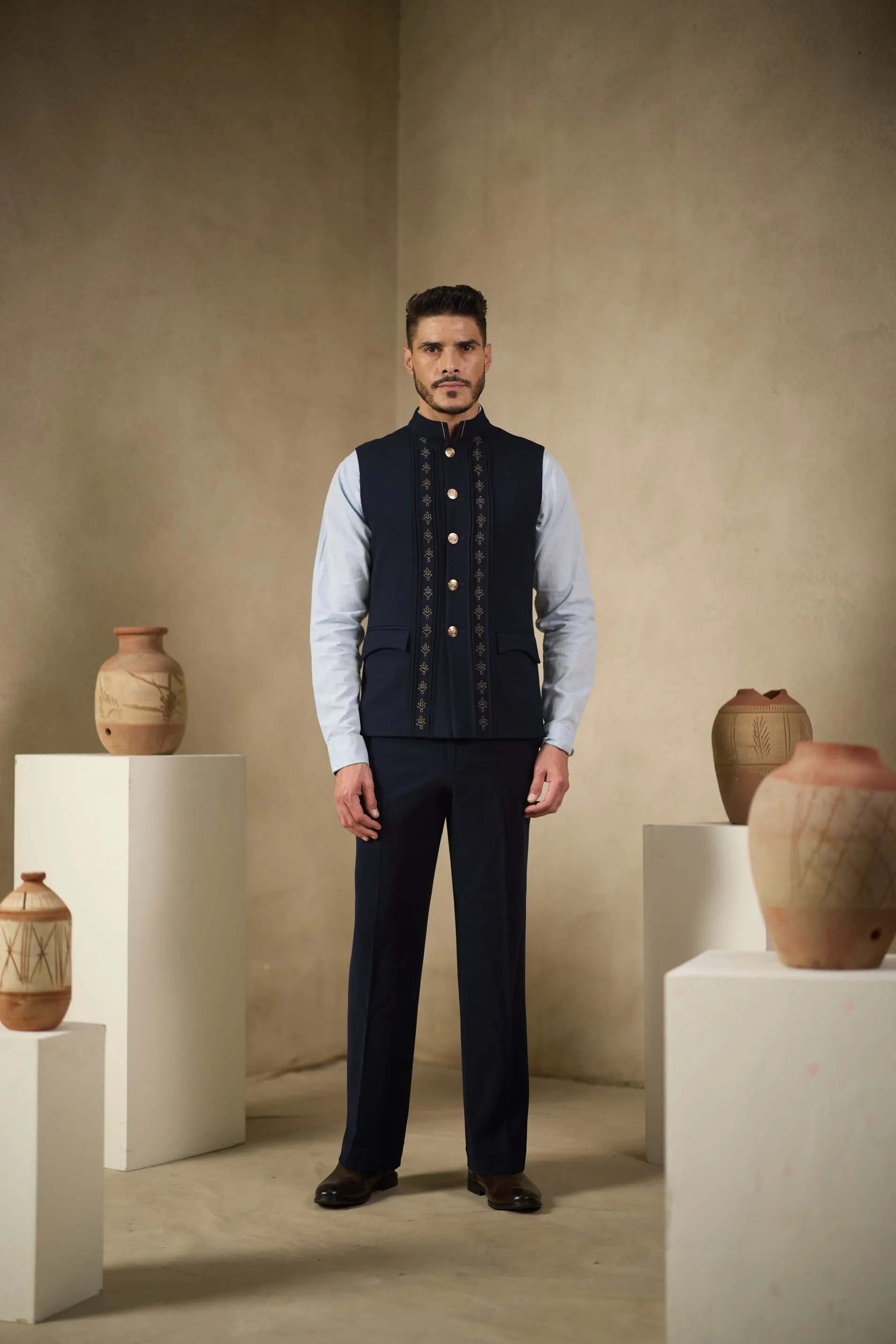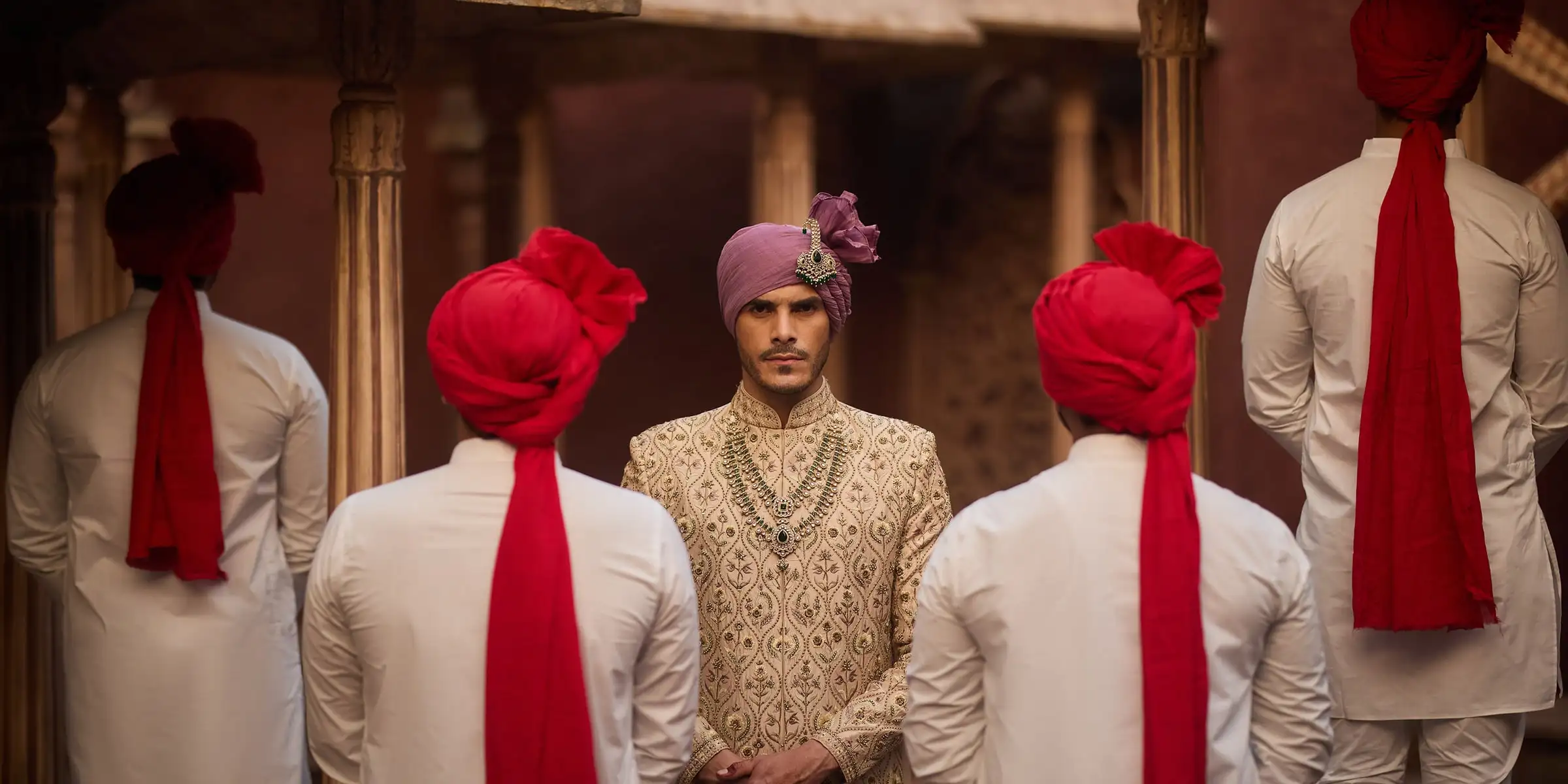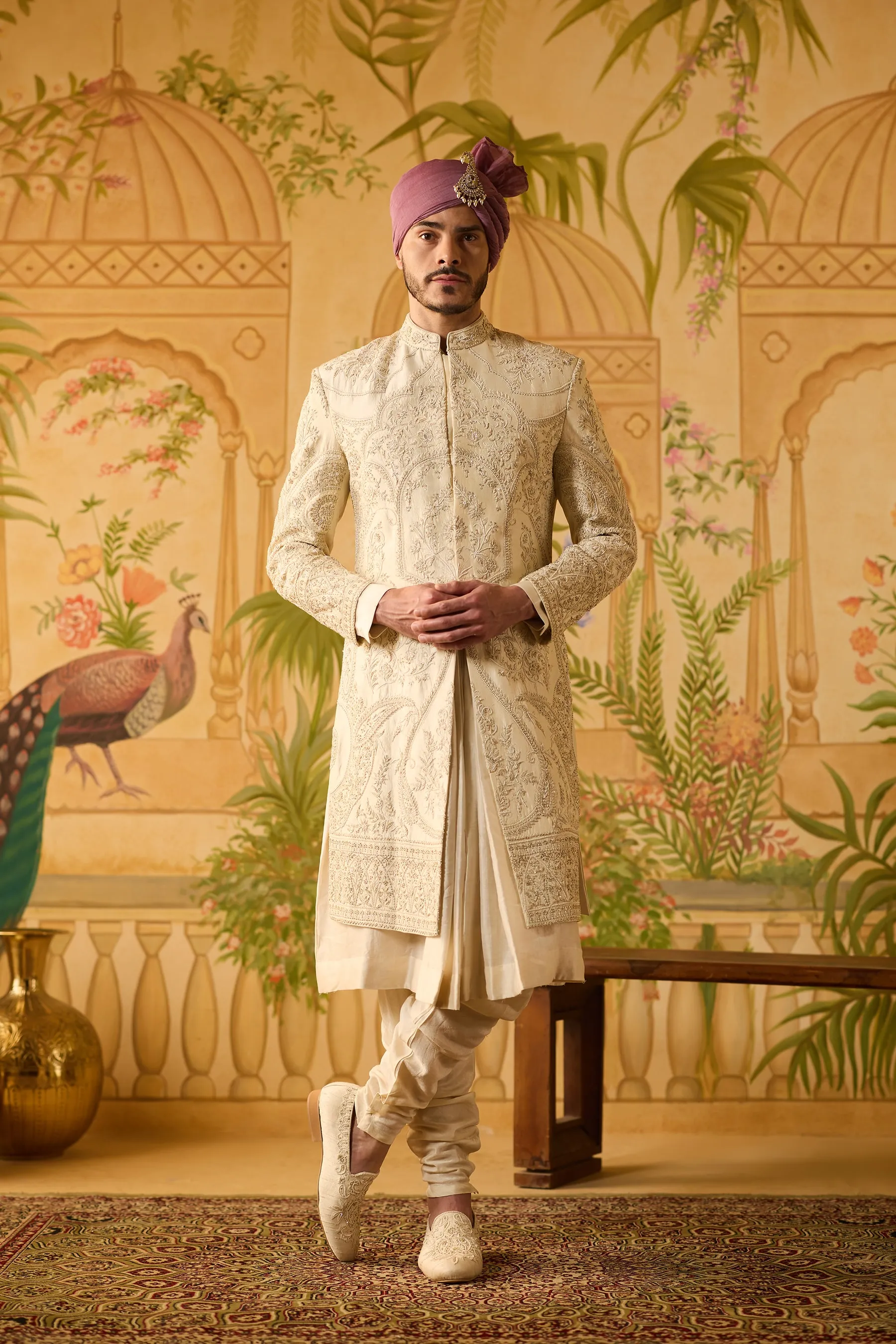
A made-to-measure wedding outfit is a collaboration between a client, a pattern-maker, a tailor and an embroiderer, and like any collaboration it needs time. The timeline matters as much as the design: start too late, and fittings are rushed and alterations squeezed; start in good time, and the outfit is a pleasure to make and to wear. This guide sets out what happens in the weeks before your wedding, stage by stage, with a realistic calendar, what to bring to each fitting and what to do if you are short of time.
If you are choosing the outfits first, our guides to what the groom wears at each ceremony and to sherwani vs achkan vs bandhgala will help. For a destination wedding, read our destination wedding groom outfit guide, whose travel advice pairs with this timeline.
What “made-to-measure” means
The term is used loosely, so it is worth defining.
- Ready-to-wear is made in standard sizes and sold off the rack. It is quick but fits only approximately.
- Altered ready-to-wear is a standard garment adjusted to your measurements. It is quicker and cheaper than custom, but limited by the original pattern.
- Made-to-measure uses a standard pattern adjusted to your measurements, with your choice of fabric and details. It balances fit, time and cost.
- Bespoke (fully custom) uses a pattern drafted from scratch for you, with more fittings and the highest level of customisation.
At Aadiyo, our process is made-to-measure: we begin with a base pattern, adjust it to your measurements and posture and refine it over two or three fittings. For most grooms, this delivers a fit that reads as bespoke, in a predictable time.
The big picture: twelve weeks in five stages
Here is the overall shape of the process.
| Stage | Typical timing | What happens |
|---|---|---|
| 1. Consultation | 12 to 10 weeks before | Choose outfits, colours, fabrics and a plan for the events. |
| 2. Measurements and order | 10 to 8 weeks before | Detailed measurements, fabric and embroidery confirmed; order placed. |
| 3. Making | 8 to 5 weeks before | Pattern cut, embroidery and construction. |
| 4. Fittings | 5 to 2 weeks before | First and second fittings and alterations. |
| 5. Finishing and delivery | 2 to 0 weeks before | Final fitting, finishing, steaming and delivery. |
Each stage has a purpose, and skipping or compressing one carries a cost.
Stage one: consultation (twelve to ten weeks before)
The consultation is where the wardrobe takes shape. In an hour or two, you will:
- List the events. Roka, haldi, mehendi, sangeet, baraat, pheras, reception and any others, with dates, venues and times.
- Decide on the outfits. Which events need a new outfit, which can share one and which can use an existing piece.
- Choose silhouettes. Sherwani, achkan, bandhgala, Nehru jacket, kurta set, Indo-Western set or tuxedo.
- Choose colours. With reference to the bride’s outfit, the venue and the community. See our guide to wedding colours for the groom.
- Look at fabrics. In daylight, and ideally with a swatch of the bride’s outfit.
- Discuss the budget and priorities.
- Plan accessories, such as the safa, stole, brooch and shoes.
Bring photographs of outfits you like, the bride’s outfit if available, and details of the venue and weather. Our team will also ask about comfort, posture, any injuries and how you intend to wear the outfit, which informs the pattern.
The consultation is also when you decide the order of priority. The baraat and pheras sherwani is often the most important, followed by the reception outfit. Starting with these two allows time for embroidery.
Stage two: measurements and order (ten to eight weeks before)
Measurements are the foundation of fit. A good tailor takes between twenty and thirty measurements and notes your posture.
What is measured
- Chest, waist, hips and seat.
- Shoulder width and slope.
- Sleeve length and bicep.
- Neck, collar and back length.
- Jacket length, kurta length and trouser length.
- Thigh, knee and ankle for churidars and trousers.
- Posture notes: forward head, rounded shoulders, uneven shoulders, prominent stomach or athletic build.
How to prepare
- Wear fitted clothes or a thin layer, so the tape sits close to the body.
- Stand naturally, not at attention.
- Tell the tailor about your habits: whether you sit cross-legged, dance, ride a horse or carry things in your pockets.
- Mention any weight plan. If you intend to lose or gain weight, say so early.
Placing the order
Once the measurements and design are agreed, the order is placed. At this point you will:
- Confirm fabrics and embroidery.
- Agree the delivery date, with a margin before the first event.
- Pay a deposit, as usual for made-to-measure work.
- Receive a plan of fittings and dates.
If you are ordering for a group, such as groomsmen or the wedding party, this is also the stage to coordinate. Our guide to groomsmen outfits includes a group-order timeline.
Stage three: making (eight to five weeks before)
While you carry on with other wedding preparations, the atelier works on the garment.
- Pattern cutting: the pattern is adjusted to your measurements and the fabric is cut.
- Embroidery: hand embroidery, zardozi or thread work is done on the fabric, often before it is assembled. Heavy embroidery can take weeks.
- Construction: the pieces are sewn, with interfacing, lining and finishing.
- Pressing and shaping: a garment’s shape depends on careful pressing.
- A baste fitting may be arranged: a first version with temporary stitches, to check fit before final sewing.
This is the stage where the outfit takes shape, and it is also the stage that cannot be rushed. Embroidery in particular is slow, and the more complex the work, the longer it takes.
Stage four: fittings (five to two weeks before)
Fittings are the heart of made-to-measure. A typical sequence is:
First fitting (four to five weeks before)
The first fitting shows the garment in an early state. You will check:
- Shoulders and neckline. Do they sit cleanly?
- Chest and waist. Is there enough ease, without pulling?
- Length. Is the jacket or sherwani the right length?
- Sleeves. Are they the right length and width?
- Overall balance. Does the garment hang straight?
The tailor will mark adjustments, and you will discuss any changes to detail. Bring the shirt, kurta and shoes you will wear. Move, sit, raise your arms and walk, and be honest if anything feels wrong.
Second fitting (two to three weeks before)
The second fitting shows a more finished garment, with embroidery complete and the lining in. You will check:
- The adjustments from the first fitting.
- Comfort when sitting, which is vital for ceremonies.
- Interaction with accessories: the safa, stole, brooch and shoes.
- Fine details, such as buttons, collar and hem.
At this stage, remaining adjustments are small, such as a half-centimetre at the hem or a minor shoulder tweak.
Third or final fitting (one week before)
The final fitting is a check, not a redesign. You will try the complete outfit, with all accessories, and confirm that everything is right. Any last tweaks are done in a day or two.
Our guides to the baraat outfit, pheras outfit and reception outfit explain what to check for each garment.
Stage five: finishing and delivery (two to zero weeks before)
In the final weeks, the outfit is finished, pressed and delivered.
- Final alterations are made and checked.
- Finishing: loose threads, buttons, steaming and pressing.
- Packing: the outfit is packed in a garment bag with tissue, ready for travel.
- Delivery: at least a week before the first event, if possible.
- A trial day: put on the whole outfit at home, with shoes and accessories, and photograph it.
If you are travelling, plan for steaming at the destination, as explained in our destination wedding guide.
A week-by-week calendar
For clarity, here is the full calendar, counting back from the first event.
| Weeks before | Task |
|---|---|
| 12 | Decide events and budget; begin looking at outfits. |
| 11 | Consultation; choose silhouettes and colours. |
| 10 | Fabric choices; measurements. |
| 9 | Order placed; embroidery begins. |
| 8 | Embroidery continues; accessories ordered. |
| 7 | Pattern cutting; construction begins. |
| 6 | Construction; baste fitting if needed. |
| 5 | First fitting. |
| 4 | Alterations; second garment fittings. |
| 3 | Second fitting; accessories tested. |
| 2 | Finishing; final adjustments. |
| 1 | Final fitting; collect and steam. |
| 0 | Wedding week; pack and enjoy. |
The exact schedule varies with the number and complexity of outfits. Multiple outfits are made in parallel, with the most embroidered first.
What to bring to every fitting
- The shoes you will wear, or a pair with the same heel.
- The shirt or kurta and churidar you will wear underneath.
- A belt, if relevant.
- Accessories: safa, stole, brooch, watch.
- Photographs of the bride’s outfit and the venue.
- A trusted friend or family member, who will give an honest second opinion.
- A phone, to photograph the fitting.
Wear fitted clothes and arrive rested, since fatigue affects posture.
How to give useful feedback at a fitting
Feedback helps the tailor, but only if it is specific.
- Say where, not just that. “It pulls across the back when I raise my arms” is more useful than “it feels tight”.
- Move. Sit, stand, raise your arms, bend and walk.
- Compare to the photographs you brought.
- Tell the tailor what you will do in the outfit: dance, ride, sit for hours.
- Ask questions. A good tailor welcomes them.
- Do not panic about early-stage lumps. A first fitting shows a garment in progress.
What if you are short on time?
Not every groom starts twelve weeks out. If your wedding is closer, you still have options.
- Four to six weeks: a simpler piece, such as a kurta set, a Nehru jacket or a bandhgala, can be made with two fittings. A lightly embroidered sherwani may also be possible.
- Two to four weeks: altered ready-to-wear, adjusted to your measurements, is the realistic option. Some ateliers keep pieces in stock that can be altered quickly.
- Under two weeks: choose a ready piece in a close size and ask for essential alterations only: sleeves, length, waist.
Be flexible with fabric and embroidery, since heavy work is the slowest. Tell the atelier your date at the start, and they will tell you honestly what is possible. See our Nehru jacket collection and kurta set collection for quicker options such as the Nawab, Kinara and Shabnam.
Peak season and festival calendars
Wedding season in India clusters in winter, from November to February, and in certain auspicious months in spring. During these months, ateliers are busiest and embroiderers are in demand, so add two to four weeks to any estimate. If your wedding falls on an auspicious date in peak season, start twelve to sixteen weeks ahead. Our winter wedding groom outfit guide discusses this in more detail, and our summer wedding groom outfit guide notes that off-peak summer dates can be more flexible.
Remote and overseas clients: fittings without visiting
Many grooms live abroad or in another city, and the process adapts well.
- Video consultation. We review events, silhouettes, colours and fabrics over a call, with swatches couriered to you.
- Guided self-measurement or a local tailor. We send a measurement guide, or you take the details of a trusted local tailor, whose measurements we compare against your height, weight and photographs.
- First fitting by video, with the base garment couriered if needed, followed by feedback and adjustments.
- A short in-person final fitting in the week of the wedding, if you travel in advance, or a local alteration by your tailor using our notes.
- Delivery with a care guide, and a steamer or a pressing contact at the destination.
Remote orders need a little more time, usually one or two extra weeks, and a candid conversation about fit tolerances. If you are travelling to India for the wedding, plan to arrive a few days early so a final fitting is possible.
Order of priority: which outfit first?
If you are ordering several outfits, sequence them by complexity and importance.
- The baraat and pheras sherwani, the centrepiece, with the most embroidery.
- The reception outfit, which needs the second-most care. See our bandhgala collection, including the Jodhpur in navy.
- The sangeet outfit.
- Daytime outfits, such as haldi, mehendi and roka, which are simpler and quicker.
For more on specific events, see our guides to the sangeet outfit, haldi outfit and engagement outfit.
Budgeting through the process
A made-to-measure budget has a few components.
- Fabric and embroidery, the largest part for a sherwani.
- Tailoring and fittings, which reflect the labour.
- Accessories, such as safa, stole, brooch and shoes.
- Alterations, which are usually included.
- Care and storage, such as cleaning and garment bags.
Ask the atelier for a breakdown, and agree a figure before starting. If you plan to re-wear pieces, invest in the ones with the highest re-wear value, such as a bandhgala. See our guide to the ivory sherwani for how to make a statement piece last.
Coordinating family and wedding party
If the father, brother and groomsmen are also ordering, align the timeline so that fittings happen together, which saves time and helps coordinate colours. Our guides to the father of the groom’s outfit and the groom’s brother’s outfit explain how to plan. Guests who wish to order should allow eight weeks too; see our male guest guide.
Common mistakes to avoid
- Starting too late, which compresses fittings.
- Skipping the second fitting.
- Bringing the wrong shoes.
- Changing the design late. Embroidery cannot be redone easily.
- Losing or gaining weight without telling the tailor.
- Forgetting accessories.
- Waiting for the bride’s outfit, which can be late; share swatches early instead.
Frequently asked questions
How long does a made-to-measure outfit take?
Eight to ten weeks with two fittings; less for simple pieces.
How many fittings do I need?
Usually three.
What should I bring?
Shoes, the shirt or kurta, accessories and photographs.
Can I order in four weeks?
Possibly, with a simpler piece or altered ready-to-wear.
Final thoughts
A good timeline is the quiet foundation of a good outfit. With twelve weeks, a clear brief and honest fittings, a made-to-measure outfit becomes one of the pleasures of wedding planning. If you would like to begin, book an appointment and we will build your calendar with you.
Shop the looks
Browse the sherwani collection, the bandhgala collection and the Nehru jacket collection, or begin with the baraat and pheras edit.