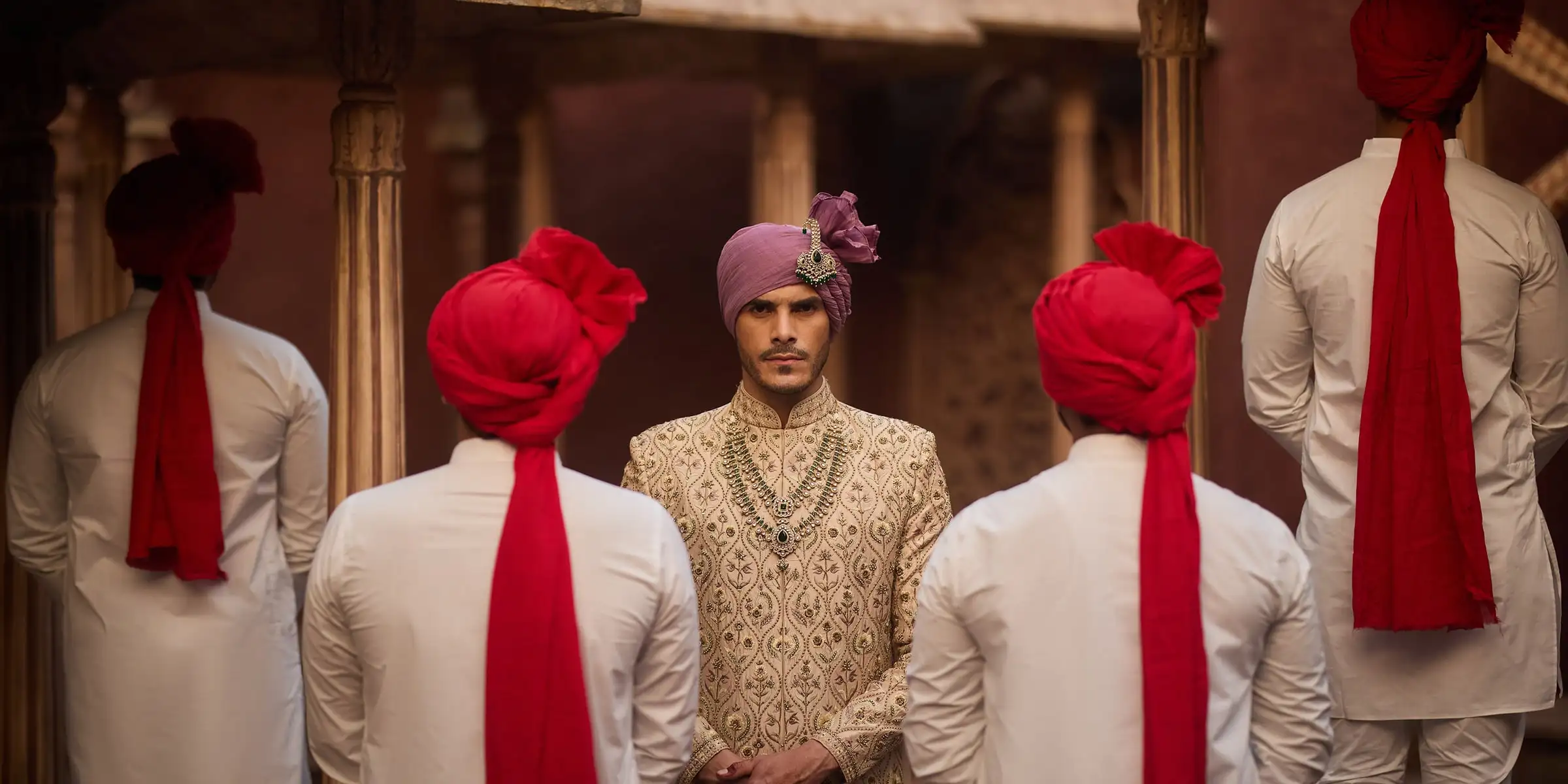
By the time of the reception, the rituals are over. The couple are married, the families are relaxed and the evening is for celebration: a stage, a long line of guests, a formal dinner and, usually, a dance floor. For the groom it is the final big outfit of the wedding, and the one that people who missed the ceremony see first. It should be distinct from the wedding-day sherwani, polished enough for a formal evening and comfortable enough for hours of greeting and dancing. This guide sets out the best options and how to choose.
For the whole schedule, see our guide to what the groom wears at each ceremony. Our reception collection gathers the evening pieces we make for this part of the wedding.
What the reception asks of the outfit
A reception is often held the evening after the wedding, or on the same evening, in a banquet hall, hotel ballroom or a decorated lawn. The format is usually:
- A stage reception. The couple sit or stand on a decorated stage while guests come up in turn to greet them and have photographs taken.
- A formal dinner. Long tables, a buffet or a seated meal.
- Music and dancing. Often a DJ or live band, with a short first dance and then open dancing.
That leads to four demands:
- Formality. You are the focal point, and the guest list may include colleagues, elders and extended family.
- Photographic polish. You will pose for hundreds of pictures, mostly standing.
- Comfort over hours. The reception may last four to six hours; the outfit should not become heavy or tight.
- Distinction. It should look different from the wedding-day outfit, which family and friends have already seen.
The best outfit options for a groom’s reception
The bandhgala
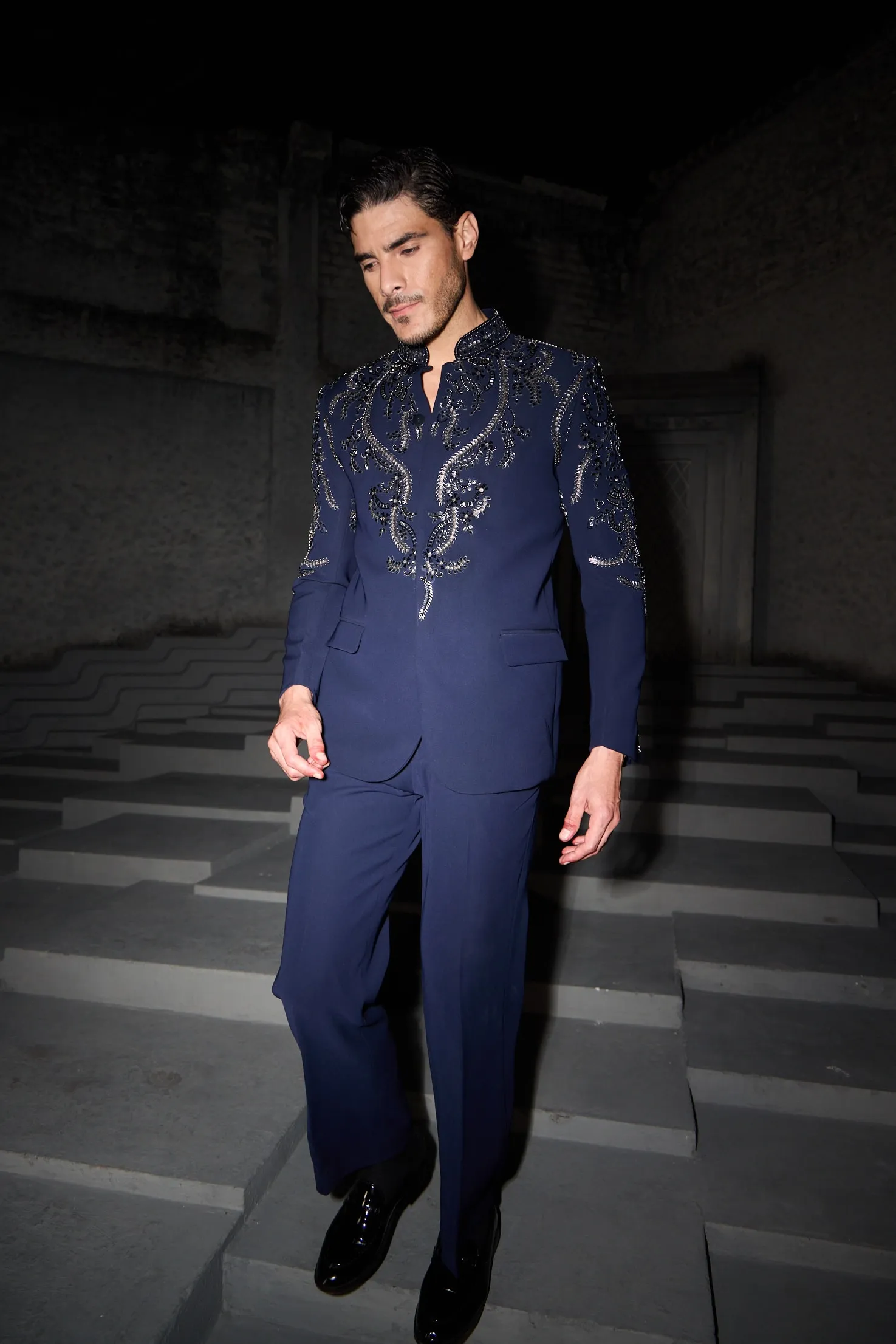
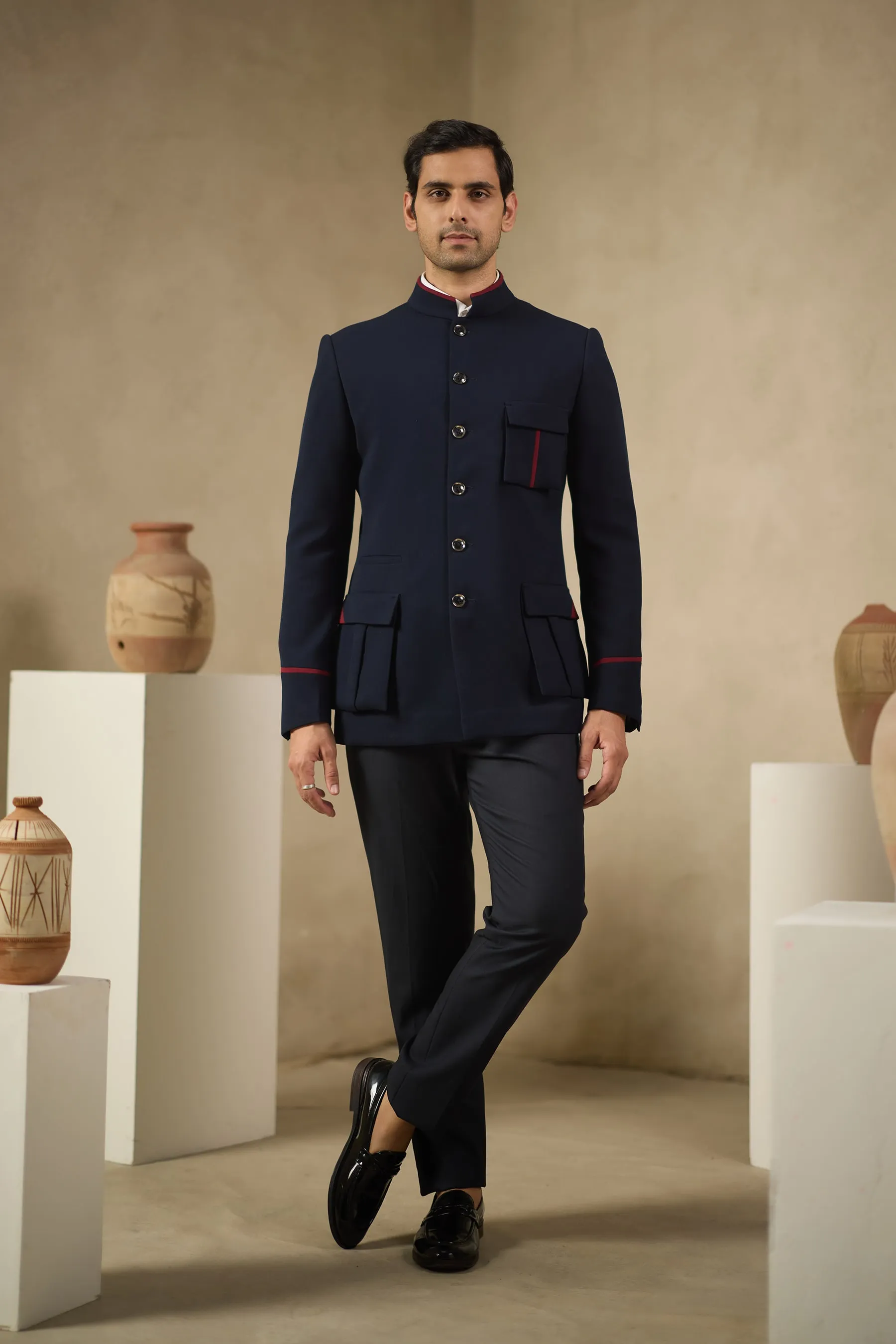
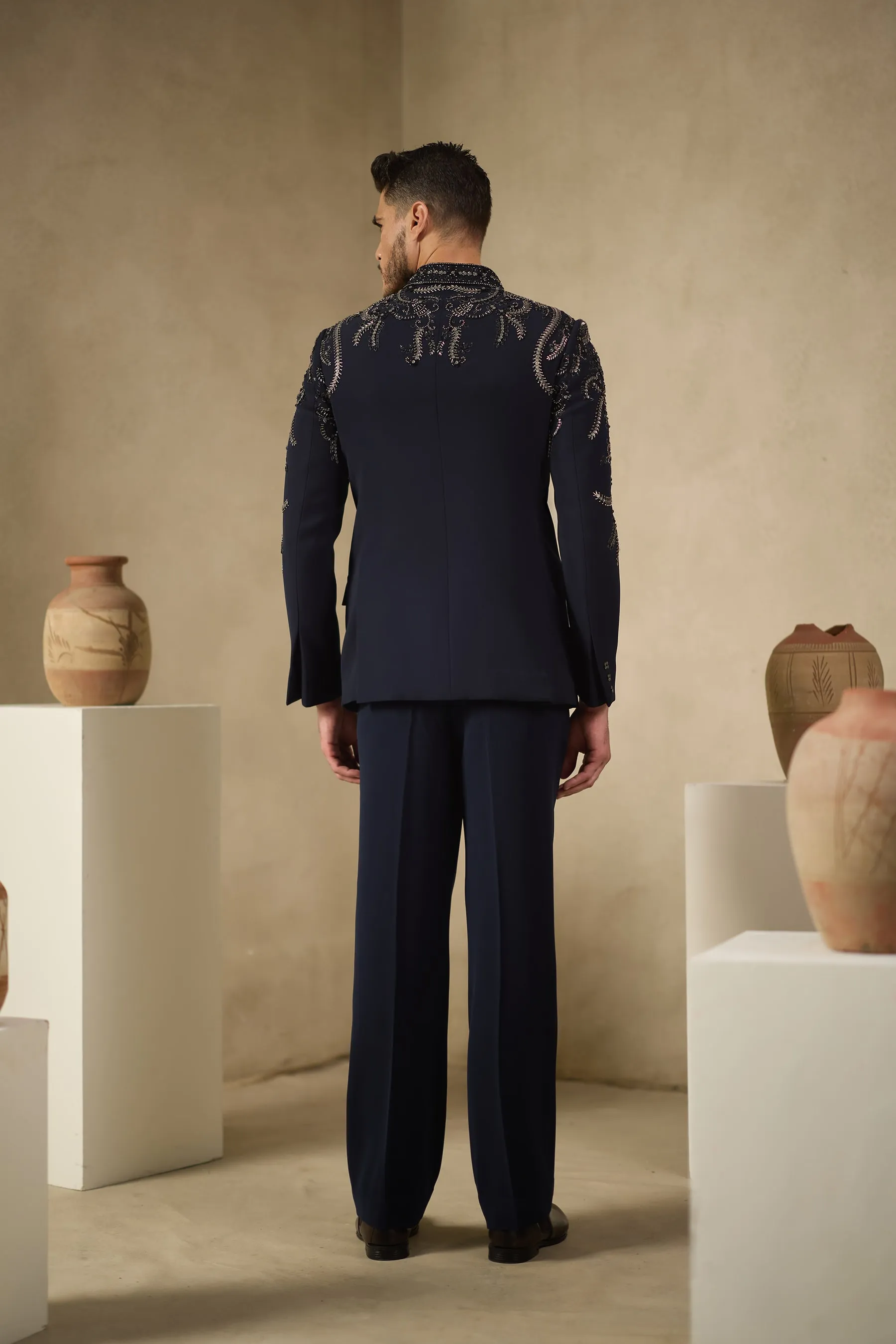
A bandhgala is the most reliable reception choice: sharp, formal and clearly Indian. Midnight navy, charcoal, black and deep green are classics, and a textured fabric (jacquard, fine wool, silk-wool) adds richness. Our Aftab in midnight navy, Samundar in navy and Jodhpur in navy are examples. See the full bandhgala collection and our guide to sherwani vs achkan vs bandhgala.
The tuxedo or dinner jacket
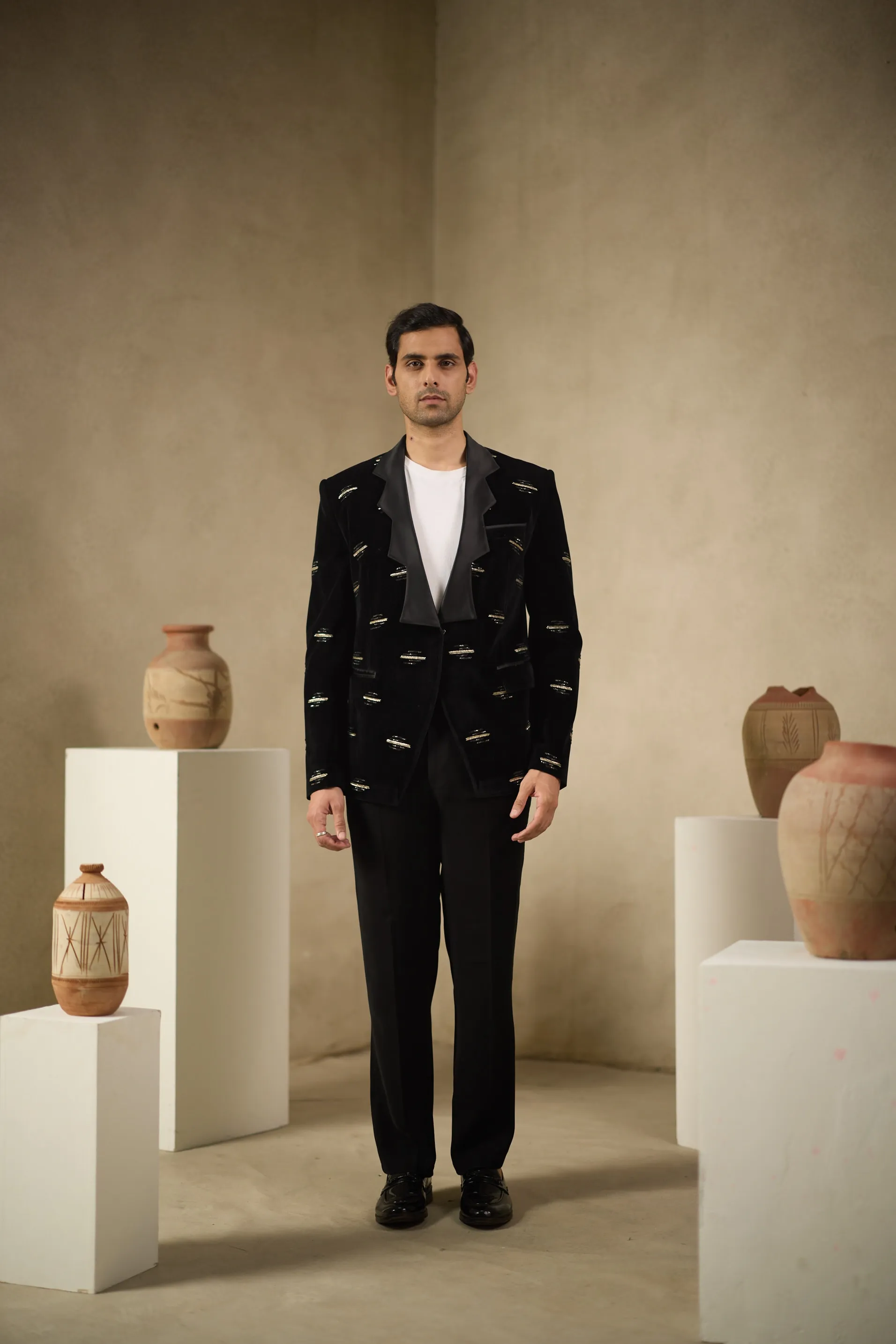
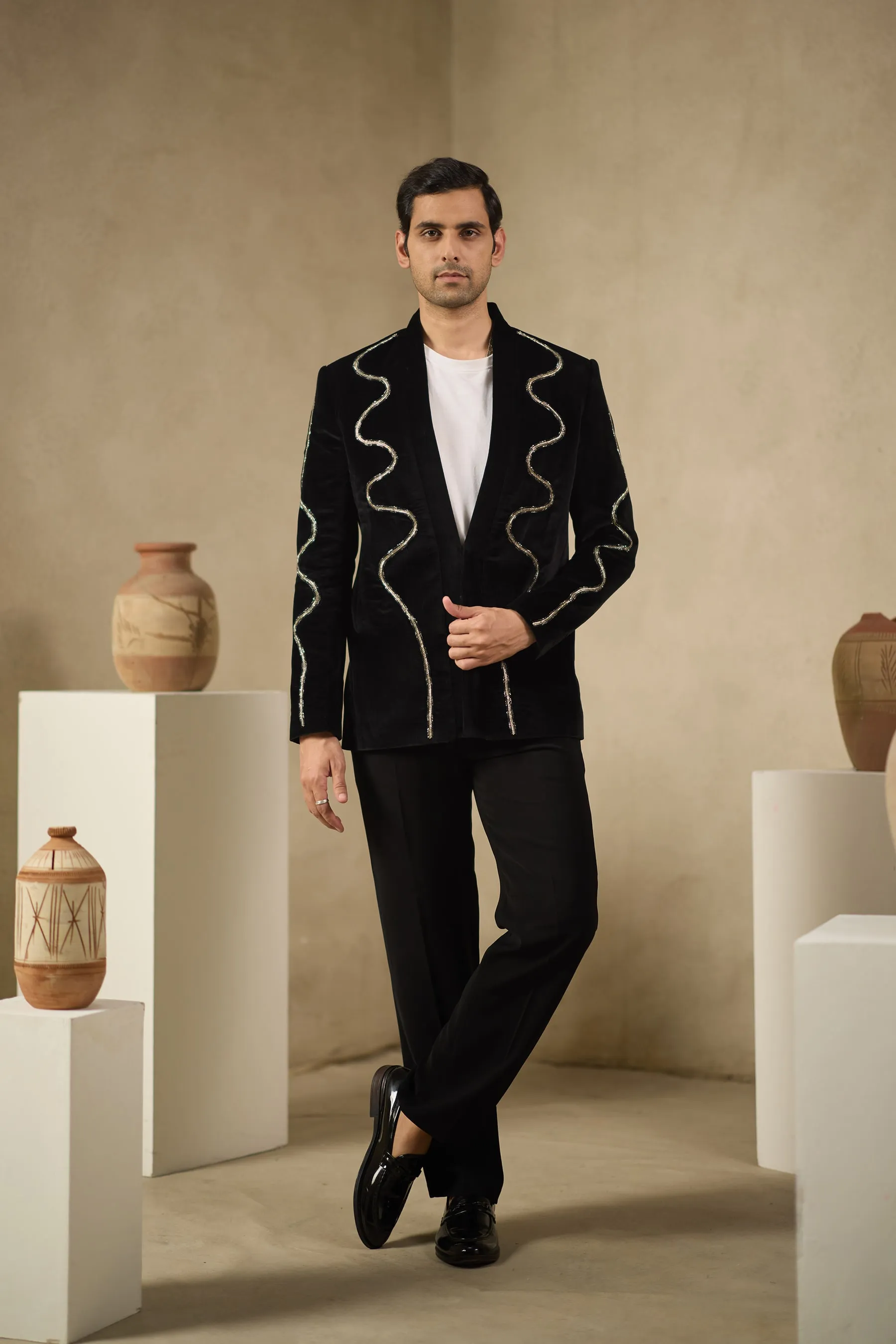
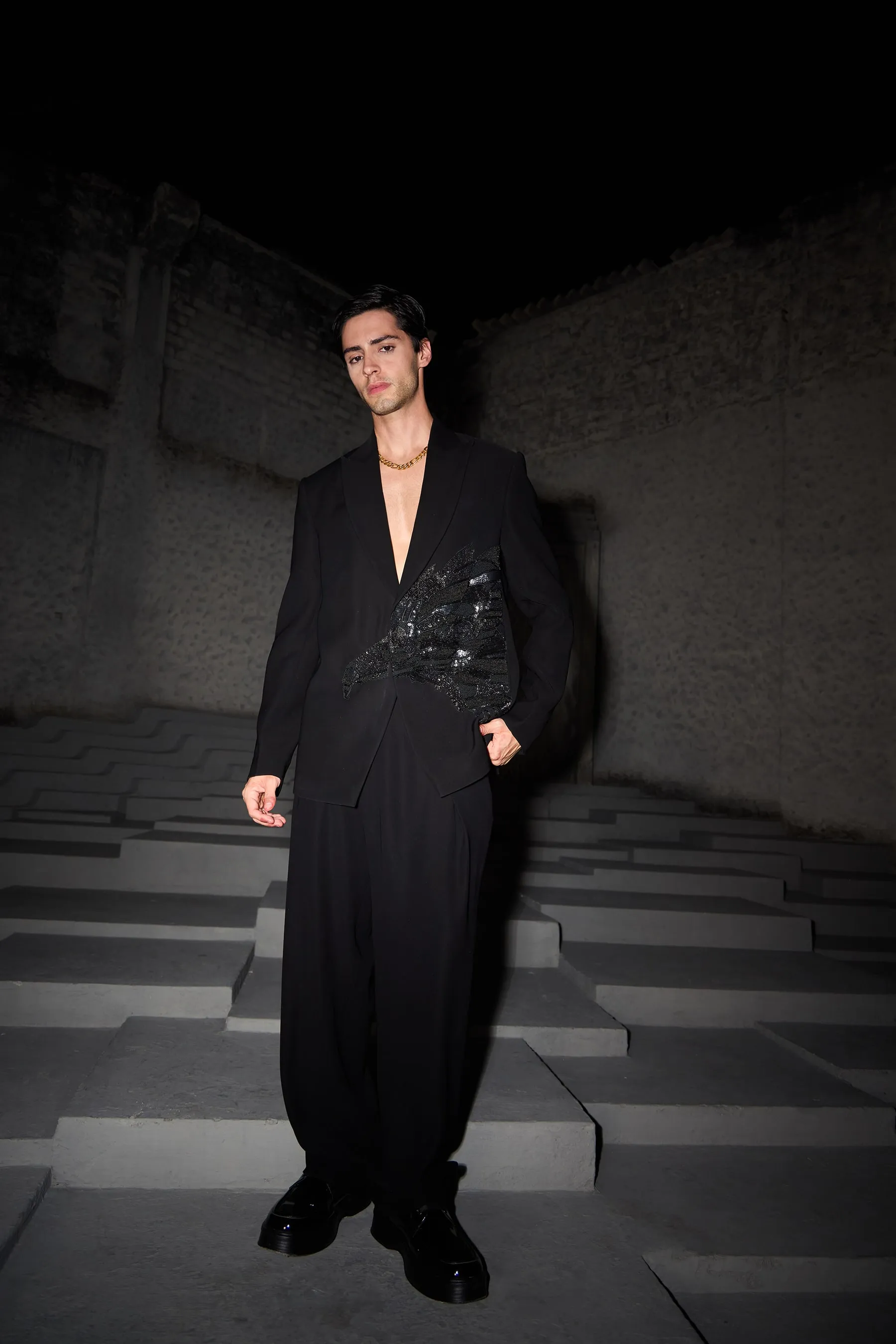
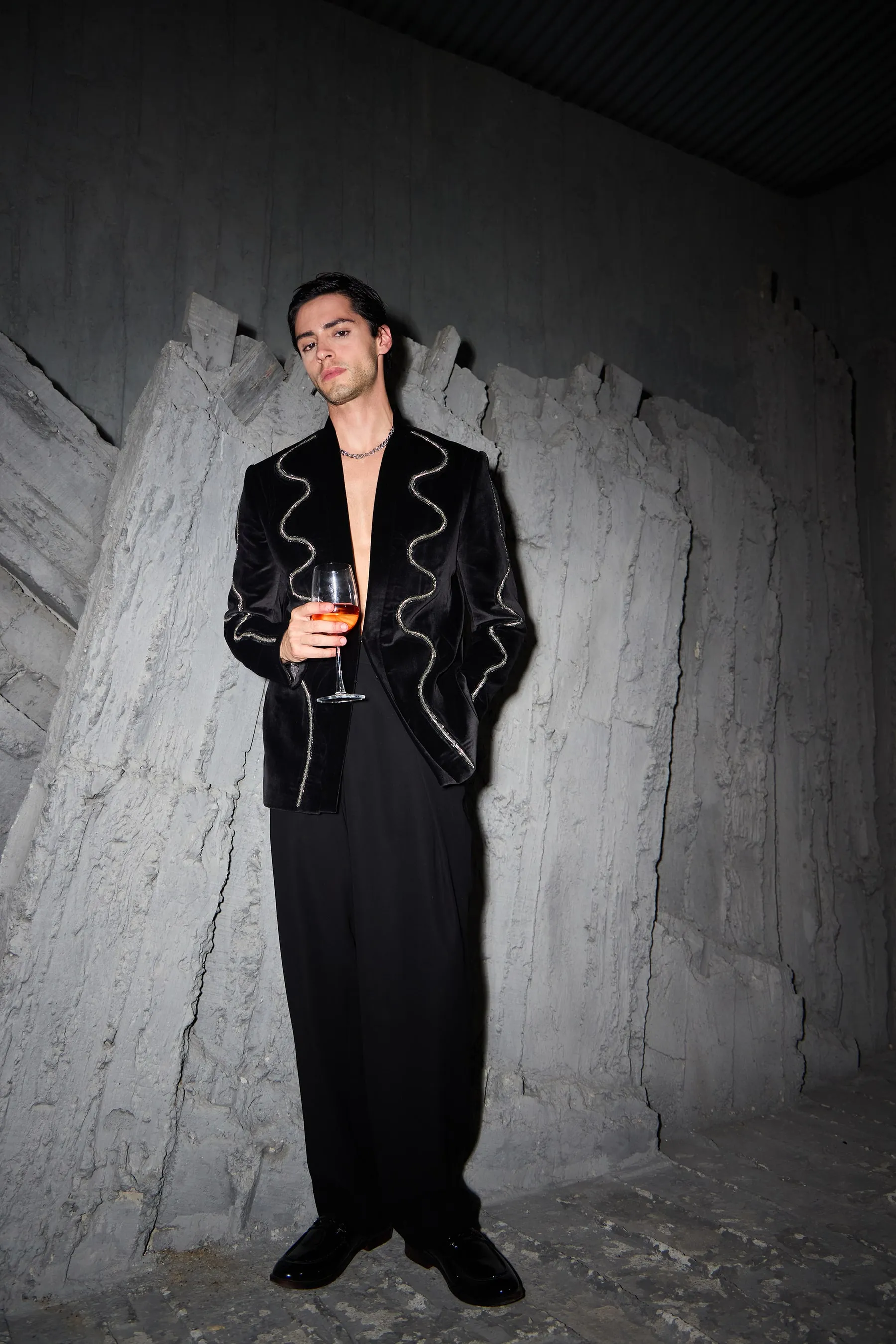
A black or midnight tuxedo, or a velvet dinner jacket, is a strong choice for a ballroom reception. It looks formal and modern, and it suits an evening of photographs and dancing. Our black velvet Parwaz and Bijli dinner jackets are cut for this. See our guide to the cocktail party outfit for the groom for details on fit, shirt and accessories.
The achkan
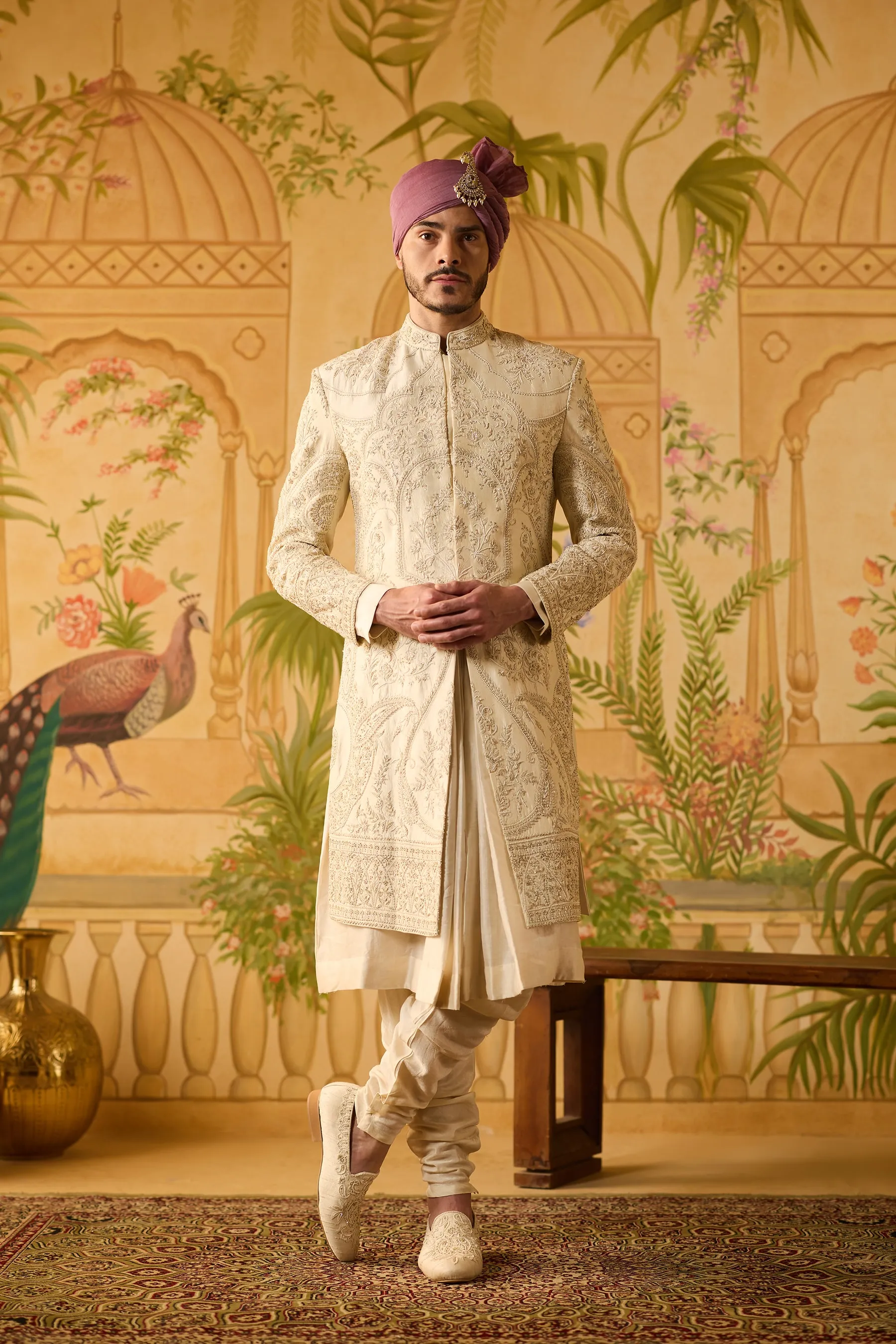
A slim, knee-length achkan in ivory, champagne, deep green or charcoal gives a traditional but understated reception look. It is more formal than a bandhgala but lighter than a sherwani.
A second sherwani
If your family expects a sherwani at the reception, choose one in a different colour and often a lighter or more modern cut than the wedding-day piece. A deep green, burgundy or midnight sherwani is a rich alternative to a gold or ivory one. If you wore ivory for the pheras, our Leher in ivory or another piece in a deeper tone can create a different mood. See our guide to the ivory sherwani for the groom.
An Indo-Western set
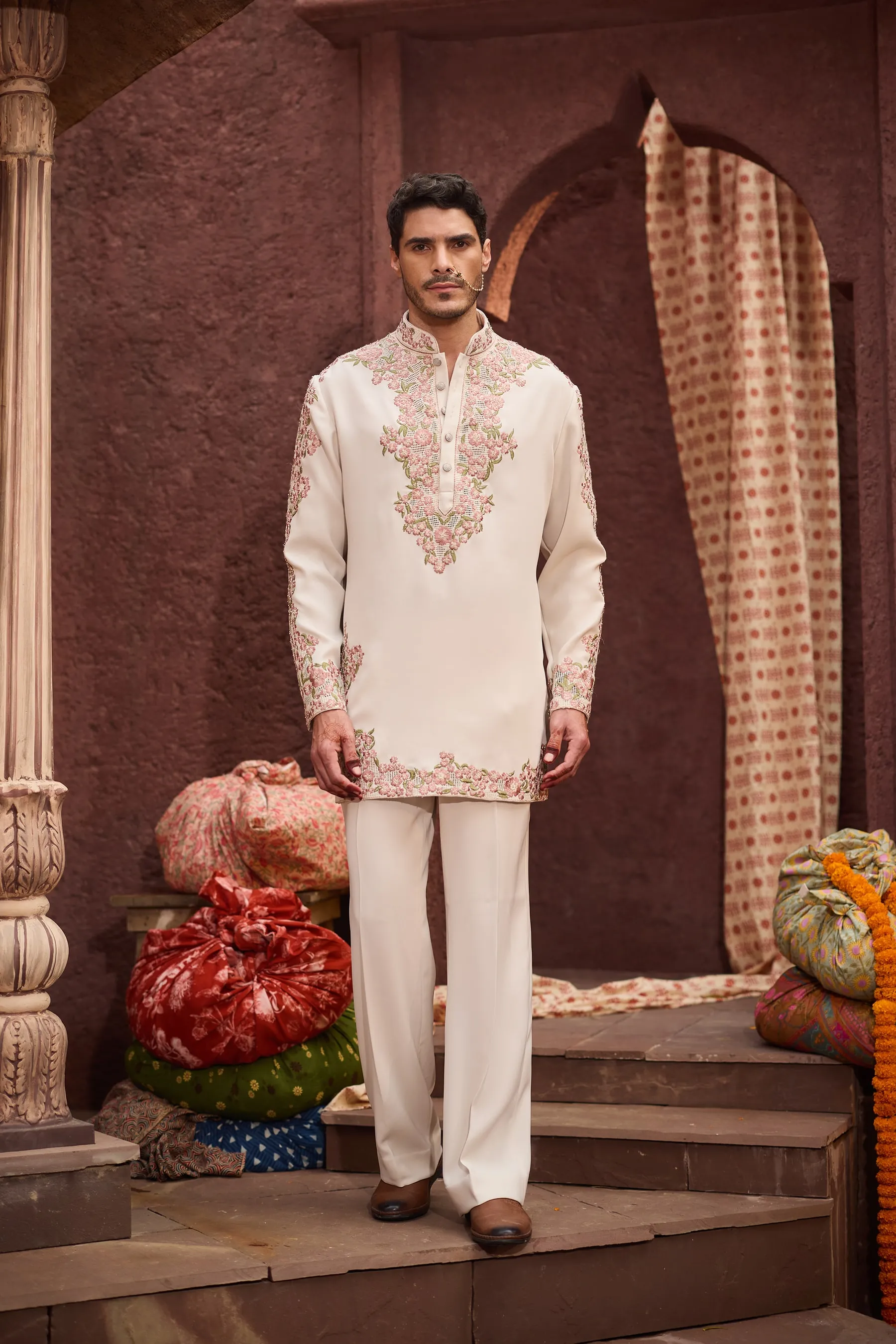
A contemporary reception can suit an Indo-Western set with a long jacket, a cape or an asymmetric hem. See the Indo-Western collection.
Colour ideas for the reception
Evening reception lighting is warm and often dim, with stage lights and decor. Colours should look rich, not flat.
- Midnight navy. Deeper than navy, softer than black. The most universally flattering evening colour.
- Black. Formal, dramatic and flexible, particularly with texture such as velvet or jacquard.
- Deep green and bottle green. Distinctive and rich; looks beautiful with gold accents.
- Burgundy and wine. Warm and festive, particularly in winter.
- Charcoal and steel grey. Contemporary and calm, well suited to a bandhgala.
- Rich ivory or champagne. Possible for a daytime or garden reception, or for a groom who wants to remain in a light palette.
Avoid very pale colours under warm lighting, which can look flat, and avoid repeating the wedding-day colour.
Fabrics and construction
- Fine wool and wool-silk. The best for a bandhgala or tuxedo: crisp, breathable and long-lasting.
- Velvet. Rich and luxurious for a winter reception.
- Jacquard and textured silk. Quiet pattern without embroidery.
- Silk blends. For an achkan or sherwani, with a gentle sheen.
- Lightweight options. For a summer reception, a half-lined jacket in a tropical wool or a silk-linen blend.
A canvas front keeps a bandhgala or tuxedo crisp through a long evening, and a breathable lining keeps you comfortable. For hot-weather advice, see the summer wedding groom outfit; for cold weather, see the winter wedding groom outfit.
Styling the reception look
Shirt and collar
A crisp white or ivory shirt with a bandhgala or tuxedo is classic. For a bandhgala, a shirt with a very low collar or a shirt-collar tuck gives a clean neckline. For a modern look, a black or midnight shirt under a darker jacket creates a tonal effect.
Bow tie or open collar
With a tuxedo, a bow tie is traditional; an open collar is a relaxed alternative. With a bandhgala, no tie is needed.
Pocket square and brooch
A silk pocket square in a complementary colour and a small brooch on the lapel or collar add polish. Keep the metals consistent.
Footwear
Polished leather oxfords or loafers for a bandhgala or tuxedo; embroidered mojaris for an achkan or sherwani. Make sure the sole grips, since reception stages can be slippery.
Accessories
A dress watch, cufflinks and a simple ring suit the formal evening. A stole is not needed, but some grooms drape a light one for a traditional effect.
Coordinating with the bride
The reception photographs show the couple side by side for hours.
- Ask for her colour palette and any key elements of her outfit.
- Aim for complement, not copy. A midnight navy bandhgala with a blush or ivory lehenga looks balanced; a deep green jacket with a gold or red outfit is rich.
- Think about texture. If she is in a heavily embroidered outfit, a clean textured jacket calms the pairing.
- Consider the stage decor. A white and gold stage suits deep colours; a floral stage suits neutrals.
Dressing your family and friends
The reception photographs include the families. Tonal coordination is better than uniforms.
- The father of the groom can wear a bandhgala or achkan in a lighter or complementary colour. See our guide to the father of the groom’s outfit.
- Brothers and groomsmen can wear bandhgalas, jackets or Indo-Western sets in related colours. See our guides to the groom’s brother’s outfit and groomsmen outfits for an Indian wedding.
- Male guests may ask what to wear; our guide to the male guest outfit for an Indian wedding gives clear options.
Reception outfit ideas by style
The classic groom
A midnight navy bandhgala, white shirt, black leather loafers, a pearl brooch. Smart, comfortable and easy to wear again.
The velvet showman
A black velvet dinner jacket with a crisp white shirt and a bow tie. Dramatic and glamorous.
The traditional groom
An ivory or champagne achkan with churidar, juttis and a stole. Elegant and respectful.
The rich-colour groom
A deep green or burgundy sherwani or bandhgala with gold accents. Warm, regal and distinctive.
Planning, fit and timeline
A reception outfit is often ordered last, but it deserves as much care as the wedding-day outfit. Begin about eight to ten weeks before the reception, with two fittings so that the shoulders, sleeve length and waist can be refined. Our atelier works to eight to ten weeks from the first fitting. For the full process, see how to plan a made-to-measure wedding outfit.
At your fitting, check:
- The collar closes without pinching.
- The shoulders sit cleanly and the sleeve ends at the wrist.
- The jacket buttons without pulling when you sit.
- The trousers are comfortable when you sit and dance.
- You can raise your arms for a photograph without the jacket riding up.
Mistakes to avoid
- Repeating the wedding-day look. The reception should feel different.
- Choosing a trend you will not like in ten years. Classic cuts last.
- Ignoring the venue temperature. A heavy velvet jacket in a warm room is uncomfortable.
- Forgetting comfort for dancing. Test movement in the fitting.
- Over-accessorising. One statement is enough.
- Leaving it too late. Good tailoring takes time.
How a reception runs, and when to change or refresh
A reception can last many hours, and a groom who plans the evening in stages stays fresh.
Stage greetings
For the first hour or two, the couple sit or stand on the stage while guests queue up. You will mostly be standing, smiling and shaking hands. Shoulder comfort and a collar that does not irritate matter most. If you wear a tuxedo or bandhgala, keep the jacket buttoned when standing and undone when sitting, as is customary.
Dinner
If the couple eat at a table, the jacket may be unbuttoned. Avoid placing the jacket over a chair and risking wrinkles; ask someone to hold it or hang it carefully. A pocket square and a napkin kept discreetly on the lap protect the front of the shirt.
The first dance
If there is a first dance, consider the tempo and whether it involves lifts or twirls. A jacket with room in the shoulders and a trouser with some ease make it simpler. Wear shoes with grip.
Open dancing
Once the formalities are done, many grooms remove the jacket or loosen the collar. Under a bandhgala, a well-fitted shirt looks neat without the jacket. Under a tuxedo, a crisp white shirt and loosened bow tie is a classic image. Carry a second shirt if you expect to perspire.
A mid-evening change
Some grooms change at the midpoint, from a formal bandhgala for the greetings to a more relaxed jacket or Indo-Western look for the dancing. If you plan this, have the second outfit ready and a quiet room in which to change.
How to make the reception outfit different from the wedding-day look
Guests who attend both the wedding and the reception notice if you look the same. The most effective ways to change:
- Change the silhouette. Move from sherwani to bandhgala, tuxedo or achkan.
- Change the colour family. If the wedding was ivory and gold, choose navy, green or black.
- Change the fabric. From silk and brocade to wool, velvet or a textured weave.
- Change the accessories. Remove the safa and stole, switch the mala for a brooch and change the footwear.
- Change the shirt or kurta. A new neckline alone changes the feel of the outfit.
A different look signals a different mood: the wedding was ceremonial, the reception is celebratory.
Reception outfits for different venues
Hotel ballroom
A formal, air-conditioned space. A tuxedo, a velvet dinner jacket or a fine wool bandhgala all work. Rich colours look best under ballroom lighting.
Banquet hall
Often warm and crowded. Choose breathable fabrics and a half lining. A bandhgala in a lightweight wool or a silk-blend achkan is a good choice.
Garden or lawn
A softer, more romantic setting. Pale or mid-tone colours, lighter fabrics and slightly relaxed tailoring suit it. Be aware of grass and uneven ground in footwear.
Palace or heritage property
Dramatic, formal and traditional. A sherwani or achkan in a rich colour suits the architecture.
Beach or destination reception
Lightweight fabrics, lighter colours and perhaps an unstructured jacket. See our guide to the destination wedding groom outfit in India.
Small details that elevate the reception look
- A boutonniere or small floral accent on the lapel, if you wear a tuxedo or jacket.
- A pocket square folded cleanly in a colour that picks up the bride’s outfit.
- Cufflinks in a simple metal or a small stone.
- Polished shoes, with the sole edges blackened or coloured to match.
- A well-trimmed beard and neat hair, since the cameras are close.
- A subtle fragrance, applied lightly before dressing.
- Tidy hands and nails, which appear in many close-up photographs.
Reception timeline: planning the outfit around the evening
Knowing how the evening unfolds helps you plan comfort and any change.
- Arrival and entry (first thirty minutes). Many couples make a staged entry with music, sometimes with a dance. You are on show, so the outfit should be fully composed, with the pocket square folded and the collar set.
- Stage greetings (one to two hours). Standing, smiling and posing. A jacket that holds its shape and shoes you can stand in for long periods matter most.
- Cake cutting or a first dance (short). A moment of ceremony and light choreography. Check the sleeves and cuffs, which appear in close-up photographs.
- Dinner (one hour). Eat in small bites, and protect the shirt front. Ask someone to hold your jacket if you take it off.
- Dancing (open-ended). Loosen up, remove the jacket if you wish, and enjoy. A second shirt helps if you expect to perspire.
- Farewell (late). Return to your composed look for the final photographs with guests who are leaving.
Choosing the right fit for a long evening
A reception outfit has to hold for six hours or more, so fit is not only about looking sharp at the start.
- Shoulders. The jacket should sit cleanly, with the seam at the edge of the shoulder, and allow arm movement.
- Chest and waist. A close but not tight fit, so you can breathe, eat and dance. A slight ease at the waist prevents a pulled look when you sit.
- Jacket length. It should cover the seat and look balanced with your height.
- Trousers. A comfortable rise and a clean line from hip to shoe. Avoid tight thighs.
- Collar. It should not dig in after several hours. Ask for a final check on the collar height and the way it sits against the neck.
- Sleeve length. The sleeve should end at the wrist bone, showing a little shirt cuff.
At your fittings, sit, stand, raise your arms and walk. If anything binds, speak up. A good tailor expects it.
Budget, value and re-wear
A reception outfit has one of the highest re-wear values of the wedding wardrobe. A midnight navy bandhgala, a black tuxedo or a charcoal achkan can be worn to corporate dinners, family weddings, festivals and anniversaries for years. When comparing options, think in cost per wear: a well-made bandhgala worn ten times costs far less per occasion than a heavily embellished piece worn once.
That does not mean choosing the plainest option. A fine fabric, a clean cut and a small personal detail such as a lining or a brooch can make a classic piece feel unique. Choose a piece that suits your life after the wedding, and the investment pays back.
Shop the reception look
- Aftab, a midnight navy bandhgala with a clean, modern line.
- Samundar, a navy bandhgala with a classic structure.
- Jodhpur, a navy bandhgala with a refined collar.
- Parwaz, a black velvet dinner jacket for an evening reception.
- Bijli, a black velvet dinner jacket with a sleek lapel.
- Leher, an ivory sherwani for a traditional reception.
See the bandhgala, tuxedo and sherwani collections. Every piece is made to measure.
Final thoughts
The reception is the wedding’s formal evening, and the groom’s outfit should be the best-tailored of the week: a clean line, a rich colour and details that look right in every photograph. Choose something different from the wedding-day sherwani, something you will wear again and something that fits exactly. When you are ready, book a fitting and we will plan the reception look alongside the rest of the wedding.