Dressing the groom is a project in itself, but dressing his friends and brothers is a project of coordination. Groomsmen at an Indian wedding are not a Western-style line of identical suits. They are a loud, loyal, varied group who carry the baraat, dance at the sangeet, hold the groom’s accessories and appear in nearly every photograph. If they look well put together, the whole wedding looks better; if they arrive in a patchwork of mismatched kurtas, it shows. This guide explains how to dress groomsmen at an Indian wedding, from palette and silhouette to fabric, budget, fittings and a timeline for a group order.
It sits alongside our guide to what the groom wears at each ceremony, which sets the groom’s own outfits across the week. Read the two together and you will see how the groomsmen’s looks should respond to his.
What is a groomsman’s role at an Indian wedding?
The term “groomsmen” is borrowed, and the role varies by family. In many Indian weddings the groomsmen are cousins, brothers, school friends and colleagues who form the baraat party: they dance in front of the groom’s horse or car, welcome the bride’s family at the milni, and escort him into the venue. Some carry out light ritual duties, such as holding the sword or the sehra. Others simply support him, keep the day on schedule and make sure he eats.
That means groomsmen need outfits that are:
- Festive enough to belong in a wedding procession.
- Comfortable enough to dance in for hours.
- Distinct enough from the groom that he remains the focus.
- Practical enough to survive heat, crowds and a long day.
If your wedding has a more Western structure, with a best man, a wedding party and a first dance, the same principles apply, and the outfits shift toward bandhgalas and tuxedos. Our guide to the cocktail party outfit for the groom is a useful reference for how an evening group looks.
Coordinate, do not match
The biggest mistake with groomsmen is identical outfits. Indian wedding clothing is richly textured, and a row of identical sherwanis in the same colour looks like a uniform. It also fits unevenly: a single pattern flatters some body types and not others.
The better approach is coordination:
- A shared palette. Pick two or three colours that echo the groom’s. If he wears ivory, groomsmen might wear sage, dusty blue and cream.
- A shared fabric family. For example, all in raw silk, or all in matte cotton-silk, so the group looks cohesive.
- A shared level of formality. Everyone in a Nehru jacket, or everyone in a bandhgala, so nobody looks under- or over-dressed.
- Small personal variations. Each groomsman chooses a shade, a pocket square or a stole that suits him.
This is how the best Indian wedding photographs look: a group that clearly belongs together, in which each person is also an individual.
How to choose a palette
Start with the groom’s main outfit and work outward.
- Identify his dominant colour. An ivory sherwani, a deep red achkan or a navy bandhgala each suggests a different palette.
- Choose one anchor colour for the group, usually a deeper or lighter tone of his. A groom in ivory can be flanked by groomsmen in sage or navy.
- Add one accent colour, such as dusty rose, marigold or burgundy, in pocket squares, stoles or safas.
- Check against the venue and décor. A palette that looks good on paper can clash with a pink-and-gold stage or a green garden.
- Test the colours together in daylight and evening light. A fabric swatch can change dramatically between the two.
If the bride’s side has a defined palette, ask them to share it. Colours that echo the bride’s lehenga will appear in the same photographs.
Silhouettes that work for groomsmen
The kurta with a Nehru jacket
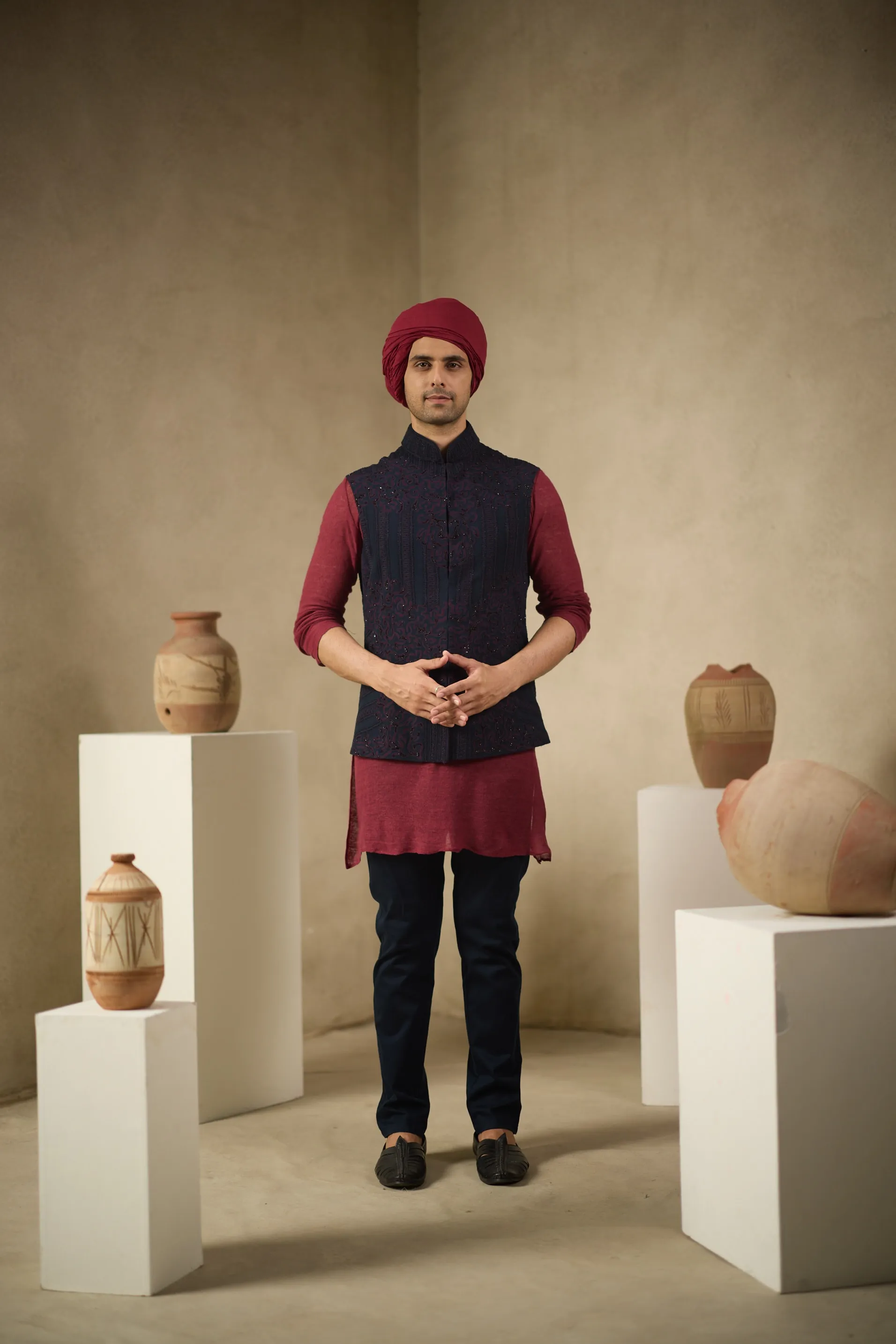
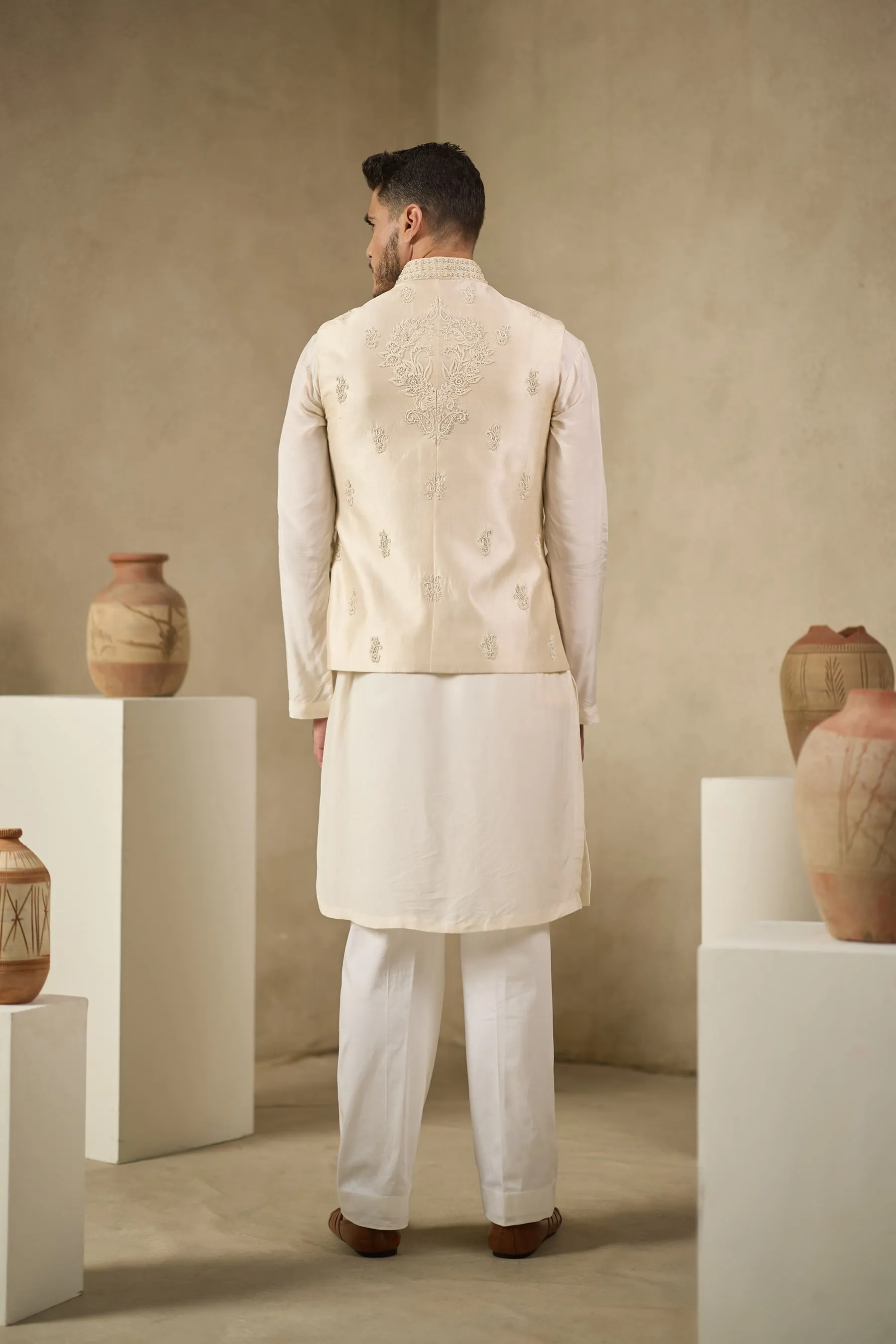
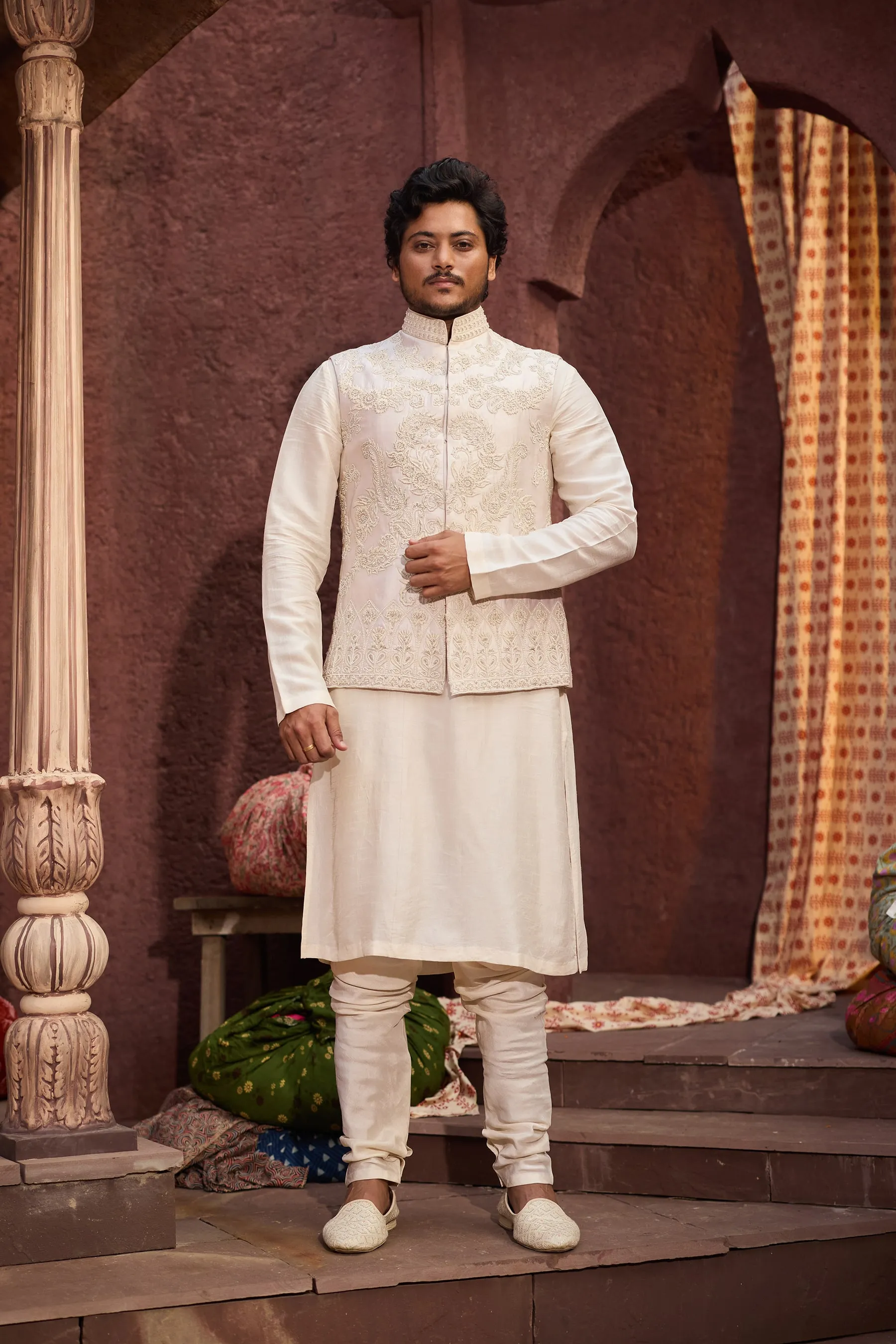
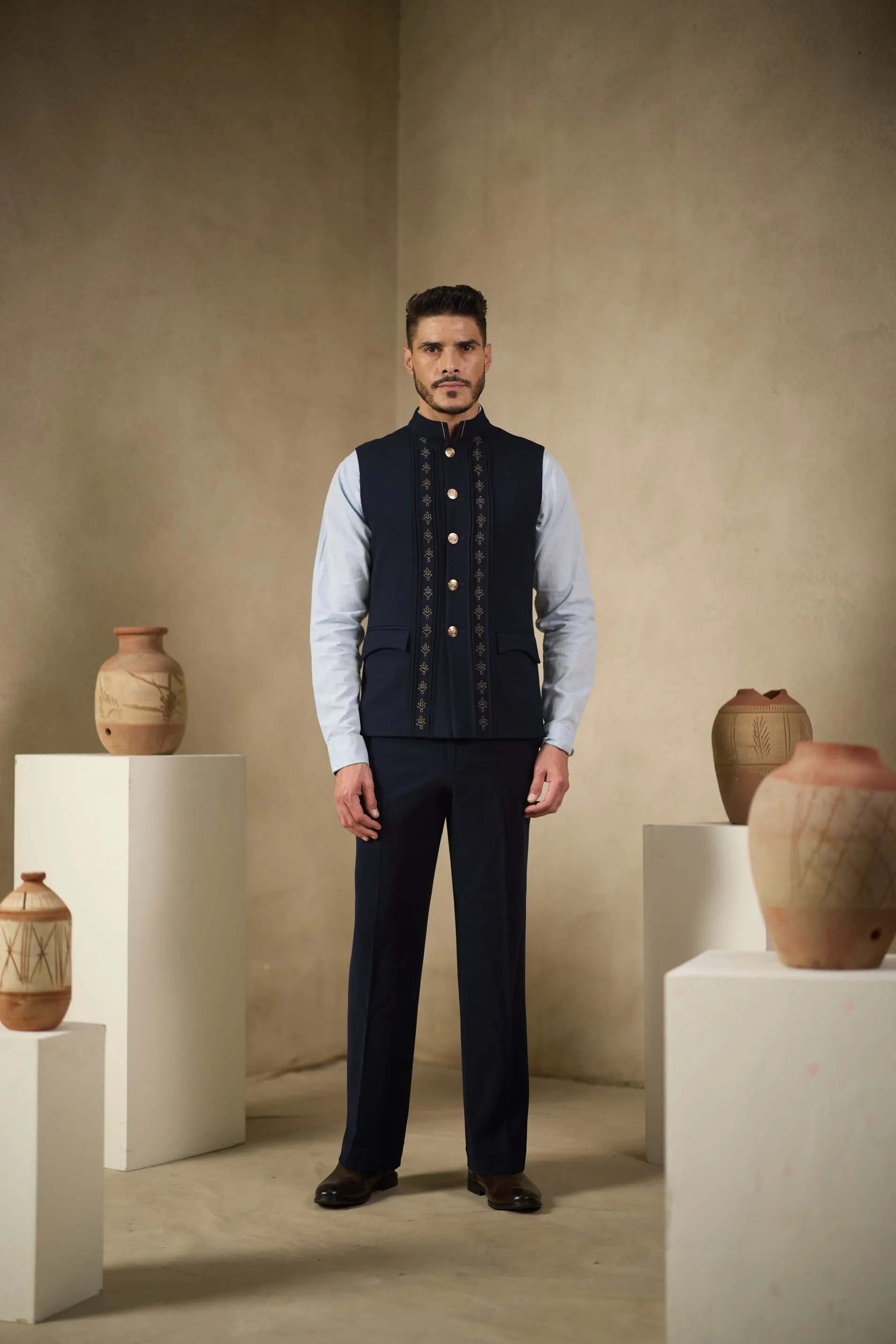
This is the groomsman’s best friend. It is festive without being heavy, comfortable to dance in and flattering on most body types. A jacket in a darker or more textured fabric over a lighter kurta gives dimension. The jacket can be sleeveless or with sleeves, and the embroidery can be as light or as rich as the event demands. See our Nehru jacket collection, including the Nawab in navy, the Jashn in navy and burgundy and the Heer in ivory.
The bandhgala
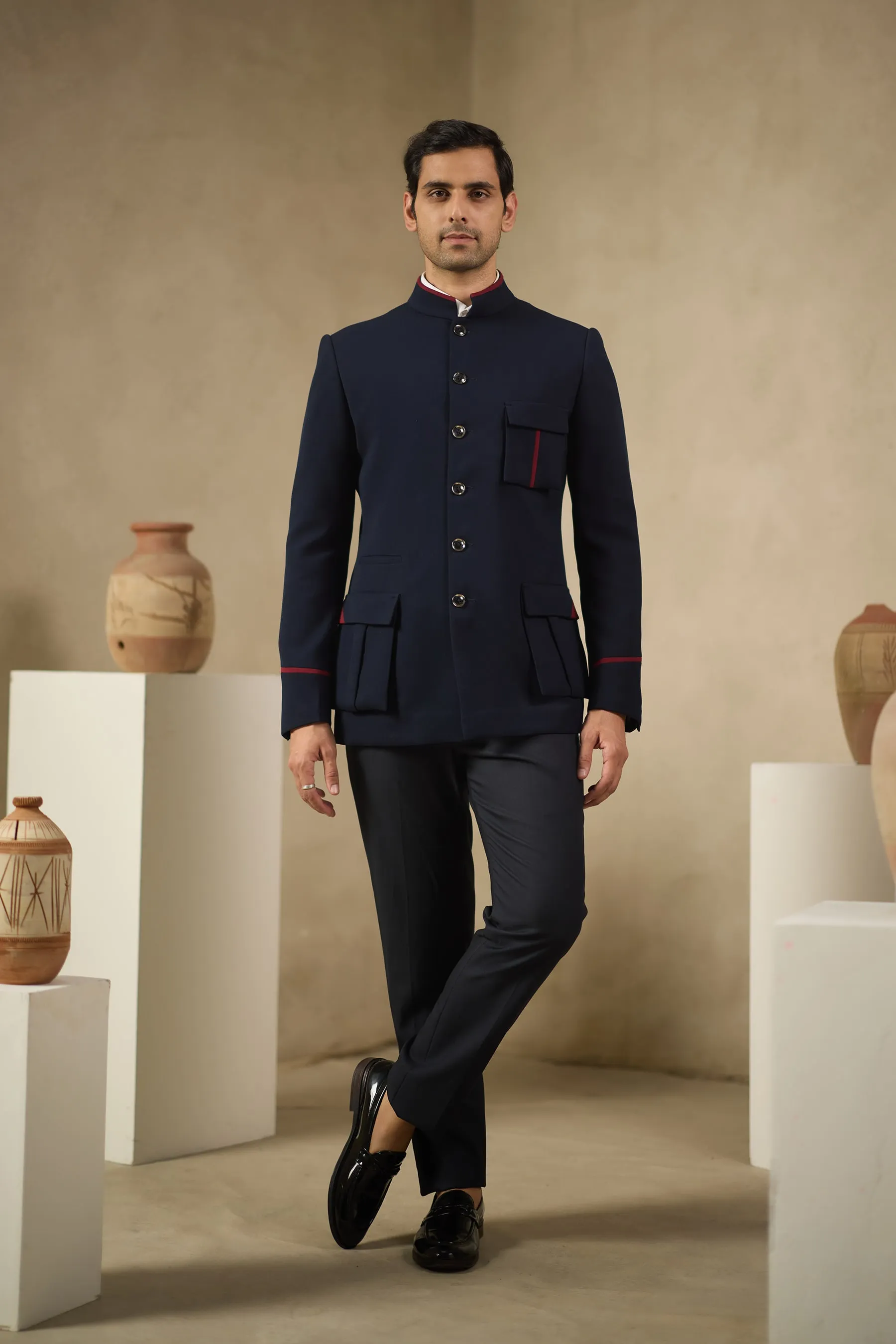
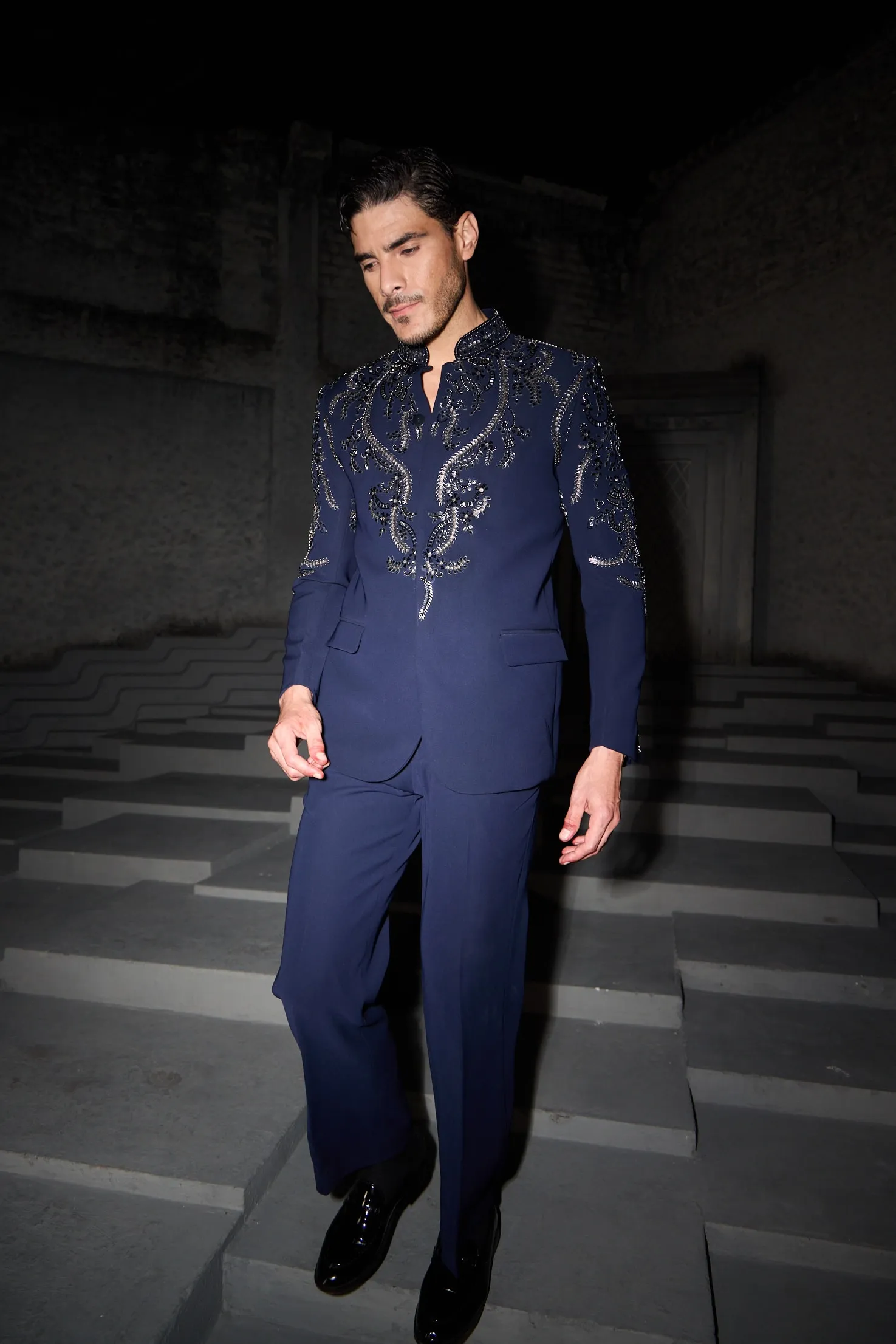
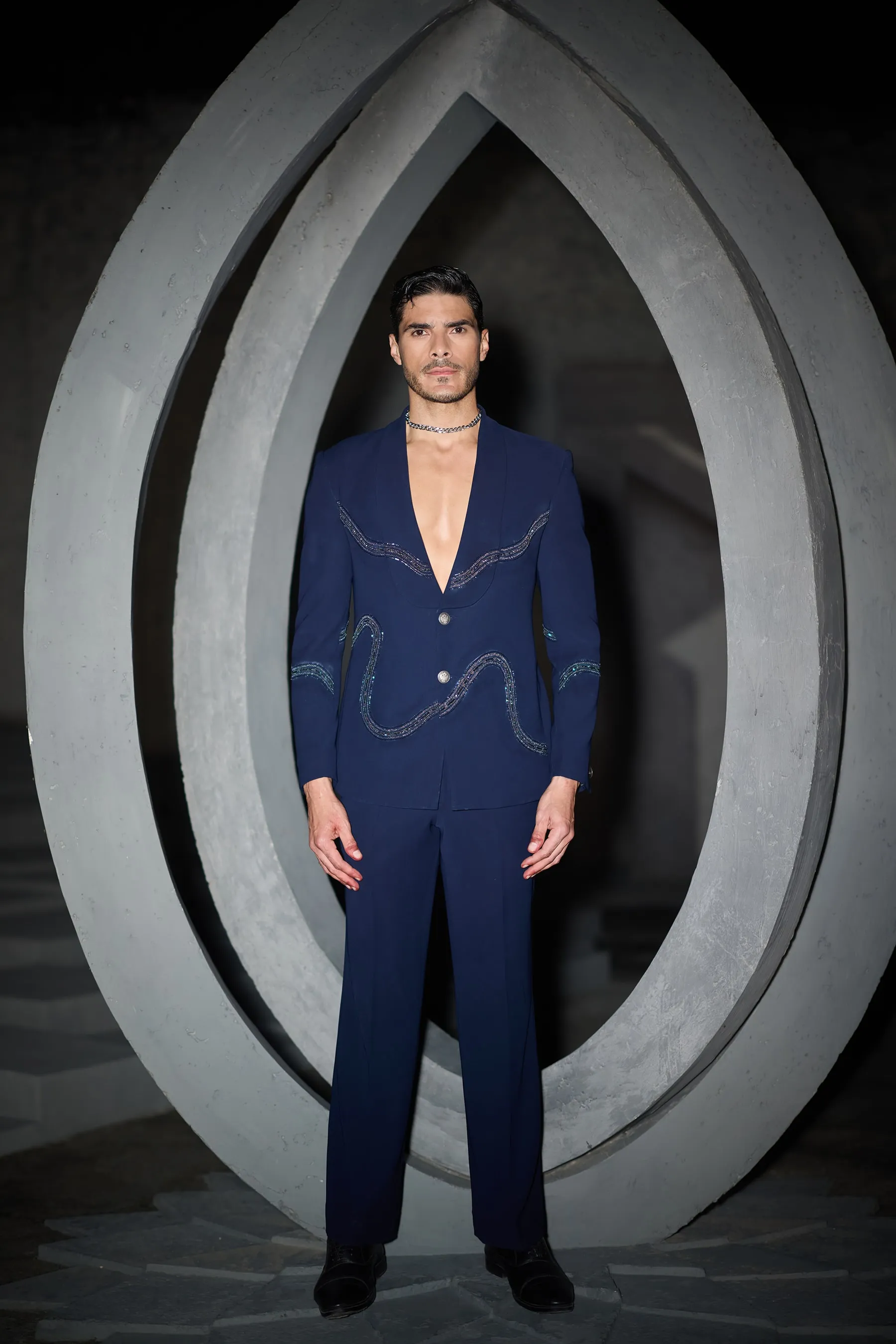
A bandhgala suits the sangeet, cocktail and reception. It is structured, modern and easy to pair with trousers and a shirt. A row of groomsmen in bandhgalas in related colours looks sharp and unified. Our bandhgala collection includes the Jodhpur in navy and the Samundar in navy.
The Indo-Western set
For a contemporary wedding, an Indo-Western set (a drape jacket, a kurta-style top with trousers or a cape) gives groomsmen a distinct, fashion-forward look. It works well when the groom himself wears something modern. See the Indo-Western collection.
The tuxedo
For a black-tie reception or a cocktail evening, a tuxedo in navy or black adds a Western note. Our Lehar in navy is a good example. Make sure the tuxedo’s formality matches the rest of the wedding.
The lighter sherwani or achkan
For the baraat, groomsmen who want a traditional look can wear a lighter sherwani or an achkan in a related colour, simpler than the groom’s. Ensure it is less embellished, so the groom’s piece remains the focus.
One step simpler than the groom
The groom is the centre of the day, and his outfit should read as such. A simple rule: dress groomsmen one step simpler than the groom.
- If the groom wears a heavily embroidered sherwani, groomsmen wear plain or lightly embroidered ones, or a bandhgala.
- If the groom wears a bandhgala, groomsmen wear Nehru jackets or simpler bandhgalas.
- If the groom wears a bold colour, groomsmen wear muted tones.
This does not mean the groomsmen should look dull. It means the contrast between the groom and the group is clear in photographs.
Event-by-event outfits for groomsmen
Roka, sagai and engagement
A kurta with a Nehru jacket in a light, festive colour. Keep it relaxed; these are family-focused events. See our guide to the engagement outfit for the groom for ideas on palette.
Haldi and mehendi
A light kurta in pastel, cream or yellow, possibly with a printed or embroidered stole. Avoid dark colours and anything delicate. Expect to be marked by turmeric. See the haldi outfit guide and the mehendi outfit guide.
Sangeet and cocktail
A bandhgala, Indo-Western set or velvet jacket in a rich colour. This is the groomsmen’s chance to dress with flair; the dance floor rewards a jacket that moves. See the sangeet outfit guide.
Baraat and pheras
A sherwani or achkan in a lighter or simpler form, or a bandhgala with a stole. Comfort is essential: you may dance outdoors and sit on the floor. See the baraat outfit guide.
Reception
A bandhgala, tuxedo or dark Nehru jacket with a plain shirt. Coordinate colour with the groom: if he wears midnight navy, they can wear charcoal or black. See the reception outfit guide.
Fabric and comfort
Groomsmen spend a long day on their feet in crowds. Fabric makes the difference between enjoying the day and enduring it.
- Cotton-silk and linen-silk for daytime: breathable, light, forgiving.
- Fine wool and wool-silk for winter evenings.
- Raw silk for baraat outfits, with a soft lining.
- Velvet only for winter evening events, and only with a breathable lining.
- Avoid stiff, heavily embellished fabrics that restrict movement or itch.
Ask for a soft cotton lining and sleeves that allow a full range of movement. A groomsman who cannot raise his arms to dance is a groomsman who will not dance.
Budget: how much should a groomsman’s outfit cost?
Costs vary widely. A made-to-measure Nehru jacket with a kurta is the most affordable well-made option, a bandhgala costs more, and a fully embroidered sherwani costs the most. Three things help keep the total manageable:
- Decide who pays before you order. Surprises about costs create awkwardness.
- Choose pieces with re-wear value. A navy bandhgala or a good Nehru jacket works for years; a heavily embellished piece may not.
- Order as a group. An atelier can often coordinate fabric and delivery for several people, saving time and avoiding mismatched dye lots.
Our atelier will build a group brief with you. You can also see how we handle made-to-measure timelines for larger orders.
The group-order timeline
A group order is more complex than a single outfit, so start early.
| When | What to do |
|---|---|
| 12 to 14 weeks before | Agree the palette, silhouettes and who is in the group. |
| 10 to 12 weeks before | Share the brief and fabric choices; collect measurements, in person or by video. |
| 8 to 10 weeks before | Place the order; confirm a single delivery date. |
| 4 to 5 weeks before | First fittings; adjust fit and detail. |
| 1 to 2 weeks before | Final fittings; check accessories. |
| The week of the wedding | Collect, steam and hang outfits; pack a small kit. |
If the group is spread across cities, use a video fitting and ask each groomsman to measure with a tailor locally. The atelier can then adjust remotely and confirm fit at a short final fitting.
Accessories that tie the group together
Accessories are the easiest way to unify a group without making everyone identical.
- Pocket squares or brooches in a shared accent colour.
- Stoles or dupattas in a related fabric, worn differently by each person.
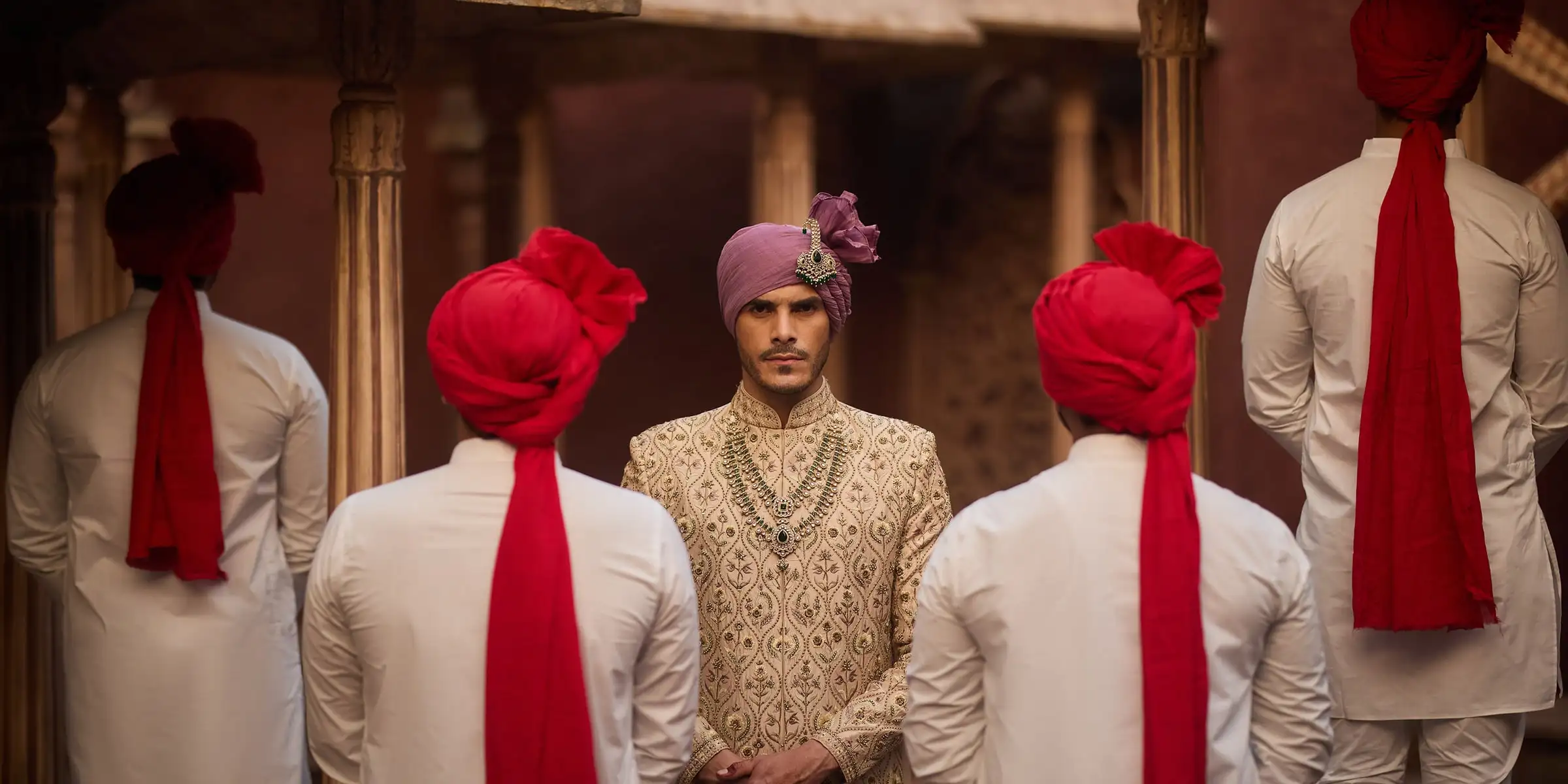
- Safas or turbans for the baraat, in a coordinated palette.
- Shoes: mojaris or leather loafers in tan, brown or black, matched to the outfit.
- Watches and cufflinks kept understated.
A small keepsake, such as matching brooches or cufflinks given by the groom, becomes a memento of the day.
Fit, fittings and photographs
At fittings, ask each groomsman to sit, stand, raise his arms and walk. If anything binds, adjust it. Shoulder seams should sit at the edge of the shoulder, sleeves should end at the wrist bone, and jacket length should cover the seat. Photographs show fit mercilessly, especially in a group, where one ill-fitting jacket draws the eye.
Take a group photograph at the final fitting. It shows how colours work together and exposes any inconsistency in length, colour or styling.
Common mistakes to avoid
- Identical outfits. They look like uniforms and fit unevenly.
- Outshining the groom. Keep embroidery and colour a notch below his.
- Ignoring the weather. A heavy velvet jacket in a summer wedding is misery.
- Leaving it late. A last-minute order leaves no time to fix fit.
- Forgetting shoes and accessories. A great outfit with mismatched shoes ruins the group photograph.
- Not telling everyone the plan. A shared brief prevents surprises.
A sample coordinated plan
Here is how a coordinated plan might look for a wedding in which the groom wears an ivory sherwani.
- Roka and haldi: groomsmen in light kurtas (cream, mint, blush) with matching pocket squares.
- Mehendi: a mix of printed stoles over cream kurtas.
- Sangeet: navy and charcoal bandhgalas with a shared accent brooch.
- Baraat: lighter sherwanis or bandhgalas in sage and navy, with safas in a coordinated shade.
- Reception: black or midnight bandhgalas or tuxedos.
The result is a group that looks related to the groom, to each other and to the wedding’s palette, without a single identical outfit.
Planning with the groom’s family
Early conversations with the groom’s family prevent clashes. The father and brother may already be planning outfits, and the groomsmen’s palette should complement theirs. Our guides to the father of the groom’s outfit and the groom’s brother’s outfit show how to position those roles. A single palette conversation, held early, saves weeks of adjustment.
Also consider the guests. A group of well-dressed groomsmen helps male guests see what level of formality is expected; our male wedding guest outfit guide is a good one to share with them.
Looking after the group on the day
A little organisation on the wedding day keeps a large group looking sharp from the first photograph to the last.
- Appoint one person to hold the kit. A small bag with safety pins, a lint roller, a stain pen, spare cufflinks and a sewing kit solves most small emergencies.
- Steam and hang every outfit the evening before. Creases from a suitcase show clearly in photographs, and a steamer is quicker than an iron on silk and velvet.
- Agree a dressing time and place. Getting a dozen people ready in one room takes longer than anyone expects. Allow at least ninety minutes for the baraat group, and keep the groom’s room separate so he can dress calmly.
- Set a photograph slot. A ten-minute group portrait before the baraat leaves, when everyone is fresh, is worth more than a dozen rushed pictures later.
- Plan for water, snacks and rest. A baraat can run for hours in heat. Groomsmen who are fed and hydrated dance better and look better.
- Decide who carries what. The groom’s sword, sehra, stole and phone should have a nominated carrier, so nothing is lost in the crowd.
Special cases: groomsmen of different heights, builds and ages
A mixed group is the norm, and good tailoring handles it. Taller groomsmen suit longer jackets and a slightly looser line; shorter groomsmen look best in a jacket that ends at the hip, with a clean trouser break. Broader builds benefit from structured shoulders and a darker palette, while slimmer builds look good in softer, lighter fabrics. Older relatives who stand with the group, such as an uncle or a family friend, are best dressed in a more classic piece, such as a Nehru jacket with a quieter embroidery. A fitting for each person, not a single size chart, is what makes a mixed group look uniform in quality while remaining varied in detail.
If a groomsman is joining from abroad and cannot attend fittings, ask him to send photographs, a video of him standing and turning, and measurements taken by a local tailor. The atelier can then prepare a first fit and confirm adjustments on arrival.
Frequently asked questions
What should groomsmen wear at an Indian wedding?
A kurta with a Nehru jacket for daytime, a bandhgala or Indo-Western set for the evening, and a lighter sherwani for the baraat. Coordinate through palette and fabric, not identical outfits.
Should groomsmen match the groom?
They should echo, not match. A related colour and a simpler outfit keep the groom as the focus.
How early should groomsmen order outfits?
Eight to ten weeks before the first ceremony, with a final fitting a week before.
Can groomsmen re-wear their outfits?
Yes. Choose pieces with re-wear value, such as a navy bandhgala or a good Nehru jacket, and they will serve for many events.
Final thoughts
Dressing groomsmen is a quiet act of hospitality. It tells friends and family that they are part of the day, and it ensures that the photographs, years later, show a group that belongs together. Pick a palette, choose a silhouette, dress one step simpler than the groom and start early. If you would like help with a group order, visit our appointment page and we will build the brief with you.
Shop the looks
Explore our Nehru jacket collection, bandhgala collection and the sangeet and cocktail edit for pieces that work for groomsmen, or see the baraat and pheras edit for lighter sherwanis.