The haldi is the most joyful, least formal ceremony of an Indian wedding, and also the messiest. A paste of turmeric, sandalwood and rose water is smoothed onto the groom’s face, arms and feet by aunts, cousins and friends, who are not always gentle. It is a blessing, a beauty ritual and a very good excuse for a party. It is also a ceremony where the wrong outfit becomes a worry. This guide sets out what a groom should wear for haldi, which colours and fabrics to choose, how to keep the look polished and what to avoid.
If you are still mapping the rest of the wedding, our guide to what the groom wears at each ceremony places the haldi in context, and the haldi and mehendi collection gathers the pieces we make for these two daytime functions.
What is the haldi ceremony, and why does it shape the outfit?
In most Hindu families, the haldi (also called pithi in Gujarat, Punjab and parts of Rajasthan, and gaye holud in Bengali weddings) takes place a day or two before the wedding. It is held at home, in a courtyard or in a garden, often in the morning. Close family apply turmeric paste to the groom, and a matching ceremony is held separately for the bride. The turmeric is meant to bless and brighten the skin and to ward off ill fortune before the wedding.
That context drives every decision. The ceremony is outdoors, so you will be warm. It is playful, so you will be moved, hugged, patted and sometimes soaked. It is intimate, so photographs are candid rather than posed. The best haldi outfit is therefore light, forgiving and happy to be marked. It looks good fresh, looks good with a golden mark across the shoulder and still looks good when you sit down to eat at the end.
The best colours for a groom’s haldi outfit
Turmeric is yellow-orange, marigold garlands are orange and gold, and the decoration often adds white, green and pink. Your outfit should sit comfortably alongside these colours rather than fight them.
Yellow and mustard
Yellow is the traditional haldi colour and the safest. A pale butter yellow or a soft mustard gives you a coordinated look, and a little turmeric on top simply deepens it. The risk is looking like part of the décor, so keep the yellow muted rather than neon.
Ivory, cream and white
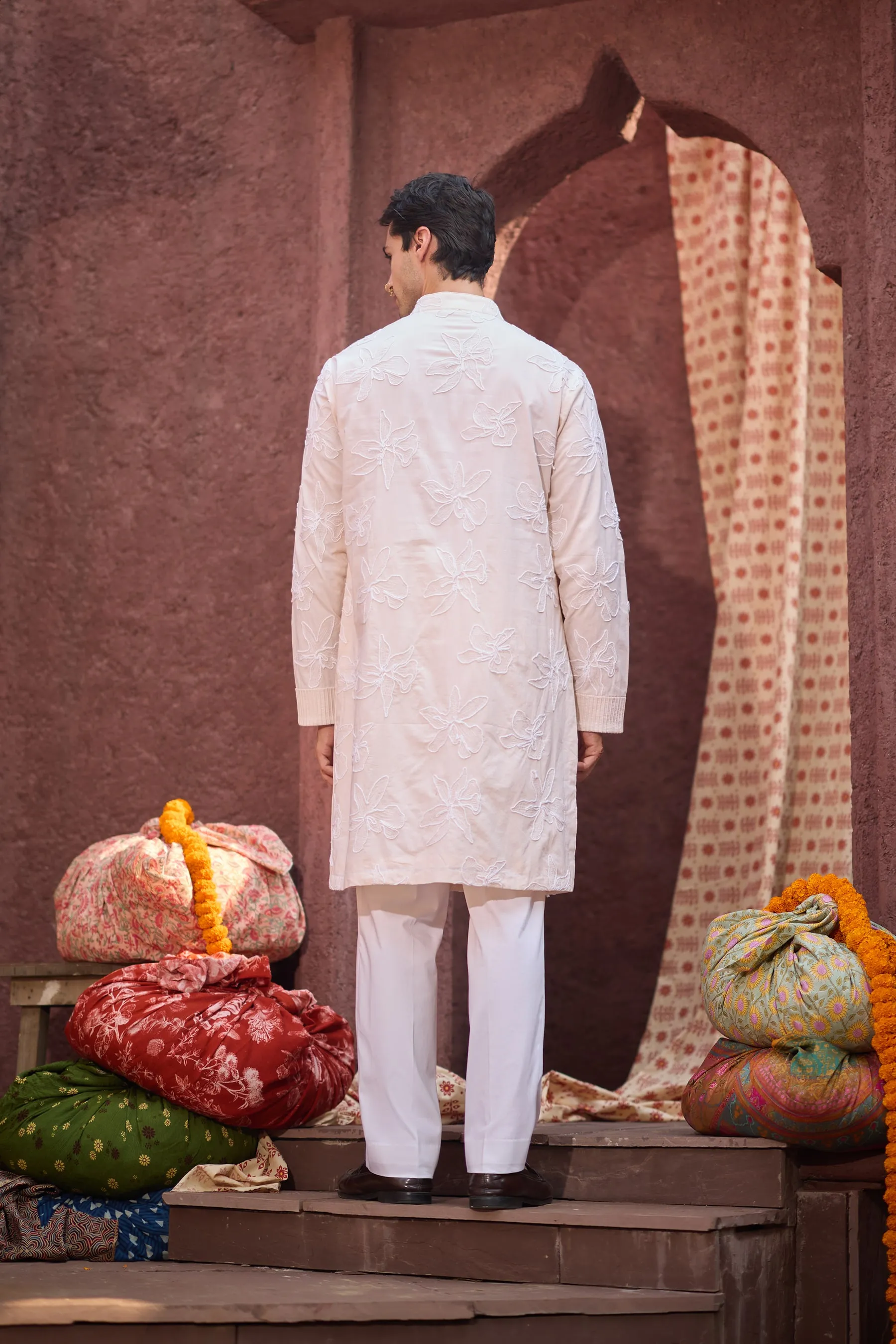
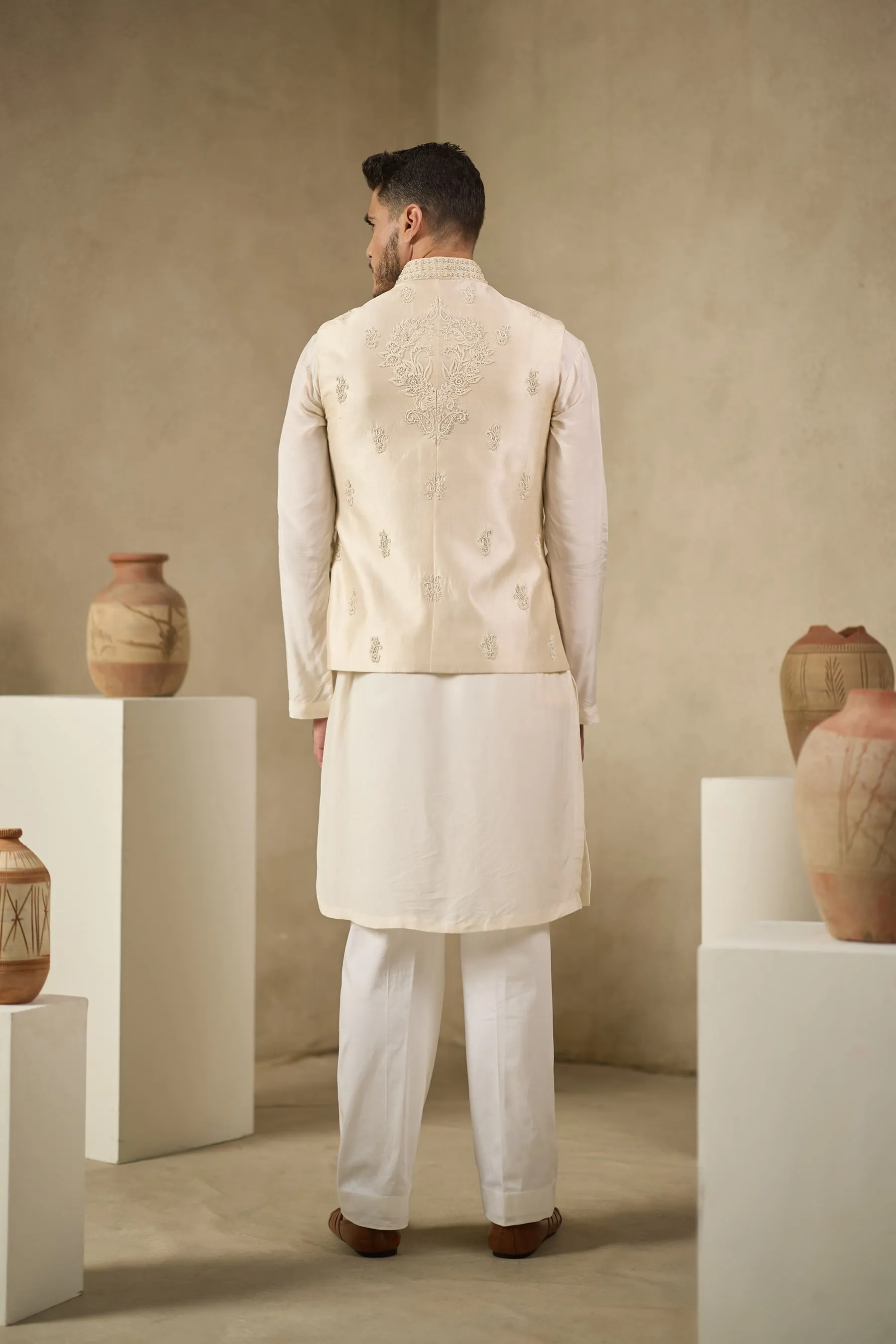
Ivory is the groom’s friend at haldi. It is cool in the heat, elegant in photographs and makes the turmeric the star. A clean ivory kurta with a marigold stole or garland looks deliberate and refined. Our Shabnam kurta set in ivory and the Safed Bel in white are made for exactly this kind of morning.
Soft pastels: blush, mint, pistachio, powder blue
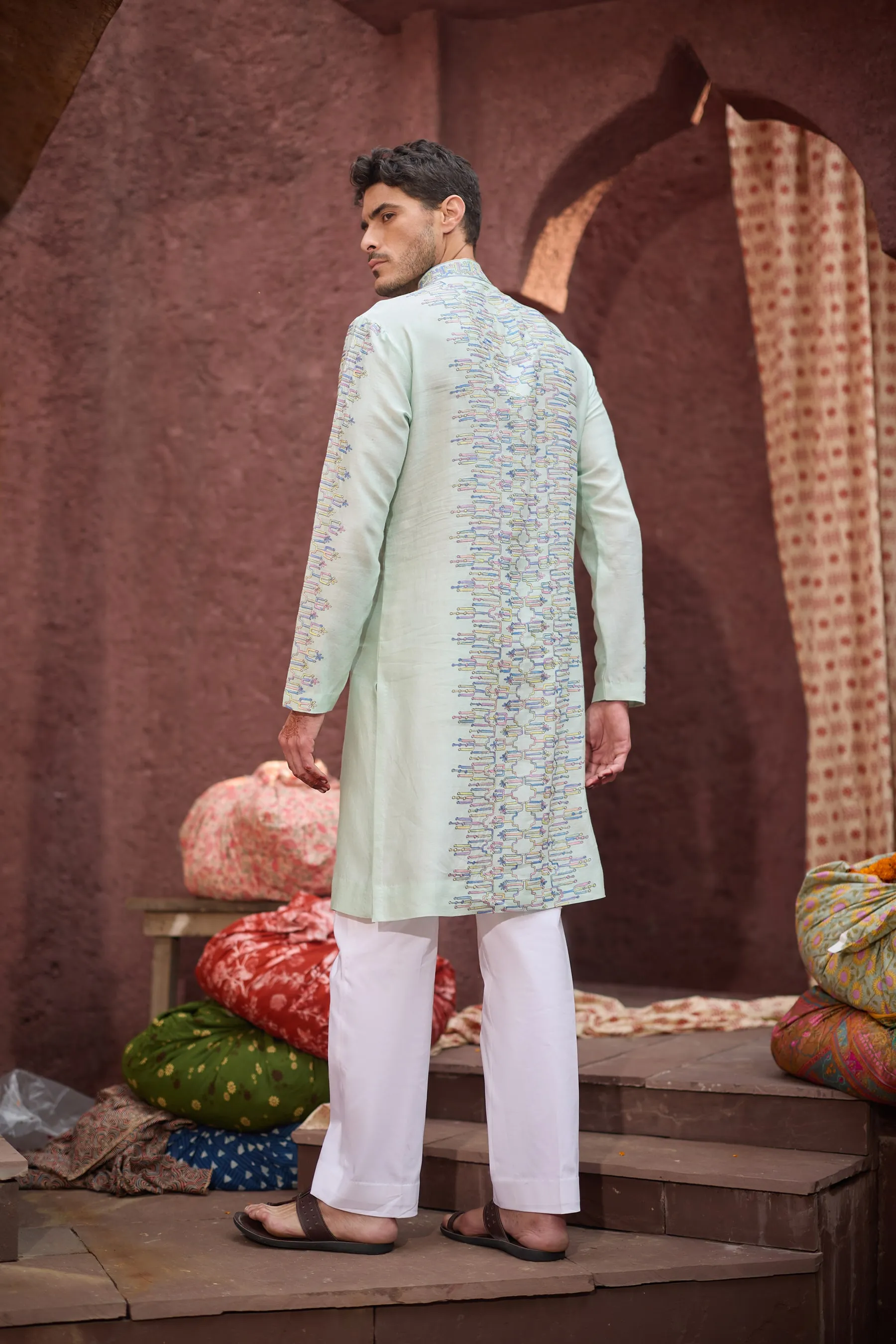
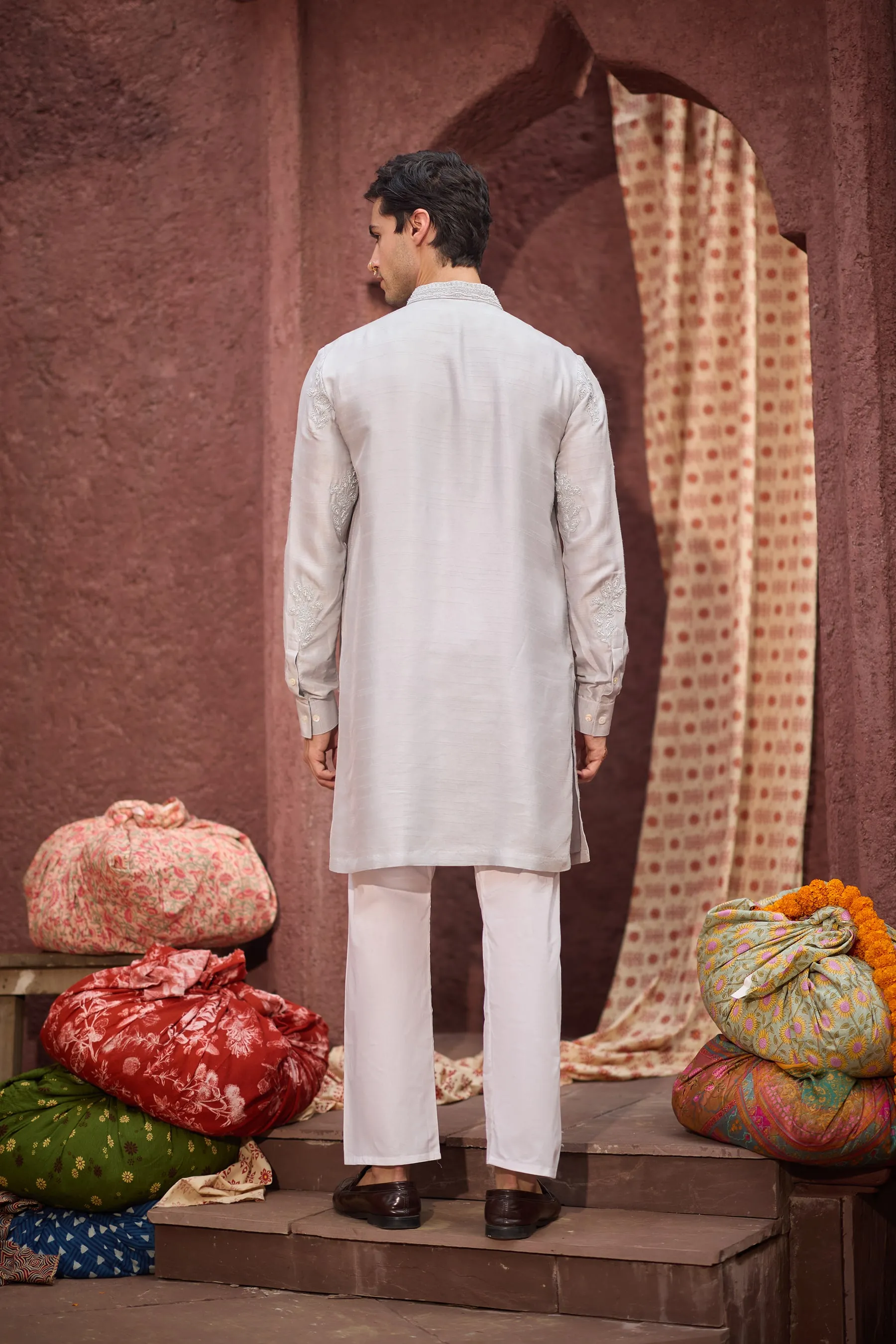
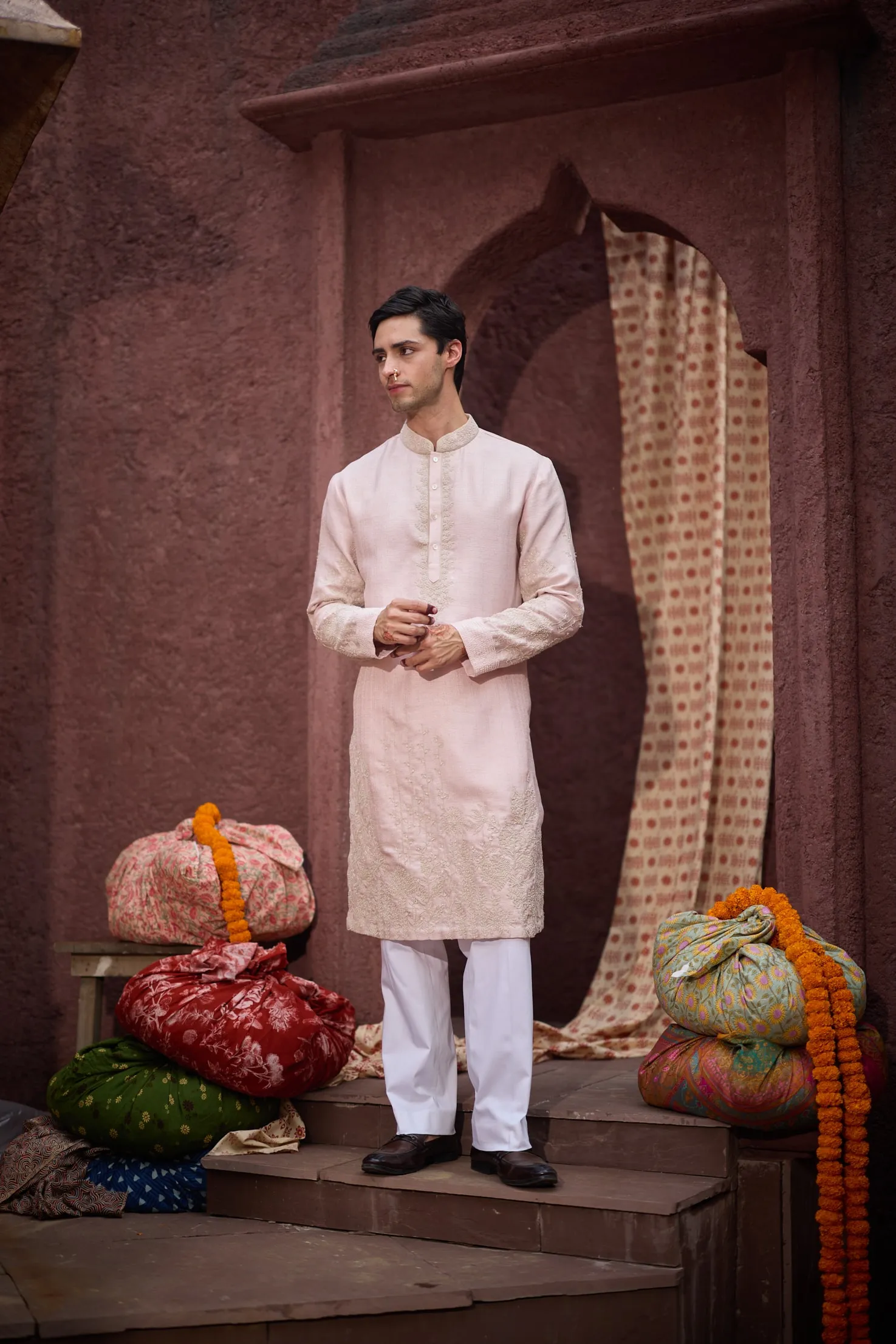
Pastels are the modern favourite. They photograph beautifully against the gold of turmeric and the green of leaves, and they feel more individual than yellow. The Gulkand kurta set in blush and the Pudina in mint are good examples: soft in colour, quiet in embroidery, comfortable in the heat.
Colours to avoid
- Black and very dark colours. They look heavy in daylight, clash with the turmeric and show the paste as a dusty smear.
- Deep maroon and wine. These are better for the sangeet or reception.
- Bright orange. It disappears against marigolds and makes you look as if you are wearing the decoration.
- Neon shades. They fight the natural, warm mood of the ceremony.
The right silhouette: kurta, jacket or something more?
The classic kurta set
A kurta with churidar, pyjama or straight trousers is the standard haldi outfit for good reason. It is comfortable, easy to move in and appropriate for every family. A mid-thigh or knee-length kurta in a light fabric with a placket of tonal embroidery is enough. If you want more of a statement, choose a pattern in the same colour (a self-woven jacquard or a thread-work yoke) rather than a contrasting colour.
A kurta with a Nehru jacket
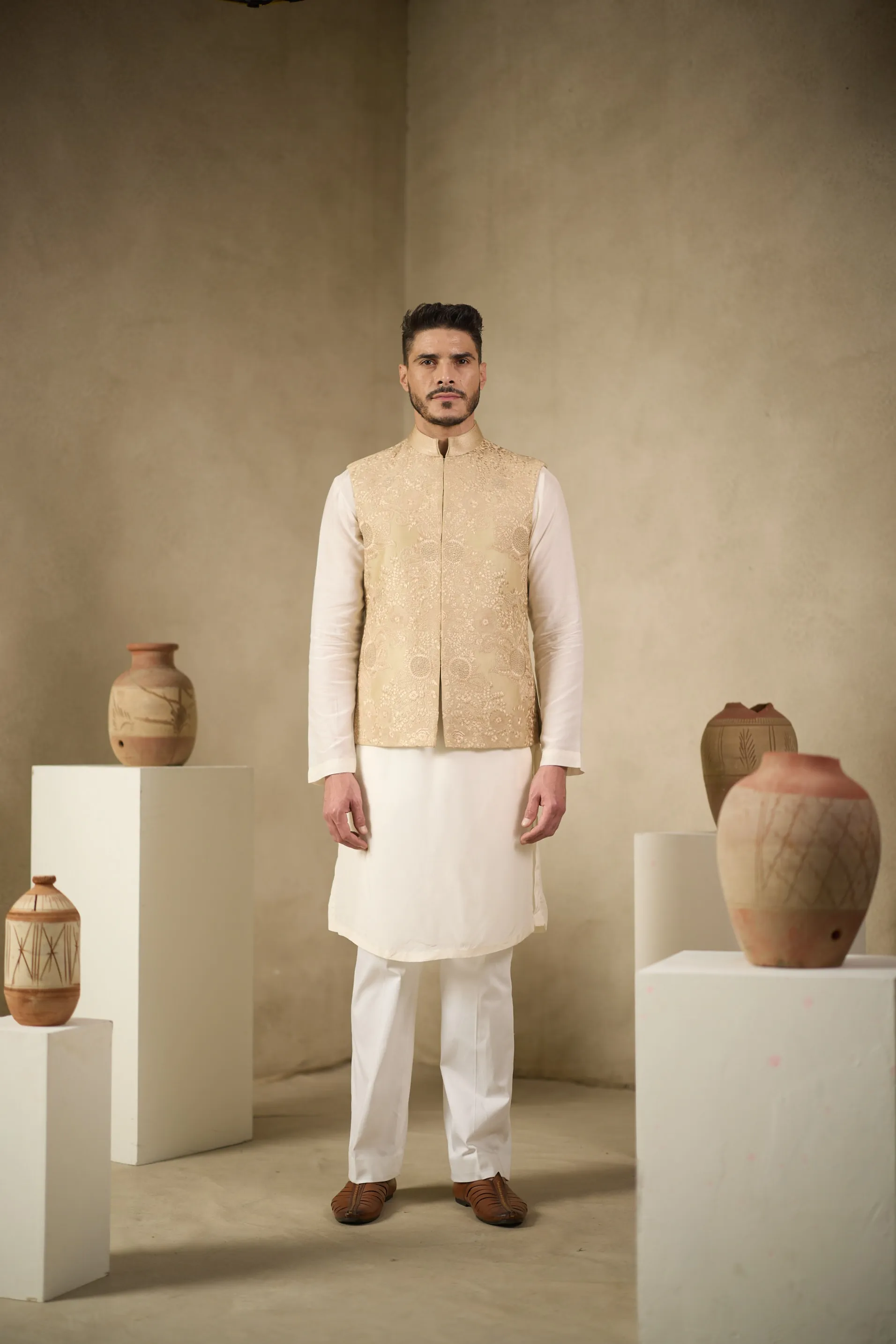
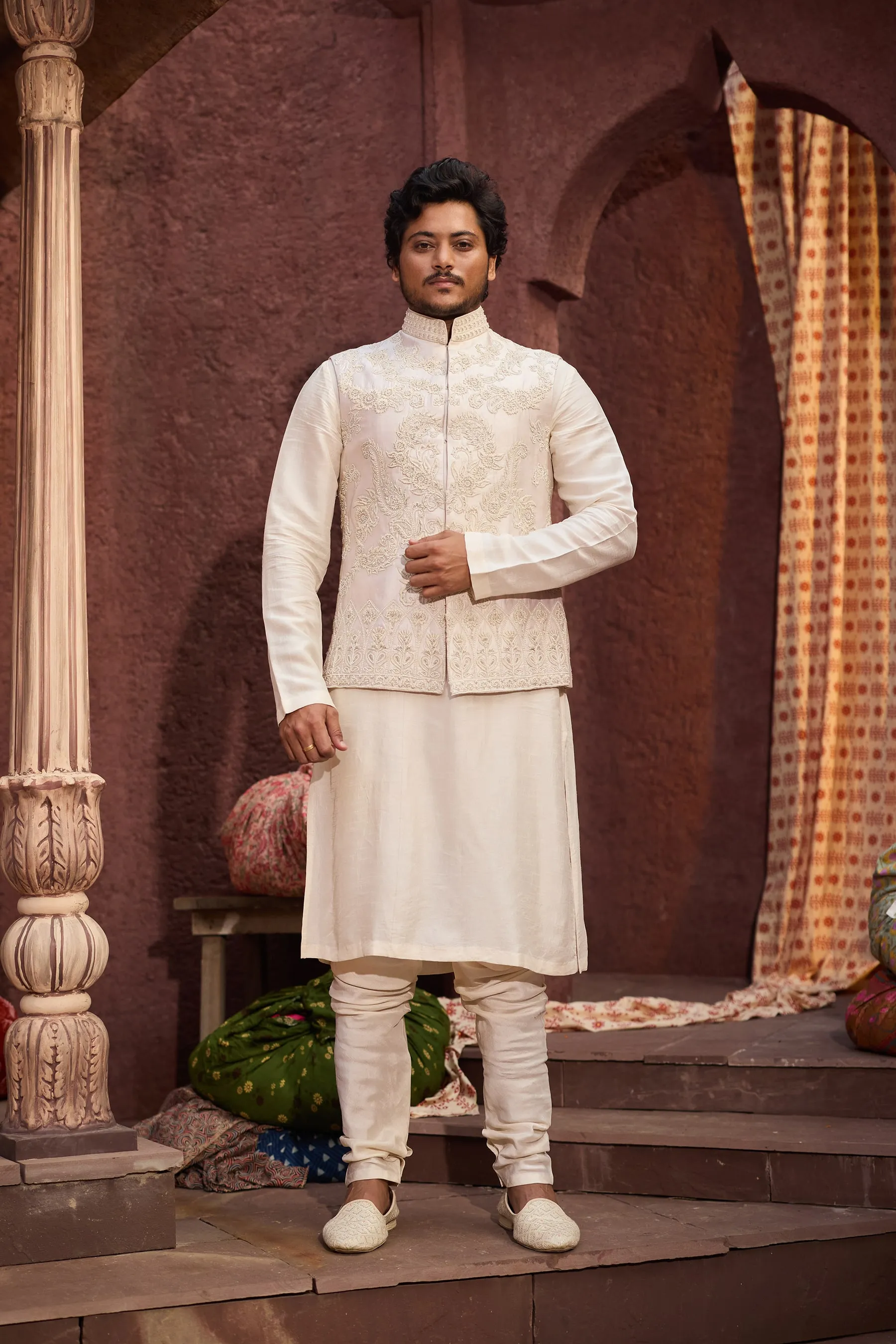
Adding a jacket gives structure and a little formality, and it photographs very well because it creates lines and layers. A light cotton-silk or linen Nehru jacket over a matching or contrasting kurta is a safe way to look dressed up without being weighed down. Our Moti Jaal Nehru jacket in ivory, Sona Bundi in gold and Heer in ivory are examples. If you expect a very messy ceremony, ask your family to apply the turmeric before you put the jacket on, then add it for photographs.
Dhoti, Pathani and other regional options
In some families the groom wears a dhoti-style bottom, a Pathani suit or a lungi-style wrap. These are traditional, breathable and entirely correct if they match how your family celebrates. If you go this route, keep the top plain and light.
What not to wear: sherwani, heavy bandhgala, tuxedo
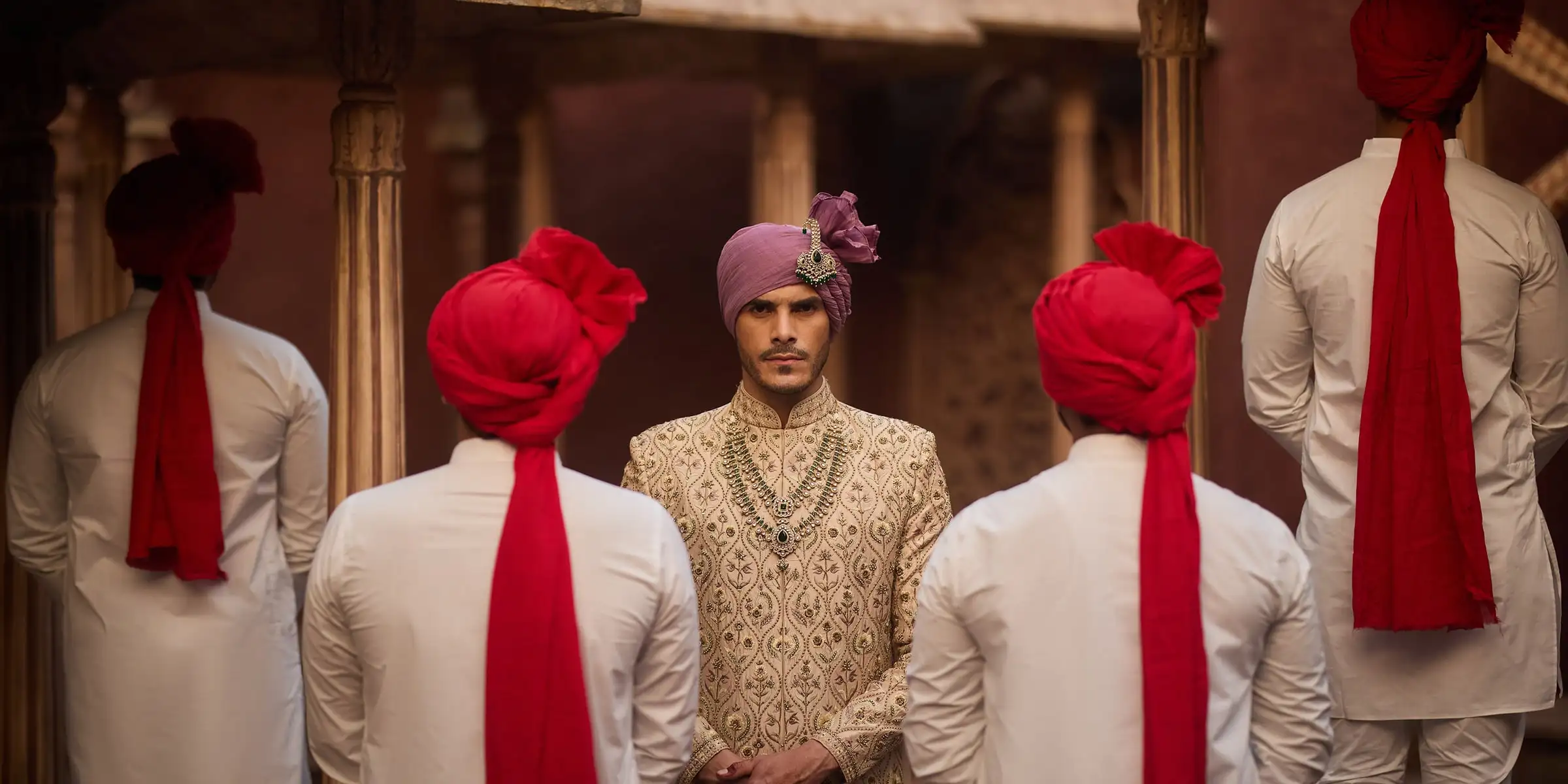
A sherwani, a structured bandhgala or a velvet jacket is too hot and too formal for a turmeric ceremony. Save them for the baraat, the pheras or the reception. If you are choosing between them, our guide to sherwani vs achkan vs bandhgala explains where each belongs.
Fabrics that work for haldi
Fabric matters more at haldi than at any other ceremony, because the day is warm, active and physical.
- Fine cotton and cotton-silk. Breathable, light and easy to care for. The best all-round choice.
- Linen and linen blends. Very cool and relaxed, but crease easily. Good for a garden haldi in warm weather, if you accept the crumpled look.
- Light silks and silk-cotton. Drape beautifully and look festive. Keep them in pale colours so marks are less visible.
- Chanderi and fine handloom. Light, with a soft sheen. Lovely for a traditional family.
- Avoid: heavy brocade, thick velvet, stiff organza and any fabric that is dry-clean only and fragile.
Embroidery should be light. Tonal thread-work, fine chikankari-style detailing and subtle self-pattern are ideal. Heavy zardozi, large stones and metallic sequins snag, trap paste and are hard to clean.
How to wear haldi with confidence: styling details
Stoles, garlands and safas
A marigold garland or a stole in a contrasting festive colour (a red, orange or green dupatta) finishes the outfit and photographs well. A small turban or safa is optional; some grooms skip it at haldi and save it for the baraat.
Footwear
You will be on grass, tiles and a courtyard, possibly barefoot for the ritual. Wear mojaris, kolhapuris or simple leather juttis that can be slipped off easily. Avoid leather shoes with laces, which are a hassle when you are asked to remove them for the ritual.
Jewellery and accessories
Keep jewellery minimal: a watch, a ring and perhaps a simple chain. Sunglasses are practical for an outdoor ceremony. Keep your phone and wallet with someone else; there is no pocket that is safe from a bucket of turmeric.
Grooming
Apply moisturiser and sunscreen before the ceremony. Turmeric can leave a yellow tint on the skin for a day or two, which is traditional and rarely a problem, but a lightly moisturised face is easier to clean afterwards. Tell your photographer which side you would like the paste applied first.
Practical tips for a messy ceremony
- Bring a second kurta. Many grooms change after the ritual for lunch or family photographs. A fresh, clean kurta in a matching shade lets you look put together for the rest of the day.
- Choose a fabric that does not cling when wet. Light cotton and linen dry quickly; some silks mark with water.
- Pre-treat with a light spray of stain guard. Ask your tailor whether a fabric protector is suitable for your cloth.
- Do not rinse turmeric with hot water. Cold water and a gentle detergent, applied soon after the ceremony, are best. Do not scrub.
- Keep a small kit nearby: towels, a spare handkerchief, a comb and a mirror for quick touch-ups.
If you care deeply about the garment afterwards, speak to the atelier or tailor about the fabric you have chosen; some cloths forgive turmeric more than others.
Matching with your family and the bride
Haldi is a family event, and coordinated colours look lovely in photographs. Consider:
- Matching the bride’s haldi colour. If she is wearing yellow, you might choose ivory or a pastel to complement rather than copy.
- Outfits for your brothers and father. A tonal palette (for example, you in blush and your brother in ivory) looks more refined than identical outfits. Our guides to what the groom’s brother wears and what the father of the groom wears set out simple ways to coordinate.
- Friends and groomsmen. A single colour family, in varied outfits, works better than uniforms. See our notes on groomsmen outfits for an Indian wedding.
Haldi outfit ideas by style
The traditionalist
An ivory or pale yellow kurta with churidar, a marigold stole and mojaris. Nothing more is needed. This look is timeless and almost impossible to get wrong.
The pastel modernist
A blush, mint or powder-blue kurta set with tonal embroidery and a matching or contrasting Nehru jacket in a lighter shade. This look reads as current, fresh and individual, and it photographs well in garden light.
The relaxed minimalist
A plain linen kurta with straight trousers in white or cream, worn with leather sandals. Simple, cool and effortless. Add a bright stole for a touch of colour.
The festive showman
A mustard or marigold jacquard kurta with a contrasting stole and a safa. Choose this if you want to lean fully into the colour of the day, and keep every other detail quiet.
Planning the haldi outfit: when to order and how to fit
A haldi outfit looks simple, but the fit matters. A kurta should be comfortable through the shoulders and chest, the sleeve should reach the wrist bone when your arm is relaxed, and the hem should sit around mid-thigh to knee, depending on your height. Churidar or trousers should be slightly looser than you would wear for the sangeet, because you may sit on the floor.
If you are ordering made to measure, begin about eight to ten weeks before the ceremony. Our atelier works to a timeline of eight to ten weeks from the first fitting, with two fittings, so that the final garment moves the way you do. Our guide to how to plan your wedding outfit made to measure lists every step, from measurements to the final fitting.
Haldi and mehendi: one outfit or two?
Many families hold the haldi and the mehendi on the same day or on consecutive days. If you are changing, the haldi outfit is usually the lighter and more casual of the two; the mehendi outfit can carry a little more colour, pattern or embroidery. If you are keeping one outfit for both, choose a colour that is happy in both settings: ivory, blush or mint are very forgiving. For ideas on the mehendi look, see our guide to what the groom wears to the mehendi.
Common haldi outfit mistakes to avoid
- Wearing something you cannot bear to see stained. If you will be anxious about it, choose a different outfit.
- Wearing white or ivory in a very thin fabric that becomes see-through when wet. Ask for a lining or choose a slightly heavier cotton.
- Overdressing. A sherwani at haldi will leave you hot, stiff and out of step with the mood.
- Ignoring footwear. Shoes that are hard to remove or uncomfortable on grass will spoil the ceremony.
- Clashing with the décor. A bright orange kurta in a marigold-filled courtyard will vanish.
- Forgetting the evening. If the haldi runs into the afternoon, make sure you have something fresh to change into.
How haldi differs across regions, and what that means for your outfit
The word “haldi” is shared across much of India, but the ceremony is not identical everywhere, and the outfit should respect the family’s own way of celebrating.
Punjabi pithi and North Indian haldi
In Punjabi families the ceremony is often called the pithi or vatna, and it is usually a lively, music-filled morning. The groom may sit on a low stool under a phulkari canopy while female relatives apply the paste and sing traditional songs. A bright, light kurta-pyjama, often in yellow or cream with a contrast stole, is customary. Because the mood is exuberant, comfort and freedom of movement matter more than structure.
Gujarati and Marathi traditions
In Gujarat, the pithi is part of a sequence of pre-wedding rituals and is often held in the afternoon. In Maharashtra, the haldi is linked to the ritual bath and has its own songs and customs. In both, white, cream or pale yellow cotton is a common, respectful choice, and some grooms wear a traditional dhoti-style bottom with a short kurta. If you are marrying into a family with a strong regional tradition, ask what the groom is expected to wear before you buy anything.
Bengali gaye holud
In a Bengali wedding, the gaye holud is a distinct and festive event, often held the evening before the wedding, with food, music and gifts brought between the two families. The groom’s side traditionally wears yellow, and grooms often choose a panjabi in a yellow or cream silk or cotton. Our guide to the Bengali groom’s wedding outfit goes into the details.
South Indian and Telugu traditions
In Tamil and Telugu weddings, the equivalent is the nalangu or pasupu ceremony. Grooms often wear a veshti (dhoti) with a simple upper garment or angavastram, usually in white or cream with a gold border. Fine cotton is both traditional and practical in the heat. You will find more in our guide to South Indian groom wedding attire.
Muslim families
Although haldi is not a religious requirement, many Muslim families hold a similar ceremony, often called ubtan or mayun, with a paste of turmeric and other ingredients. The outfit is generally a light kurta-pyjama or pathani, in a soft colour. For the nikah itself, see our notes on the nikah and walima groom outfit.
In every case, the principle is the same: light fabric, light colour, comfortable footwear and an outfit that suits your family’s way of celebrating. A good tailor will adjust the cut, the length and the detailing to match.
Shop the haldi look
If you are looking for a place to begin, these pieces are made for daytime ceremonies:
- Gulkand, a blush kurta set with quiet tonal embroidery.
- Shabnam, an ivory kurta set in a light, breathable cloth.
- Pudina, a mint kurta set for a fresh, modern look.
- Sona Bundi, a gold Nehru jacket to layer over a plain kurta.
- Moti Jaal, an ivory Nehru jacket with a textured weave.
- Heer, an ivory Nehru jacket for a polished daytime look.
You can browse more in our kurta set collection and Nehru jacket collection. Every piece is made to measure, so we can adjust the colour, fabric weight and embroidery to suit the climate and the way your family celebrates.
Final thoughts
The best haldi outfit is the one you forget about: light enough that you can laugh, hug and dance, beautiful enough that you look good in every photograph and quiet enough that the turmeric, the marigolds and your family are the real focus. Choose a light fabric in a soft colour, keep the embroidery subtle, wear comfortable footwear and bring a fresh change. The rest of the day will take care of itself.
When you are ready to plan the whole wedding wardrobe, book a fitting and the atelier will help you build a sequence of outfits that works from the haldi to the reception.