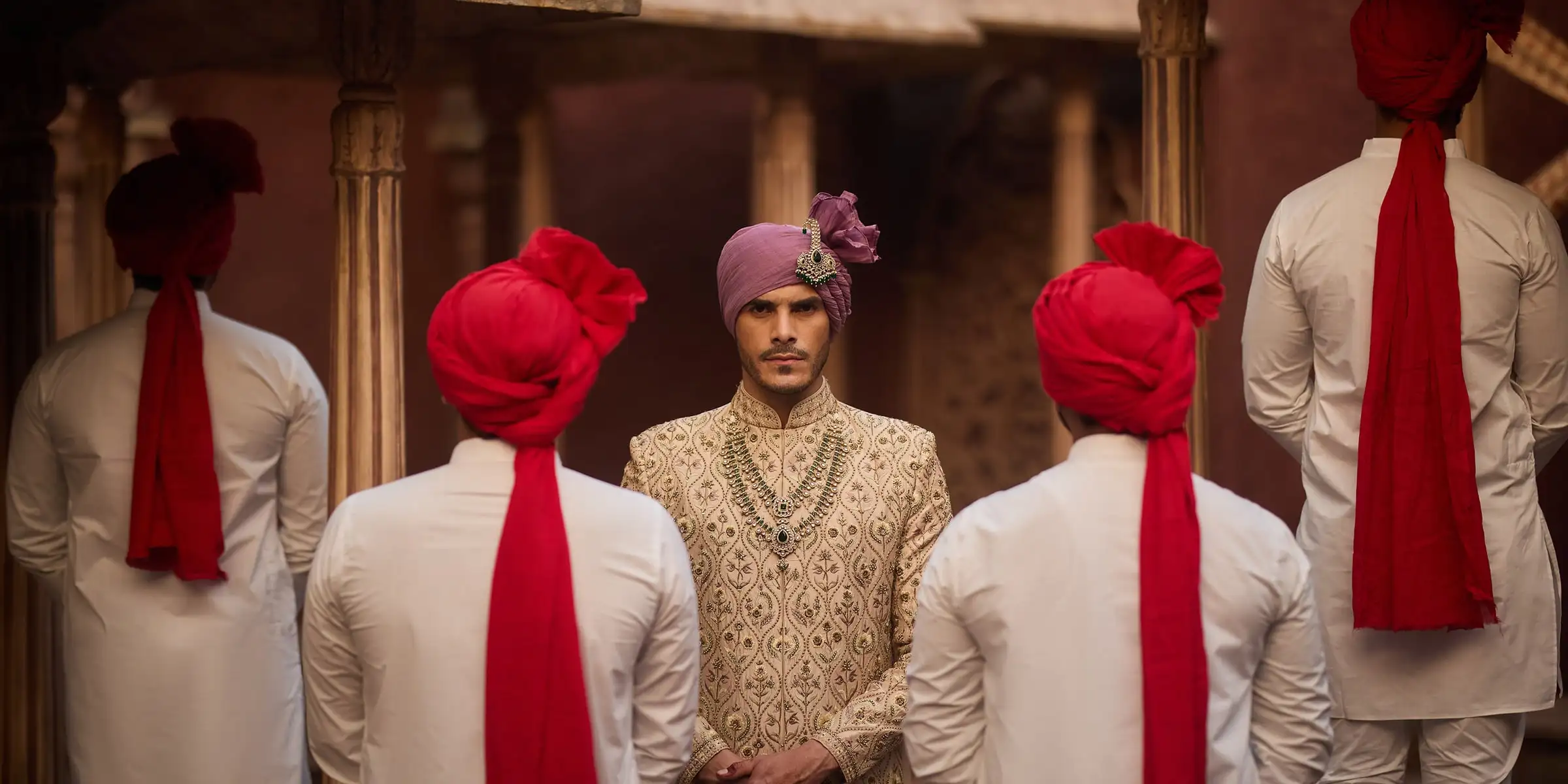
A Bengali wedding has a distinct elegance, from the sound of conch shells and ululation to the sight of the groom arriving in a cream panjabi with a crown of sola pith. The clothing is a quiet statement of heritage: soft silk, a crisp dhoti, a shawl across the shoulders and a topor that sits like a small spire above the forehead. This guide explains what a Bengali groom wears to the wedding and the functions around it, including the gaye holud, the bou bhaat and the reception, with advice on fabric, fit, colour, accessories and timing.
Wedding customs vary between Bengali families in West Bengal, Bangladesh and the diaspora, and between Hindu, Brahmo and other traditions. Treat this guide as a framework, and speak with the elders of your family about the specifics. For other communities, see our guides to the Sikh wedding outfit, the nikah and walima outfit and South Indian wedding attire, or the overview of what the groom wears at each ceremony.
The sequence of a Bengali wedding
A Bengali wedding unfolds through a series of rituals, each with its own mood and, often, its own attire.
- Aashirbaad: the blessing ceremony, where elders bless the couple with paddy and dub grass. Smart, traditional clothing, usually a panjabi.
- Gaye holud: the turmeric ceremony, held a day before the wedding, with songs, sweets and a lively atmosphere. Yellow or light, easy outfits.
- Dodhi mongol and snan: a morning ritual before the wedding, with a ceremonial bath. Simple, traditional clothing.
- Bor jatri and bor boron: the groom’s procession arrives and is welcomed by the bride’s family. The groom wears the full wedding attire, with topor and mala.
- Subho drishti and saat paak: the exchange of glances and the seven circles. The groom wears the wedding attire.
- Sindoor daan and ghomta: the bride is adorned with vermilion. The attire continues.
- Bou bhaat: the reception hosted by the groom’s family on the day after, welcoming the bride. A festive but less formal outfit.
- Reception: an evening party, often with western or contemporary elements. A bandhgala, kurta set or tuxedo.
The wedding day outfit is the centrepiece, and each other function adds a different note.
The classic: cream panjabi with a dhoti
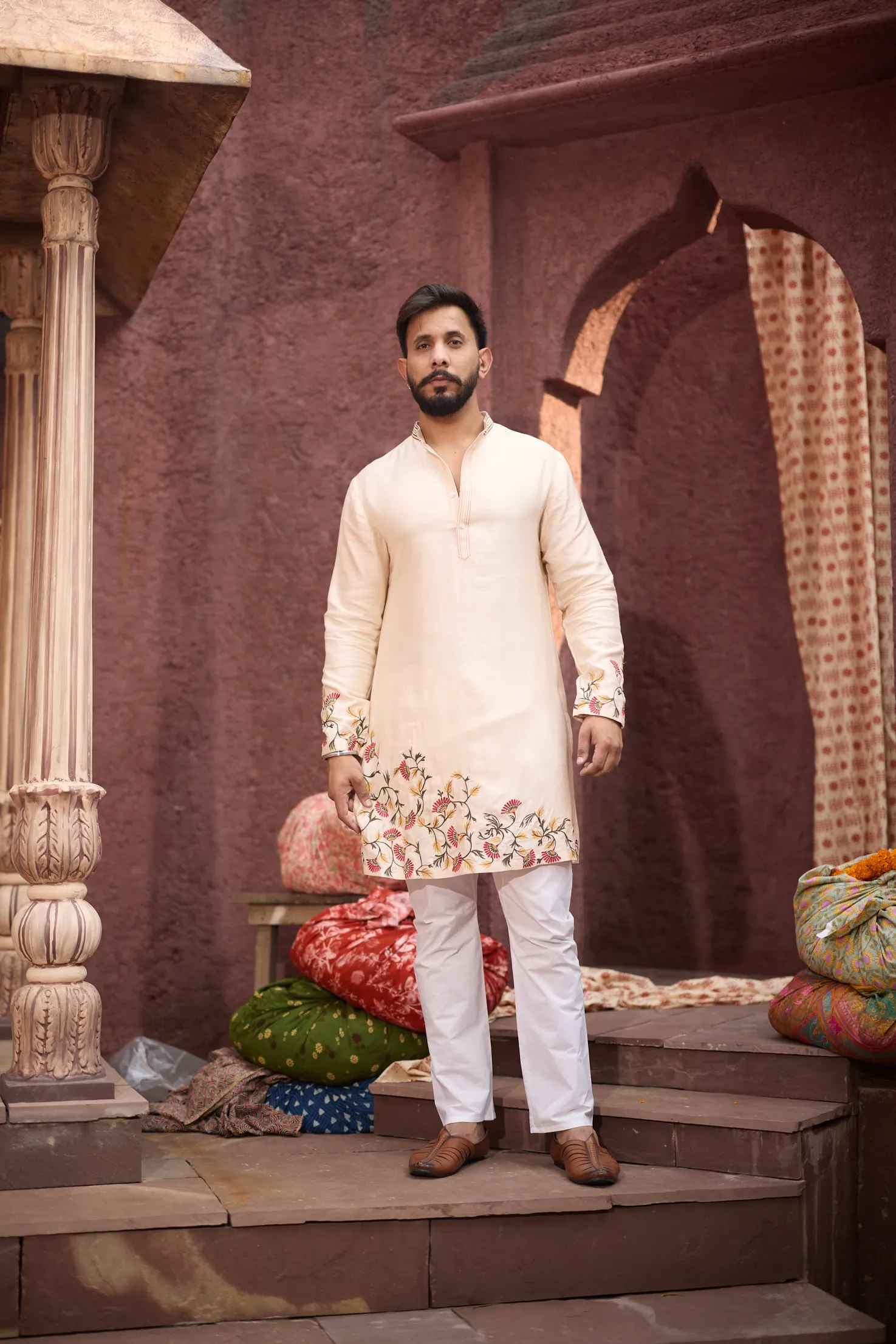
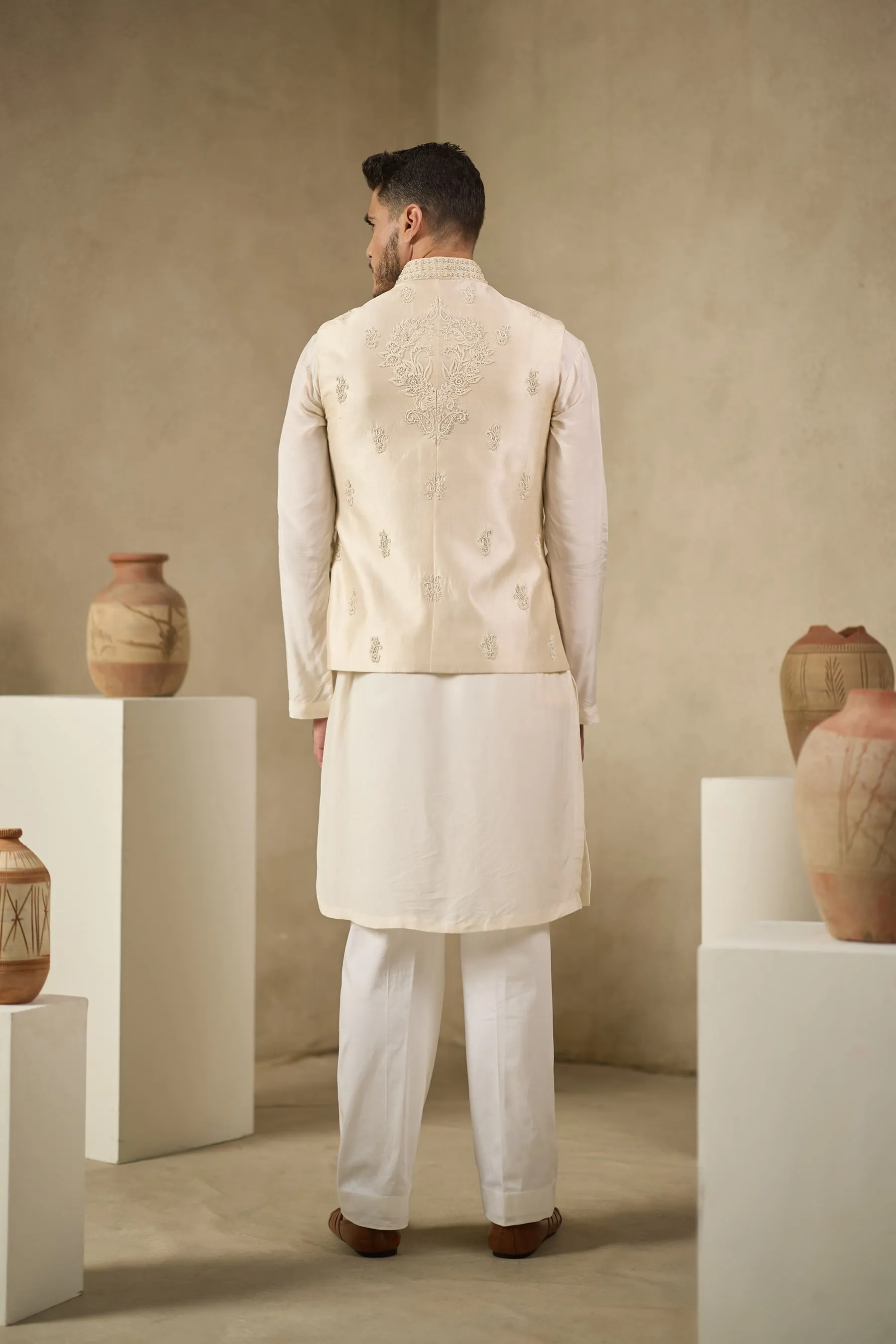
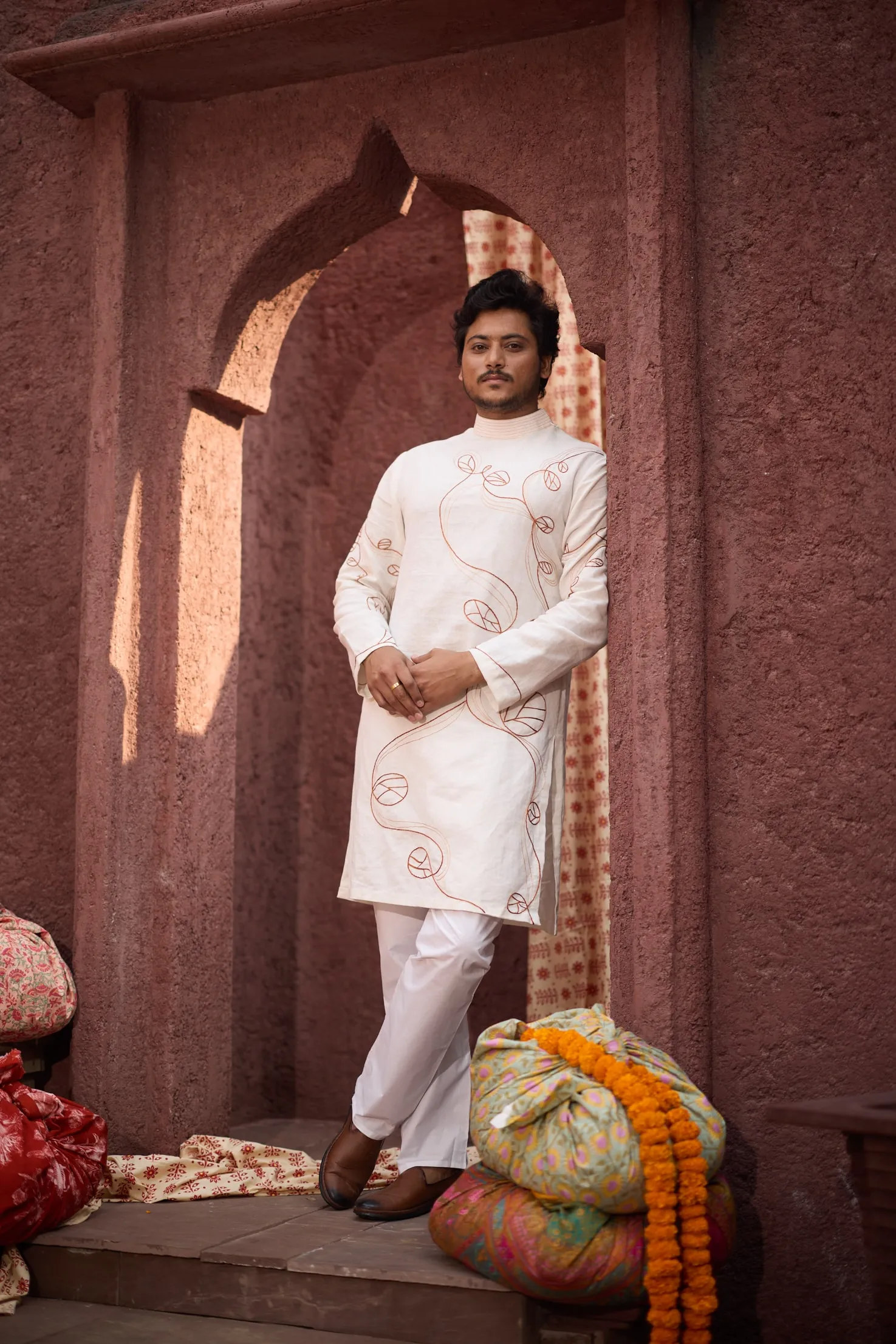
The traditional Bengali groom wears a panjabi, a long, loose-fitting kurta, usually cream, ivory or off-white, with a dhoti, a draped lower garment.
The panjabi
A well-made panjabi should:
- Fall below the knee, often mid-calf, in a long, graceful line.
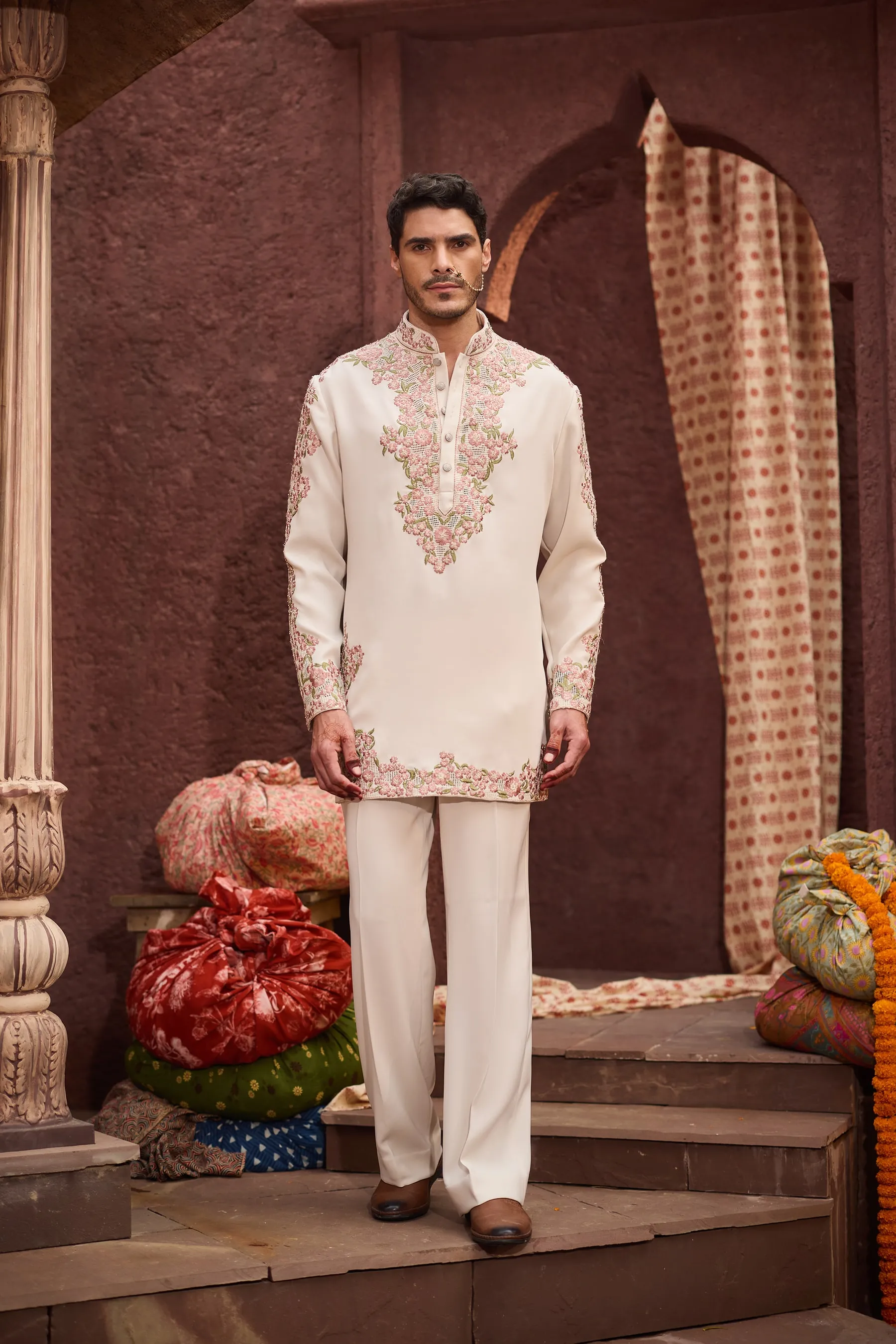
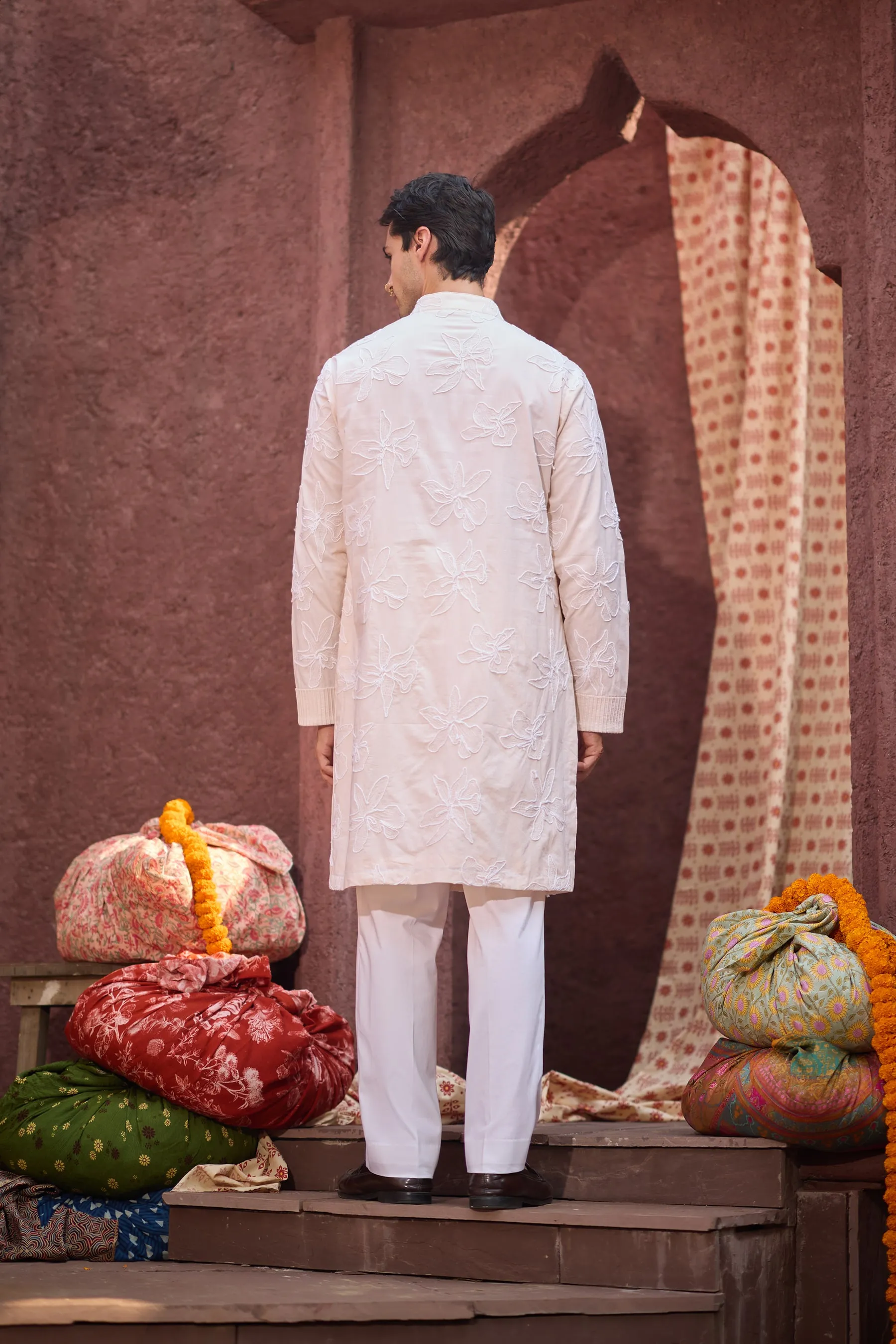
- Have a gentle, tonal embroidery, such as a fine chikankari, a woven jacquard or a delicate hand embroidery at the collar, placket and cuffs.
- Be cut from silk, silk-cotton, tussar or fine cotton, chosen for drape and breathability.
- Have a button placket, with covered or metal buttons that look elegant.
- Have a comfortable collar, often a mandarin collar or a small band.
Our kurta set collection includes pieces that adapt well to a panjabi cut, such as the Safed Bel in white, the Kinara in cream and the Gulab Kinari in ivory. At our atelier, any of these can be made longer and fuller in the panjabi style on request.
The dhoti
The dhoti is a long piece of cotton or silk draped around the waist and legs. For a Bengali groom, it is typically white or cream, with a fine gold or coloured border (the paar). It is worn in a distinctive style with pleats at the front, and the end may be tucked in or held in the hand.
Practical points:
- Choose a good dhoti fabric. Fine cotton, silk-cotton or tussar drapes well and stays cool.
- Ask for a border that complements the panjabi. A gold or maroon border is traditional.
- Practise draping. A dhoti that comes loose is a classic wedding-day worry. Some grooms prefer a pre-stitched dhoti with a hidden fastener, which holds its shape and is easier to put on.
- Wear a comfortable undergarment and consider a lightweight inner layer to protect the dhoti fabric.
The chadar and shawl
A chadar or a light shawl draped over the shoulders completes the look. It can be plain or embroidered, and it adds dignity and warmth. In winter, a richer shawl or a stole is common.
The topor, mala and other accessories
The topor
The topor is the conical crown made of sola pith, worn by the Bengali groom (and the bride has a matching mukut). It is a work of craft: carved, shaped and decorated with beads, flowers and sometimes gold thread. It symbolises purity and auspiciousness. Topors are made by specialist artisans, so order yours early, and ensure that it fits your head comfortably. It should sit securely and not dig in, since you will wear it for hours.
The mala (garland)
The groom wears one or more garlands of flowers, often jasmine or marigold, during the ceremony. Choose a garland length that does not cover the embroidery on the panjabi.
The chandan and tikka
Sandalwood marks on the forehead and sometimes the arms are applied by the family and are part of the ritual.
The belt and sword
Some grooms wear a ceremonial sword or a decorative belt, though this varies by family. Check with the elders.
Footwear
Traditional leather sandals (chappals) or embroidered mojaris suit the panjabi and dhoti. You will remove your shoes at certain rituals, so choose a comfortable, easy-to-slip-on pair. See our guide to male guest outfits for footwear advice that applies here too.
Colours and fabrics: beyond cream
While cream and ivory are traditional, the modern Bengali groom has more choice.
- Cream, ivory and off-white: the classic, timeless and dignified.
- Pale gold and champagne: a festive variation, especially with a subtle border.
- Saffron and pale yellow: for the gaye holud or a morning ceremony.
- Soft pastels: dusty rose, sage or powder blue for more contemporary families.
- Tussar and matka silk: earthy, natural textures that suit a heritage look.
- Kantha and hand-embroidered details: a nod to Bengal’s craft heritage, used sparingly on a collar or cuff.
- Jamdani and Dhakai weaves: exquisite, fine woven patterns that suit a stole or a panjabi.
Silk and fine cotton are the best choices for the heat and humidity of Bengal and Bangladesh. Avoid heavy synthetic fabrics, which trap heat and creases.
Gaye holud: the turmeric ceremony
The gaye holud is one of the most joyous events of a Bengali wedding. The groom is anointed with turmeric by family members, who bring sweets, fish and gifts for the bride. The groom’s outfit should be light and happy to be marked.
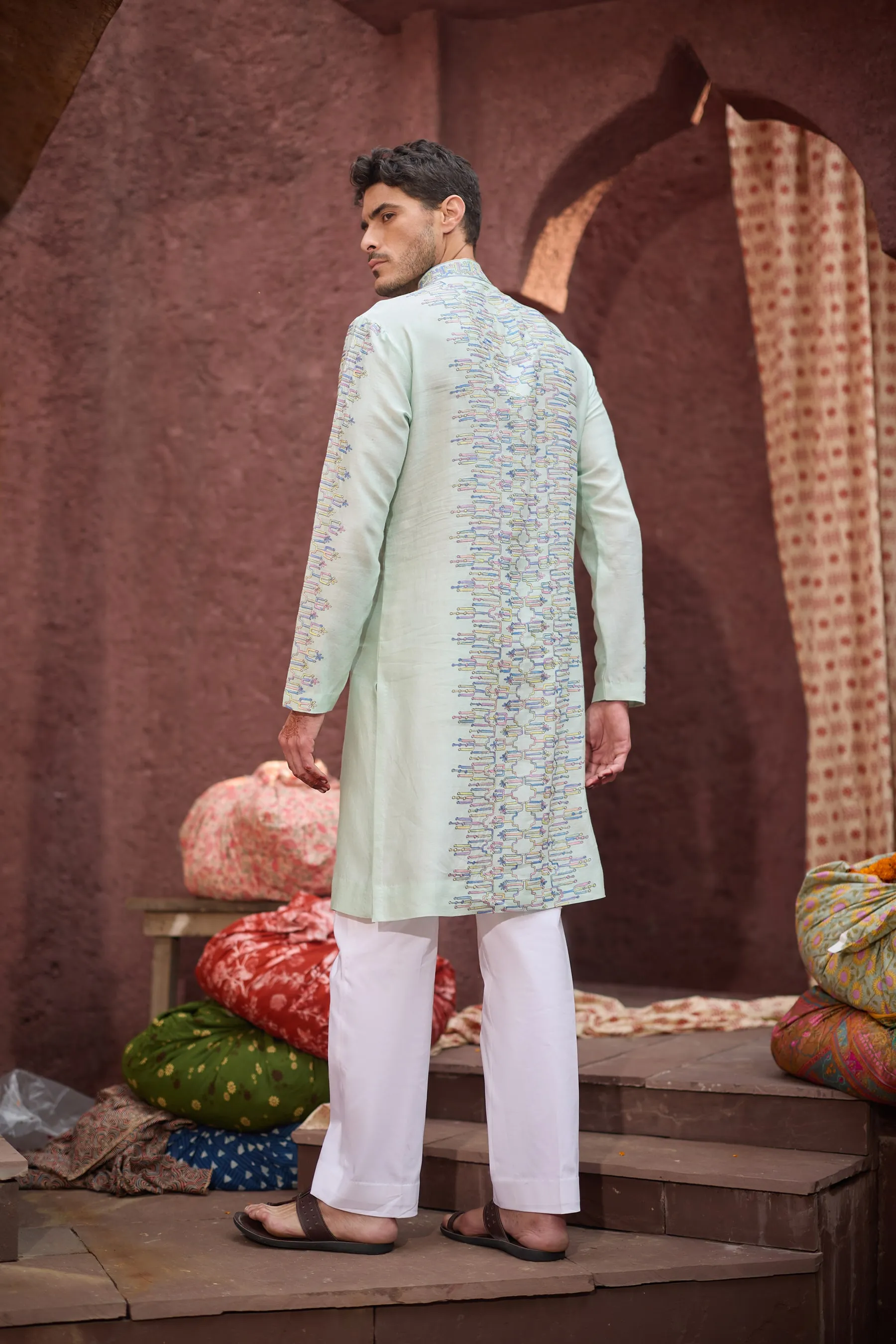
- A yellow or cream panjabi, perhaps in cotton or cotton-silk, with a simple dhoti or pyjama.
- A light stole in yellow or white.
- Avoid delicate or heavy fabrics, as turmeric stains are part of the fun.
Our haldi outfit guide discusses colours and fabrics that suit turmeric, and the principles apply to the gaye holud. See also the haldi and mehendi edit for pieces that suit daytime ceremonies.
The wedding day and the evening
On the wedding day, the groom is dressed with ceremony. A typical sequence:
- Bathing and dressing, with help from relatives. Allow ninety minutes.
- The panjabi and dhoti, followed by the chadar.
- Sandalwood and tikka, applied by elders.
- The topor and mala, fitted and checked.
- Arrival with the baraat, with conch shells, music and dancing.
- The ceremony, which can last several hours.
Because the day is long and the ceremony is seated, choose breathable fabric, a comfortable cut and a dhoti that stays in place. Pack a spare panjabi in case of spills, and keep a small kit with safety pins.
The bou bhaat and the reception
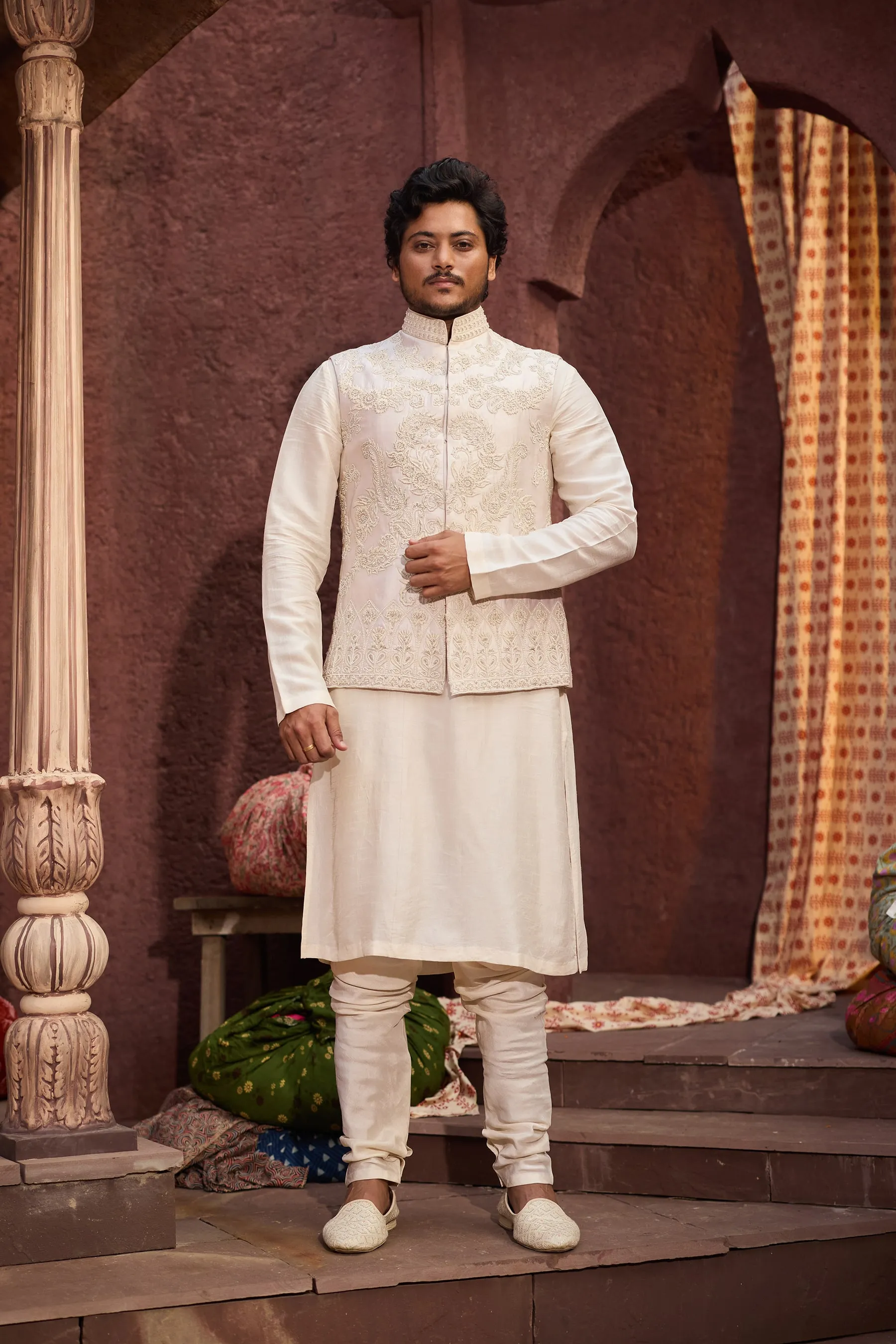
The bou bhaat, hosted by the groom’s family, welcomes the bride into her new home. The groom usually wears a festive but less formal outfit: a panjabi in a richer colour, or a kurta set with a Nehru jacket. Our Nehru jacket collection, including the Moti Jaal in ivory and the Heer in ivory, suits this.
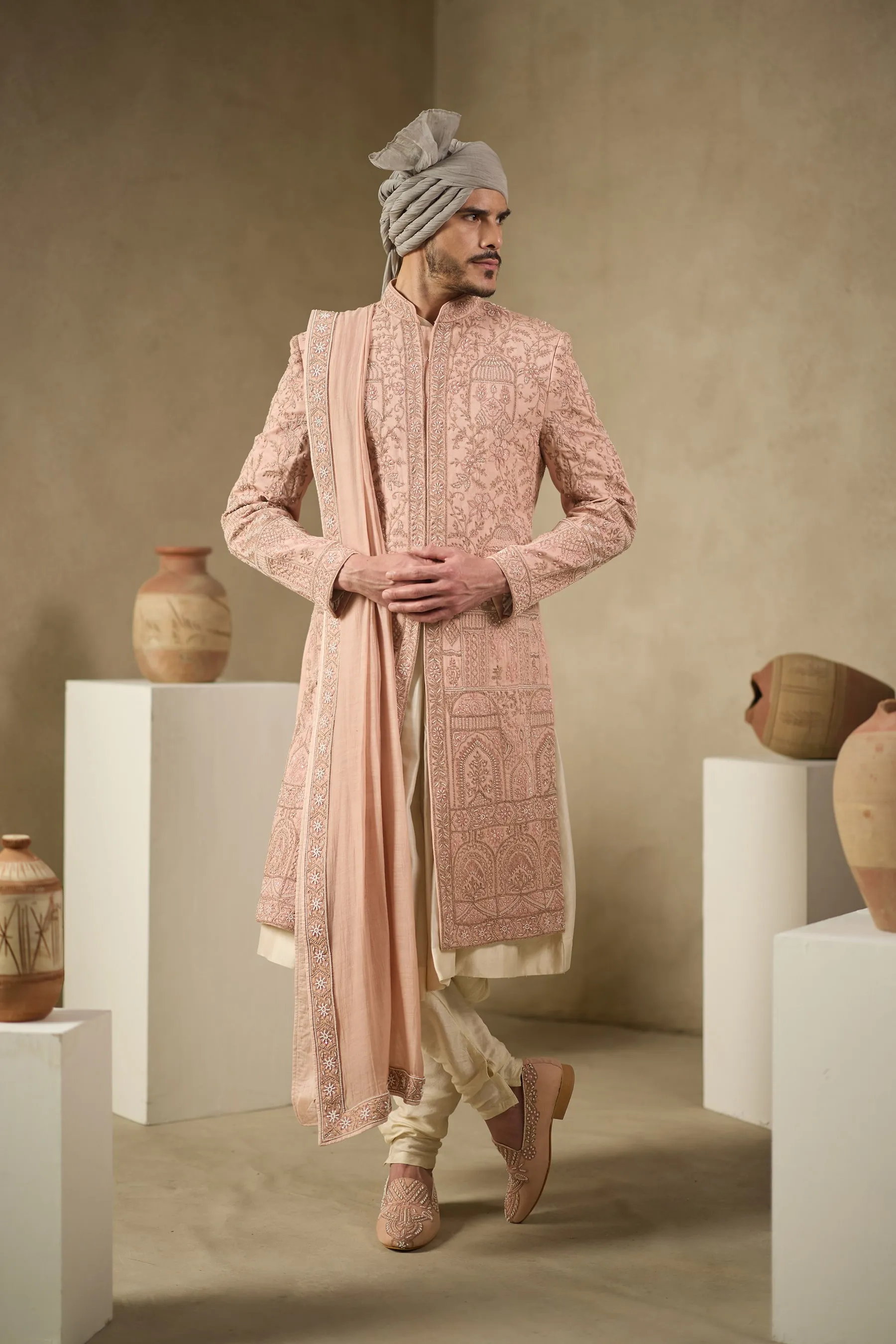
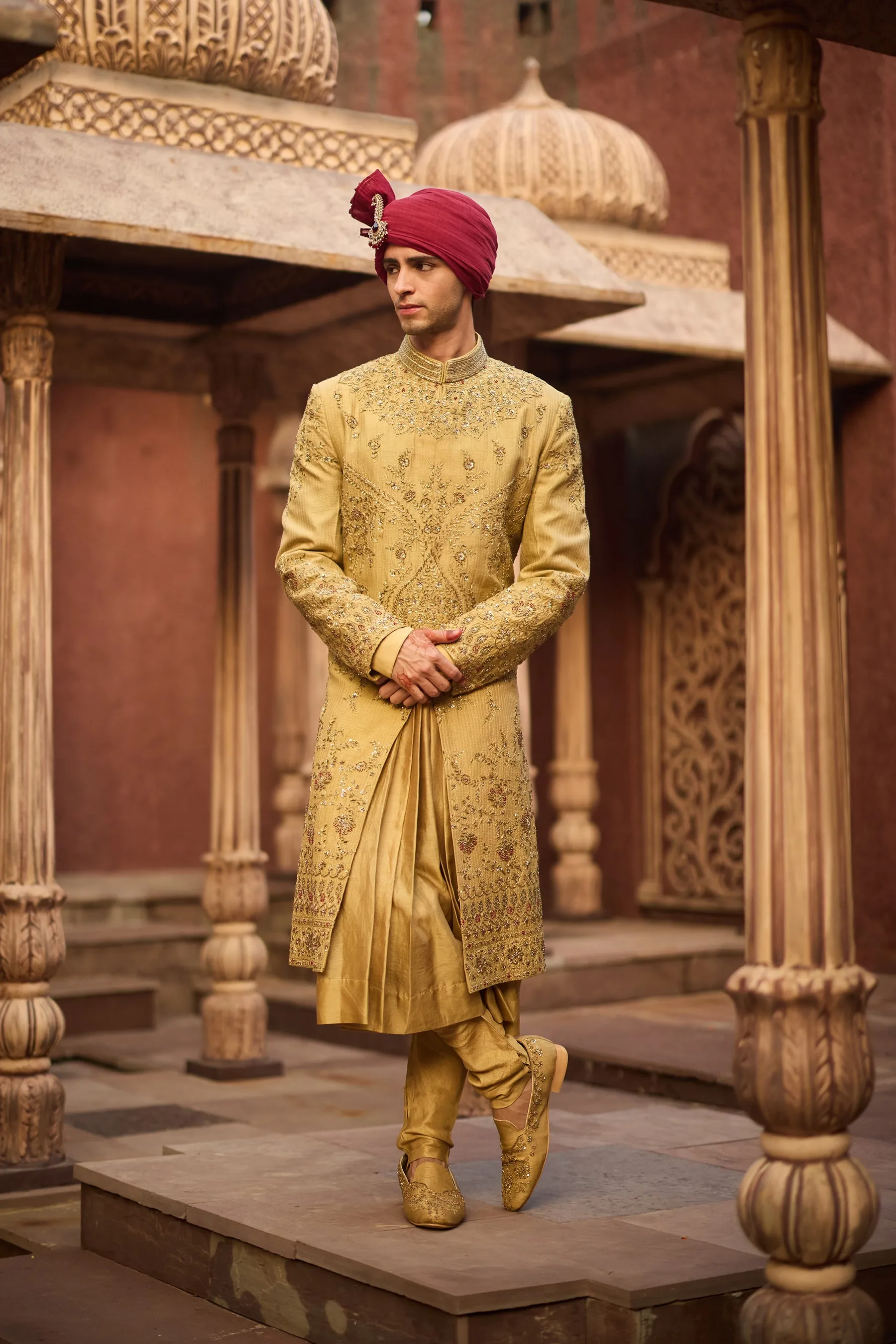
The reception, held on the evening of the bou bhaat or on another day, is a more contemporary event. A bandhgala in midnight navy or black, a tuxedo or a sherwani in a soft colour is common. See the reception outfit guide and the bandhgala collection for ideas.
Coordinating with the bride and family
The bride in a Bengali wedding traditionally wears a red Benarasi saree with gold, a shola mukut and elaborate jewellery. The groom’s cream and gold complement it beautifully. Families often coordinate: the groom’s father and brothers wear cream or off-white panjabis and dhotis, while mothers and sisters wear sarees in coordinated colours. Our guides to the father of the groom’s outfit and the groom’s brother’s outfit explain how to coordinate without matching. For friends, read about groomsmen outfits.
Planning and timeline
| When | What to do |
|---|---|
| 12 weeks before | Choose the panjabi style, fabric and colour; order the topor from a specialist. |
| 10 weeks before | Measurements for panjabi, dhoti and chadar. |
| 8 weeks before | Order; confirm accessories. |
| 4 to 5 weeks before | First fitting; check length and sleeve. |
| 2 weeks before | Second fitting; practise the dhoti and topor. |
| 1 week before | Final fitting; steam and pack. |
If the wedding is in another city or abroad, our guide to the destination wedding groom outfit covers packing and care. For general timelines, see made-to-measure timelines.
Panjabi, kurta or sherwani: what is the difference?
The terms are often used loosely, so it helps to be precise when you brief a tailor.
- A panjabi is longer and looser than a standard kurta, usually reaching the knee or below, with a straight side seam, a small collar and a button placket. It is the garment of Bengali and Bangladeshi formal dress.
- A kurta is a general term for a long shirt and varies in length, collar and cut. A kurta set pairs it with churidar or pyjama.
- A sherwani is a structured coat worn over a kurta, with a fitted body and a buttoned front, and it is a more formal and heavier garment.
If you are choosing a modern look for a Bengali wedding, a long panjabi in silk with a stole is the most authentic, a kurta set with a Nehru jacket is the most flexible, and a sherwani is best kept for the reception or the photo session. Many families like to see all three across the week: panjabi for the ceremony, kurta and jacket for the bou bhaat, and a sherwani or bandhgala for the evening.
Fit and tailoring: getting a panjabi right
A panjabi looks simple, and so any fault in fit is easy to see.
- Length. The hem should end at or just below the knee for a traditional look, and a few centimetres longer for a regal one. Check the length standing and sitting, since a panjabi rises when you sit.
- Shoulders. The shoulder seam should sit at the edge of the shoulder, not drooping. A loose panjabi can still have a clean shoulder.
- Sleeves. Full sleeves should reach the wrist bone, with the cuff open or buttoned according to taste. Avoid sleeves that drag.
- Chest and waist. A gentle shaping at the waist keeps the panjabi from billowing, but it should not cling.
- Side slits. Slits at the hem allow movement and let the dhoti show beneath. Make sure they are the right height for walking and sitting.
- Collar. A neat band or mandarin collar, not too tight.
- Buttons. Covered or antique-gold buttons that sit flat and fasten easily.
Bring your dhoti to the fittings if you can, so that the tailor sees how the panjabi falls over it. If you are wearing a pre-stitched dhoti, bring that too.
Fabrics for the Bengal climate
Bengal and Bangladesh are warm and humid for much of the year, so fabric choice matters greatly.
- Silk-cotton combines the sheen of silk with the breathability of cotton and is ideal for the panjabi.
- Tussar and matka silk have a natural, slightly rough texture that looks elegant and holds the shape.
- Fine cotton and muslin are the coolest, and look lovely with chikankari or kantha embroidery.
- Dhakai jamdani is a fine, woven fabric with patterns worked into the weave. It is expensive and exquisite, and suits a stole or a panjabi.
- Pure silk is rich but warm; choose a lighter weight for a day wedding.
- Avoid heavy brocade and polyester, which trap heat and show perspiration.
For a winter wedding, a lined panjabi in a heavier silk, with a shawl, is comfortable. See our winter wedding groom outfit guide for fabric ideas, and our summer wedding groom outfit guide for the opposite season.
Caring for silk, dhoti and topor
After the wedding, your outfit deserves care.
- Dry clean silk panjabis with a specialist, and ask for gentle cleaning to protect embroidery.
- Wash cotton dhotis gently in cold water, and iron them while damp for a crisp finish.
- Store the topor in a rigid box with tissue, away from moisture, since sola pith is delicate.
- Hang the panjabi on a padded hanger in a cool, airy place, and avoid plastic covers that trap moisture.
- Keep the garlands as a keepsake if you wish, by drying the flowers carefully.
Treated well, a panjabi can be worn again for festivals such as Durga Puja and for family weddings, and the dhoti can be re-used for years.
A short checklist for the groom
Before the wedding, check that you have the following:
- Panjabi, dhoti and chadar, fitted and steamed.
- Topor, fitted and tested for comfort.
- Garlands, ordered from the florist.
- Footwear, comfortable and cleaned.
- A spare panjabi and dhoti for the gaye holud and the bou bhaat.
- A small kit for emergencies.
- A trusted relative to help with the dhoti and chadar.
Common mistakes to avoid
- A panjabi that is too short. The long line is part of the elegance.
- A dhoti you have not practised in. Rehearse before the day.
- A tight topor. Ask for a comfortable fit.
- Heavy fabric in humid weather. Choose silk-cotton or fine cotton.
- Overdoing embroidery. The Bengali aesthetic favours restraint.
- Forgetting the bou bhaat and reception. They deserve their own outfits.
Frequently asked questions
What does a Bengali groom wear?
A cream or ivory silk or cotton panjabi with a dhoti, a chadar, a topor and a garland.
What is a topor?
A conical crown made of sola pith worn by the groom.
Can I wear a sherwani?
Yes, at the reception or for photographs, though the panjabi and dhoti are traditional for the ceremony.
How early should I order?
Eight to ten weeks before, with the topor ordered earlier.
Final thoughts
The beauty of a Bengali groom’s outfit lies in its simplicity: a long, soft panjabi, a crisp dhoti and a topor that lifts the whole picture. Choose fine fabrics, practise the drape and let the details speak. If you would like help planning the outfit, book an appointment and we will take you through fabrics, cuts and fittings.
Shop the looks
Browse the kurta set collection, the Nehru jacket collection and the haldi and mehendi edit, or see the reception edit for the evening.