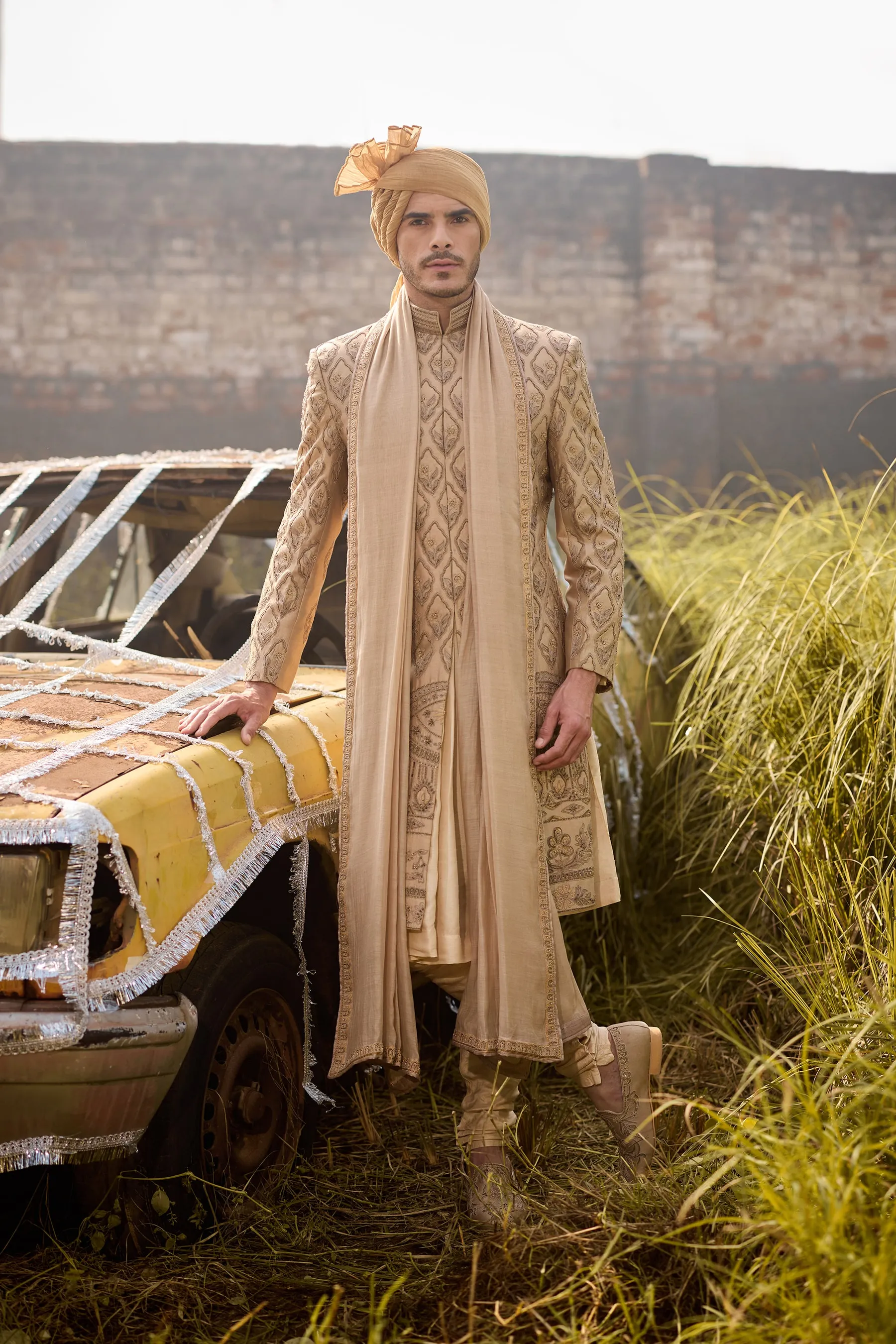
A South Indian wedding is a morning of rituals: the sound of the nadaswaram, the fragrance of jasmine, the chanting of mantras and the golden glow of silk. The groom’s attire is part of this rhythm, simple in its basics and rich in detail. A silk veshti, an angavastram and sometimes a silk shirt or kurta form the core, and the clothes are worn with the quiet confidence of tradition. This guide explains what a South Indian groom wears, from the engagement to the reception, covering Tamil, Telugu, Kannada and Malayali traditions, with advice on fabric, colour, fit, accessories and planning.
Customs vary by community, family and region, so treat our advice as a framework and consult the elders in your family. For other communities, see our guides to the Bengali wedding outfit, Sikh wedding outfit and nikah and walima outfit, and the overview of what the groom wears at each ceremony.
What do South Indian grooms wear? The basics
South India is not one tradition but several. The terms differ, but the basics are shared.
- The veshti (Tamil), panche (Kannada), panchakattu or dhoti (Telugu) and mundu (Malayalam) is a long, unstitched cloth wrapped around the waist and legs. For weddings, it is usually silk or fine cotton, in cream, ivory or off-white, with a gold or coloured border.
- The angavastram (also called uttariyam or shalya) is a cloth worn over the shoulder or across the chest, often matching the veshti border.
- A silk shirt or kurta is worn by many modern grooms, especially for the reception line, the engagement and when the groom is not bare-chested.
- Accessories include a garland, sandalwood paste, a sacred thread and, in some traditions, a turban or a headpiece.
At a traditional Tamil Brahmin or Telugu wedding, the groom may wear only the veshti and angavastram for the muhurtham, with the upper body bare apart from the sacred thread. Many modern families allow a silk shirt or a kurta. Follow the family’s lead.
The stages of a South Indian wedding and the groom’s look
The sequence differs by community, but a typical programme includes:
- Nischayathartham or engagement: the formal betrothal, with exchange of gifts. A silk shirt with a veshti or a kurta with a Nehru jacket.
- Pre-wedding rituals (such as the pandhakkal or mehendi): relaxed, traditional clothing.
- Kasi yatra: a playful ritual in which the groom pretends to leave for a pilgrimage to Kasi, with an umbrella, a walking stick and a bag, until the bride’s father persuades him to return and marry. The groom wears the veshti and angavastram.
- Oonjal (swing ceremony): the couple sit on a swing while women sing. A veshti and silk shirt or angavastram.
- Muhurtham: the main ceremony, held at an auspicious time, often early in the morning. The silk veshti and angavastram are essential.
- Reception: an evening party, where many grooms change into a bandhgala, sherwani or suit.
The core outfit, then, is the veshti and angavastram, with the reception as an opportunity for a contemporary change.
The silk veshti: fabric, border and colour
Fabric
The veshti for a wedding is usually silk. Mysore silk, Kanchipuram silk, Pochampally silk, Kerala kasavu and Dharmavaram silk are well known, and each has a different feel. Fine cotton with a gold border (such as Kerala’s kasavu) is more breathable and common in warm weather. If you are choosing, remember:
- Pure silk has a rich sheen but can be warm.
- Silk-cotton blends breathe and drape well, ideal for a long ceremony.
- Kasavu and fine cotton are cool, simple and elegant, especially in Kerala.
Border
The border (kara, or the zari edge) is a defining feature. A gold border suits cream and ivory beautifully, while a maroon, green or mustard border adds colour. The border should be proportionate: a narrow border looks refined, and a wide one looks bold. Coordinate the border with the bride’s saree if the families wish.
Colour
- Cream, ivory and off-white are the classic choice, with a gold border.
- Pale yellow or sandalwood is auspicious and warm.
- Light pastels are increasingly chosen for modern weddings, but check with the family.
- Deep colours such as maroon or green are more common for the bride’s saree than the groom’s veshti.
The drape
The veshti is draped in a particular style that varies by region. A Tamil veshti is wrapped and tucked, often with a pleated front; a Kerala mundu is tied with a distinctive knot, often with a folded end; an Andhra panchakattu is worn with a pleated back tuck. Because the drape can slip, many grooms prefer:
- A pre-stitched veshti with a hidden fastening, which holds the shape and is quick to wear.
- A practised drape, rehearsed several times before the day.
- A trusted relative to help on the morning.
- A comfortable undergarment for security.
The angavastram: the finishing touch
The angavastram is draped over the shoulder, across the chest or tied around the waist. It should complement the veshti, with the same border and a matching or contrasting colour. In winter or air-conditioned halls, a larger, warmer angavastram is practical; in summer, a lighter one is more comfortable.
Practical points:
- Pin it discreetly with a small brooch or safety pin so that it does not slip during rituals.
- Choose a length that drapes well, neither too short nor trailing.
- Match the quality of the angavastram to the veshti, since mismatched fabrics show.
Silk shirt, kurta or sherwani: when the groom covers up
Not every groom wears only the veshti. Modern families and many communities accept an upper garment.
The silk shirt
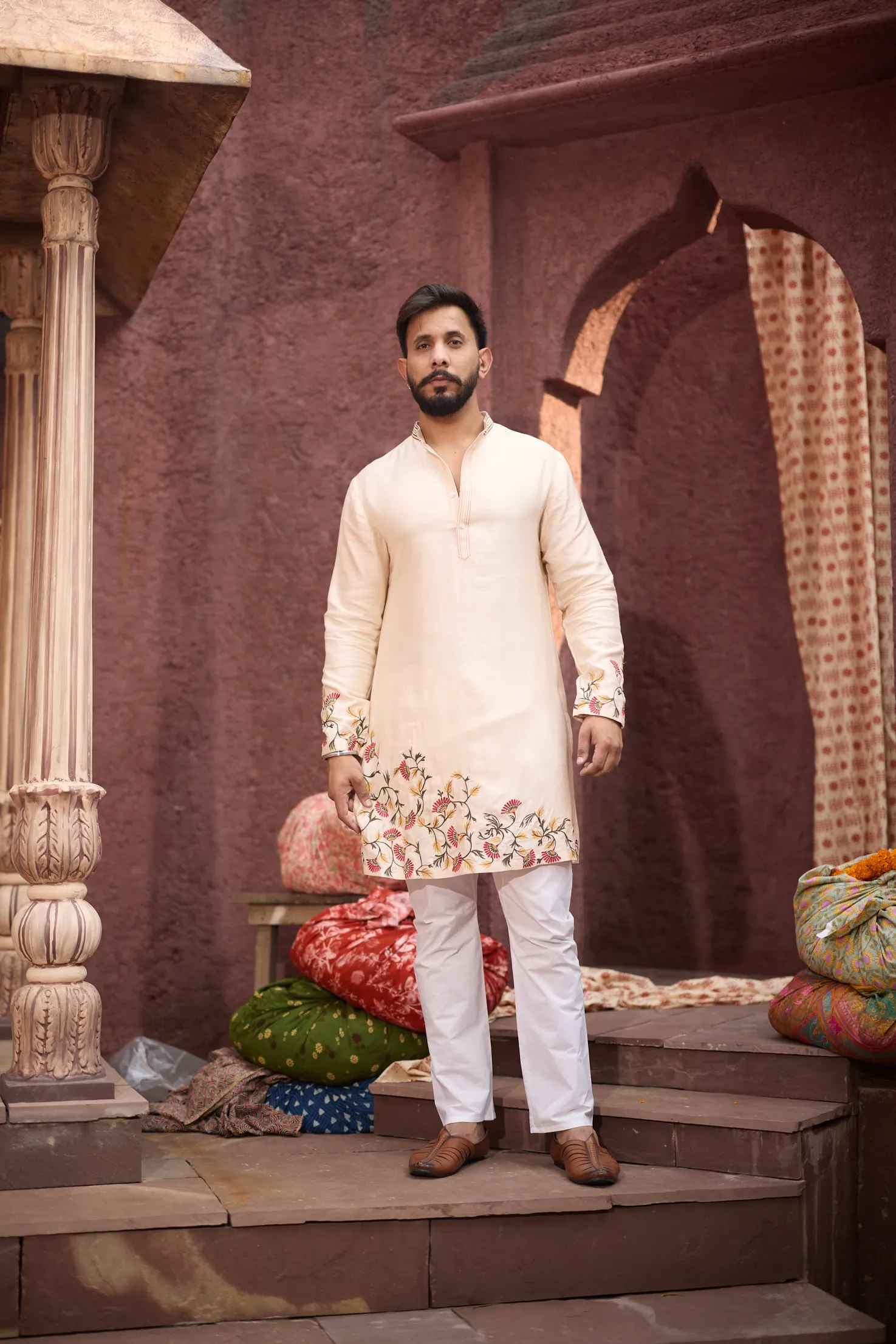
A silk shirt in cream, gold or pastel, tucked or untucked, worn with a veshti, is the most common modern choice. It should be fitted but comfortable, with a collar that does not dig, and sleeves that are the right length. Our kurta set collection, which includes the Kinara in cream, can be adapted to a silk kurta paired with a veshti.
The kurta with a Nehru jacket
For the engagement and the oonjal, a kurta with a Nehru jacket and a veshti or pyjama gives a polished, flexible look. See our Nehru jacket collection.
The sherwani
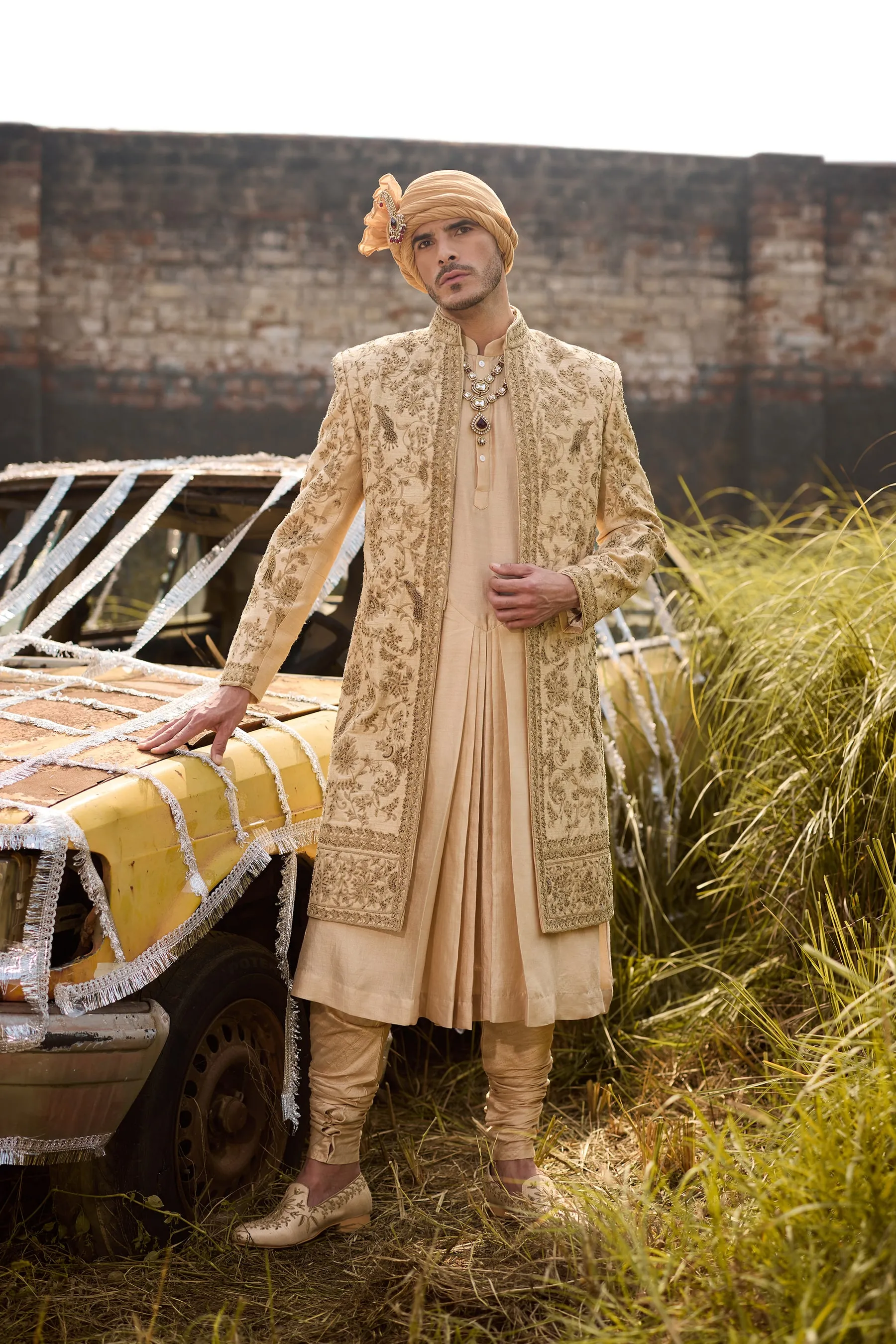
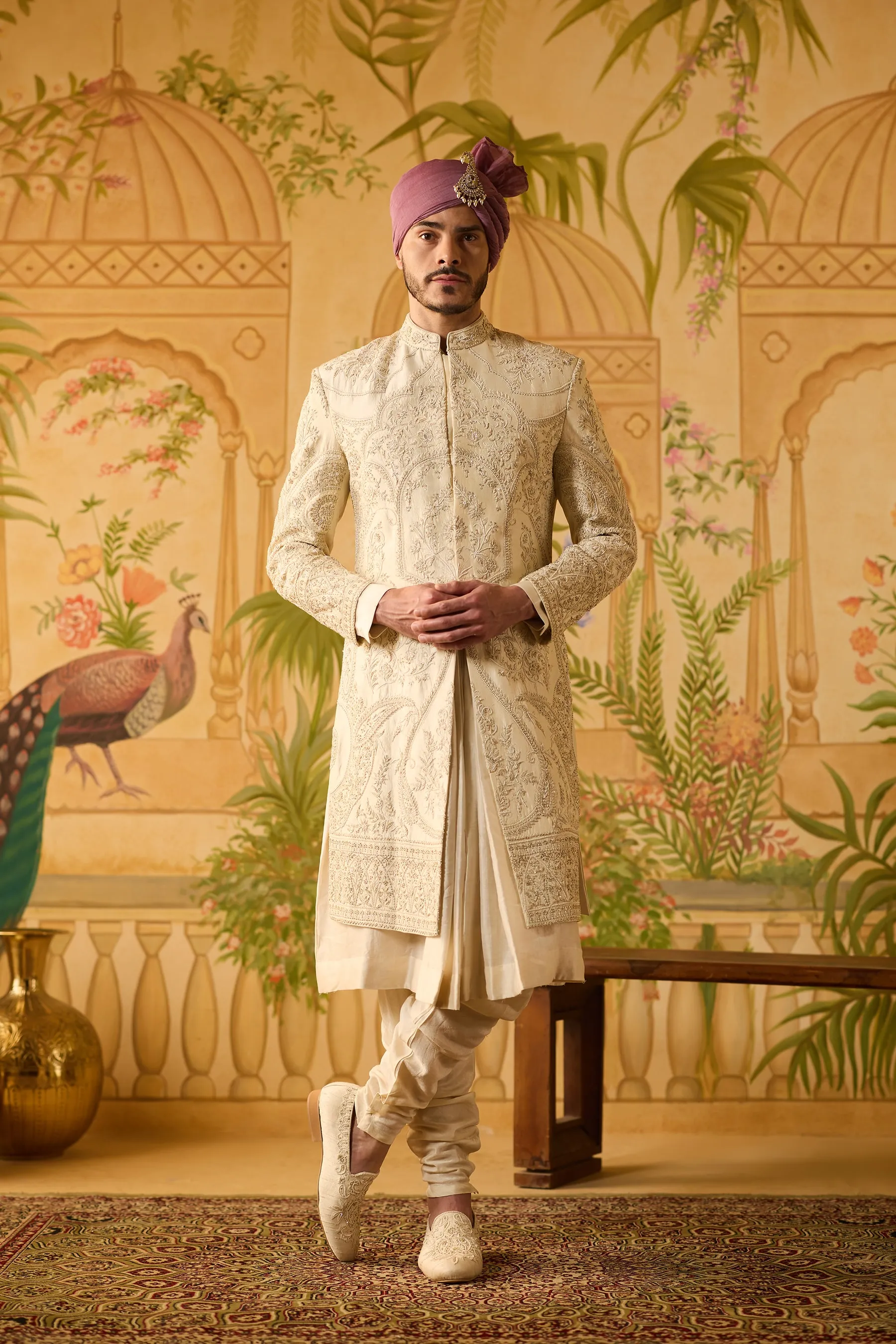
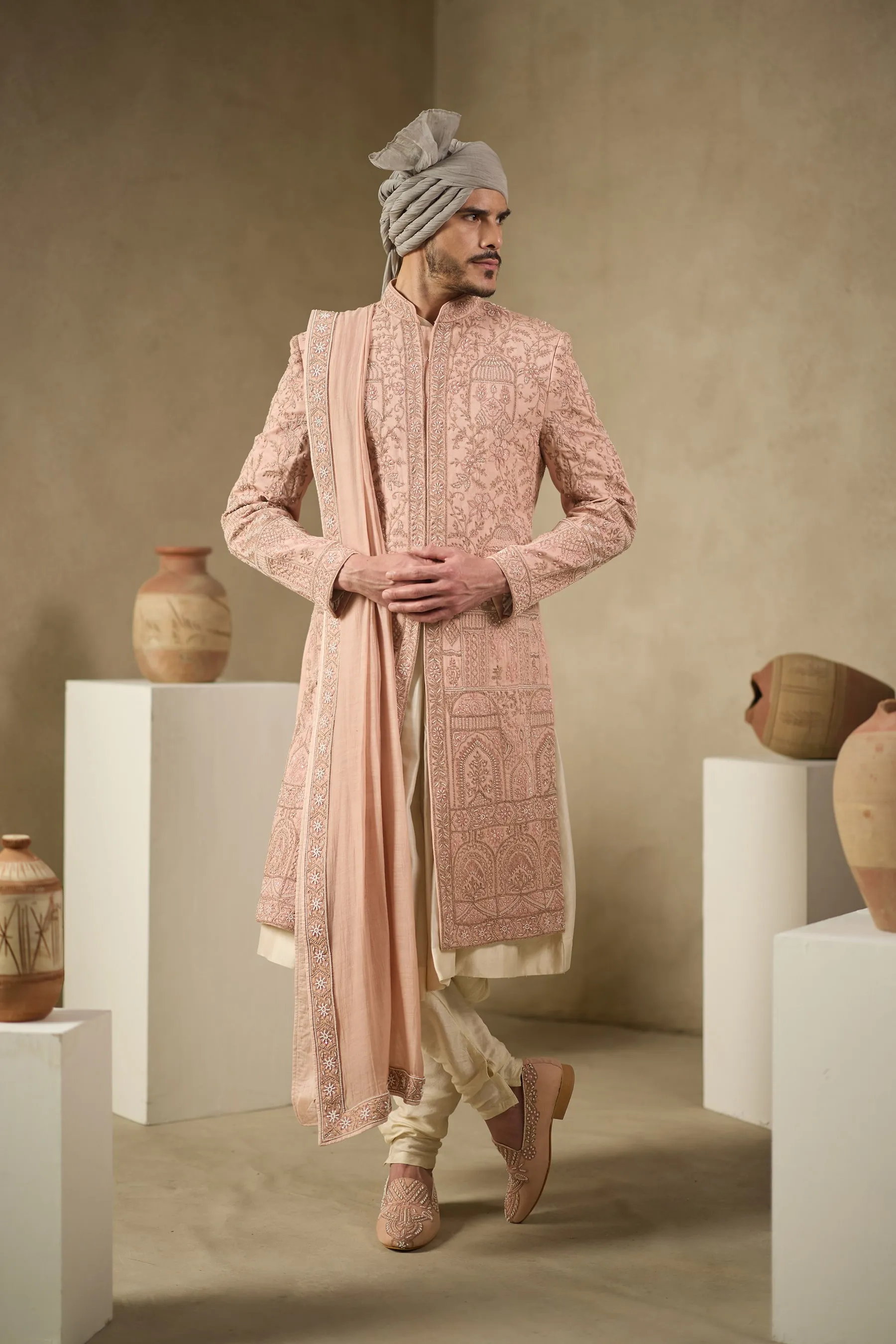
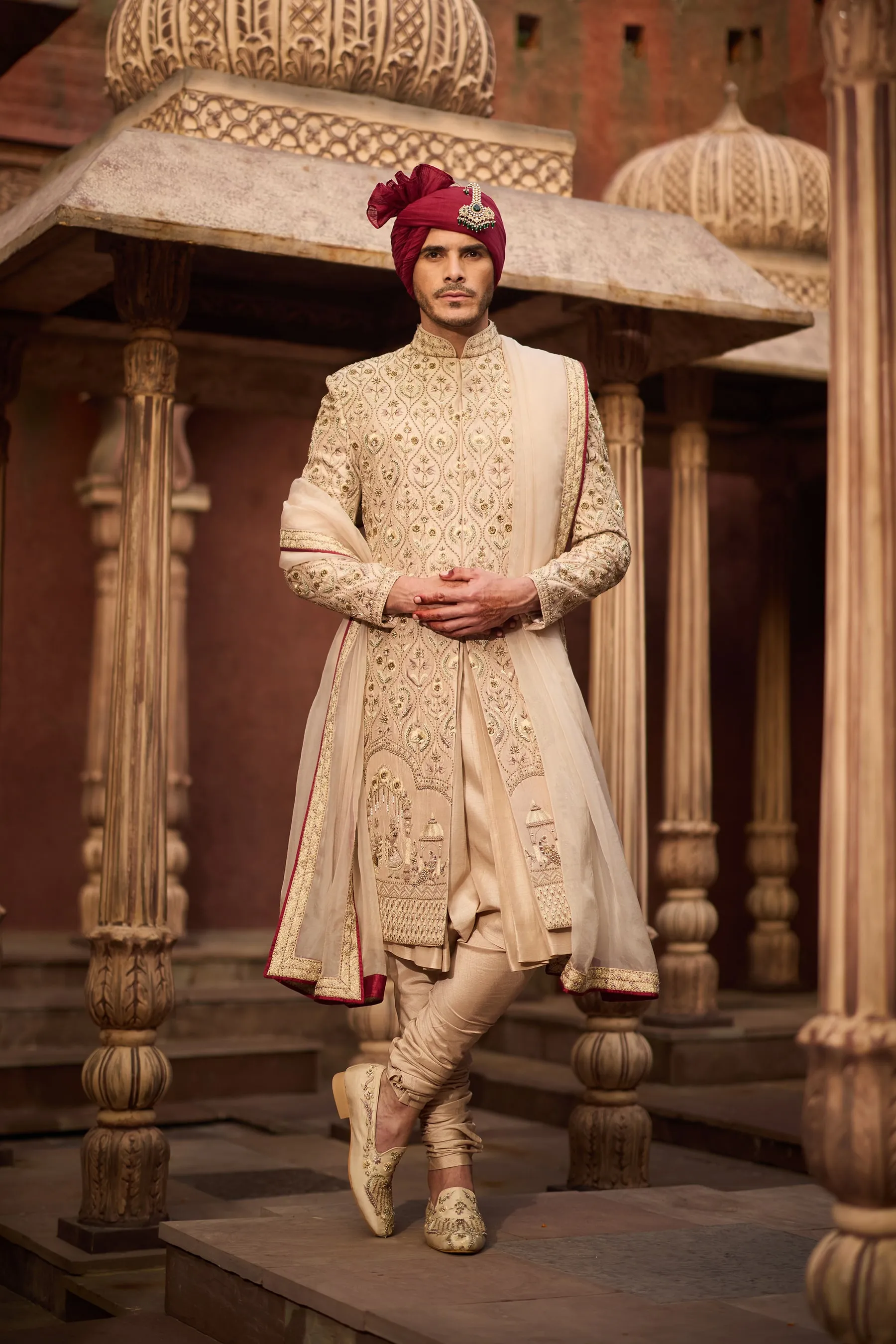
A sherwani is not a traditional choice for the muhurtham, but it is popular for the reception and the engagement in many families, especially in cities and in the diaspora. Our Zarbaft sherwani in gold-beige and the Leher in ivory suit a South Indian palette of cream and gold. See the sherwani collection for more.
If you are unsure which upper garment to choose, speak to the elders and the priest, as expectations differ. Our guide to sherwani vs achkan vs bandhgala may help you choose a silhouette for the reception.
Accessories and details
- Garland (mala): fresh flowers such as jasmine, marigold and roses. Choose a length that lets the angavastram show.
- Sandalwood and kumkum: applied by family or the priest.
- Sacred thread (yajnopavita or poonool): worn by the groom in many Brahmin communities.
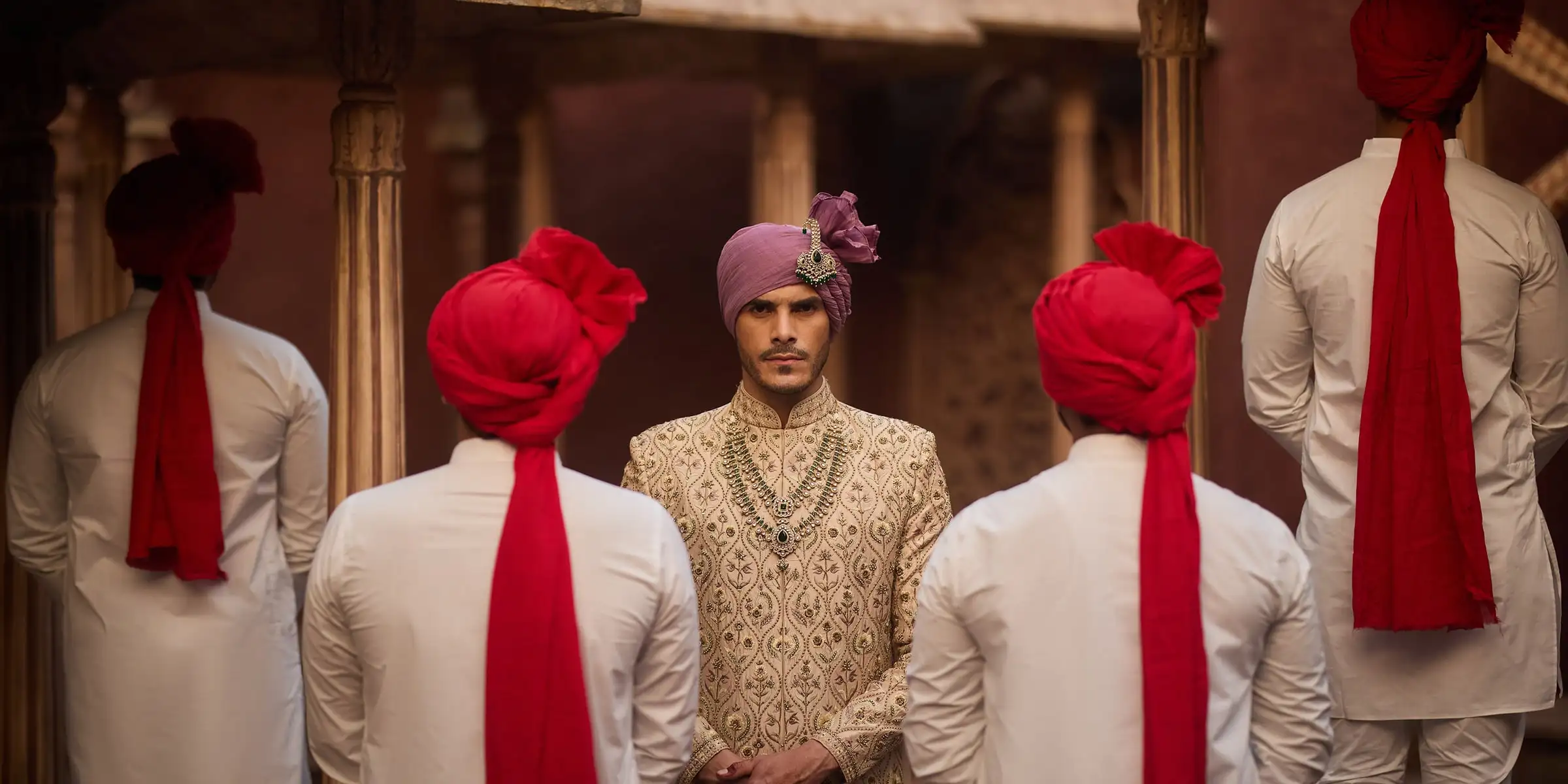
- Headpiece: some grooms wear a turban or a small cap, particularly at Telugu or Kannada weddings.
- Jewellery: minimal, often a gold chain, a ring and a thin bracelet, as the family’s custom allows.
- Footwear: you will remove your shoes for the rituals; choose clean, comfortable sandals or mojaris.
The reception: a contemporary change
After the muhurtham, many grooms change for the evening reception. This is the time for a bandhgala, a sherwani or a suit. The reception is typically held in a hall with guests, music and a stage, so comfort and polish matter.
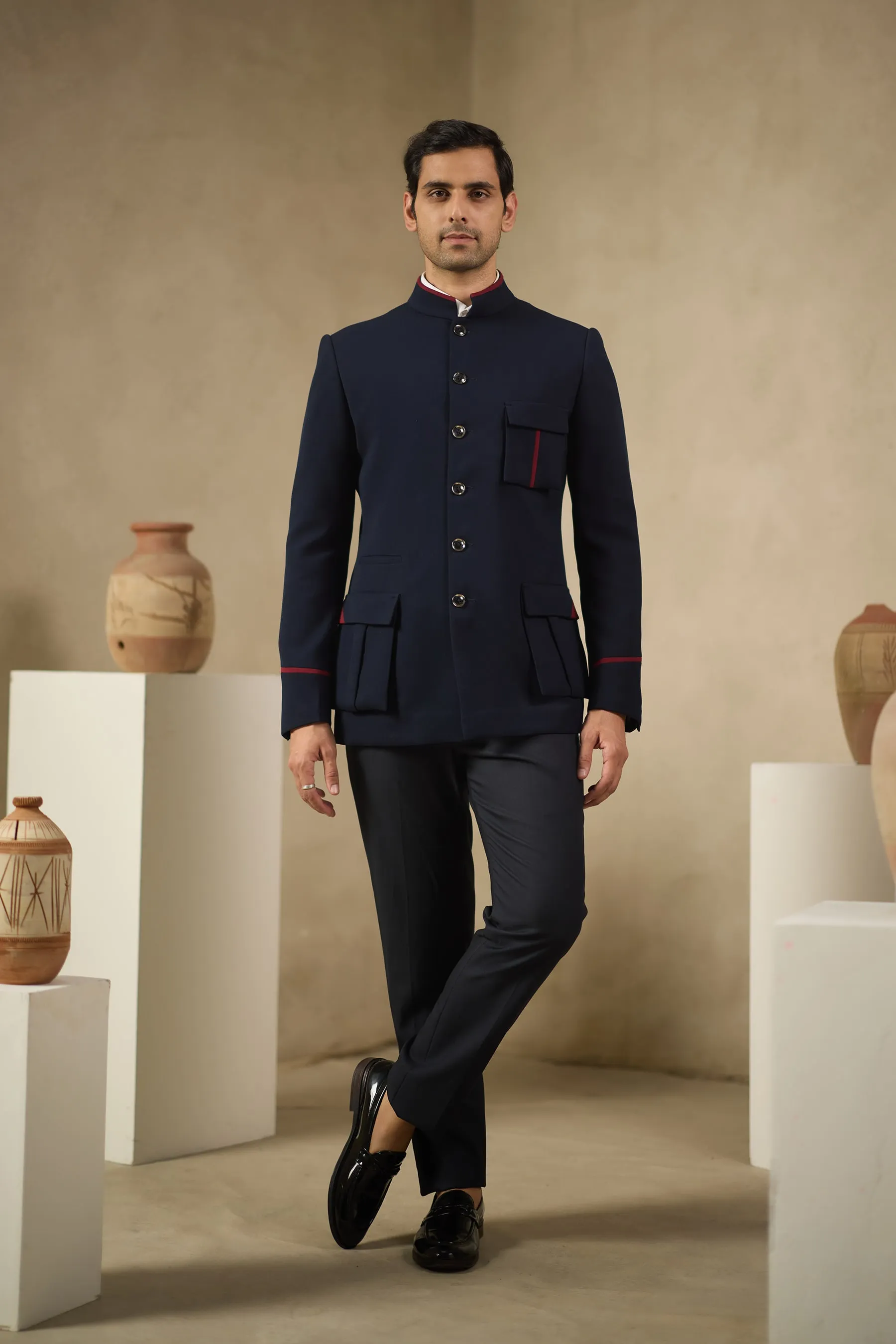
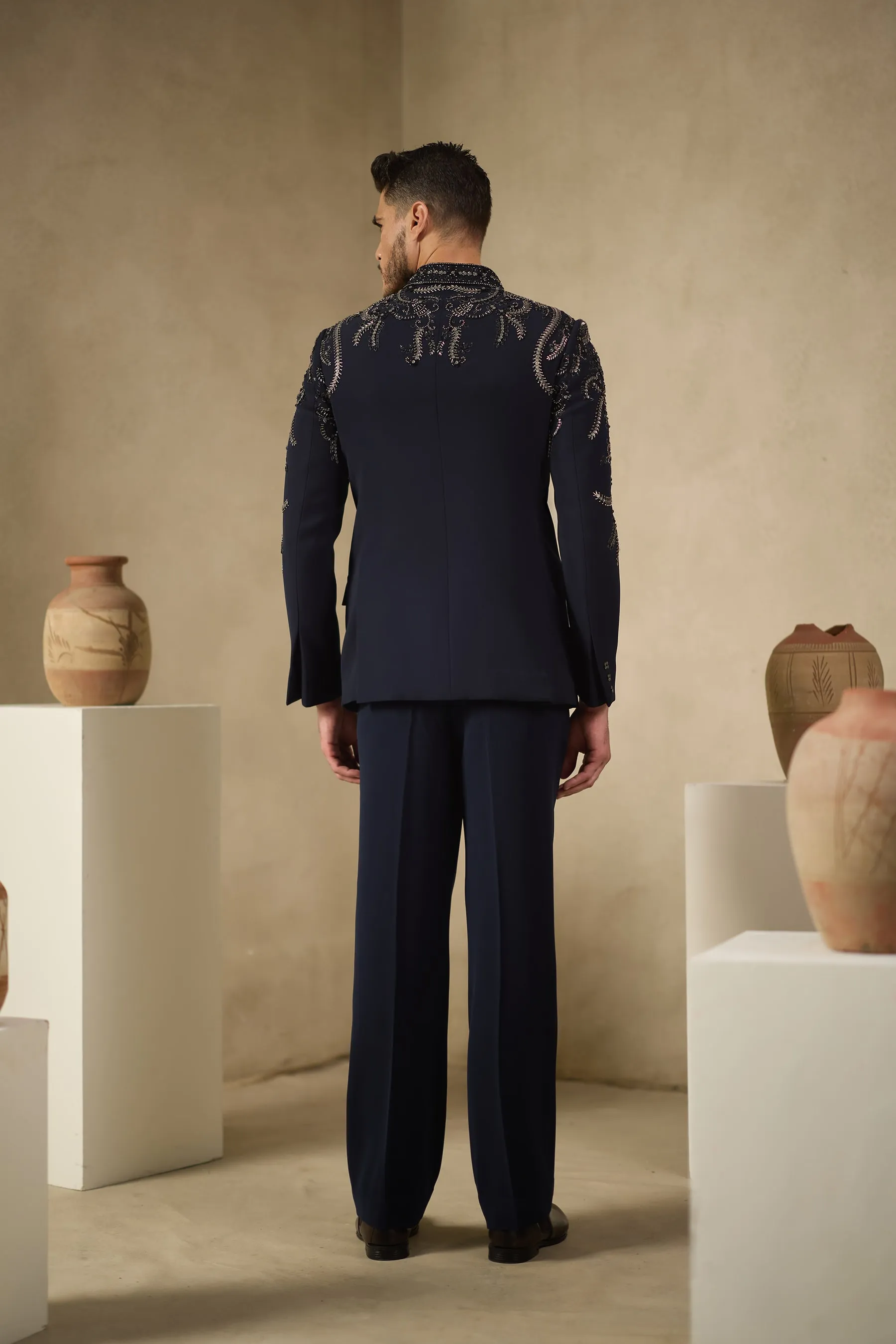
- A midnight navy bandhgala is a favourite: sharp, modern and easy to wear. See the Aftab in midnight navy and the Jodhpur in navy in our bandhgala collection.
- A sherwani in ivory, gold or champagne carries the South Indian palette into the evening. See the Suvarn in champagne gold.
- A tuxedo or a dark suit suits a black-tie reception.
Our reception outfit guide and the reception edit cover styling and fit, and the cocktail party outfit guide is useful if there is a cocktail evening.
Tailoring and fit for a silk veshti set
A veshti is unstitched, so it is not tailored in the usual way, but the surrounding pieces are.
- Measure the length from the waist to the ankle, allowing for the drape and the pleat.
- Choose the shirt or kurta length to sit well over the veshti: slightly longer than a western shirt, or at hip level.
- Check the sleeve and collar against the angavastram, so that the layers do not bulk at the shoulder.
- Test sitting. You will sit cross-legged for a long time, and the veshti must allow it.
- Try the full outfit, including the angavastram, garlands and footwear, before the wedding.
Our atelier can make a shirt or kurta to match your veshti fabric, and can advise on pre-stitched veshtis.
Planning and timeline
| When | What to do |
|---|---|
| 12 weeks before | Choose the veshti fabric and border; talk to the family about the upper garment. |
| 10 weeks before | Order the veshti and angavastram; take measurements for the shirt. |
| 8 weeks before | Order the reception outfit; confirm accessories. |
| 4 to 5 weeks before | First fitting; test the drape. |
| 2 weeks before | Second fitting; rehearse the full outfit. |
| 1 week before | Final check; steam and pack. |
For more detail on the process, see made-to-measure timelines. If the wedding is at a destination or abroad, read the destination wedding groom outfit guide for packing and care of silk.
Family and friends
Fathers, brothers and uncles often wear matching veshtis, with angavastrams in coordinated colours. Our guides to the father of the groom’s outfit and the groom’s brother’s outfit explain how to coordinate. For friends and groomsmen, see groomsmen outfits, and for guests, the male guest guide, which notes that guests at South Indian weddings often wear a silk shirt with a veshti or a kurta with a light jacket.
Regional differences: Tamil, Telugu, Kannada and Malayali grooms
Each community has its own nuances, and knowing them helps you avoid small errors.
Tamil weddings
A Tamil groom, particularly in Brahmin and many other families, wears a silk veshti in the traditional panchakachcham style with an angavastram. The upper body may be bare for the muhurtham, with the sacred thread visible, or covered with a silk shirt in modern families. The kasi yatra, the oonjal and the mangalyadharanam each have their own timings, and the groom is often dressed by family members. Dhotis with a narrow gold border are favoured, and the colour is usually cream or off-white.
Telugu weddings
A Telugu groom wears a pancha (dhoti) with an uttariyam, and the upper body is often covered with a silk shirt or kurta in modern weddings. The pelli kuthuru and pelli koduku rituals before the wedding involve turmeric and oils, so a simple outfit is chosen. For the wedding itself, a richly bordered silk pancha in cream or pale gold is common, sometimes with a turban or a small headpiece.
Kannada weddings
A Kannada groom wears a panche with a shalya, sometimes with a silk shirt, often in cream with a gold or maroon border. Mysore silk is especially prized. Many weddings are held in the morning, with simple, dignified clothing.
Malayali weddings
A Kerala groom commonly wears a cream mundu with a gold kasavu border and a matching uttariyam or shirt. The look is simple and elegant, with an emphasis on the border and the quality of the cotton or silk. Christian weddings in Kerala follow Western or semi-Western dress, with a suit or a sherwani; Hindu weddings follow the mundu tradition.
Syrian Christian, Muslim and other communities
South India also has Christian, Muslim and other wedding traditions with their own dress. A Christian groom often wears a suit or a sherwani for the church ceremony, and a Muslim groom a sherwani for the nikah. For the latter, see our nikah and walima guide. If you belong to such a tradition, adapt the principles in this guide, and the colour palette, to your own customs.
Making the outfit comfortable for a long ceremony
A South Indian ceremony may last a couple of hours, much of it seated on the floor or on a low platform. A few practical measures make the outfit comfortable.
- Choose a veshti that is the right length, so it does not trip you or ride up.
- Wear a soft undergarment that stays in place without chafing.
- Avoid a heavy angavastram in hot weather; choose a lighter one.
- Eat and drink beforehand, since the ritual runs long and an empty stomach does not help.
- Take a break between the ceremony and the reception to refresh and change.
- Carry a small towel or handkerchief for perspiration, tucked discreetly.
If the ceremony is outdoors or in an unairconditioned hall, consider a lighter kasavu or fine cotton veshti. Your tailor can advise on weights.
Gifts, family customs and the groom’s mother
The groom’s mother often plays a role in choosing and presenting the veshti and angavastram. In many families, the bride’s side presents the groom with a new veshti and a silk shirt as part of the ritual (the “koorai” or the “muhurtha pudavai” for the bride, and the “veshti” for the groom). Ask the family which outfits are presented, so that you do not duplicate or contradict them. It is a lovely gesture to wear the veshti presented by the bride’s family for part of the ceremony.
Common mistakes to avoid
- Draping the veshti for the first time on the wedding morning. Practise.
- Heavy silk in a hot hall. Choose a lighter weight or a blend.
- A border that clashes with the bride’s saree. Coordinate with her family.
- Ignoring the upper garment. Ask the elders what is expected.
- Tight shirts that restrict sitting. Ease matters.
- Skipping the reception outfit plan. It deserves its own fitting.
Frequently asked questions
What does a South Indian groom wear?
A silk veshti with an angavastram, sometimes with a silk shirt or kurta, in cream or ivory with a gold border.
What is an angavastram?
A cloth draped over the shoulder, matching the veshti border.
Can I wear a sherwani?
At the reception, yes. For the muhurtham, a veshti is traditional.
How early should I order?
Eight to ten weeks before, with a fitting for the upper garment.
Final thoughts
South Indian wedding attire is elegant in its restraint: the beauty lies in the quality of the silk, the proportion of the border and the grace with which the cloth is worn. Choose with the family, practise the drape and give yourself time. If you would like help with the shirt, kurta or the reception outfit, book an appointment and we will plan the wardrobe with you.
Shop the looks
Browse the sherwani collection, the bandhgala collection and the kurta set collection, or see the baraat and pheras edit.