Walk into any wedding atelier and you will hear three words repeated: sherwani, achkan and bandhgala. To many grooms they sound like the same garment in different names, and in casual conversation they are often used interchangeably. They are not the same. Each has its own cut, length, history and place in the wedding. Choosing the right one for the right ceremony is one of the most useful decisions you can make, and it is easier than it sounds once you know what to look for. This guide explains the differences, when each is appropriate and how to choose.
For the full wedding schedule, see our overview of what the groom wears at each ceremony. You can also browse our sherwani, achkan and bandhgala collections.
A brief history of the three garments
The three garments share a root in the long coats worn at the courts of North India. The achkan is generally traced to the Mughal-influenced coats of the 18th and 19th centuries, with a closed neck and a fitted line. The sherwani, which developed in a similar environment, became associated with the aristocracy of Hyderabad, Awadh and Delhi in the 19th and 20th centuries and grew more ornate over time. The bandhgala, or Jodhpuri coat, is usually credited to the court of Jodhpur in the late 19th century, where a closed-collar jacket worn with trousers combined Indian and British tailoring.
You do not need to know the history to choose well, but it helps explain why each garment carries its own level of ceremony: the sherwani as court dress, the achkan as formal daywear and the bandhgala as a refined, modern uniform of Indian formal wear.
Sherwani: the ceremonial coat
What it is
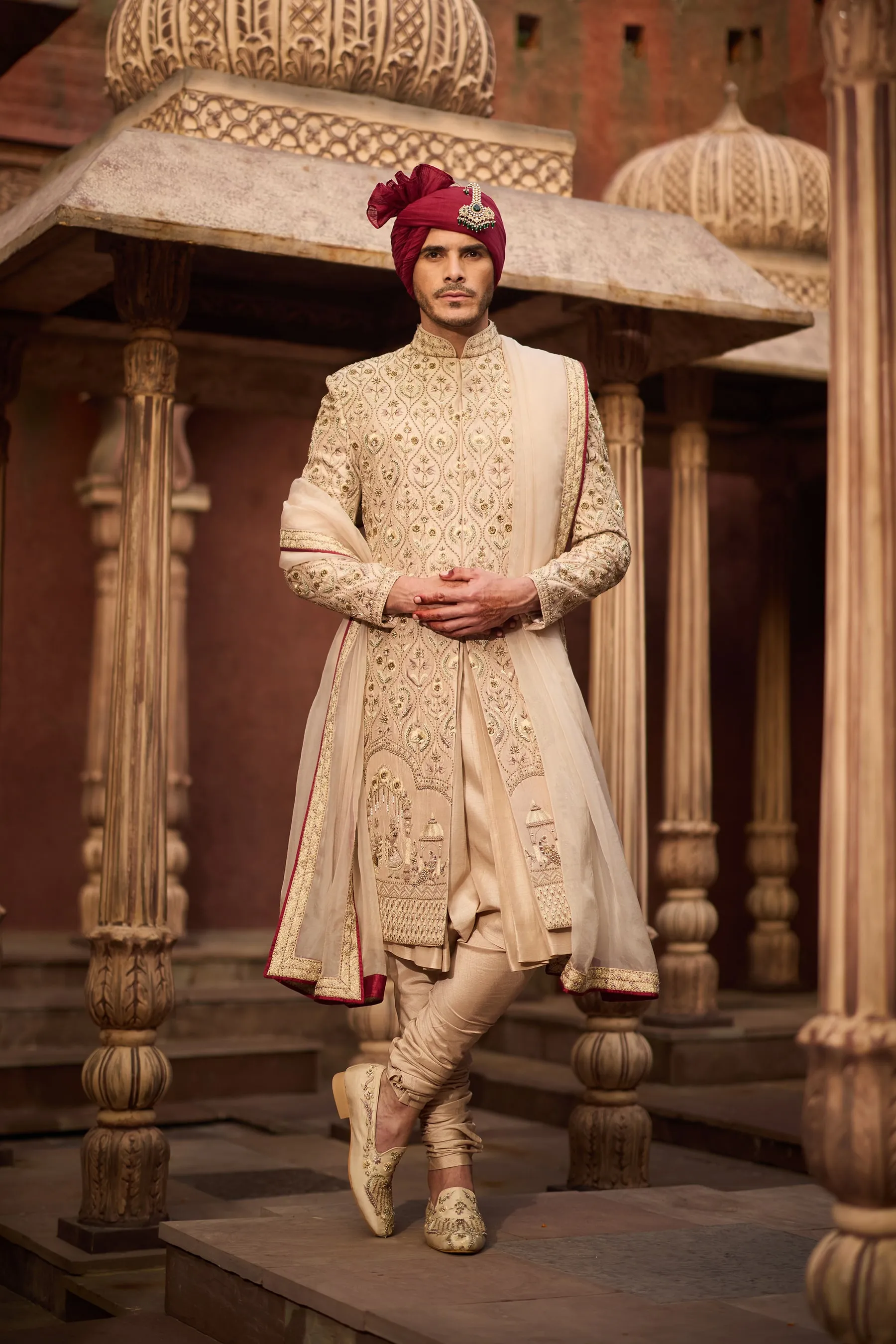
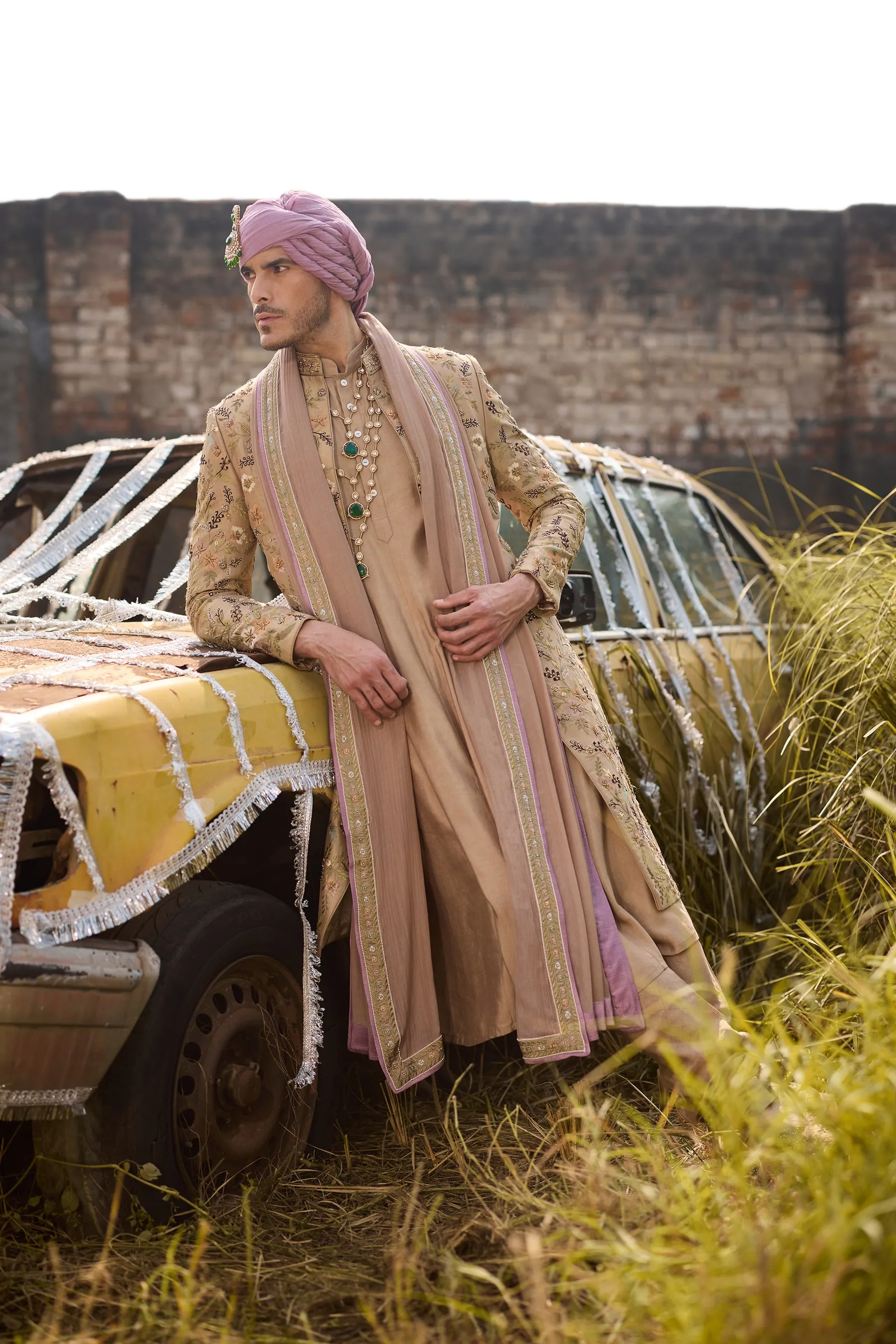
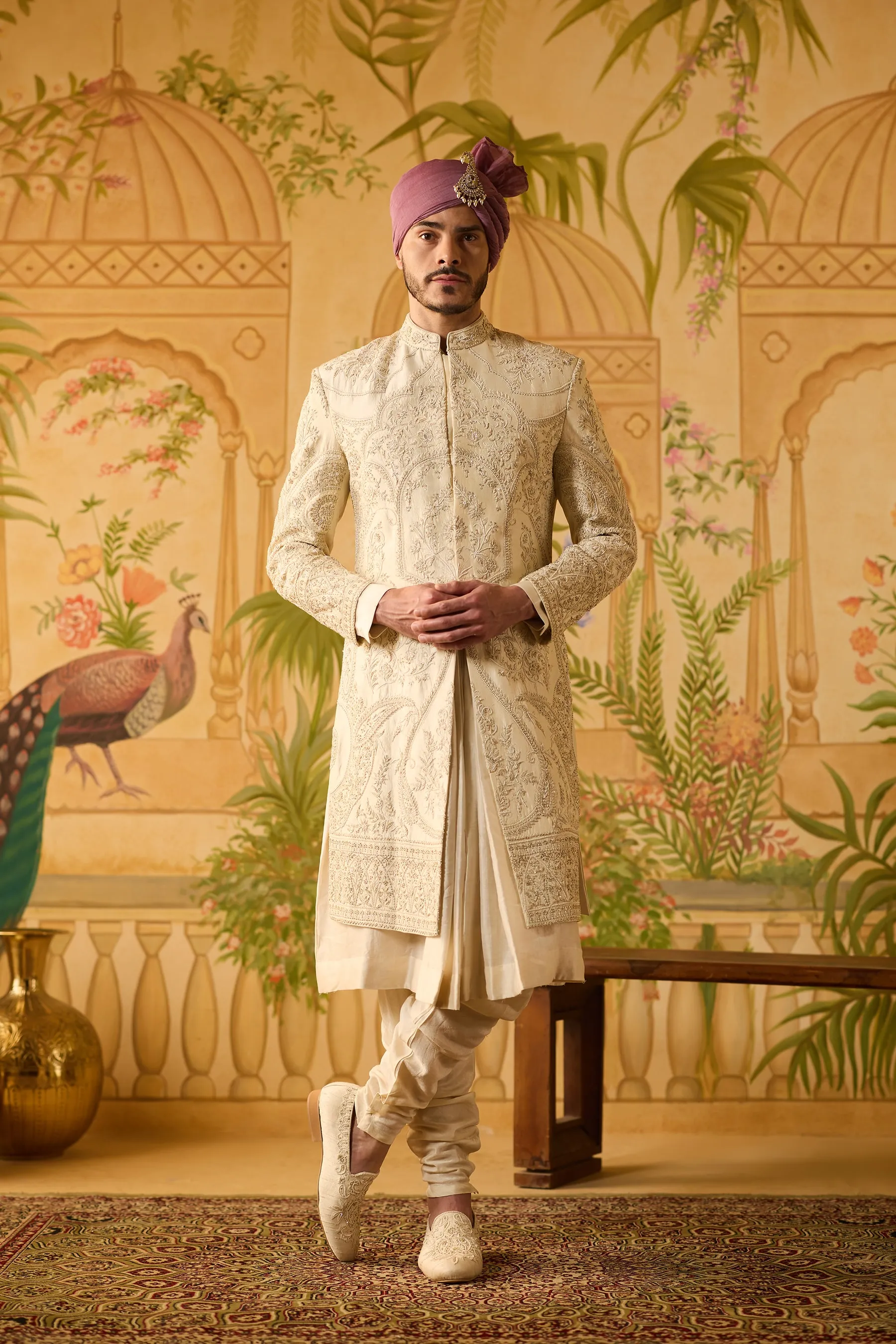
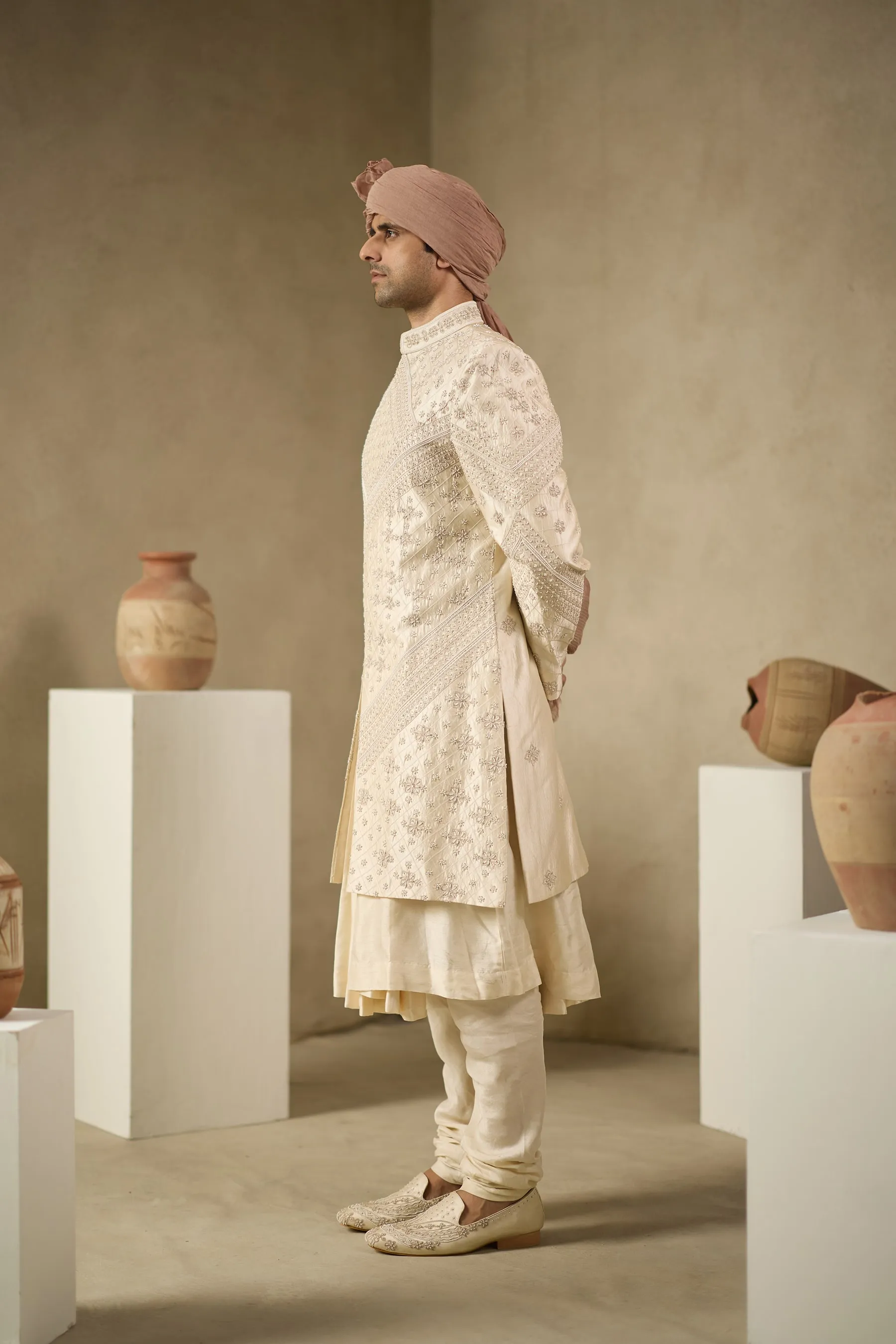
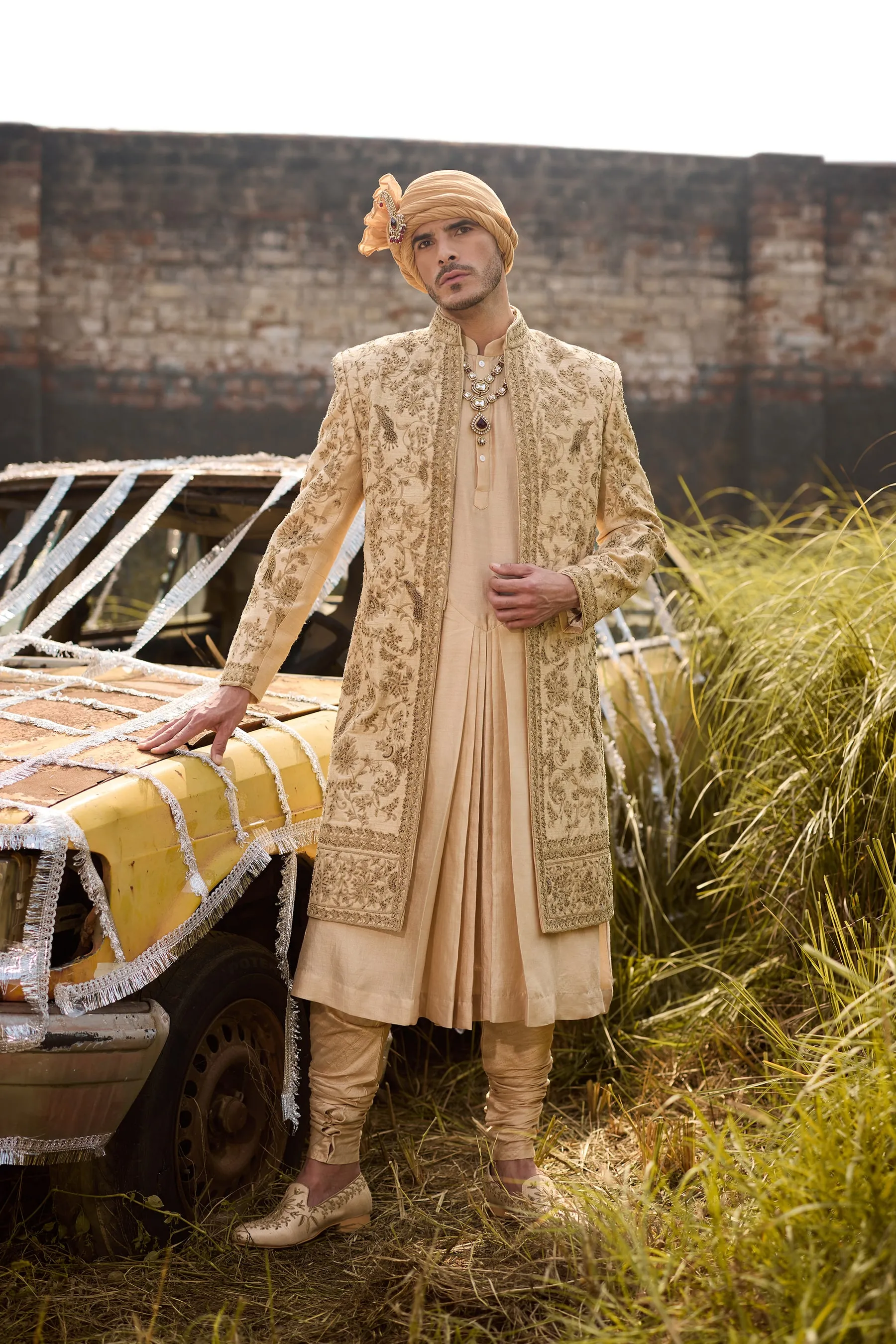
A sherwani is a long coat that typically falls to or just below the knee, with a closed or Mandarin-style collar, a front buttoned from neck to waist or to the hem and a slight flare through the skirt. It is worn with churidar, pyjama or tailored trousers.
What it looks like
Sherwanis are usually the most embroidered and embellished of the three: zardozi, resham, thread-work, mirror-work, pearls, stones or woven brocade. They are often structured, with a canvas front and padded shoulders, which gives a commanding line. Colours range from ivory and champagne to deep jewel tones.
When to wear it
A sherwani is the traditional choice for the baraat, the pheras and the wedding-day ceremonies in North Indian, Hindu, Sikh and Muslim weddings. It also suits a formal reception if you prefer a very Indian look. Our Suvarn in champagne gold, Parinay in ivory, Bahar in sand gold and Leher in ivory are examples cut for the wedding day. For more detail on ivory sherwanis, see our guide to the ivory sherwani for the groom.
Pros and cons
- Pros: Ceremonial, photogenic, unmistakably a wedding garment.
- Cons: Heavier and warmer than the others, more formal than many pre-wedding events need and less likely to be worn again unless you attend many weddings.
Achkan: the slim, formal coat
What it is
An achkan is a knee-length or slightly longer coat with a closed neck and a slim, straight line. It is often fully lined and tailored close to the body, with less flare than a sherwani. The front is usually buttoned from collar to hem or waist.
What it looks like
Achkans tend to be plainer than sherwanis, with embroidery limited to the collar, cuffs or placket, or none at all. They often rely on cut, fabric and buttons for effect. The overall impression is of understated elegance.
When to wear it
An achkan suits an engagement, a daytime wedding, a civil ceremony, a smaller family wedding or any formal event where you want to look traditional but not heavy. Many modern grooms choose an achkan for the wedding itself because it is lighter and more flattering to wear for a long day. In many families it is also the preferred groom’s outfit at the reception.
Pros and cons
- Pros: Slim, refined, lighter than a sherwani, versatile and easier to wear again.
- Cons: Less dramatic than a sherwani, and it needs precise tailoring to look right.
Bandhgala: the Jodhpuri jacket
What it is
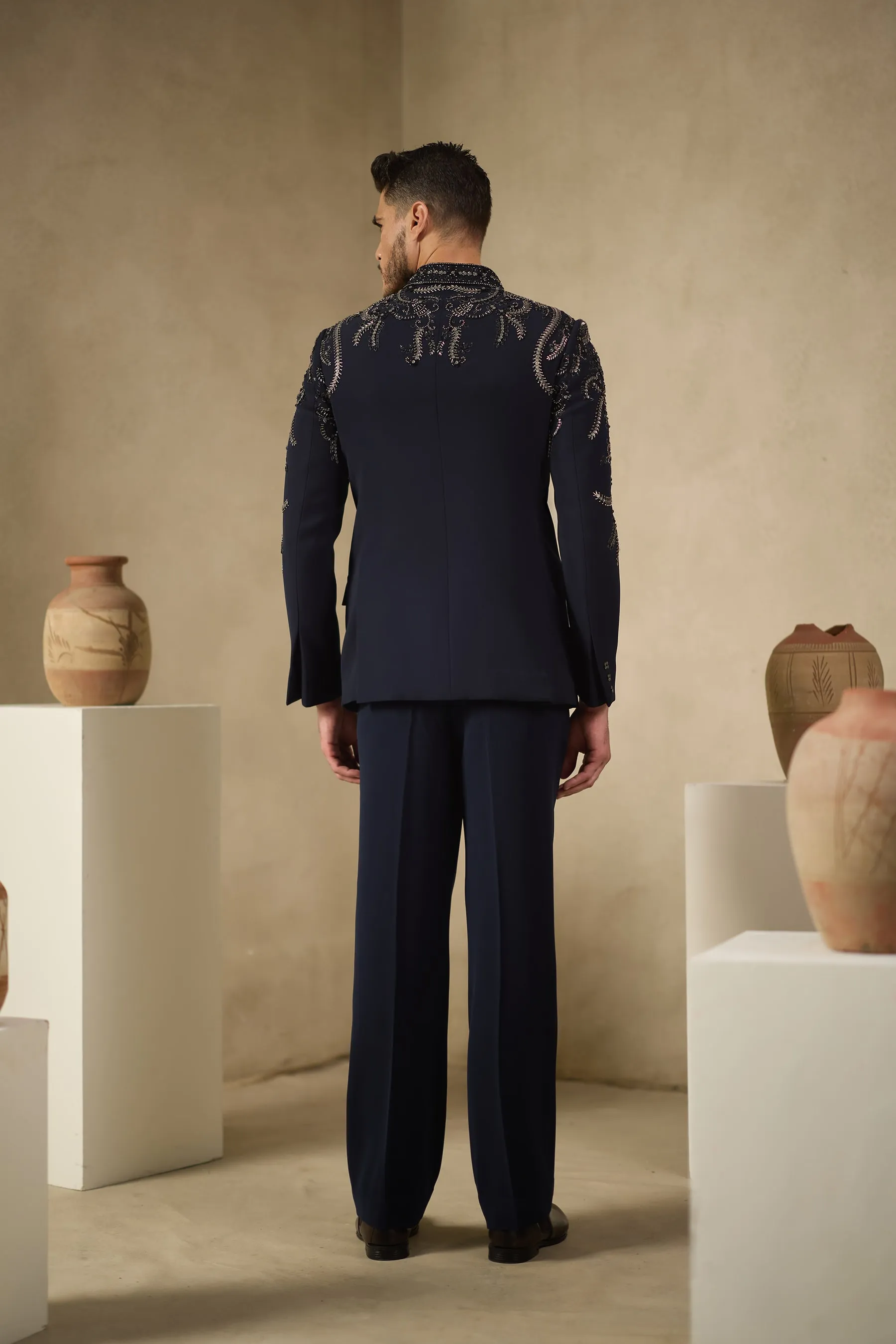
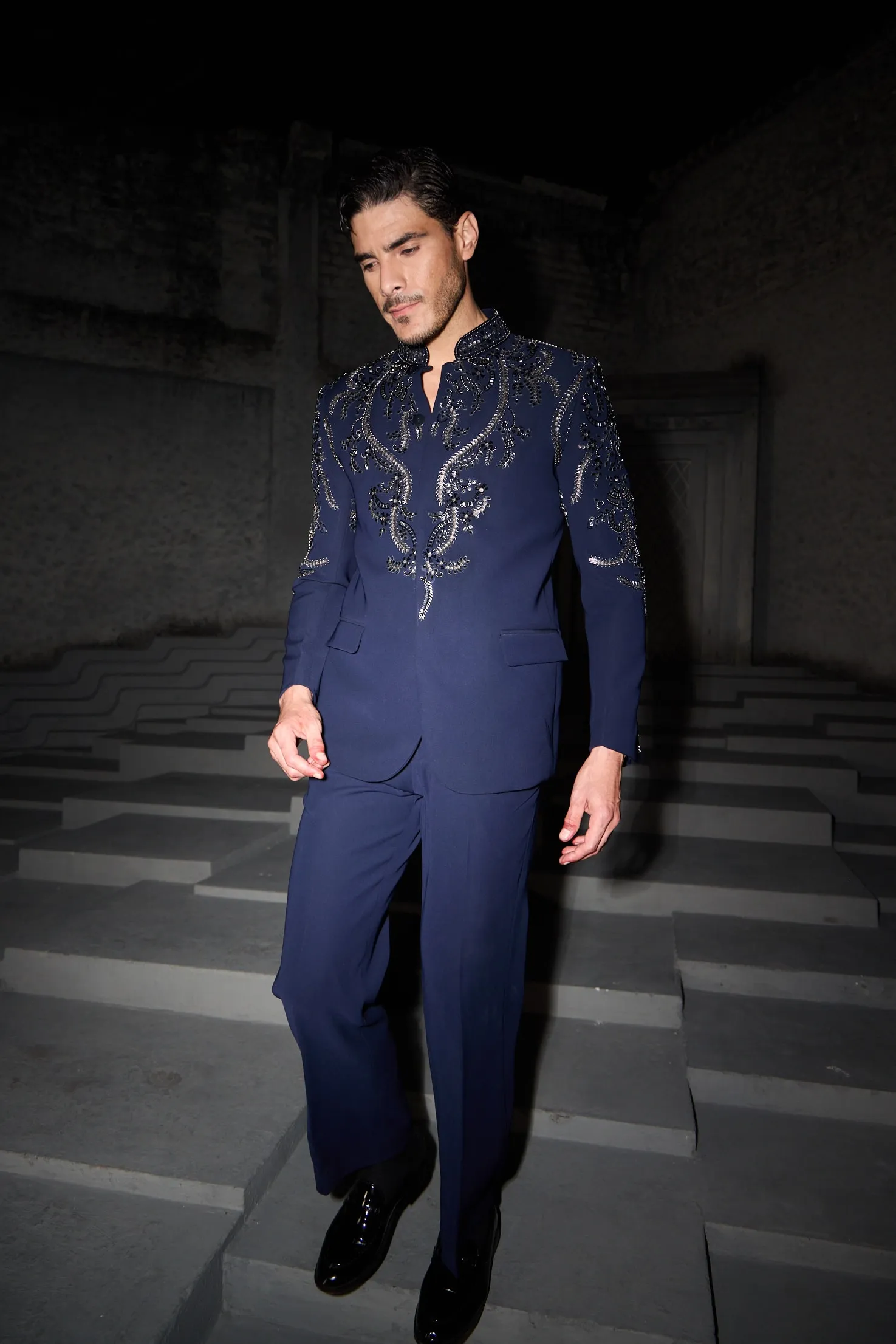
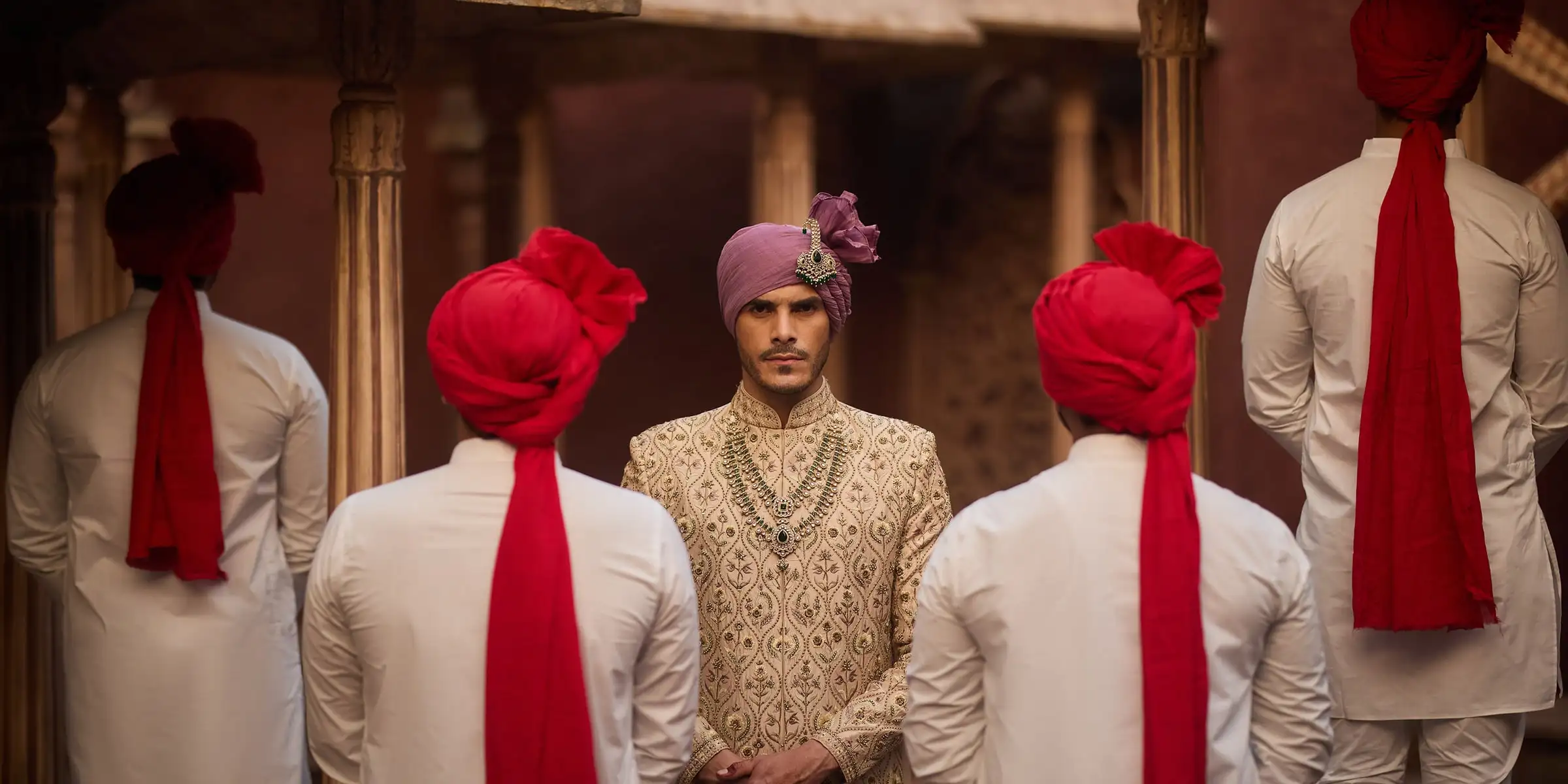
A bandhgala (literally “closed neck”) is a jacket with a band or Mandarin collar, worn with matching or contrasting trousers. It is the shortest and most versatile of the three: usually hip- or thigh-length, with the structure of a Western suit and the closed collar of Indian formal wear.
What it looks like
Bandhgalas are often plain or lightly textured, in wool blends, silk blends, velvet or jacquard. Buttons run from the collar to the waist, and the tailoring is clean, with a defined shoulder and a slim waist. They may include a pocket square, brooch or contrast lining.
When to wear it
A bandhgala is the best choice for the roka, engagement, sangeet, cocktail evening, reception and any formal event. Many modern grooms also wear a richly finished bandhgala as the wedding-day outfit, particularly at civil, destination or small weddings. Our Aftab in midnight navy and Samundar in navy show the range from refined to rich.
Pros and cons
- Pros: Light, comfortable, versatile and very wearable afterwards. It suits corporate and festive occasions.
- Cons: Less ceremonial than a sherwani; some families expect a longer coat for the wedding itself.
Side-by-side comparison
| Sherwani | Achkan | Bandhgala | |
|---|---|---|---|
| Length | Knee or below, flared | Knee-length, slim | Hip to thigh |
| Embroidery | Often heavy | Light or none | Light or none |
| Collar | Closed or Mandarin | Closed | Band collar |
| Worn with | Churidar, pyjama, trousers | Churidar or trousers | Trousers |
| Formality | Highest | High | Medium to high |
| Best for | Baraat, pheras | Engagement, daytime wedding, reception | Roka, sangeet, reception, cocktails |
| Weight | Heaviest | Medium | Lightest |
| Re-wear value | Lower | Medium | High |
How to choose between them
Start with the ceremony
Ask what the occasion is. For the baraat and pheras, a sherwani is the default; for a roka, engagement or sangeet, a bandhgala or achkan is easier. If you are having just one outfit for a small or civil wedding, a refined achkan or a richly finished bandhgala is a strong choice.
Consider the climate
In hot weather, a lighter achkan or bandhgala in a breathable fabric is better than a heavy sherwani. In winter, a sherwani in a wool-blend or velvet can be warm and luxurious. For weather-led advice, see our guides to the summer wedding groom outfit and the winter wedding groom outfit.
Think about your build and height
A well-cut sherwani flatters most builds, but its length and flare need proportion. If you are shorter, a slightly shorter sherwani or an achkan lengthens the line; if you are tall, a longer coat looks balanced. A bandhgala with a clean line suits almost every body. A made-to-measure fitting is the best way to get proportions right.
Think about the family
Some families expect a sherwani at the main ceremony. Others are happy with a bandhgala. A short conversation avoids surprises.
Think about re-wear
If you want to wear the outfit again, a bandhgala has the highest re-wear value, followed by an achkan. A sherwani is more occasion-specific but can be worn to other weddings.
Fabrics for each silhouette
- Sherwani: raw silk, silk brocade, velvet, jacquard, silk-blend with embroidery. Choose weight according to season.
- Achkan: silk blends, fine wool, jacquard, crêpe and matte silks. Plain or lightly embroidered.
- Bandhgala: wool and wool blends, silk-wool, velvet, textured silks, linen for warm weather.
Our guides to the summer wedding groom outfit and the winter wedding groom outfit go into fabric by season in more detail.
Colours for each silhouette
- Sherwani: ivory, champagne, gold, blush, peach, pistachio, deep jewel tones.
- Achkan: ivory, cream, soft grey, navy, powder blue.
- Bandhgala: navy, midnight, black, charcoal, deep green, ivory.
See our wedding colours for the groom guide for palettes by ceremony.
Common questions about the three silhouettes
Is an achkan the same as a long bandhgala?
No. A long bandhgala is still a jacket worn with trousers, with the structure of a suit. An achkan is a coat that closes at the neck and continues to the knee, usually with a slimmer, more fluid line.
Is a Nehru jacket the same as a bandhgala?
A Nehru jacket is a sleeveless or sleeved waistcoat-style jacket with a mandarin collar, worn over a kurta. A bandhgala is a full jacket with sleeves, worn over a shirt and with trousers. See the Nehru jacket collection for the difference.
Can I wear a bandhgala to a Hindu wedding?
Yes. Many grooms wear one for pre-wedding events and for the reception, and increasingly for the ceremony.
What do men wear under a sherwani?
Usually a fine kurta or a shirt, with churidar, pyjama or trousers. The sherwani is the outer layer.
Which is the most flattering?
A well-fitted version of any of the three. Fit matters more than silhouette.
How a made-to-measure fitting makes the difference
All three garments depend on fit. A sherwani that is too long swallows the groom; an achkan that is too tight pulls at the buttons; a bandhgala that is too loose looks shapeless. In a made-to-measure fitting, the shoulders, chest, waist, sleeve and length are adjusted to your body, and a second fitting refines the result. Our atelier works to eight to ten weeks from the first fitting, with two fittings and hand finishing. For the process, see our guide to planning a made-to-measure wedding outfit.
A simple wardrobe plan
Many grooms ask which silhouette to choose for which event. A simple plan:
- Roka or engagement: bandhgala or light achkan.
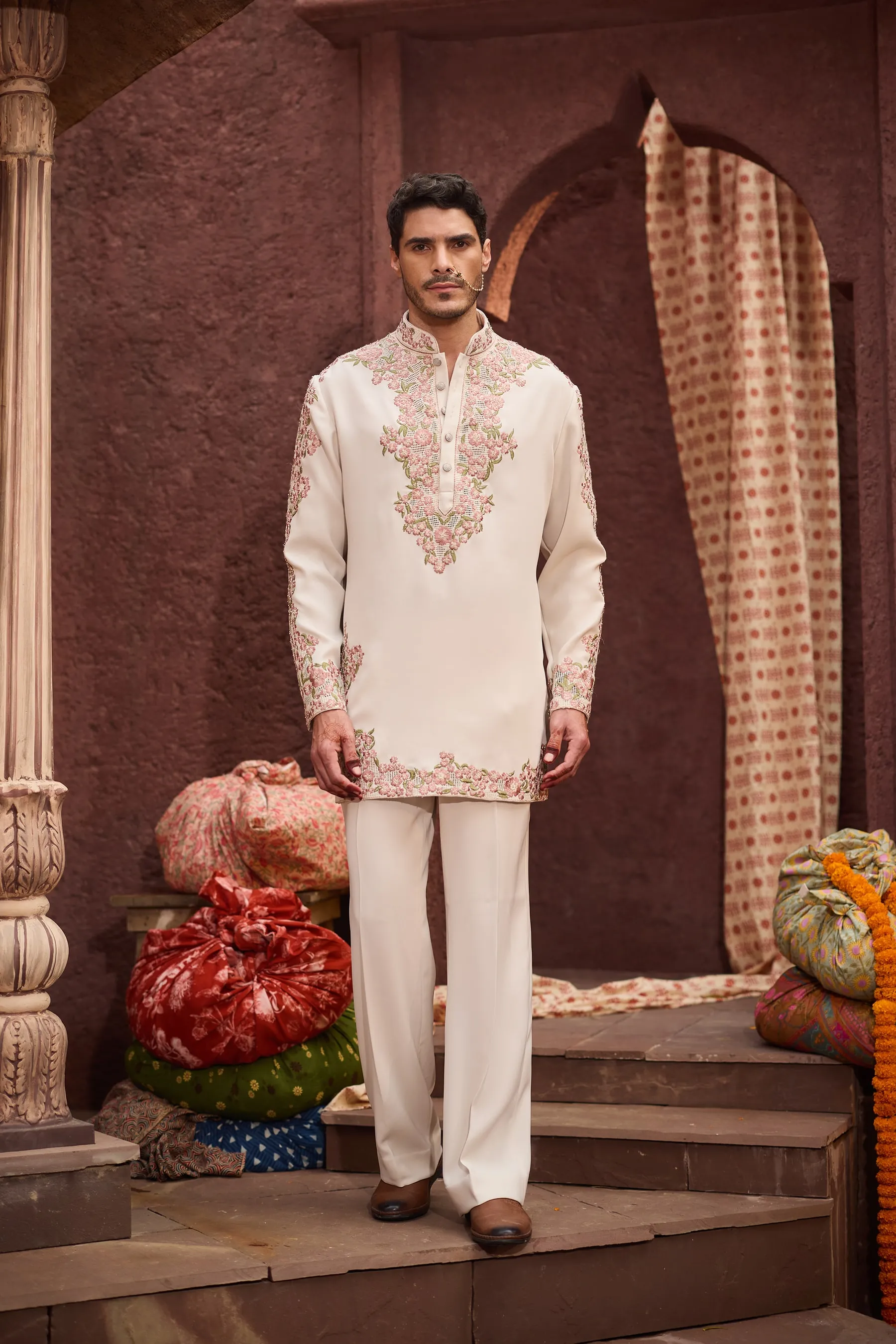
- Haldi and mehendi: kurta set or Nehru jacket.
- Sangeet and cocktails: bandhgala, velvet jacket or tuxedo.
- Baraat and pheras: sherwani.
- Reception: bandhgala, achkan or a second sherwani in a different colour.
This sequence builds from relaxed to ceremonial and back to formal-festive, and it gives you each silhouette at the right moment.
What each garment is made of inside: construction and why it matters
Two garments can look similar on a hanger and feel completely different on the body, because of what lies beneath the fabric. Construction is the unseen difference between a good sherwani, achkan or bandhgala and a mediocre one.
Full canvas
A full-canvas front uses a layer of horsehair or wool canvas stitched (not glued) between the outer fabric and the lining. Over time it moulds to the wearer and holds a natural, slightly sculpted shape. It is the most traditional and the most durable construction, and it is common in a good sherwani or bandhgala.
Half canvas
A half-canvas construction runs the canvas through the chest and lapel area only, with the lower part fused. It gives most of the shape and drape of a full canvas, at a lower weight and cost. Many fine bandhgalas and achkans use it.
Fused
A fused garment has an adhesive interlining applied to the fabric. It is lighter and quicker to make, and fine for a one-off garment, but it can bubble or lose shape over time and is less breathable.
Unconstructed
An unconstructed garment has little or no interlining. It is the lightest, most relaxed option, well suited to warm weather and Indo-Western looks, but it does not hold a sharp line.
Ask your tailor which construction a garment uses. For a sherwani or bandhgala you will wear more than once, a canvas front is worth the investment. Our atelier makes its structured pieces with a canvas front, and our about page explains the constructions we use.
The silhouettes in context: how Indian grooms have worn them
Fashions in Indian formal wear change, but the three silhouettes have each found a stable place.
- The sherwani has stayed the ceremonial choice for generations, and its modern versions vary from heavily embellished to nearly plain. A contemporary sherwani often has a slimmer skirt and a more fitted chest than older versions, and many have a slightly shorter length for easier movement.
- The achkan has returned in recent years as grooms look for refinement over decoration. A well-cut achkan in a plain or tone-on-tone fabric is one of the most elegant looks in Indian menswear.
- The bandhgala has become the default Indian formal jacket for the professional world as well as weddings. It is worn at business dinners, festivals and galas, as well as at the sangeet and reception.
Understanding where each garment sits will make your decisions easier, and the sequence in your wardrobe more balanced.
Mixing silhouettes across the wedding week
You do not need to choose just one. A well-planned wedding wardrobe uses each silhouette where it shines.
- A bandhgala at the roka or engagement shows you are thoughtful and modern.
- A kurta with a Nehru jacket at the haldi and mehendi keeps you comfortable and colourful.
- A tuxedo or velvet dinner jacket at the cocktail night shows range.
- A sherwani at the baraat and pheras honours tradition.
- An achkan or a second bandhgala at the reception gives a refined finish.
The most common mistake is to wear the same silhouette to every event. Variety creates a sense of progress and rewards guests who see you at several functions. For more on matching outfits to ceremonies, see our guides to the reception outfit for the groom and the baraat outfit for the groom.
Mistakes to avoid when choosing a silhouette
- Choosing by photograph alone. A garment looks different on a model than on you. Try a version in your own measurements.
- Ignoring the climate. A heavy sherwani in a hot afternoon is a recipe for discomfort.
- Overlooking the length. Too long makes you look shorter; too short can look unfinished. Ask your tailor to check the proportion.
- Copying a celebrity look without adjusting for your build. Proportions that suit one body can overwhelm another.
- Forgetting the footwear. A sherwani calls for juttis or mojaris; a bandhgala for loafers or oxfords.
- Choosing the silhouette last. It affects fabric and embroidery decisions, so decide it early.
Shop the three silhouettes
- Sherwanis: Suvarn, Parinay, Bahar and Leher.
- Bandhgalas: Aftab and Samundar.
- Achkans: see the achkan collection.
All are made to measure.
Final thoughts
The sherwani, achkan and bandhgala are three versions of the same idea: Indian formal wear that makes the groom look composed and distinguished. Choose the one that suits the ceremony, the climate and your own taste, and invest in the fit. When you are ready, book a fitting and we will help you build a wardrobe that uses each at the right moment.