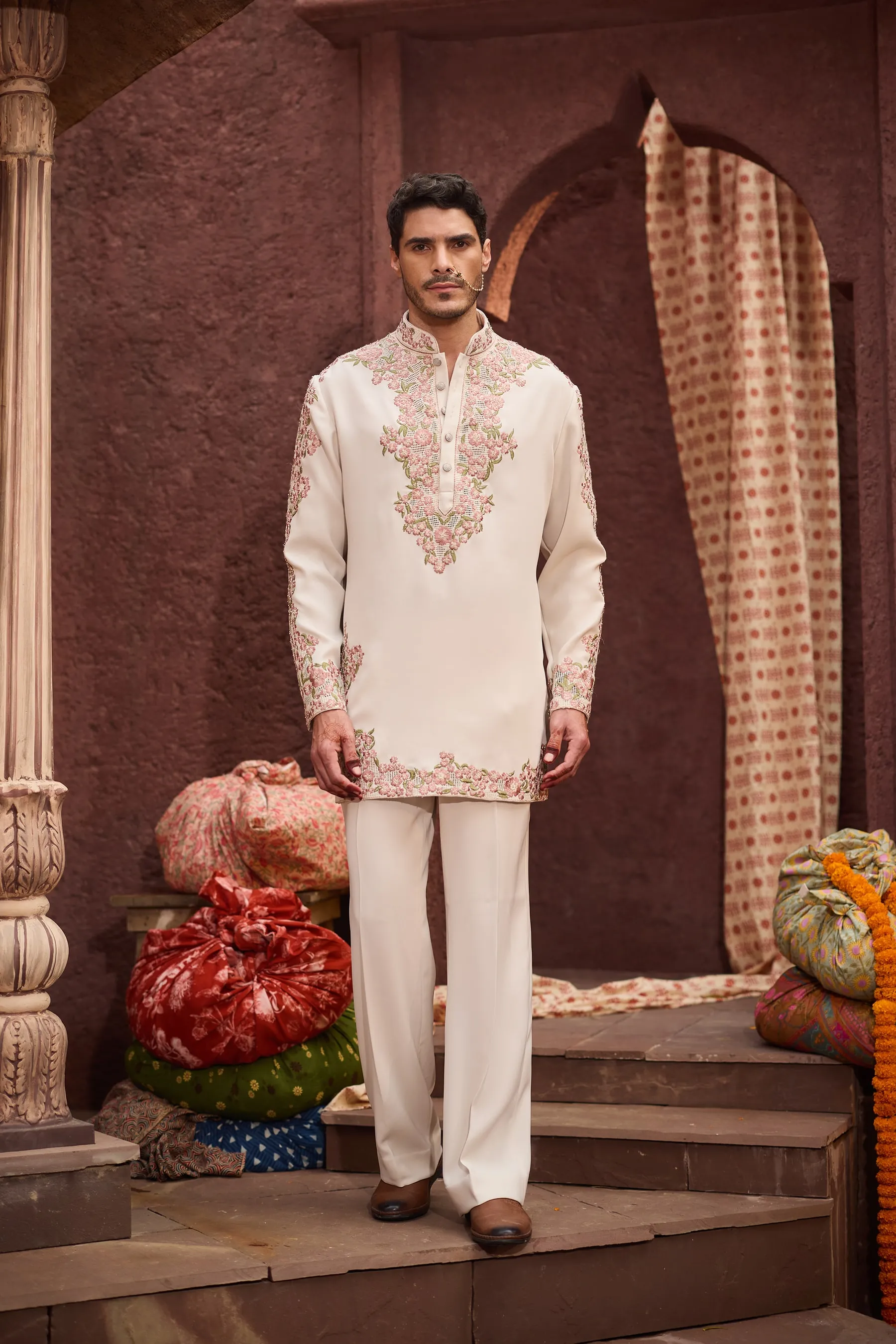
The engagement, or sagai, is the first time the couple stands in front of everyone as a couple. There are rings, flowers, blessings, music and a great many photographs, and the pictures from this day are often the ones framed and passed around for years. For the groom, it is the first big outfit of the wedding season, and the first chance to wear something that is formal and festive but not as heavy as the wedding day. This guide covers what to wear to the engagement, how to choose colour and fabric, how to coordinate with the bride and what to avoid.
For the wider wedding schedule, see our overview of what the groom wears at each ceremony. The roka and sagai collection gathers pieces made for these first formal occasions.
What the engagement ceremony involves
In many Indian families, the engagement (sagai, mangni, nischayam, kuda vishekam, depending on region and community) is a distinct event. The format varies, but common elements include:
- Ring exchange. The couple exchange rings in front of both families.
- Blessings and gifts. Elders bless the couple, and the families exchange gifts, sweets and sometimes clothing or jewellery.
- A formal seating or stage. The couple often sit or stand together on a decorated stage or sofa for photographs.
- Music and food. A DJ or small band, a meal and sometimes a short performance by friends or family.
The engagement may be a home ceremony with 50 guests or a banquet with 500. It may be a daytime function or an evening party. Your outfit should suit both the size and the time: a daytime home ceremony calls for something lighter and warmer in colour, and an evening banquet can take richer fabric and deeper colour.
How formal should the groom’s engagement outfit be?
The engagement is more festive than the roka and less ceremonial than the wedding. A useful guide is to dress about 70 percent of the way to your wedding outfit: refined fabrics, subtle embroidery or texture, and tailoring that is sharp. You want the outfit to feel special, but you also want the wedding to remain the highlight.
If the engagement is combined with the roka, see our guide to the roka ceremony outfit. If it is a large, evening event, you can lean towards the more formal end, as you would for a reception (see our guide to the reception outfit for the groom).
Outfit options for the engagement
The achkan
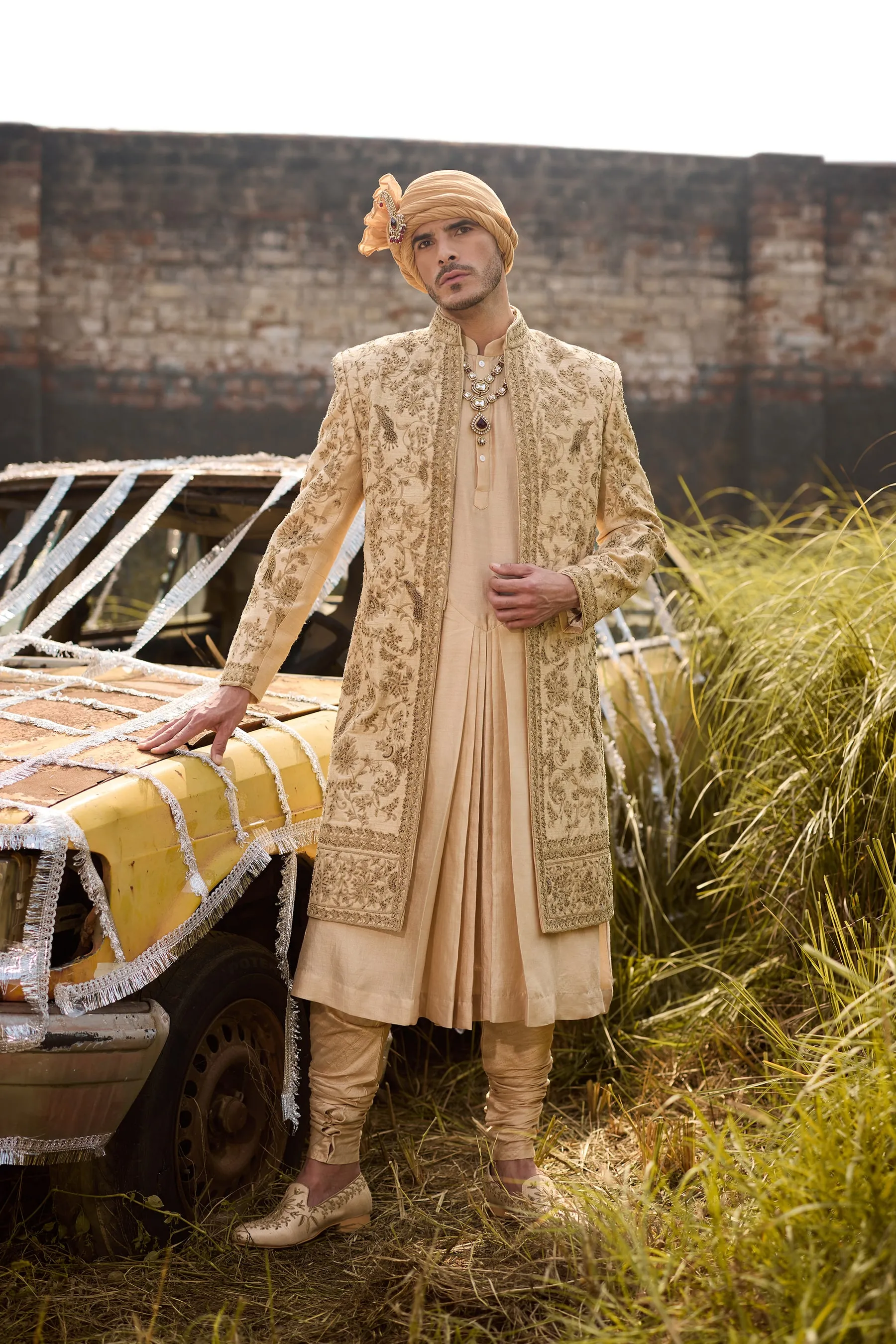
An achkan is a knee-length, closed-neck coat with a slim line. It is a graceful choice for an engagement because it is formal and traditional without being as voluminous as a sherwani. Choose a fine fabric (silk blend, raw silk, jacquard) in a soft colour with restrained embroidery. Pair with churidar or tailored trousers. Our achkan collection includes pieces cut to this slim, elegant line.
The bandhgala
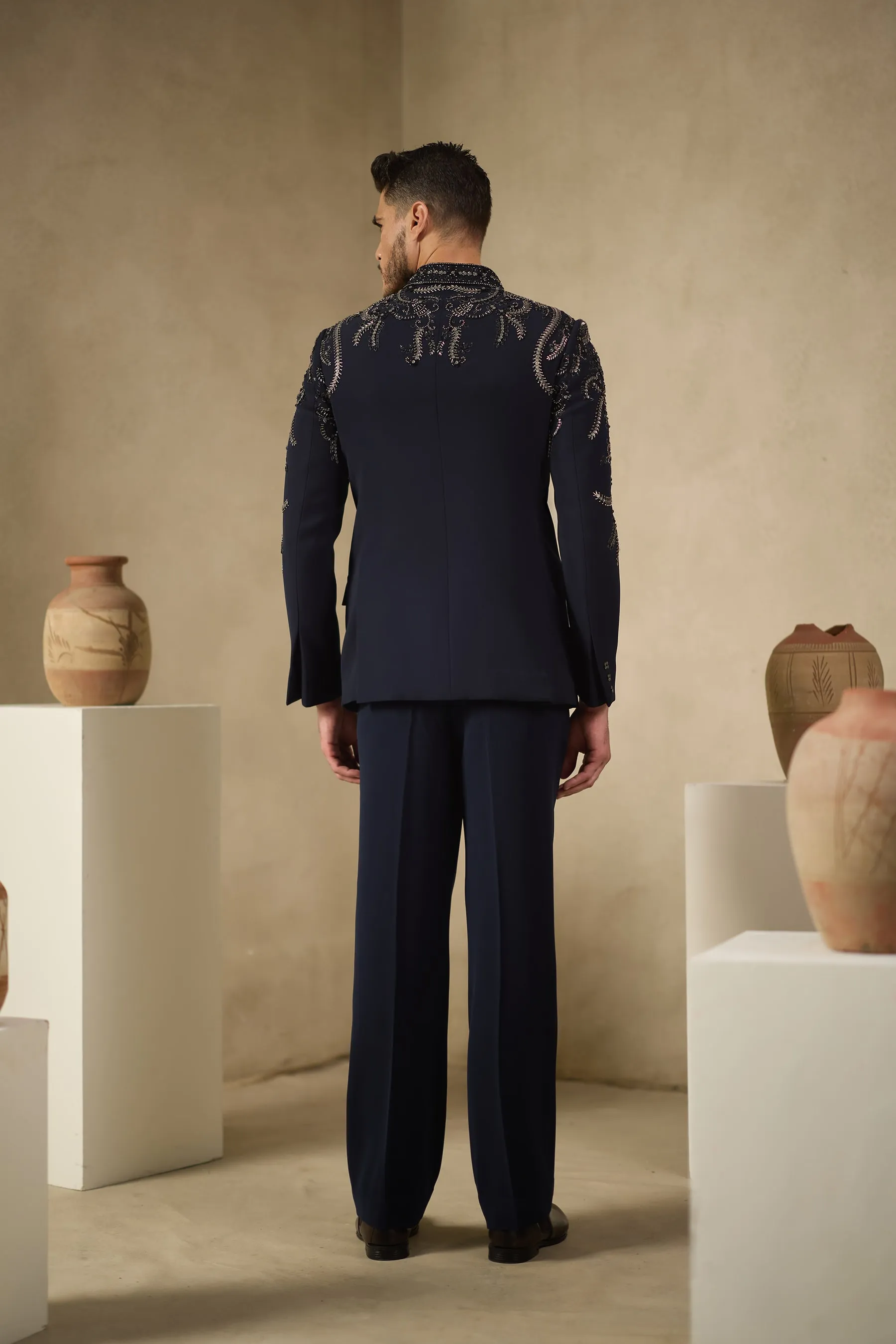
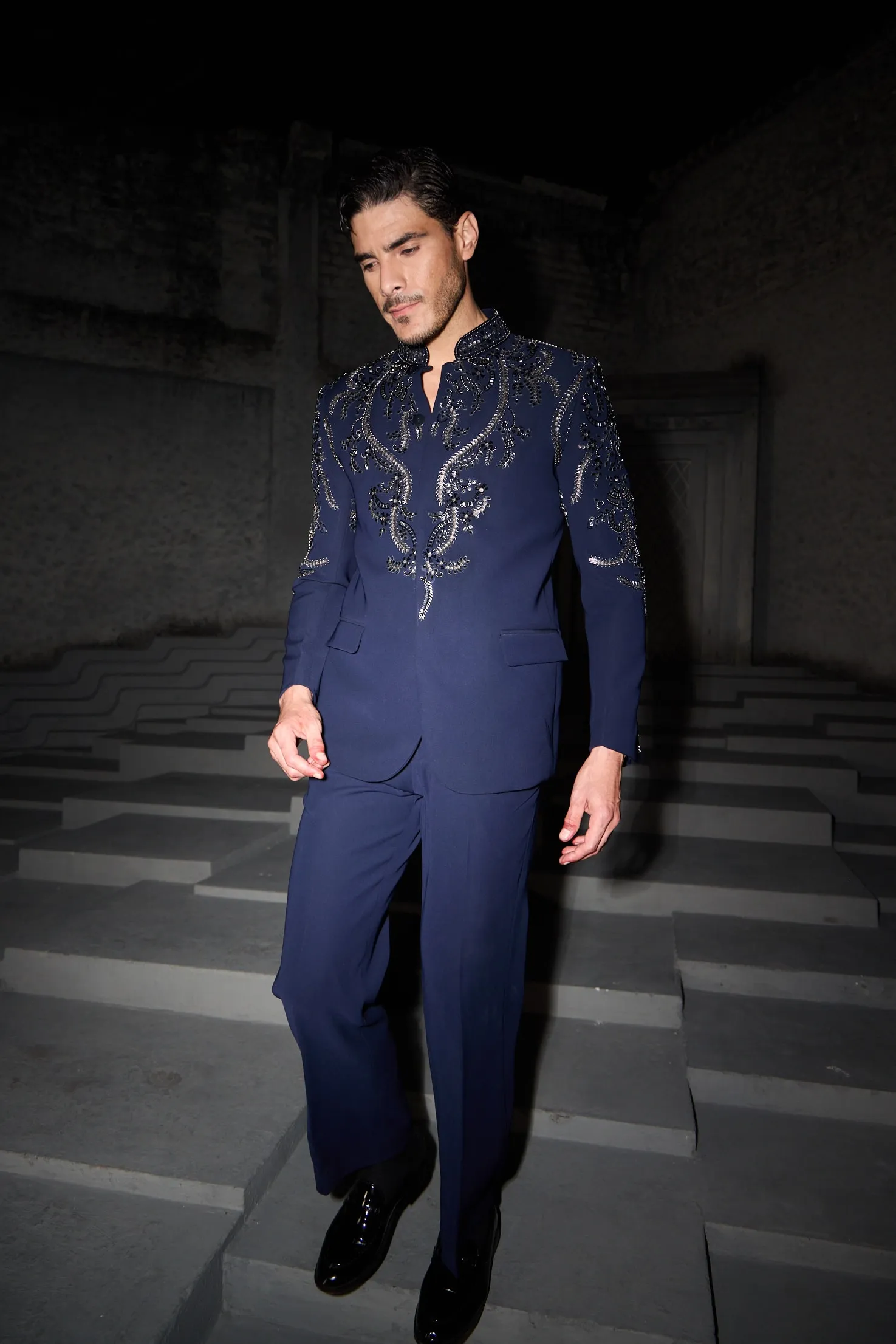
A bandhgala is a versatile engagement choice: sharp, comfortable and clearly Indian. Navy, charcoal, ivory and deep green are classic. Our Aftab in midnight navy is a good example. For a daytime ring ceremony, pair with a crisp white shirt; for an evening event, a darker shirt or a high-collar white shirt works. See the bandhgala collection.
A kurta with a Nehru jacket
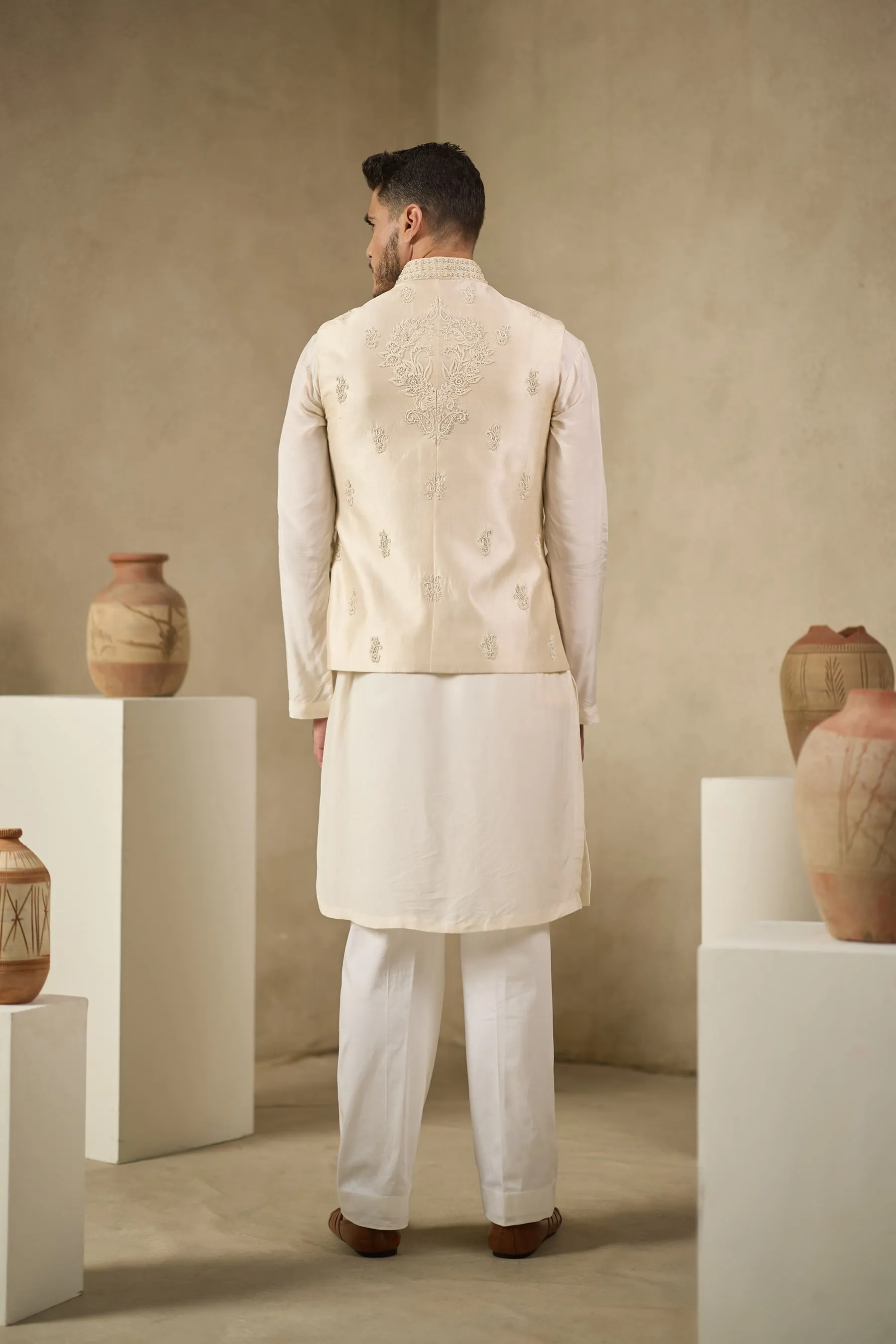
An ivory or cream kurta with a rich jacket gives a polished, festive look and is comfortable for a long day. Our Gulab Kinari kurta set in ivory layered with the Heer Nehru jacket is a balanced, elegant combination. See the Nehru jacket collection.
A velvet or textured jacket
For an evening engagement, a velvet or textured jacket in navy, green or burgundy gives richness without the weight of a sherwani. Pair with a fine shirt or a kurta. Our tuxedo collection includes velvet pieces suited to evening functions.
An Indo-Western set
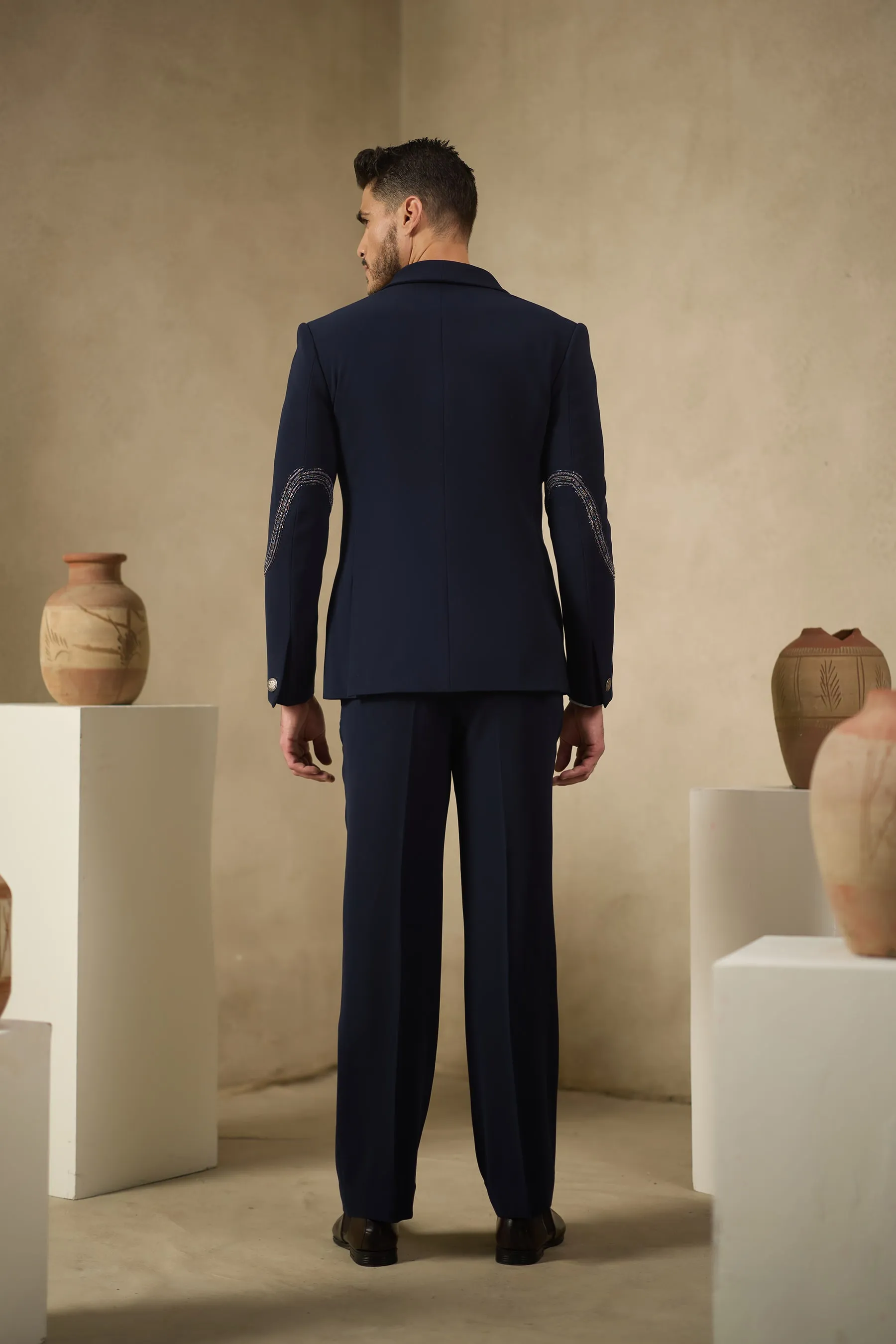
An Indo-Western ensemble (a long jacket, a bandi or a cape with a tailored trouser and shirt) suits a modern couple and a contemporary venue. Our Shafaq in blush and Mauj in navy are examples. See the Indo-Western collection.
A light sherwani
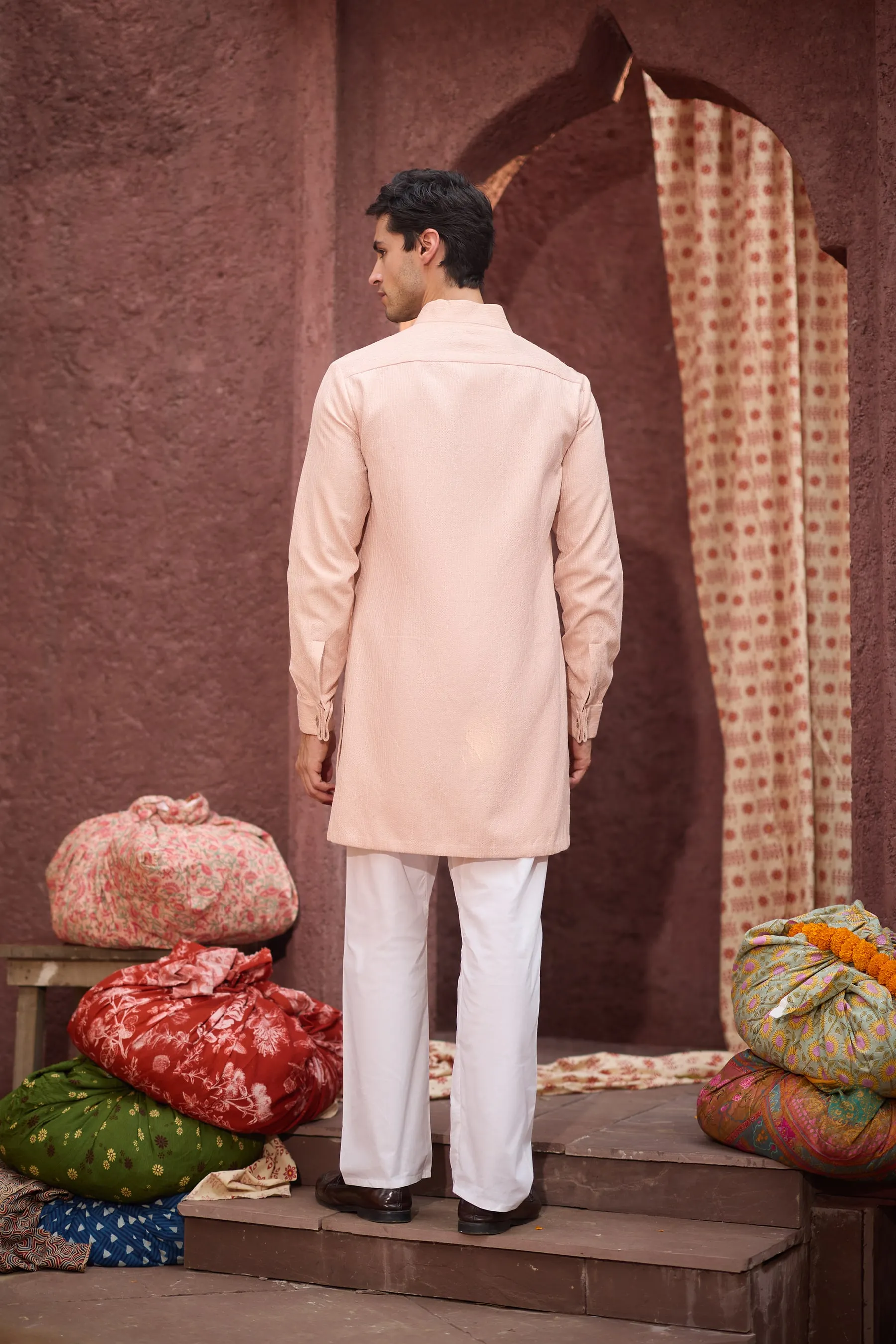
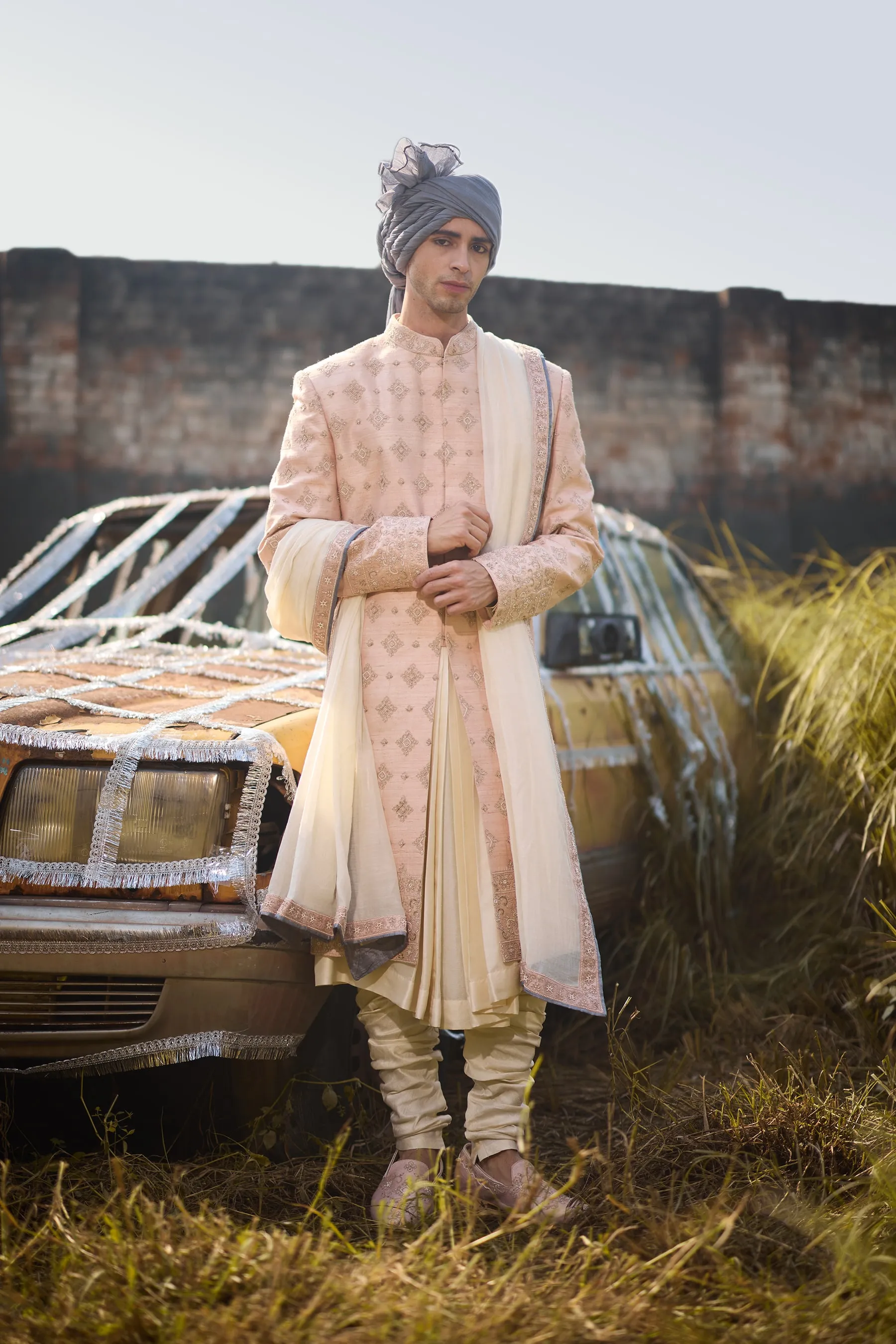
If your family expects a sherwani, choose a lighter, softer one in a pale or pastel colour with understated embroidery. Our Kusum sherwani in blush is an example of a gentle colour that works for a ring ceremony. Keep your wedding-day sherwani for the baraat and pheras. For the differences between these silhouettes, see our guide to sherwani vs achkan vs bandhgala.
Colour ideas for the groom’s engagement outfit
Because the engagement is so photographed, colour choice matters. Consider the venue, the time of day and the bride’s outfit.
- Ivory, cream and champagne. Refined, universal and flattering in daylight. They show off embroidery and look beautiful with floral decor.
- Navy and midnight blue. Strong, formal and complementary to nearly every bride’s palette. Excellent for evening events.
- Deep green and bottle green. Distinctive and rich. Work well with gold accents and in warm lighting.
- Burgundy and wine. Warm and festive. Pair well with ivory and gold decor.
- Soft pastels: blush, powder blue, sage. Modern and gentle; particularly good for daytime and garden engagements.
- Charcoal and steel grey. Contemporary and understated, ideal for an Indo-Western look.
Avoid wearing the exact shade of the bride’s outfit. Complementary colours (navy with blush, ivory with deep green, charcoal with rose) photograph better than identical ones.
Fabrics: what to choose and why
- Silk blends and raw silk. Rich texture without excessive shine. Good for achkans and kurtas.
- Fine wool and wool-silk. For bandhgalas and jackets: crisp, breathable and long-lasting.
- Jacquard. Woven pattern that adds interest without embroidery.
- Velvet. For evening events in cooler weather; luxurious but warm.
- Linen and cotton-silk. For daytime events in warm weather; relaxed and breathable.
A ring ceremony involves a lot of standing, sitting and hand movement, so choose fabrics that do not crease badly or lose their shape. Also consider how the sleeve and cuff look when your hand is extended for the ring: a clean, well-fitted cuff is worth the attention.
Details that matter at a ring ceremony
The hands
The ring exchange is the central photograph, and your hands will be in it. Make sure your sleeves are the right length (showing a little shirt cuff or ending neatly at the wrist), your nails are tidy and any rings or watches are simple and clean.
Collar and neckline
A well-set collar frames your face in every photograph. Check that the collar sits close to the neck without gaping or pinching, and that a bandhgala or achkan collar does not dig in when you turn your head.
Pocket square, brooch or stole
A small detail personalises the look: a silk pocket square, a pearl brooch, a stole in a coordinating colour. Keep it to one or two details.
Footwear
Polished leather loafers or oxfords for a bandhgala or jacket; mojaris or juttis for an achkan or kurta. Wear shoes you have already broken in.
Grooming
A professional haircut and beard trim three to five days before the event, gentle skincare and sunscreen. Avoid trying new products right before the event.
Coordinating with the bride, the families and the decor
The engagement is typically a coordinated visual event, and planners and families often share a colour palette.
- Ask for the palette. Even a general direction (pastels, jewel tones, ivory and gold) helps you choose.
- Complement, do not copy. A navy bandhgala with a blush lehenga, or an ivory achkan with a deep green outfit, looks intentional.
- Consider the venue. A floral garden suits ivory, blush and sage; a ballroom with warm lights suits navy, burgundy and green.
- Coordinate with your family. Tonal outfits for your parents and siblings look better than identical ones. See our guides to the father of the groom’s outfit and the groom’s brother’s outfit.
Engagement outfit ideas by style
The traditional groom
An ivory or champagne achkan with churidar, juttis and a stole. Elegant, timeless and respectful of tradition.
The modern classic
A navy bandhgala, white shirt, tailored trousers and polished loafers. Sharp and easy to wear again.
The relaxed romantic
An ivory kurta set with a pastel Nehru jacket, a pocket detail and mojaris. Light, gentle and photogenic.
The evening showman
A velvet jacket in midnight navy or deep green with a white shirt and a brooch. Rich and distinctive.
The Indo-Western groom
A tailored Indo-Western set in charcoal or sage, with a fine shirt and loafers. Contemporary and clean.
Timeline and planning
The engagement often happens months before the wedding, which gives you time to plan, but many couples leave outfit decisions until the last month. A good timeline for a made-to-measure engagement outfit:
- Ten to twelve weeks before: Book a consultation, share the event details and palette and choose the silhouette.
- Eight to ten weeks before: Choose fabric and colour; take measurements.
- Five to six weeks before: First fitting, to check the silhouette and shoulders.
- Two to three weeks before: Second fitting, to refine sleeve, length and collar.
- One week before: Final pressing and accessories.
Our atelier works to eight to ten weeks from the first fitting, with two fittings. For the full process, see our guide to planning a made-to-measure wedding outfit.
Mistakes to avoid
- Wearing your wedding sherwani. Too heavy for an engagement and spoils the wedding reveal.
- Choosing too casual an outfit. A kurta-pyjama may be too relaxed for the formality.
- Matching the bride exactly. Aim for harmony, not a uniform.
- Ignoring the venue. A heavy velvet jacket in a hot garden is a mistake.
- Neglecting the cuffs and collar. They are the focus of the ring photograph.
- Leaving the fitting too late. Tailoring takes time to do well.
Making the most of the outfit after the engagement
A well-chosen engagement outfit often becomes one of the most useful parts of the wardrobe. A bandhgala works for formal dinners, receptions and festive evenings. An ivory achkan suits pujas and family weddings. A velvet jacket can be worn through the winter wedding season. When you choose, think about how many occasions the piece could cover.
Engagement traditions across communities, and what they mean for the outfit
The word “engagement” covers many different traditions, and the groom’s outfit should respect the one your family follows.
Punjabi and North Indian sagai
A Punjabi sagai is often a lively, music-filled event with a ring exchange, a dhol and a large guest list. The groom usually wears an achkan, a bandhgala or a smart kurta-jacket, often with a turban or a stole for a Sikh groom. Because the mood is celebratory, colour is welcome: ivory, gold, deep green and burgundy all work.
Gujarati and Marathi traditions
In Gujarati families the engagement may be part of a longer sequence of rituals, with a formal exchange of gifts and sweets. In Maharashtrian families the sakhar puda (the sugar offering) is a distinct, quieter ceremony. A refined kurta with a jacket, or a light achkan in a soft colour, suits both.
Bengali and Odia traditions
In Bengali families the aashirbaad (blessing) is a formal family occasion, and the groom often wears a silk panjabi, sometimes with a shawl. For more on Bengali dress, see our guide to the Bengali groom’s wedding outfit.
South Indian traditions
Tamil and Telugu engagements (nischayathartham, nischitartham) are formal family ceremonies at which the groom often wears a veshti with an angavastram or a silk kurta. A cream or white veshti with a gold border and a silk upper garment is traditional. See our guide to South Indian groom wedding attire.
Muslim families
A Muslim engagement may include a formal exchange of gifts and sweets, and the groom often wears a sherwani, an achkan or a kurta with a jacket. For the nikah itself, see our guide to the nikah and walima groom outfit.
The best rule is to ask. A quick conversation with a parent or elder will tell you whether the family expects tradition or welcomes a modern look, and that conversation also shows respect.
Engagement photographs: planning the outfit for the camera
The engagement album is usually among the most-viewed of the wedding, so it is worth thinking about how your outfit will look on camera.
- Choose colour with the light in mind. Daylight softens pastels and ivory; evening light enriches navy, green and burgundy. If your engagement runs from afternoon into evening, choose a mid-tone that works in both.
- Avoid very fine patterns. Tight stripes and small checks can shimmer on camera. Solid colours, subtle textures and larger woven patterns are safer.
- Mind the contrast with your partner. A groom in a deep colour next to a bride in a pale one creates a strong, balanced image. Two very similar tones can blur together.
- Check the fit from the side and back. Photographers shoot from all angles, and a jacket that wrinkles across the back or a collar that gapes is more visible than you expect.
- Practise the poses. Stand, sit, turn and extend your hand for the ring in the outfit. If anything pulls or bunches, tell the tailor at the fitting.
- Prepare a second look. If the event is long, a second jacket or stole lets you refresh for evening photographs.
What to avoid wearing on your engagement day
- A creased, steam-starved garment. Steam the outfit the day before.
- Anything that restricts movement. You will bend, extend your hand, hug relatives and sit on a stage.
- A bold pattern that fights the decor. Floral backdrops are busy already; keep your own outfit calm.
- Statement jewellery that distracts. The rings are the focal point.
- A heavy fragrance. You will be in close contact with many relatives, and a light scent is kinder.
Budgeting and planning the engagement outfit within the wedding wardrobe
The engagement is only one outfit among many, and a good plan prevents overspending on one event and under-spending on another. A simple way to approach it:
- Decide the anchor pieces first: the wedding-day sherwani and the reception outfit.
- Choose the engagement outfit so that it complements and does not compete: lighter, simpler and more re-wearable.
- Look for versatility: a bandhgala or achkan that can serve the engagement, the reception and later formal events is better value than a one-off.
- Keep accessories flexible: a stole, brooch and pocket square change a single outfit across events.
Most of all, treat the wardrobe as a sequence rather than a set of unrelated purchases, and discuss the whole plan at your first fitting. An atelier can suggest fabric and silhouette combinations that work across several events, and can often arrange the fittings in one visit to save time.
Shop the engagement look
- Gulab Kinari, an ivory kurta set for a daytime ring ceremony.
- Aftab, a midnight navy bandhgala for a crisp evening look.
- Heer, an ivory Nehru jacket to layer over a kurta.
- Shafaq, a blush Indo-Western set for a modern ceremony.
- Mauj, a navy Indo-Western set with relaxed tailoring.
- Kusum, a blush sherwani for a traditional family.
Browse the sherwani, bandhgala and Nehru jacket collections. Each piece is made to measure.
Final thoughts
Dress for the engagement as you would for the most important dinner of your life: smart, comfortable, specific to you. Choose a colour that works with the bride and the setting, a fabric that holds its shape and tailoring that fits exactly. When you are ready to start, book a fitting and we will help you plan the engagement look alongside the rest of the wedding.