The groom’s brother has one of the most visible supporting roles at an Indian wedding. He walks in the baraat, stands beside the groom in photographs, helps with the rituals and often leads the dancing at the sangeet. He is part of the family, not a guest, and what he wears should say so: close to the groom in formality and palette, slightly simpler in detail so the groom remains the focus. This guide sets out what the groom’s brother should wear at each ceremony and how to coordinate with the groom, the family and the wedding party.
For the whole schedule, see what the groom wears at each ceremony. Our haldi and mehendi, sangeet and cocktails, baraat and pheras and reception collections include pieces for every role.
The brother’s role, and why the outfit matters
At an Indian wedding the groom’s brother is part of the inner circle. He is photographed in nearly every family frame, he may carry the groom’s bags, hold the safa, lead the baraat dance and give a toast. Four principles guide the outfit:
- Close, not identical. He should look like the groom’s brother, not like a guest and not like a clone.
- One step simpler. Less embroidery, less shine, less drama, so the groom is the focus.
- Comfort for activity. He will dance, walk, carry and stand for long periods.
- Coordination with the whole family. His outfit should harmonise with the father, mother, sisters and the bride’s family.
Ceremony by ceremony
Roka and engagement
A tailored bandhgala or a kurta with a Nehru jacket in a soft, formal colour. Ivory, grey, navy and powder blue work. See our guides to the roka outfit and the engagement outfit, which apply equally to the brother in a lighter form.
Haldi
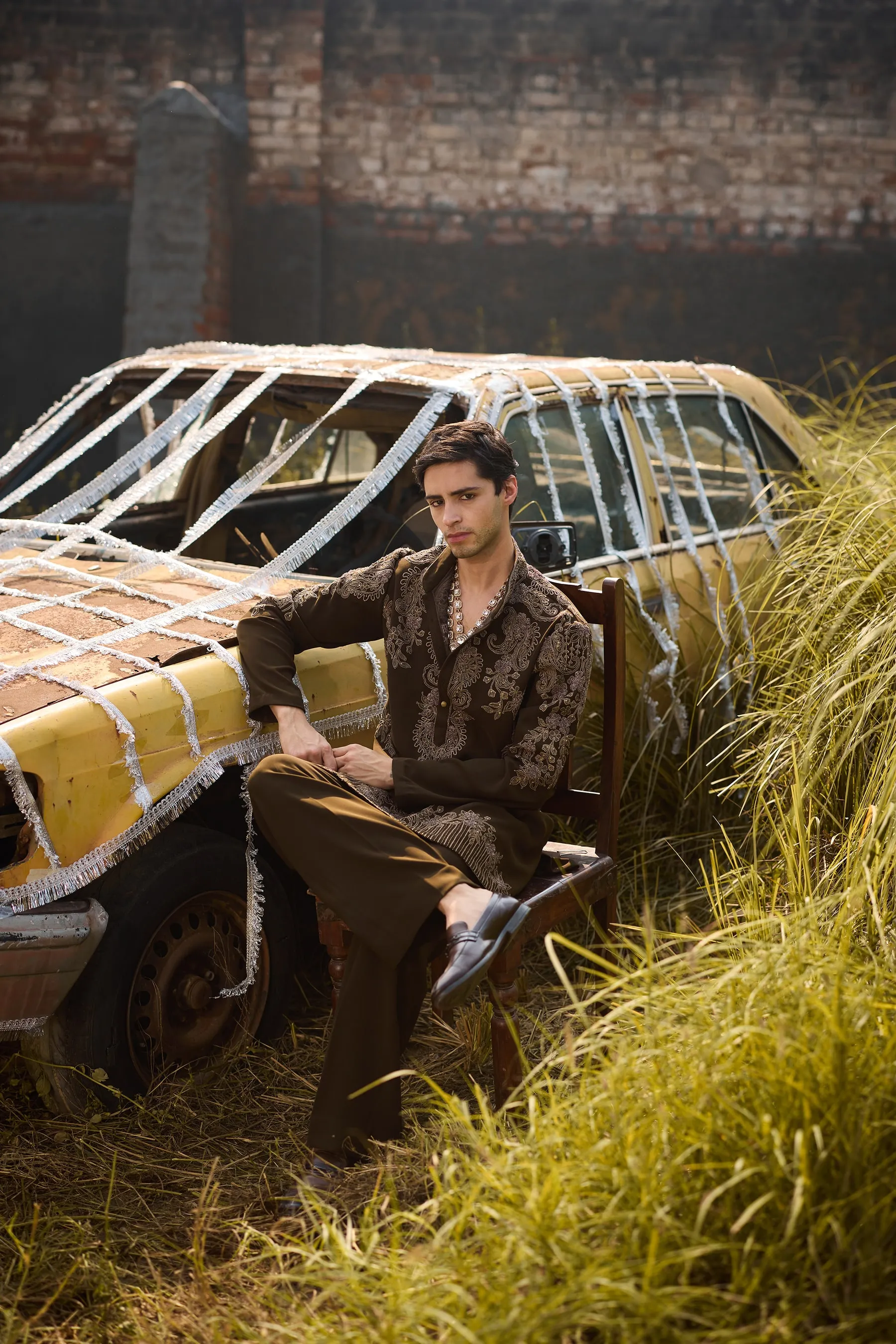
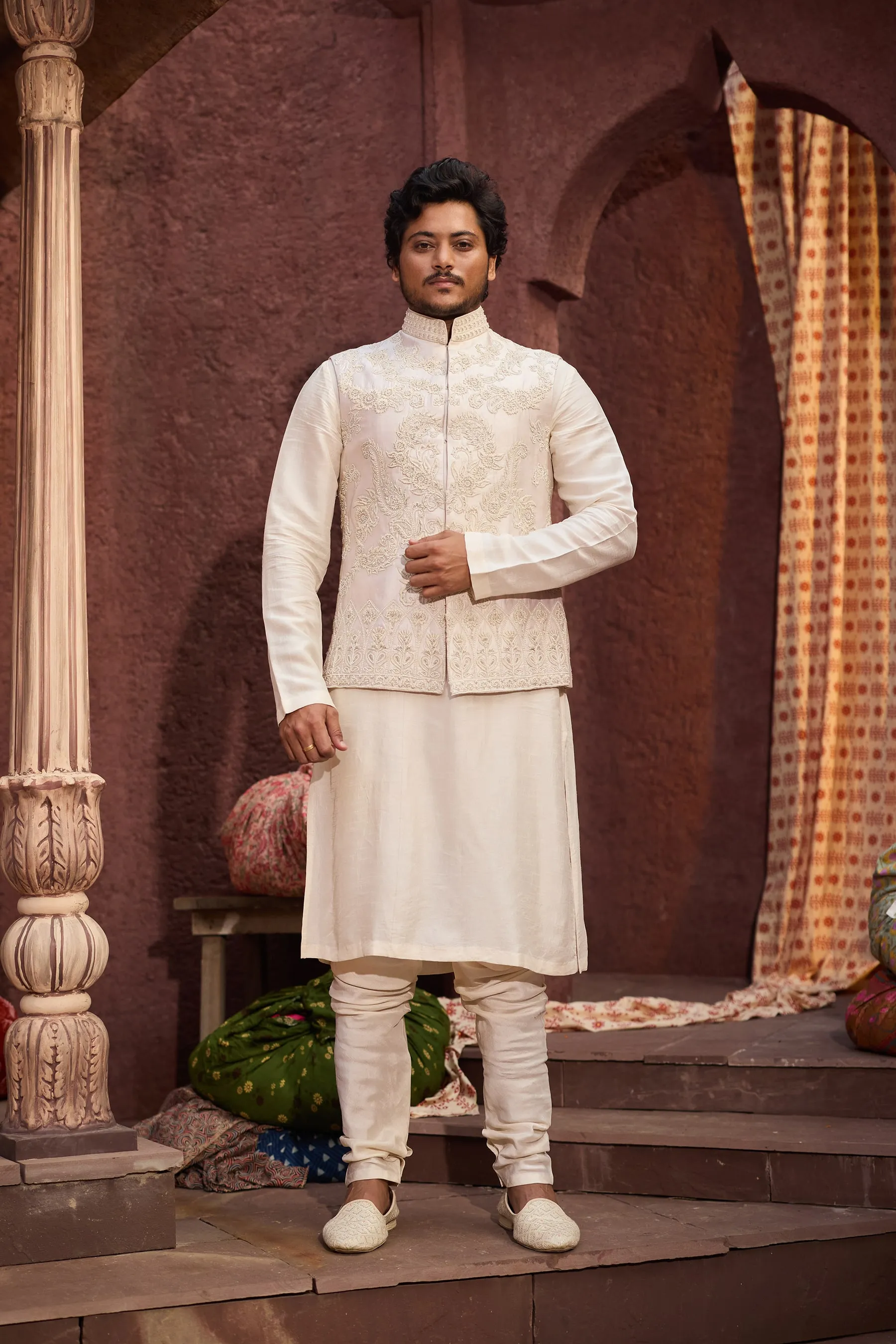
A light kurta set in ivory, pastel or yellow, perhaps with a light Nehru jacket. Avoid heavy fabrics and dark colours. See our guide to the haldi outfit for the groom for fabric and colour ideas. Our Moti Jaal Nehru jacket in ivory and Kasturi kurta set in chocolate are examples of options that read well in daylight.
Mehendi
A colourful kurta with a printed or embroidered jacket, or a soft Indo-Western set. The mehendi is relaxed, and the brother can lean into colour. See our guide to the mehendi outfit for the groom.
Sangeet
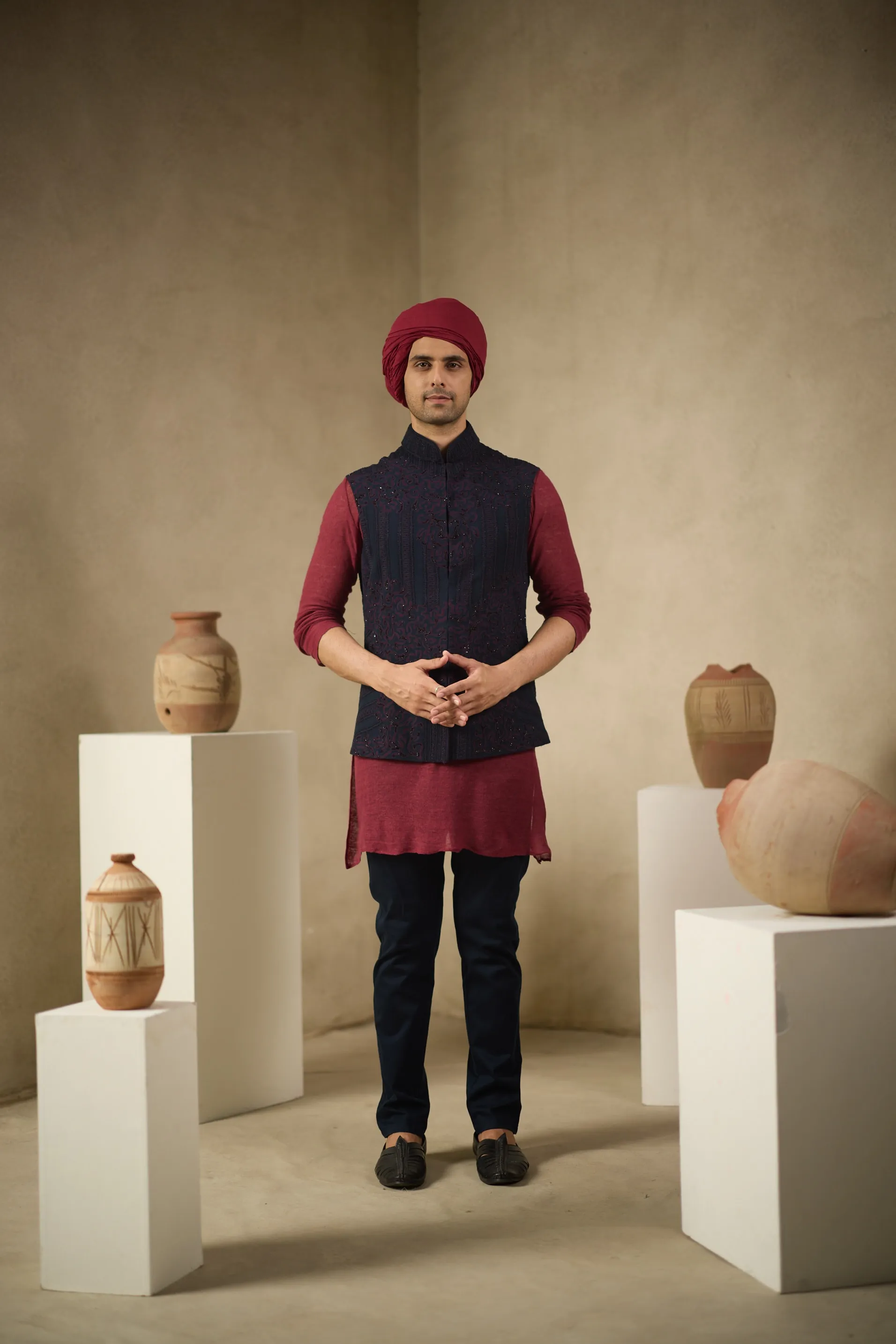
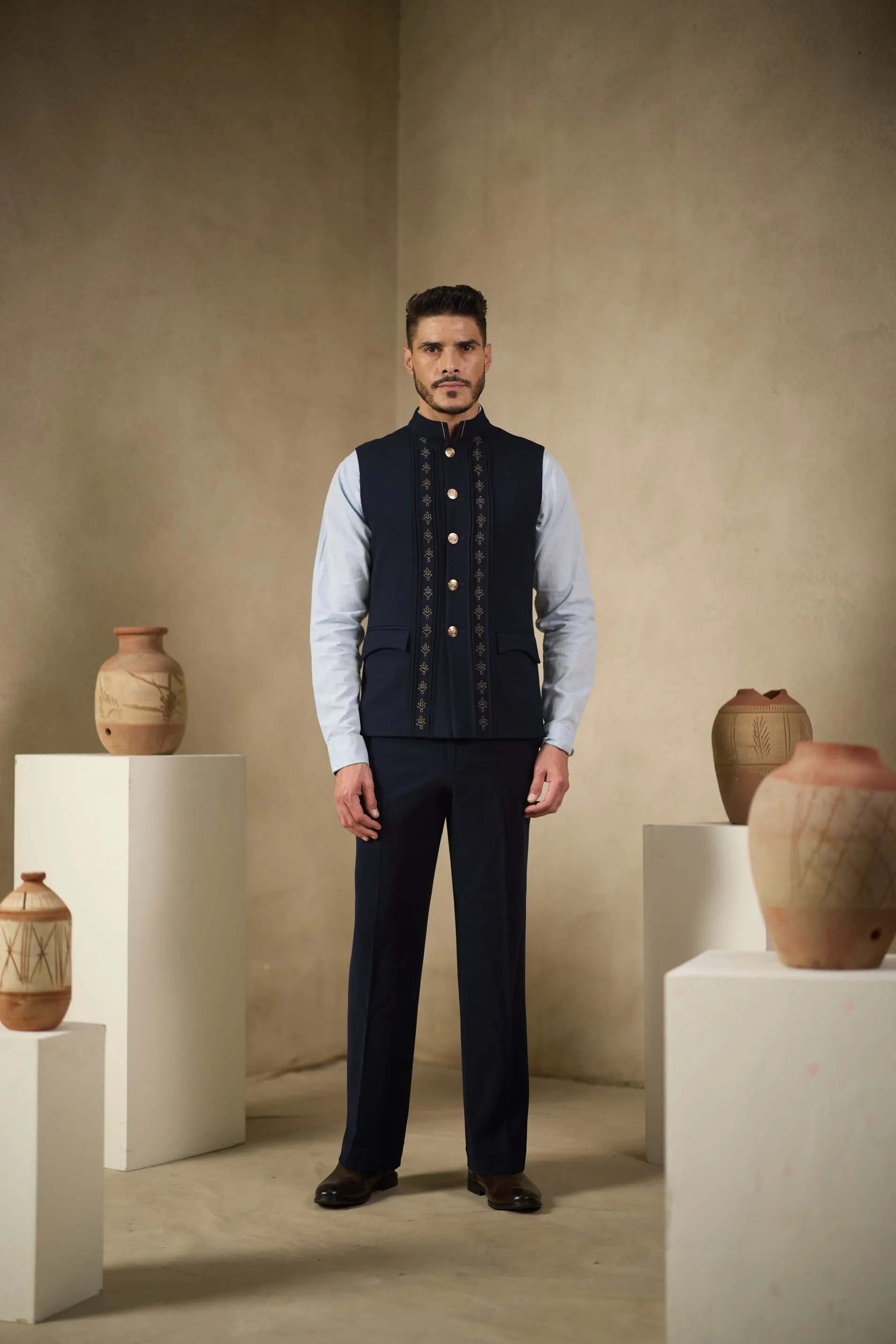
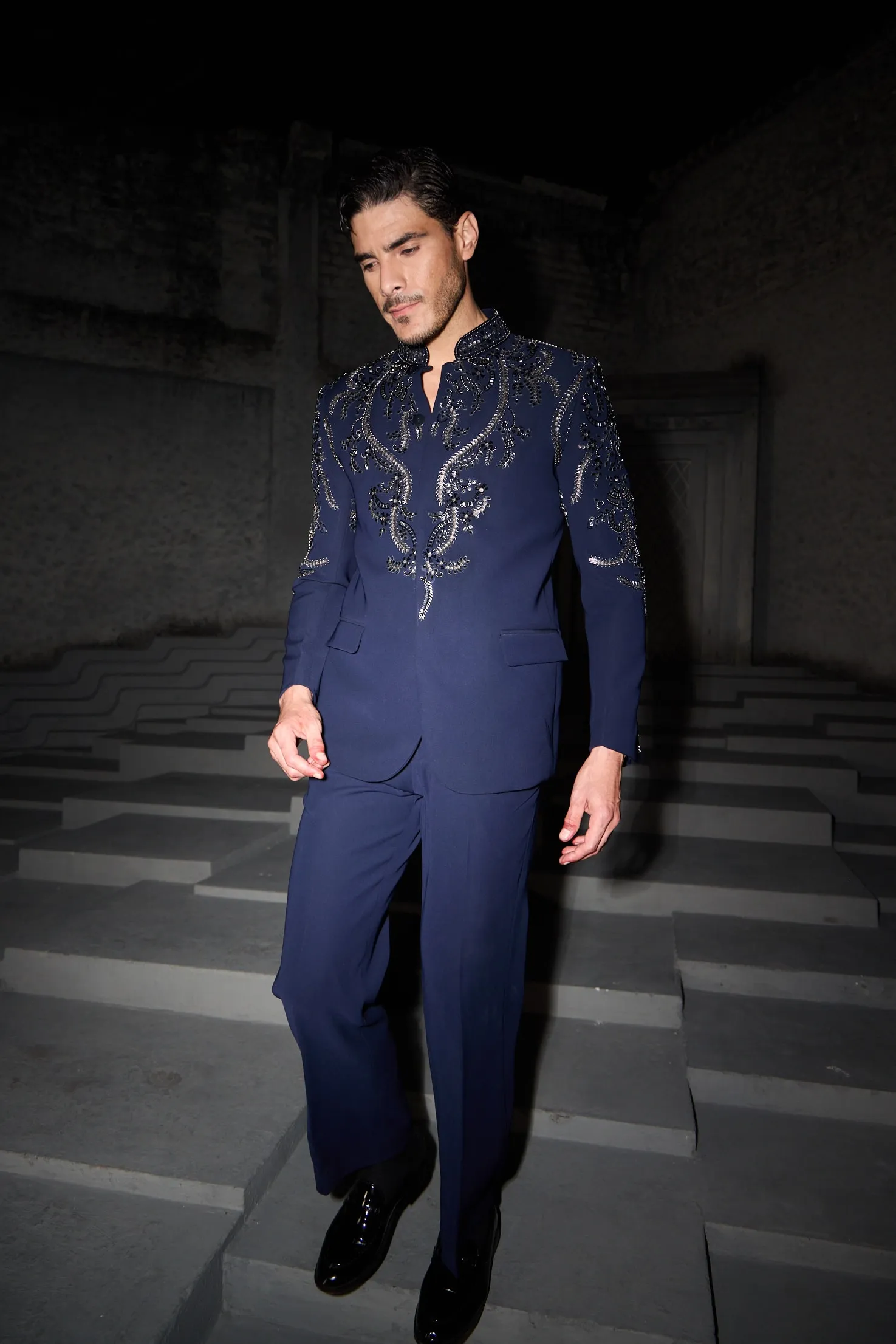
A bandhgala, a velvet jacket or an Indo-Western set in a deep colour. The brother is likely to dance, so the cut should allow movement. Our Jashn in navy and burgundy and Nawab in navy Nehru jackets suit an evening, and our Samundar bandhgala in navy is a strong option. See our guide to the sangeet outfit for the groom.
Baraat and pheras
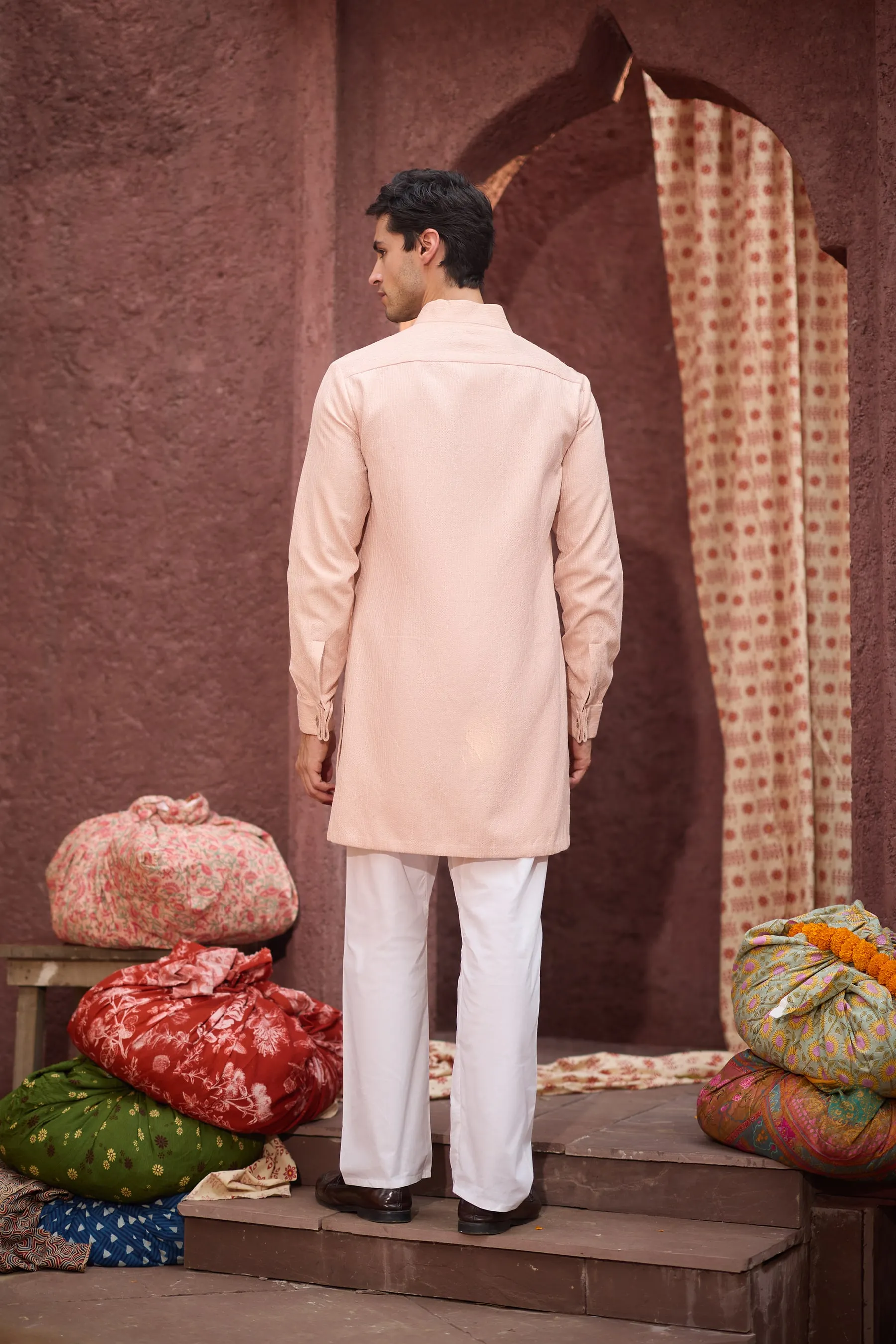
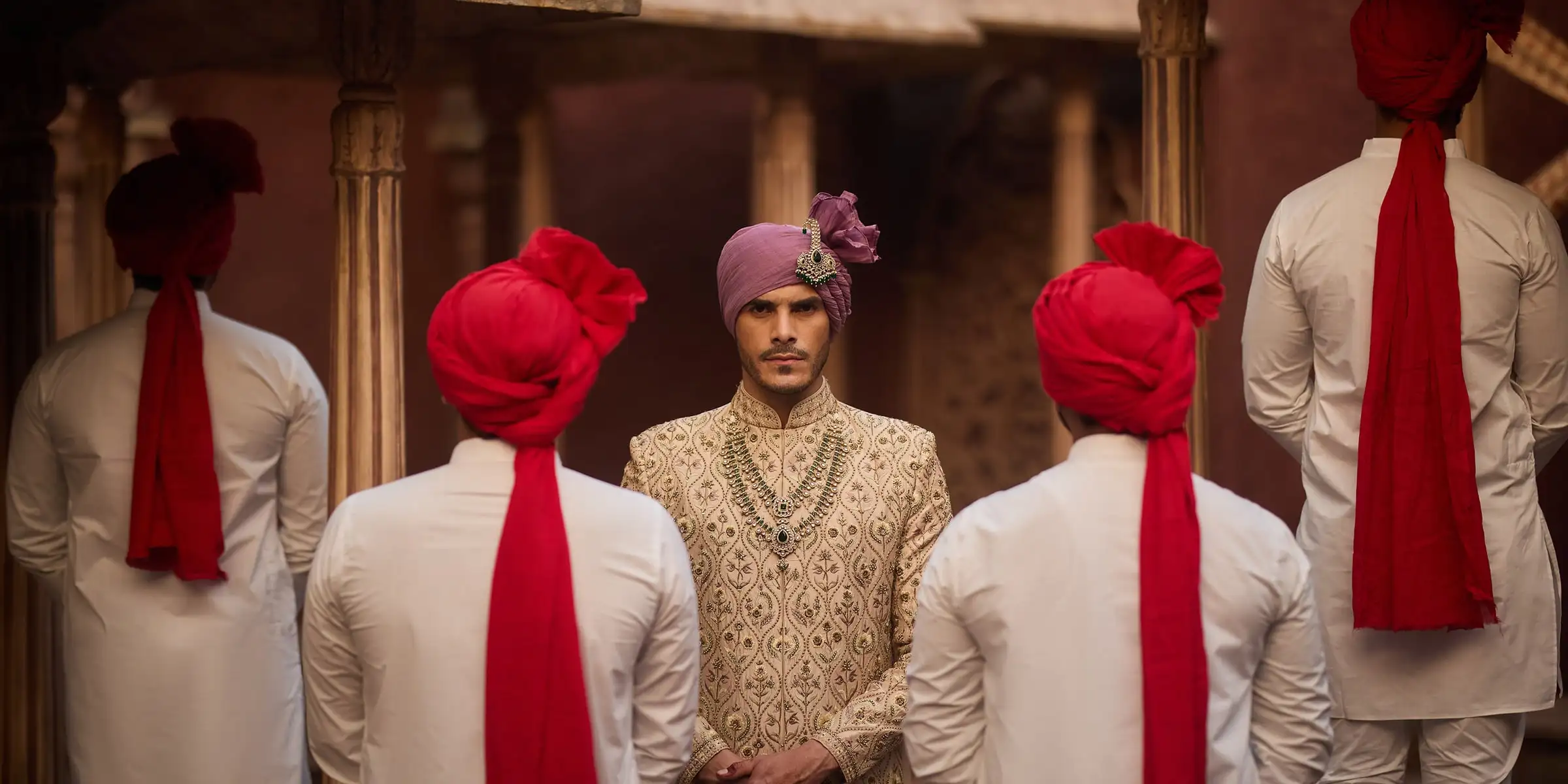
A lighter, simpler sherwani or achkan, or a rich bandhgala, in a colour that complements the groom’s. If the groom wears gold, the brother might wear ivory, champagne or soft peach; if the groom wears ivory, the brother might wear a soft pastel or a gold-toned piece. Pair with juttis and, if he wishes, a safa or stole. See our guides to the baraat outfit and the pheras outfit.
Reception
A bandhgala, a tuxedo or dinner jacket, or an Indo-Western set. Midnight, black, charcoal and deep green are safe. See our guide to the reception outfit for the groom.
Choosing colours that coordinate with the groom
Coordination is the heart of the brother’s outfit.
Related, not identical
Choose a colour family close to the groom’s. If the groom wears ivory and gold, the brother wears champagne or soft grey. If the groom wears midnight navy, the brother might wear charcoal or a lighter navy. If the groom wears a pastel, the brother wears a deeper tone of the same colour or a complementary neutral.
Use accessories to tie the look together
A shared stole, a matching pocket square, a similar brooch or a safa in the same colour are simple ways to unify without cloning.
Ask the groom, the planner and the family
The groom’s palette may be shaped by the bride’s outfit, the decor and the photographer’s plan. Ask for the main colours and any no-go colours well in advance. For more on colour, see our guide to wedding colours for the groom.
Silhouettes for the brother
- Kurta with a Nehru jacket. Light, comfortable and versatile. See the Nehru jacket collection.
- Bandhgala. Formal, sharp and easy to wear again. See the bandhgala collection.
- Indo-Western set. Modern and relaxed. Our Shafaq Indo-Western set in blush is an example. See the Indo-Western collection.
- Lighter sherwani or achkan. For the wedding day.
- Kurta set. For daytime and family functions. See the kurta set collection.
Fabrics and fit
The brother’s outfit should be comfortable for a long, active day. Choose breathable fabrics (cotton-silk, wool blends, silk blends) and a fit that allows arm movement. A good tailor will adjust the shoulders and sleeves for dancing and lifting. If the brother is having outfits made, ordering at the same time as the groom keeps colours and fabrics consistent. See our guide to planning a made-to-measure wedding outfit.
Coordinating with the whole wedding party
The groom’s brother stands in the middle of a larger group.
- With the father. A tonal relationship: the brother in a slightly deeper or lighter version of the father’s colour. See our guide to the father of the groom’s outfit.
- With the groomsmen. A shared palette with a distinctive detail for the brother. See groomsmen outfits for an Indian wedding.
- With the groom’s mother and sisters. Ask for their palettes so that the family group photograph is harmonious.
- With the bride’s brothers. If both sides coordinate, the photographs look cohesive.
Practical roles of the brother and what the outfit must allow
- Carrying and lifting. The brother may carry bags, garlands, gifts or even the groom. Choose a fit with room in the shoulders.
- Holding the safa or the sword. Some traditions give the brother small ceremonial duties.
- Dancing. He leads the baraat dance and joins the sangeet performance.
- Photographing and filming. He often has a phone in hand. A jacket with a secure inner pocket is useful.
- Hosting. He greets guests, so a neat, composed look matters.
Mistakes to avoid
- Out-dressing the groom. Keep embroidery and colour one step down.
- Matching exactly. It looks like a uniform and confuses the photographs.
- Choosing a trendy outfit that will date. A classic outfit can be worn again.
- Ignoring the weather. Heavy fabrics in hot weather spoil the day.
- Leaving the fitting late. Allow eight to ten weeks for a made-to-measure outfit.
Sample palettes for the groom and his brother
Colour decisions are easier with examples. These pairings show how two brothers can look related without matching.
Ivory and gold groom, champagne brother
The groom wears an ivory sherwani with gold embroidery; the brother wears a champagne achkan or a soft gold bandhgala. Both carry gold accents, but the groom’s ivory makes him the lighter, more luminous figure.
Midnight navy groom, charcoal brother
For a reception, the groom wears midnight navy; the brother wears charcoal with a pocket square in the groom’s navy. The tones are close, and the brother’s slightly softer shade keeps him secondary.
Blush groom, ivory brother
At a daytime ring ceremony, the groom wears a blush Nehru jacket over an ivory kurta; the brother wears an ivory kurta with a sand or soft gold jacket. They share the ivory base.
Deep green groom, ivory and gold brother
For a winter evening, the groom wears bottle green; the brother wears ivory with a gold-trimmed stole. The contrast is gentle and flattering.
Black velvet groom, navy brother
At a cocktail night, the groom wears a black velvet dinner jacket; the brother wears a navy tuxedo or bandhgala. Both are dark and formal, with texture setting the groom apart.
What the groom’s brother should know about the day
Beyond clothing, the brother’s role involves several practical tasks. A few reminders:
- Know the schedule. A printed timeline of the day, with locations and times, helps you keep the groom on track.
- Carry a small kit. Safety pins, a stain pen, a handkerchief, mints, a phone charger and a small first-aid kit are all useful.
- Look after the groom’s accessories. The safa, stole, mala and shoes should be in a bag that you or a friend watch.
- Hydrate and eat. A brother who faints is no help to the groom.
- Greet the elders. Touch the feet of the older relatives as the groom does.
- Prepare a short speech or toast if the family expects one. A sentence or two, sincerely spoken, is enough.
Brother outfit ideas by style
The traditional brother
A lighter achkan or sherwani in champagne or ivory with juttis and a stole. Elegant, formal and respectful.
The modern brother
A navy or charcoal bandhgala with a white shirt, loafers and a pocket square. Sharp and flexible.
The relaxed brother
A kurta with a Nehru jacket in a soft colour for the haldi and mehendi, then a bandhgala for the evening events.
The fashion-forward brother
An Indo-Western set in sage, sand or charcoal, with a fine shirt and statement loafers. Contemporary and distinctive.
Questions brothers often ask
Should I wear a safa at the baraat?
If the groom wears one and the family expects it, yes, in a colour that complements. Otherwise, a stole or nothing is fine.
Can I wear black to the sangeet?
Yes. Black is a standard evening colour at a sangeet or cocktail night, particularly with texture such as velvet. Avoid black for daytime ceremonies.
How much should I spend compared with the groom?
There is no rule, but the brother’s outfits are usually simpler and less expensive than the groom’s. Investing in a classic bandhgala or Nehru jacket that can be worn again is wise.
What if I am the older brother?
The principles are the same. The older brother may be photographed with the parents more often; coordinate with the father’s palette.
What if there are several brothers?
Choose a shared palette with individual variations, such as different jackets in the same colour family. See our guide to groomsmen outfits for how to coordinate a group.
Choosing between a Nehru jacket, a bandhgala and a sherwani as the brother
The three most common brother outfits differ in formality and effort, and the right one depends on the ceremony.
The Nehru jacket
A Nehru jacket (a sleeveless or sleeved jacket with a mandarin collar) over a kurta is the easiest and most flexible choice. It reads as festive without being heavy. It suits the haldi, mehendi, roka and sangeet, and it is among the most re-wearable pieces in a wardrobe. Choose a jacket in a colour or texture that adds interest to a plain kurta, and keep the embroidery light.
The bandhgala
A bandhgala is a step up in formality and structure. It is ideal for the engagement, sangeet and reception, and it can serve as the wedding-day outfit for a brother who prefers a modern look. Because it is worn with trousers and a shirt, it is easy to dress up or down.
The sherwani or achkan
A sherwani or achkan for the baraat and pheras places the brother clearly in the wedding party. Choose a lighter or simpler piece than the groom’s, in a related colour. If the brother will carry out ritual duties, a comfortable, well-fitted piece is essential.
Budget and planning for a brother
Brothers often have fewer outfits than the groom, but they still need more than one. A sensible plan:
- One festive daytime outfit (kurta with a Nehru jacket) for the haldi, mehendi and roka.
- One formal evening outfit (bandhgala or Indo-Western set) for the sangeet and reception.
- One wedding-day outfit (a lighter sherwani or achkan) for the baraat and pheras, if the family expects it.
If the budget is limited, a bandhgala can double as the sangeet and reception outfit with a change of shirt and accessories, and a Nehru jacket can be worn with different kurtas for several daytime events.
A fitting day for the whole family
One practical way to coordinate is to hold the fittings for the groom, brother and father on the same day, so that colours, fabrics and silhouettes can be compared side by side. The atelier can lay out fabrics together, check how they look in daylight and evening light and suggest adjustments. It also saves time: many families find that a single day at the atelier replaces weeks of messages.
If you cannot attend together, share photographs of the chosen fabrics and the groom’s outfit so everyone sees the same palette. A video fitting can also work for family members who are travelling.
The brother as a supporting stylist
The brother often becomes an informal stylist for the day. A few things he can do:
- Check the groom’s collar and stole before each photograph.
- Keep a small kit with safety pins, a lint roller and a stain pen.
- Hold the safa, sword and accessories and return them at the right moment.
- Gently remind the groom to drink water and eat.
- Keep the group moving so photographs run on time.
None of this needs special clothing, but a comfortable jacket with an inner pocket for the kit makes it easier.
What if the brother is also the best man or a groomsman?
In many families the groom’s brother takes on the role that a best man plays in a Western wedding: organising the groomsmen, holding the rings, giving the toast and looking after the groom. If your brother carries that role, his outfit can reflect it with one or two distinguishing details.
- A slightly different jacket or stole from the other groomsmen, in the groom’s palette.
- A matching pocket square or brooch in a colour that links him to the groom.
- A little extra polish, such as a perfectly folded pocket square, neat cufflinks and well-kept shoes.
The distinction should be quiet. The aim is for those who look closely to see that he stands closest to the groom, not for the outfit to announce it. When the groomsmen are dressed in a coordinated palette, the brother’s slight difference in colour or detail ties the whole group together.
Shop the brother’s look
- Moti Jaal, an ivory Nehru jacket over a plain kurta.
- Jashn, a navy and burgundy Nehru jacket for an evening function.
- Nawab, a navy Nehru jacket with a classic line.
- Samundar, a navy bandhgala for the sangeet and reception.
- Shafaq, a blush Indo-Western set for a contemporary look.
- Kasturi, a chocolate kurta set for a rich, earthy palette.
All pieces are made to measure with two fittings and hand finishing.
Final thoughts
The groom’s brother should look as though he belongs beside the groom: composed, coordinated and comfortable. Choose a related palette, a slightly simpler silhouette and a fit you can dance in. When you are ready, book a fitting and we will plan the brother’s outfits alongside the groom’s, so the family looks united in every photograph.