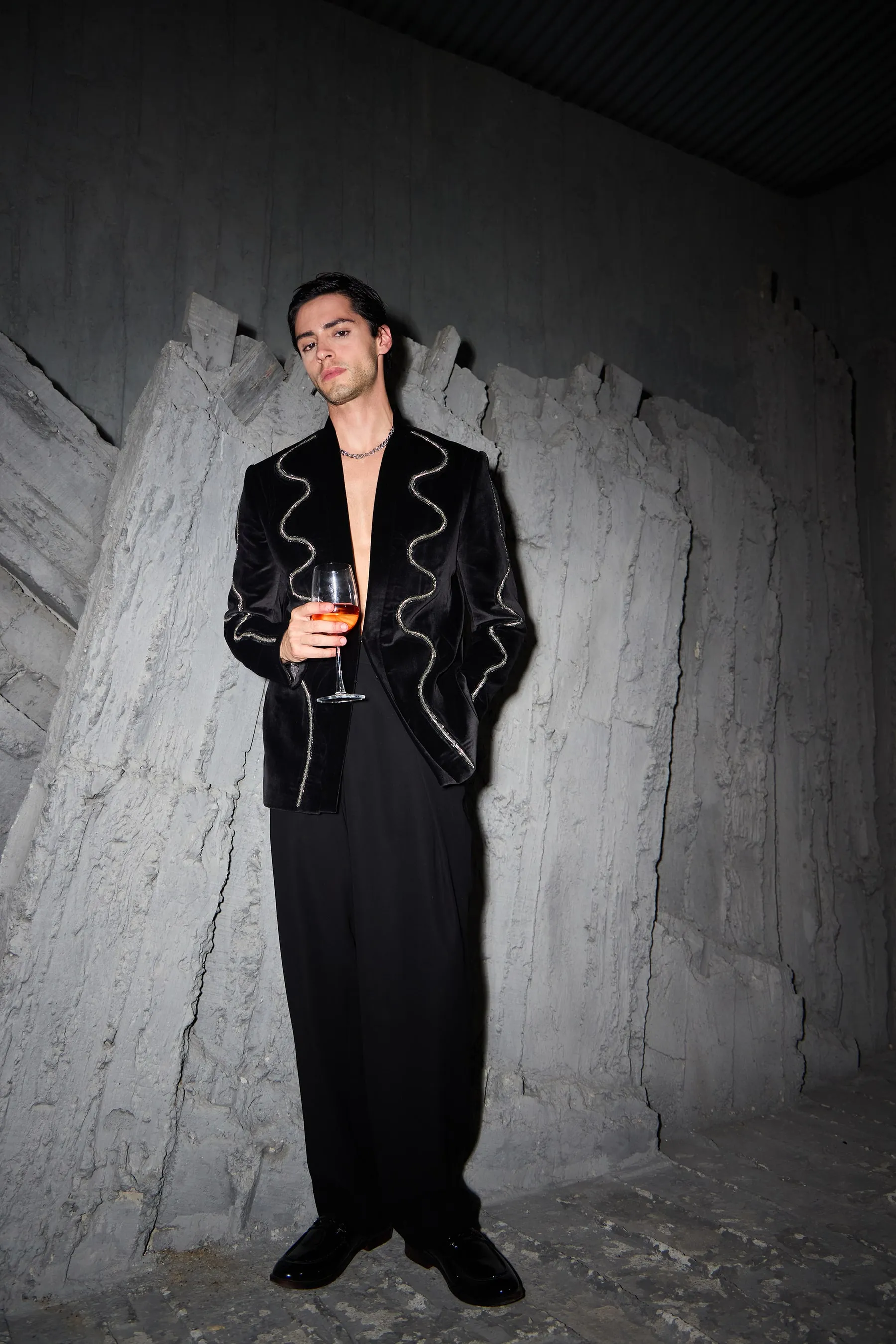
The sangeet is the wedding’s big night out. There is a stage, a playlist, choreographed numbers from both families and a dance floor that does not clear until late. It is also, for the groom, one of the best chances to wear something dramatic that is not a sherwani. A good sangeet outfit looks sharp in photographs, moves well under lights and can handle two hours of dancing without losing its shape. This guide explains what to wear to the sangeet, how to choose colour and fabric, and how to make sure you can actually dance in it.
For the wider plan, see what the groom wears at each ceremony. Our sangeet and cocktails collection gathers the evening pieces we make for this part of the wedding.
What makes a good sangeet outfit?
The sangeet is more formal than the haldi or mehendi, and less ceremonial than the pheras. It is a party with a dress code that rewards confidence. Four qualities define a good sangeet look:
- Evening richness. Deeper colours, textured fabrics and a touch of shine look best under stage lights and fairy lights.
- Clean tailoring. Everyone looks at the groom on the dance floor, so fit has to be exact.
- Freedom of movement. You will lift your arms, spin, bend and sometimes lift someone. The garment must allow all of it.
- A little drama. One distinctive element (a velvet lapel, a brooch, a patterned lining) separates your outfit from the crowd.
The best silhouettes for the groom at the sangeet
The bandhgala (Jodhpuri suit)
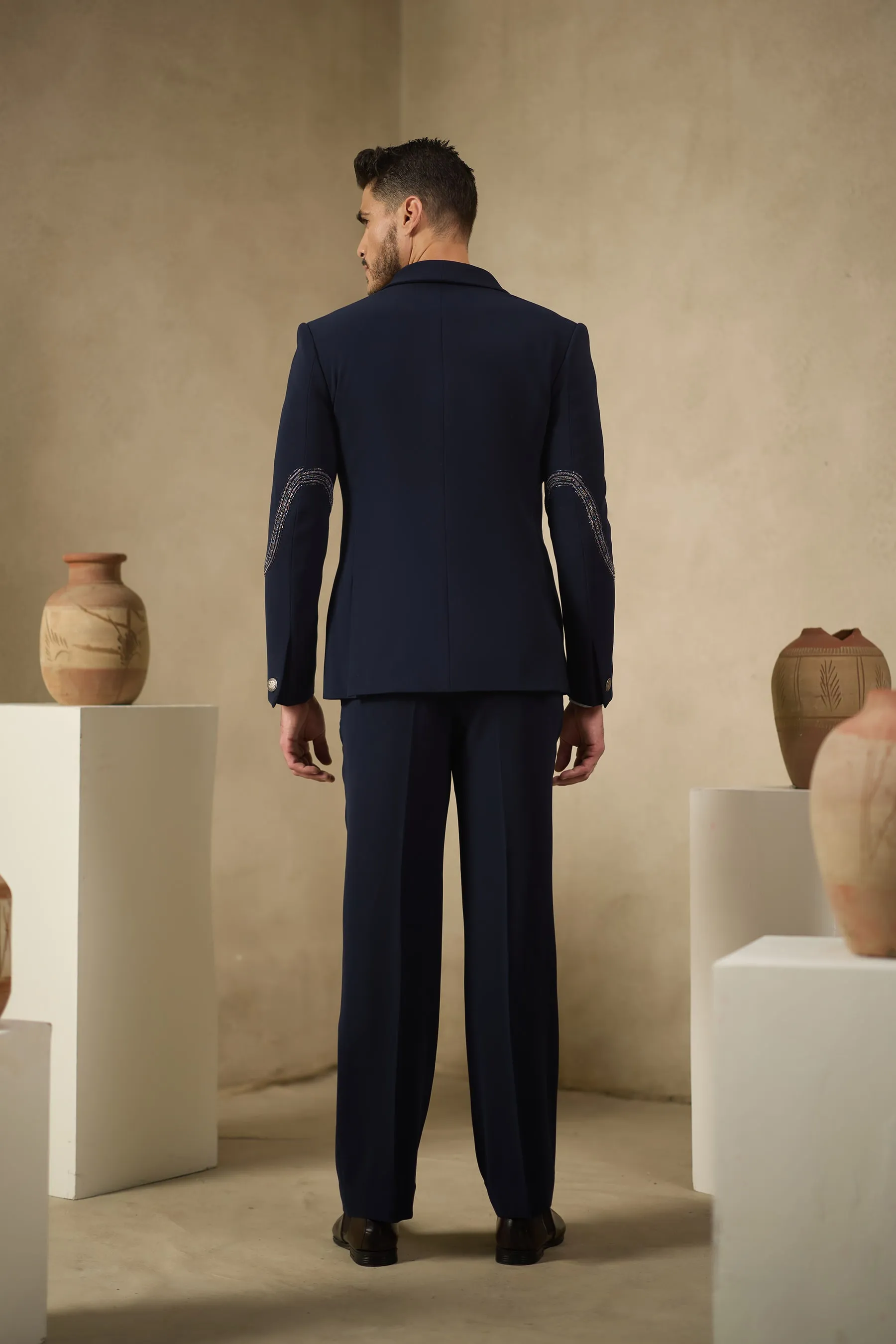
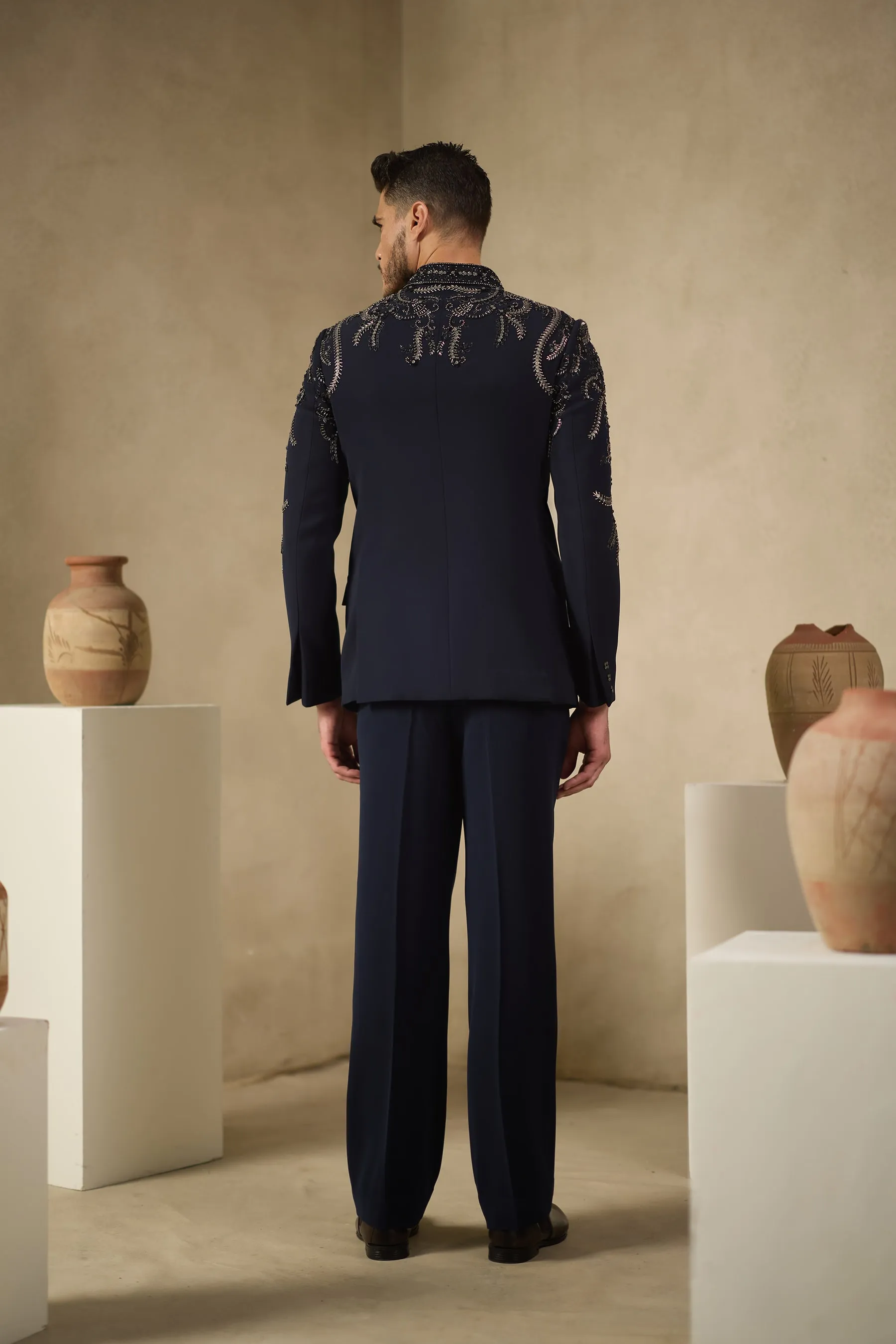
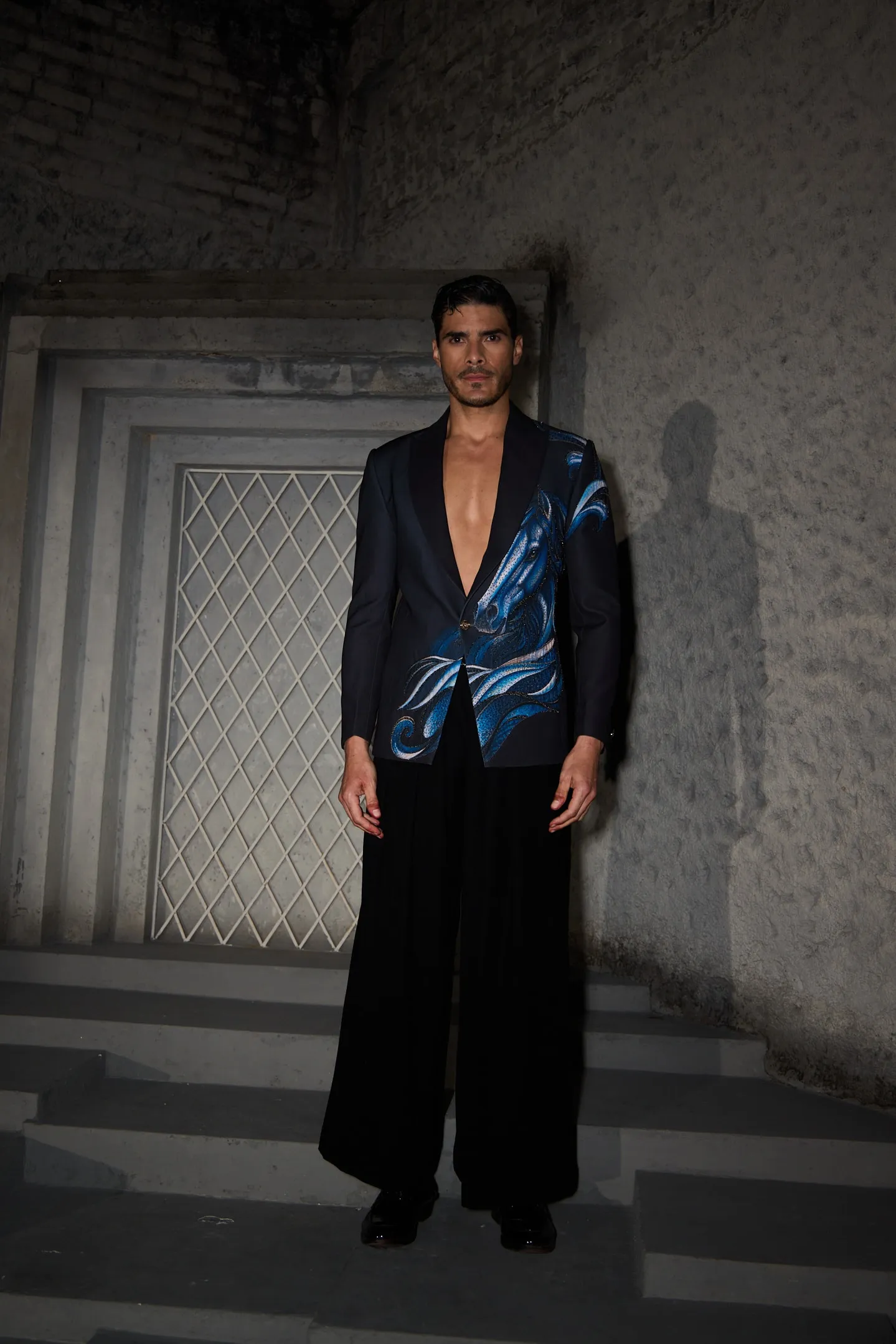
A bandhgala combines the structure of a suit with the closed collar of Indian formalwear. It is the most reliable sangeet choice: smart, comfortable and quietly traditional. Choose midnight navy, charcoal or black in a wool blend, or a textured silk for more sheen. Our Aftab bandhgala in midnight navy is a good example. See the full bandhgala collection. Our guide to sherwani vs achkan vs bandhgala explains how it differs from the other silhouettes.
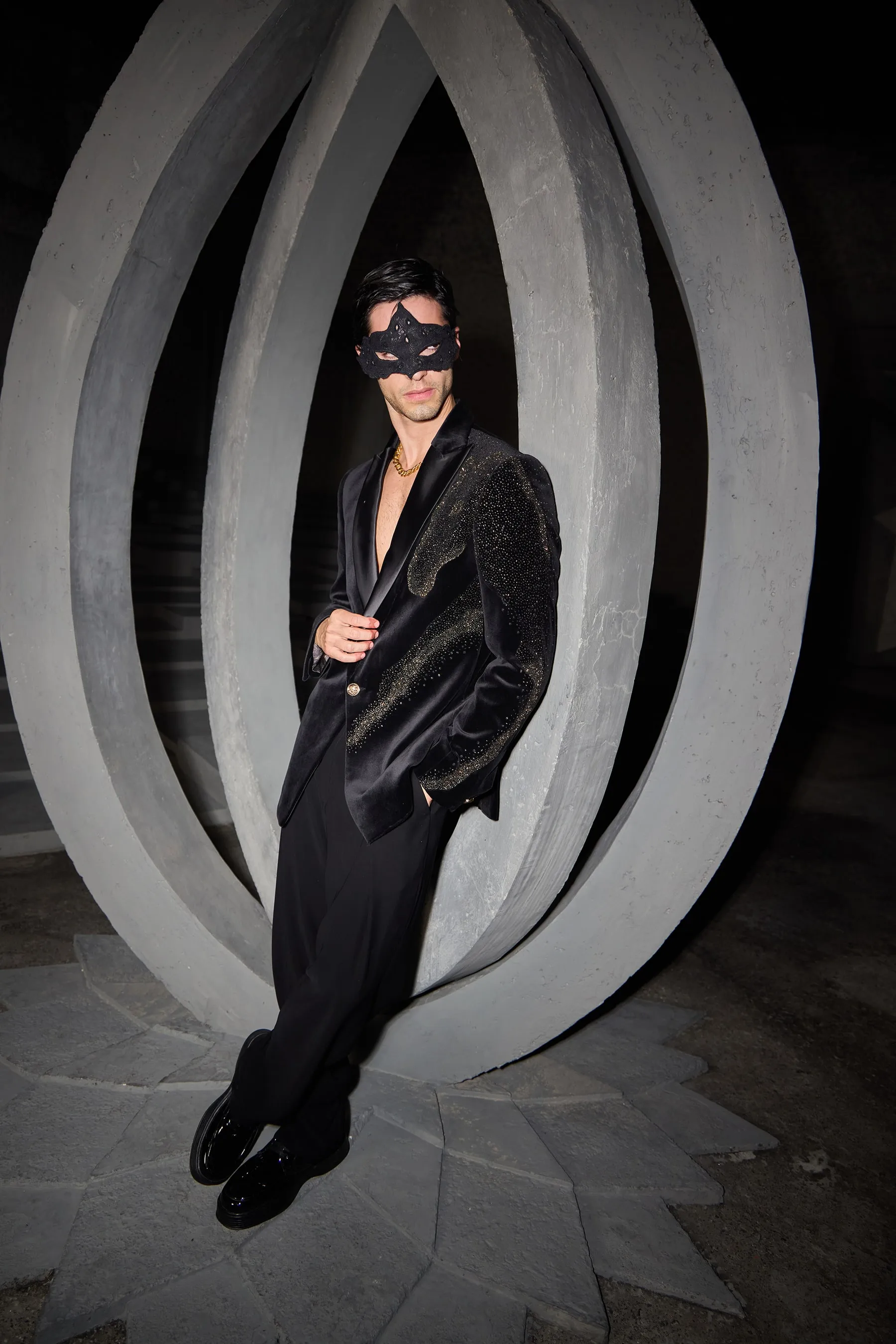
The velvet dinner jacket
A velvet jacket is a classic of the Indian sangeet and cocktail evening. Black, midnight and deep green velvet look luxurious under light and pair with a white shirt, a fine bow tie or an open collar. Our Nagin and Naqab dinner jackets in black velvet are made for this. Velvet sits warm, so choose it for cooler months or air-conditioned venues; for warmer weather, see our notes in the summer wedding groom outfit guide.
The tuxedo
A black tuxedo with satin lapels is a sharp alternative, especially for a cocktail-style sangeet. Pair with a crisp white shirt, a bow tie or a fine stand collar and patent or polished leather shoes. Our tuxedo collection includes Siyah, Raaz and Lehar in navy. For a deeper look at the cocktail-night version, see our guide to the cocktail party outfit for the groom.
Indo-Western sets
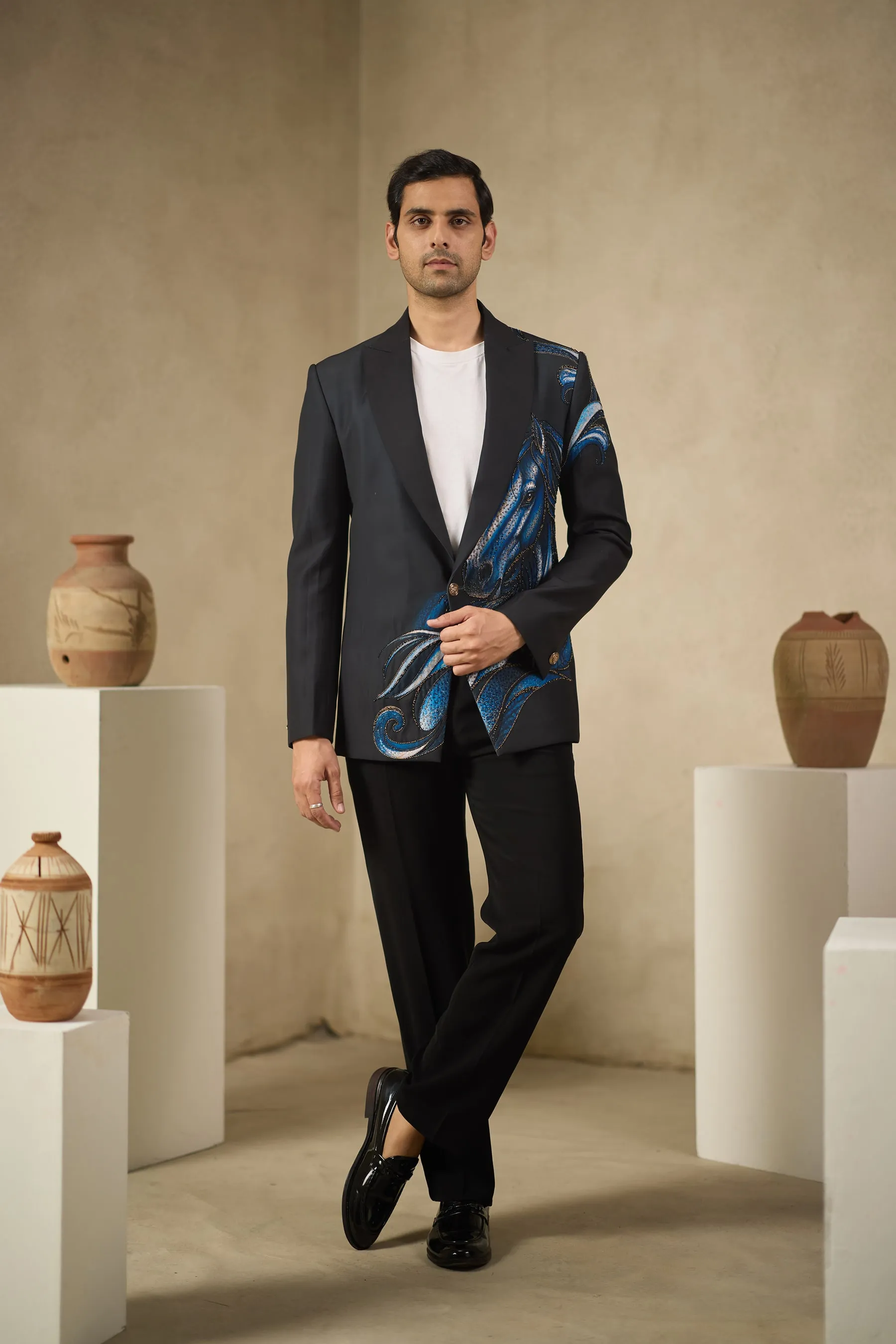
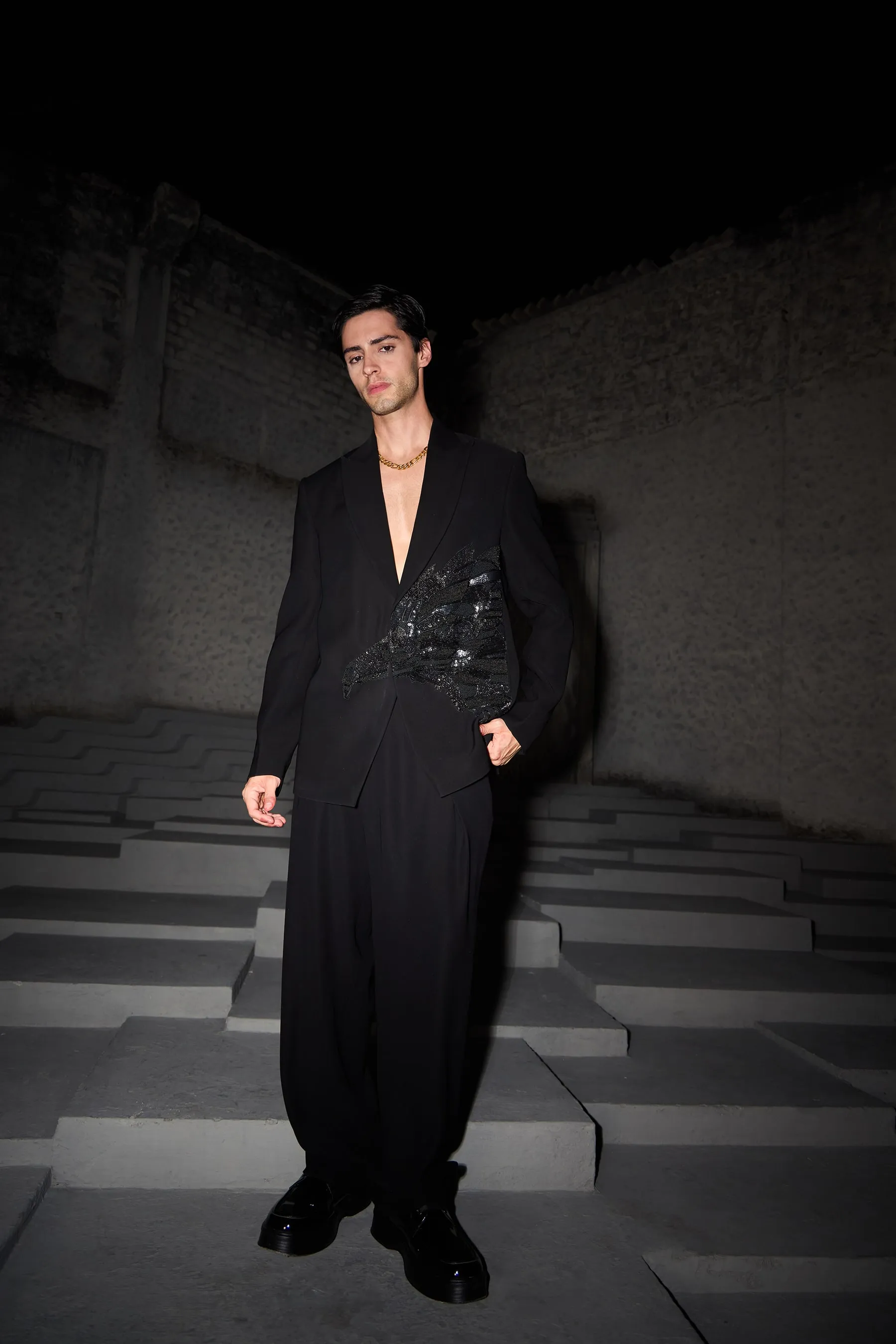
An Indo-Western set blends an Indian structure (a long jacket, a bandi, an asymmetric hem or a draped cape) with Western tailoring (trousers, a shirt, loafers). It suits a contemporary sangeet with a DJ and a modern stage. Our Ashwa in black and Mauj in navy sit in this space. See the Indo-Western collection.
The embellished jacket or sherwani
If your sangeet is a grand, formal event, an embellished short sherwani or a heavily embroidered jacket can work. Keep it lighter than your wedding-day sherwani, and make sure it does not restrict your arms.
Colours for the sangeet
Evening lighting changes colour. Warm lights soften pale shades and enrich dark ones, so deeper colours generally photograph better at the sangeet.
- Midnight navy. The most flattering evening colour. It looks richer than black in warm light and works with every skin tone.
- Black. Dramatic, formal and flexible. Add texture (velvet, jacquard) so it does not read flat.
- Bottle green and forest green. Rich and distinctive; look especially good with gold accents.
- Burgundy and wine. Festive, warm and slightly unexpected.
- Charcoal and steel grey. Quietly modern, ideal for an Indo-Western set.
- Jewel accents. Emerald, sapphire or ruby in a lining, brooch or pocket square.
Avoid white and cream for the sangeet unless you are in a bold embroidered piece; they tend to look washed out under stage lights and show marks easily.
Fabrics that look good and move well
- Wool blends and lightweight wool. Excellent drape, naturally breathable and forgiving to dance in.
- Velvet and cotton velvet. Luxurious, deep colour; warm, so keep the lining light.
- Jacquard and textured silk. Subtle pattern that catches light without being flashy.
- Silk-blend crêpe. Soft, fluid and comfortable for Indo-Western pieces.
- Stretch blends. A small amount of elastane improves comfort in trousers and fitted jackets.
Avoid stiff organza, heavy brocade or very tight fits if you plan to dance a lot.
How to make sure you can dance in it
A good tailor will plan for movement. Ask for these things at your fitting:
- Raise your arms above your head and forward. The jacket should not ride up or pull at the shoulders.
- Bend and squat. Trousers should not tighten across the thigh or pull at the waist.
- Sit and stand repeatedly. The jacket should not bunch or open awkwardly.
- Try a few dance moves. It sounds silly, but it tells you what a mirror cannot.
- Check sleeve length with your arms extended. A cuff that rides up looks untidy in photographs.
If you are having an outfit made to measure, tell the atelier you will dance. Our process includes two fittings so that the final garment can be adjusted after you have moved in it. For the full process, see how to plan a made-to-measure wedding outfit.
Styling the details
Shirt and collar
A crisp white shirt is a classic with a tuxedo or bandhgala. For an open look, a stand-collar shirt in white, ivory or a muted colour works without a tie. A black or midnight turtleneck under a velvet jacket is a modern alternative in cooler weather.
Brooches and pocket squares
A single brooch on a lapel or collar adds personality and costs little. Keep it small and distinctive: a pearl, a kundan piece or an enamel detail. A silk pocket square in a complementary shade finishes a tuxedo or jacket.
Footwear
Polished leather loafers, patent shoes or oxfords suit a tuxedo or bandhgala. For a more traditional look, embroidered mojaris in black or gold work well. Whatever you choose, make sure the sole grips on a polished stage or dance floor.
Watch, rings and jewellery
A dress watch or a statement ring is plenty. If you wear a necklace or mala, keep it simple and ensure it does not catch on the jacket.
Matching the bride and the family
Your sangeet look will appear next to hers in dozens of photographs. Ask for her colour palette, even if it is only a general direction.
- Complementary colours. If she is in ruby red or emerald, midnight navy or black gives a strong contrast; ivory and gold would give a softer pairing.
- Textures. If her outfit is heavily embellished, a clean, textured jacket on you can balance it.
- Family coordination. Brothers and father can wear lighter, related tones. See what the groom’s brother wears and what the father of the groom wears.
- Groomsmen. A palette of navy, charcoal and black with a shared detail (a brooch, a pocket square) looks coordinated. See groomsmen outfits for an Indian wedding.
Sangeet outfit ideas by style
The classic bandhgala
Midnight navy bandhgala, white shirt, black leather loafers, a pearl brooch. Smart, flattering and easy to wear for hours.
The velvet showman
Black velvet dinner jacket, white shirt, a fine bow tie or open collar and patent shoes. Dramatic and photogenic.
The Indo-Western modernist
A long charcoal or navy jacket over a slim shirt and tailored trousers, with minimalist jewellery. Contemporary and relaxed.
The festive traditionalist
A short embroidered jacket or sherwani in deep green or burgundy with a stole and juttis. Honours tradition while lighter than a wedding-day sherwani.
Practical tips for the evening
- Pack a change. Many grooms change between the rituals and the dance. A second shirt or a lighter jacket helps.
- Eat before you dance. A fitted outfit and a full plate do not mix.
- Check the venue temperature. Velvet in a hot hall is uncomfortable; a lightweight wool or silk blend is safer.
- Break in your shoes. Do not wear new leather soles on a polished stage.
- Plan your first-dance or entry. If you have a choreographed entrance, practise it in the outfit.
Mistakes to avoid
- Wearing the wedding-day sherwani. It will be too heavy and too formal.
- Ignoring the lighting. Dark, rich colours look better than pale ones under stage lights.
- Overloading with accessories. One statement is enough.
- Skipping the movement test. A beautiful jacket that restricts your arms is not a good sangeet jacket.
- Choosing a trend you will not like in photographs in ten years. Classic tailoring with one personal detail ages best.
Sangeet and cocktail night: one outfit or two?
Many modern weddings have both a sangeet and a cocktail evening, sometimes on consecutive nights. A black velvet jacket or a midnight bandhgala can be worn twice with a different shirt and accessories. If you want two distinct looks, choose a bandhgala for the sangeet and a tuxedo for the cocktail night, or the reverse. Our guide to the cocktail party outfit for the groom covers the second look.
Choosing between a structured and an unstructured jacket
The biggest practical decision in a sangeet jacket is how much structure it has. Structure (canvas, padding, a firm chest piece) gives a sharp line and holds its shape over a long evening. Lack of structure (a soft shoulder, light interlining) gives comfort and freedom.
- Fully or half-canvassed jacket. A canvas inside moulds to your body over time and keeps its shape through dancing. It is the better choice for a bandhgala or tuxedo you will wear again.
- Unconstructed jacket. Light, almost shirt-like. It suits an Indo-Western set, warm weather or a groom who wants to move without thinking.
- Fused jacket. More affordable and lighter, but less durable and less breathable. Fine for a one-off event, less so for a piece you hope to wear for years.
Ask your tailor which construction is used, and choose according to how you will wear the garment. Our atelier makes structured pieces with a canvas front and softer pieces where freedom of movement is the priority.
Entrance, stage and choreography: planning your outfit around the moments
Many sangeets include a choreographed entrance, a couple’s dance, a family act and a moment on stage. Each has its own demands.
The entrance
If you enter on stage to a song, think about the first sight: the colour, the silhouette, the sound of the footwear. A longer jacket creates movement when you walk; a short jacket looks crisp and modern. Wear the shoes you will dance in so the walk is natural.
The couple’s dance
Close dancing means the bride’s jewellery and embroidery will touch your jacket. Choose a fabric that does not snag, and avoid sharp embellishments on the front of the jacket. Velvet and wool blends are forgiving; heavy beadwork is not.
The group act
If you are dancing with friends and brothers, coordinate softly. Matching accessories (a brooch, a pocket square, a stole) look good and let everyone wear a different jacket.
Lighting and stage
Stage lights are strong and often coloured. Very dark fabrics can lose detail; very pale ones can glare. A mid-to-deep tone with a textured surface reads best under a mix of lights.
What the sangeet means across families and regions
The sangeet began as a North Indian, particularly Punjabi, tradition of women singing folk songs before the wedding. Over the past two decades it has grown into a large evening event across many communities, with professional choreography and a mixed guest list. The dress expectations have shifted accordingly. In some families the sangeet remains a modest gathering at home, where a kurta with a jacket is entirely right. In others it is a large party in a banquet hall, where black-tie is more fitting.
Because the format varies so much, the best first step is to ask the couple’s families what they expect. If the invitation names a theme or dress code (Bollywood, black-tie, retro, jewel tones), follow it, and use it as an opportunity to personalise your look. If there is no theme, choose a rich, evening look and add a distinctive detail.
Packing and managing the outfit on the day
- Hang the outfit early. Velvet and wool recover from travel creases if they hang for a few hours in a steamy bathroom.
- Keep it covered. Use a garment bag and avoid placing it near food or henna.
- Carry a small kit. A lint roller, safety pins, a needle and black thread, double-sided tape and a stain pen are all useful.
- Allow time to dress. A bandhgala with buttons and a collar takes more time than a kurta; give yourself thirty minutes.
- Plan a quick change. If you are dancing hard, a second shirt in the same colour lets you refresh without changing your whole look.
When the sangeet comes right after the haldi or mehendi
On busy wedding days, the haldi and the sangeet may be only a few hours apart. Plan the outfit changes in advance. Ask a friend or sibling to hold the sangeet outfit, keep a steamer or portable iron nearby and allow time to shower and groom between events. If you are tight on time, a simple approach is to choose a light kurta for the daytime and a jacket or bandhgala for the evening, which you can put on over a fresh shirt in minutes. For the daytime look, see our guides to the haldi outfit and the mehendi outfit.
How to wear a sangeet outfit again after the wedding
The sangeet is the part of the wedding wardrobe that translates best into everyday formal life. A midnight bandhgala works for corporate dinners, festive gatherings and anniversaries. A black velvet jacket becomes a winter evening staple. A tuxedo works for galas and award dinners. Choose a classic colour and silhouette, keep the personal detail small and replaceable (a brooch, a lining, a pocket square) and you will get many years of use out of the garment.
Shop the sangeet look
- Nagin, a black velvet dinner jacket with satin detail.
- Naqab, a black velvet dinner jacket with a sharper lapel.
- Aftab, a midnight navy bandhgala in a structured wool blend.
- Ashwa, a black Indo-Western set for a modern look.
- Mauj, a navy Indo-Western set with relaxed tailoring.
- Sagar, a charcoal and blue Indo-Western set for a contemporary palette.
Browse the bandhgala, tuxedo and Indo-Western collections. All are made to measure.
Final thoughts
Dress for the sangeet as you would for a very good party where you are the host: sharper than your guests, comfortable enough to dance and distinctive in one small detail. Choose a deep colour, a fabric that moves and tailoring that fits exactly, then test it by dancing. When you are ready, book a fitting and we will plan the sangeet look alongside the rest of your wedding wardrobe.