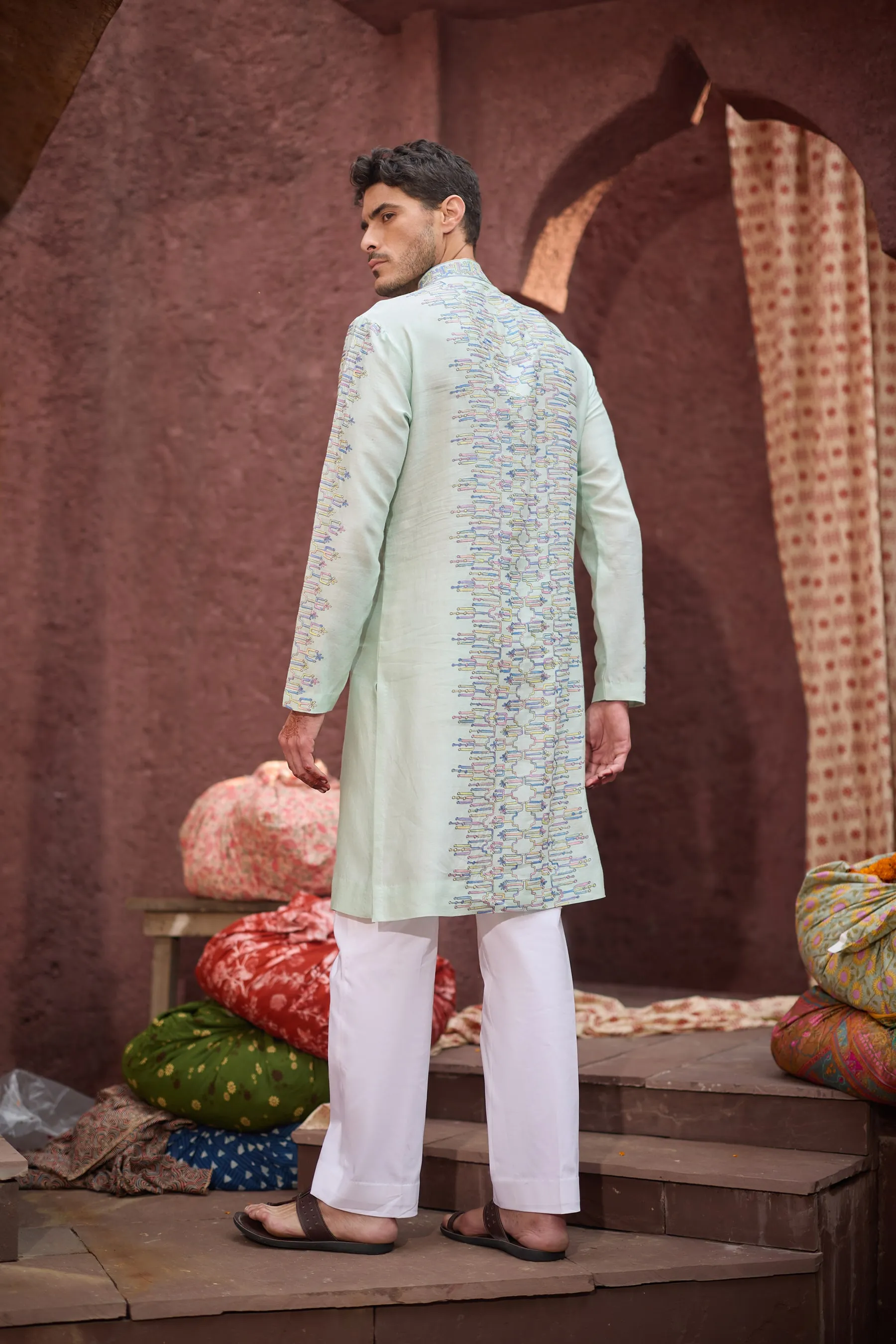
The mehendi is the part of the wedding where the mood softens. The bride’s hands are being painted, the family is gathered, the music is playing and nobody is in a hurry. For the groom, it is a rare ceremony where you can dress with colour and personality and without the weight of a sherwani. It is also a ceremony many grooms under-plan, then regret. This guide covers what to wear to the mehendi, which colours and fabrics work, and how to look considered without looking overdressed.
If you are planning the whole wedding, start with our overview of what the groom wears at each ceremony. Our haldi and mehendi collection brings together pieces designed for these relaxed daytime functions.
What the mehendi ceremony is like, and what that means for your outfit
In many families the mehendi is held the day before the wedding, or on the same day as the haldi, in the afternoon or early evening. The bride (and often the women of the family) have henna applied while music, snacks and conversation continue around them. In some families the groom’s side holds a separate mehendi for the groom’s women relatives, and the groom attends briefly. In others, the groom is a full guest of honour, joining in the dancing and dhol.
Three things shape your outfit:
- You will sit for a long time, often on floor cushions, so the garment must be comfortable seated.
- You will dance, so there should be room through the shoulders, hips and legs.
- The setting is informal and colourful, so the palette can be braver than at the pheras or reception.
The best mehendi outfit is therefore relaxed in cut, light in fabric and clear in colour. Think kurta, jacket or soft Indo-Western rather than structured sherwani.
Colour ideas for the groom’s mehendi outfit
Green, the traditional echo
Henna is green before it stains, and green has long been the mehendi colour. Modern interpretations use sage, mint, pistachio and eucalyptus rather than bright parrot green. Our Pudina kurta set in mint is a good example of a soft, wearable green that does not look themed. For an evening mehendi, deeper bottle or forest green in a silk-cotton works well.
Pastels: blush, peach, powder blue, lilac
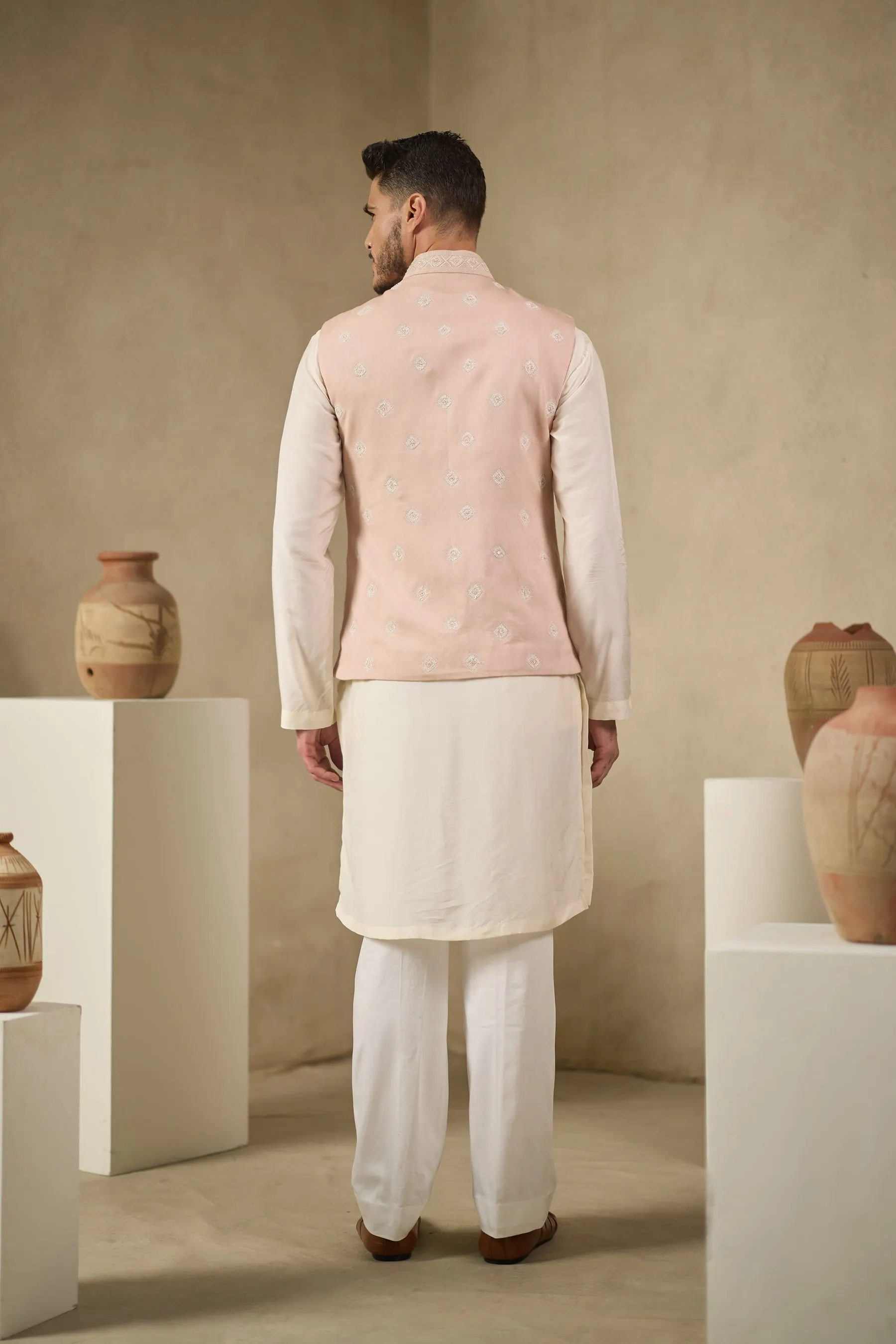
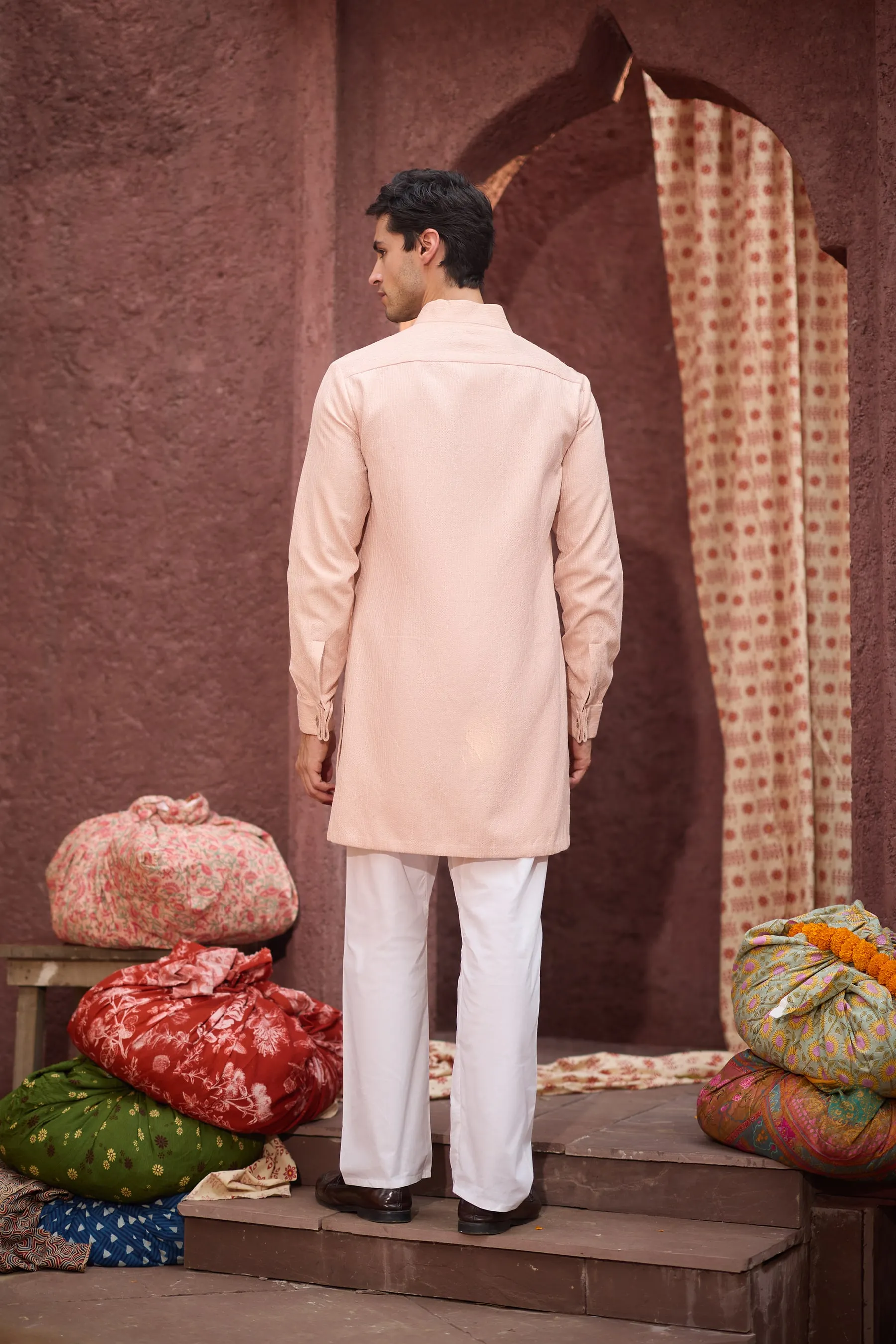
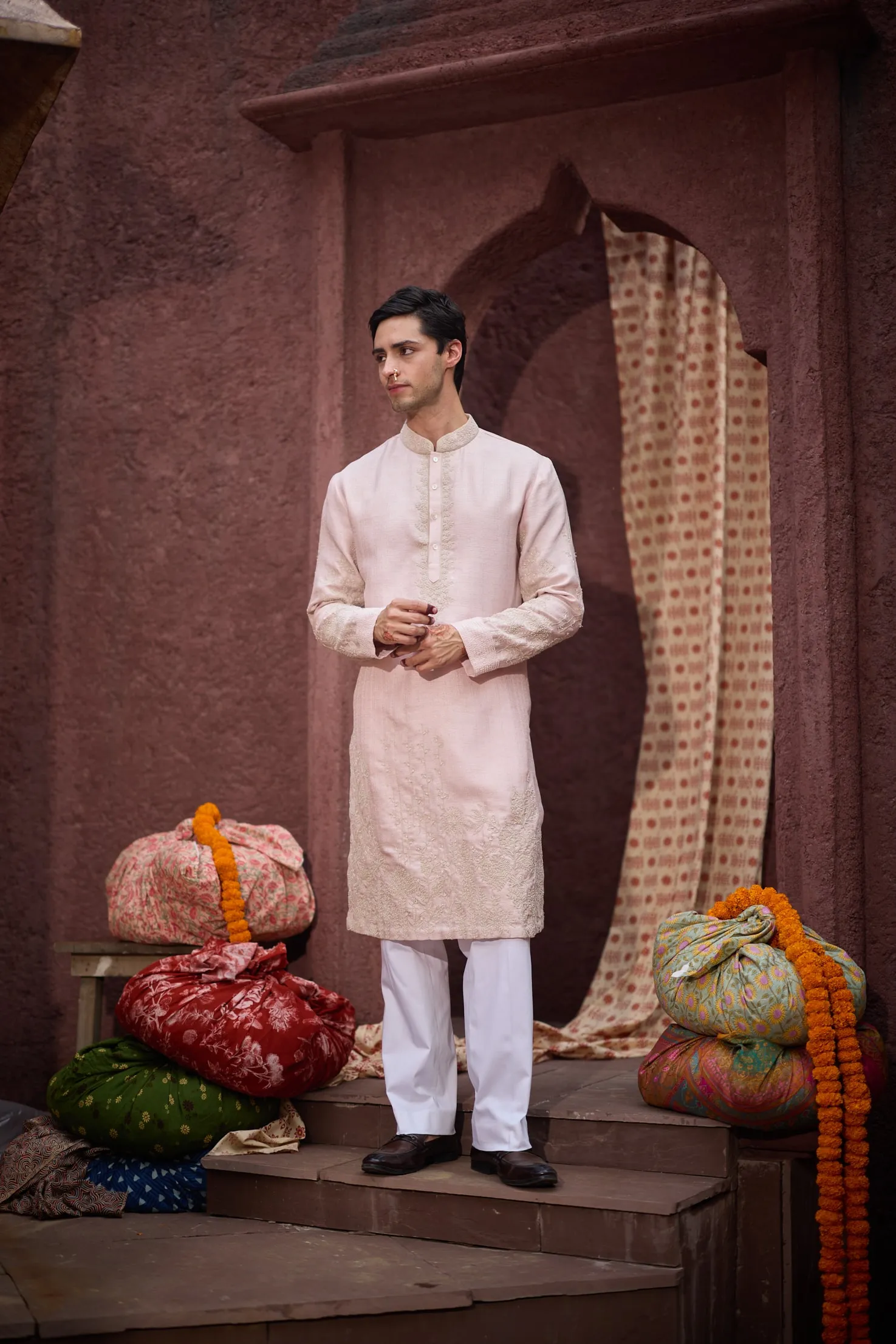
Pastels are the default for a contemporary groom. They photograph beautifully in daylight and in garden string lights, and they sit well beside the bride’s outfit. The Gulbahar Nehru jacket in blush and the Shafaq Indo-Western set in blush are good examples.
Ivory and cream
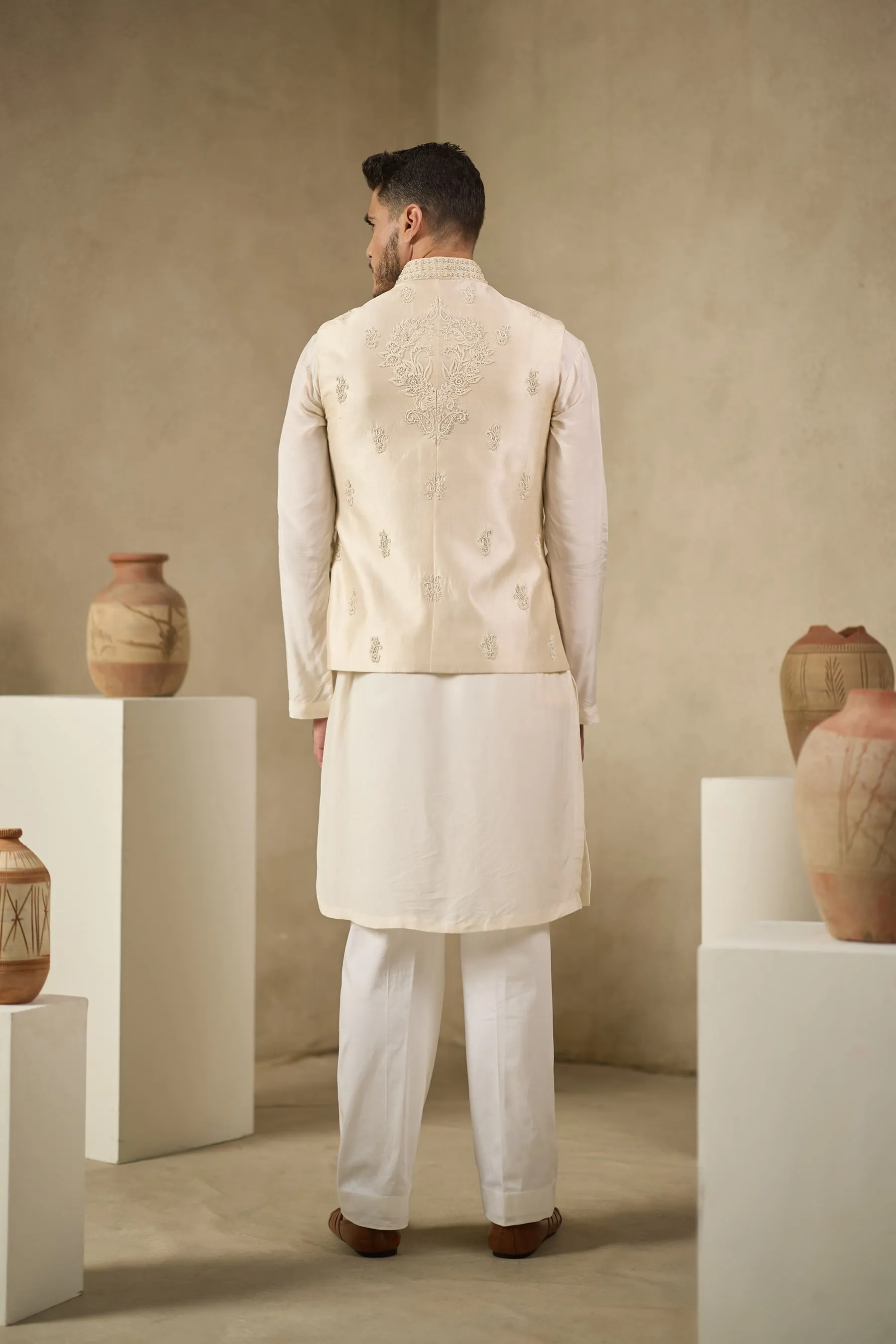
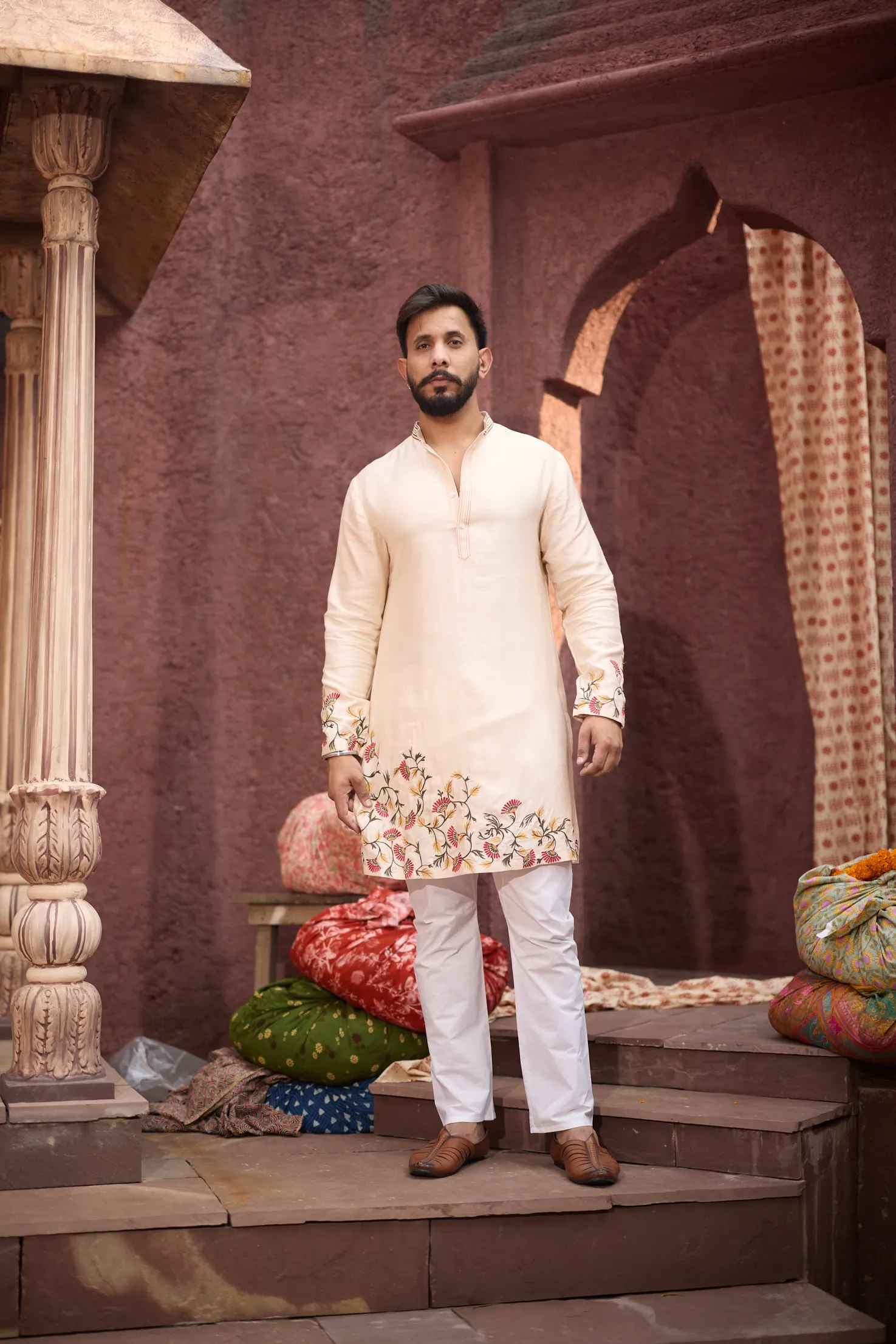
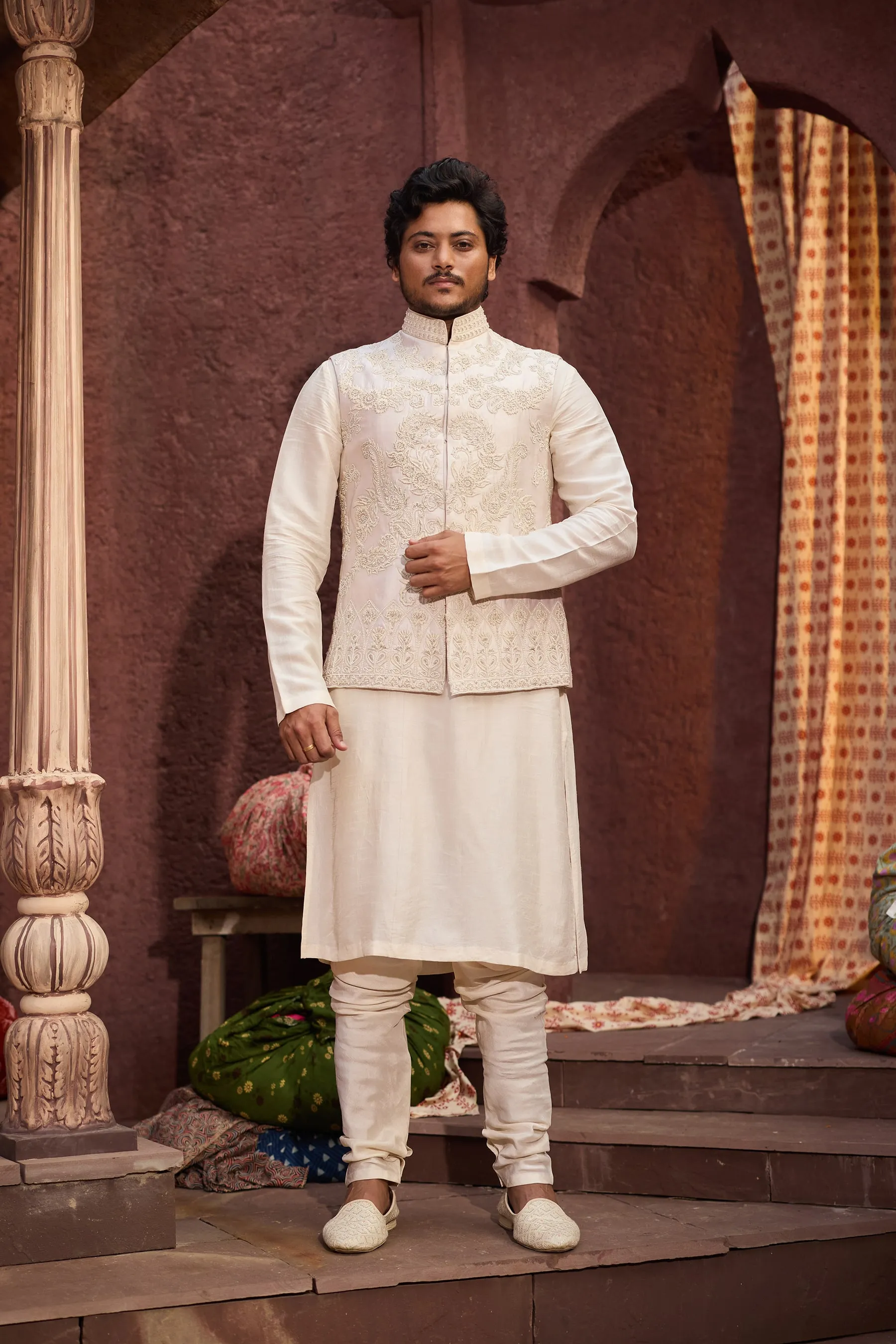
An ivory kurta with a printed or embroidered jacket in a bolder colour is a classic combination. Ivory is cool in the heat and acts as a neutral base for stoles and jackets. Our Kinara kurta set in cream works well here.
Navy, burgundy and rich jewel tones
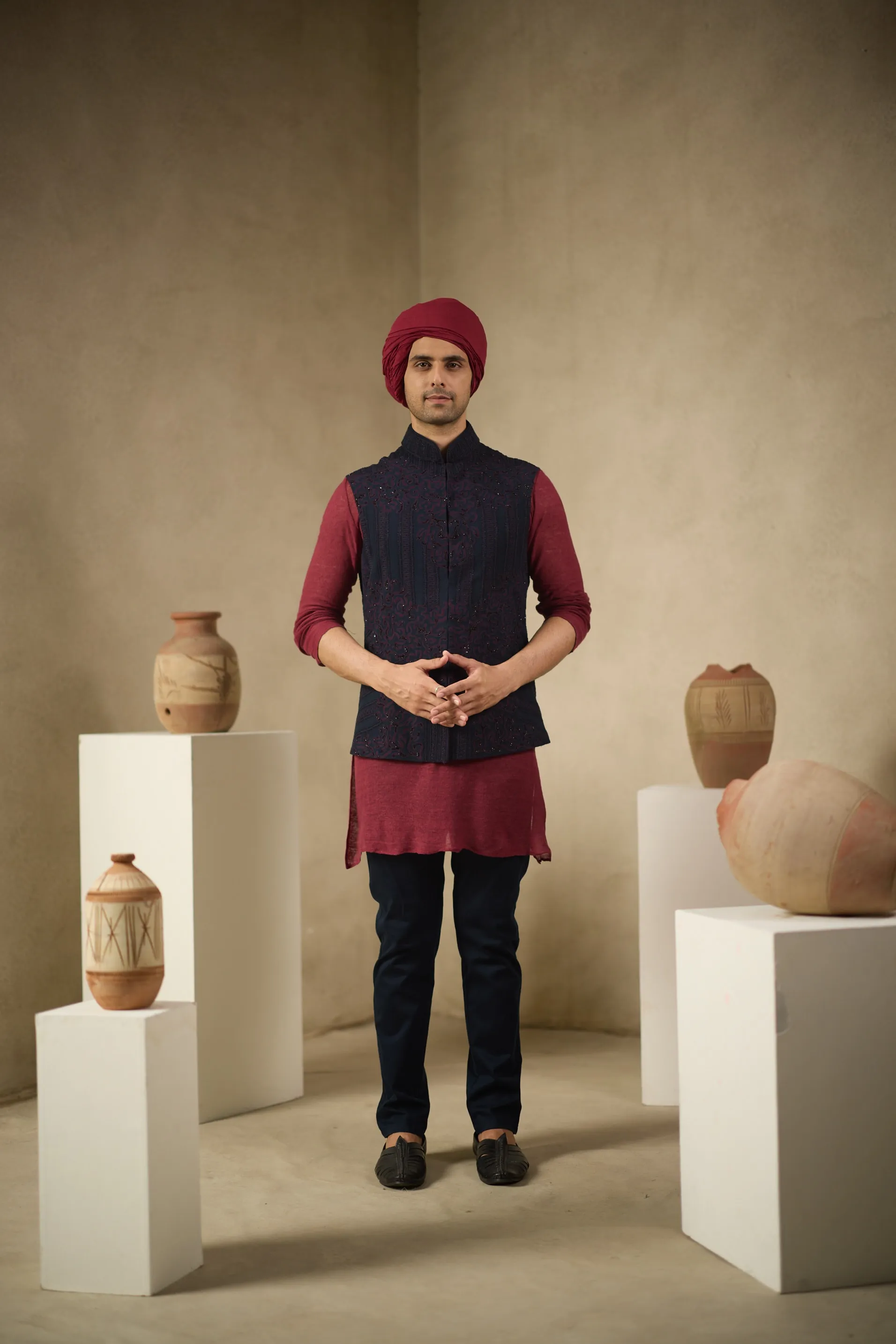
For an evening mehendi, a mid-to-deep colour can look elegant. The Jashn Nehru jacket in navy and burgundy layers a rich jacket over a kurta in a way that feels festive without being formal. Keep the bottom half simple.
Colours to be careful with
- Matching the bride exactly. A coordinated palette is lovely; an identical shade looks like a uniform.
- Black. Too heavy for a daytime mehendi; fine for an evening Indo-Western look.
- Neon and fluorescent shades. They date quickly and fight natural light.
Silhouettes that work for the mehendi
The kurta set
A kurta with churidar or tailored trousers is the most comfortable and the most flexible. Choose a slightly relaxed fit in the chest and hips. Embroidery should be tonal or modest: thread-work on the placket and cuffs rather than heavy zardozi.
Kurta with a Nehru jacket
The jacket adds structure and photographs well. Choose a jacket in a contrasting colour or a printed or woven pattern, over a plain kurta. This combination is one of the most popular mehendi looks because it feels both festive and organised. Keep the jacket lightweight and unlined, or half-lined, so you do not overheat. See our Nehru jacket collection.
Indo-Western sets
If the mehendi is more of a party, an Indo-Western set (a long jacket or bandi with tailored trousers and a fine shirt, or a kurta with a draped cape) gives a modern look. Our Indo-Western collection is designed for exactly this kind of ceremony. Pair with loafers rather than mojaris if you want to lean contemporary.
Pathani, dhoti kurta and regional options
If your family has a tradition, follow it. A Pathani suit, a short kurta with dhoti pants or a regional style are all appropriate and photograph beautifully. The key is to keep fabrics light and cuts easy.
Fabrics for a comfortable mehendi
- Cotton-silk and fine cotton. Light, breathable and elegant.
- Linen blends. Relaxed and cool; accept a little creasing.
- Chanderi and handloom. Lovely drape and subtle sheen.
- Light silks. Good for evening mehendi; choose a matte finish rather than high shine.
- Velvet or heavy brocade. Too warm for most mehendis unless it is a cold-weather evening function.
If your mehendi is outdoors in a warm month, ask for the garment to be lined only where necessary, and consider a lightweight lining in cotton or cupro.
Styling the details
Stoles, dupattas and pocket squares
A stole in a contrasting festive colour adds depth to a plain kurta. A pocket square in a jacket works if the jacket has a pocket. Keep patterns and colours coordinated with the bride’s palette rather than the decoration.
Footwear
Mojaris and kolhapuris are traditional and comfortable. Loafers in tan, brown or navy suit Indo-Western looks. Avoid stiff new shoes you have not broken in, since you will be on your feet and perhaps on lawn grass.
Jewellery
A watch, a ring, a simple chain or a kada is usually enough. If your family expects traditional jewellery, a small pearl or kundan brooch on a jacket is both tasteful and easy to remove.
Grooming
A fresh haircut a few days before, a trimmed beard and lightly moisturised skin photograph best. If you are attending both haldi and mehendi, schedule skin care carefully; turmeric can tint the skin for a day or two.
Matching the family and the bride
Mehendi photographs are among the most shared of the wedding, so coordination matters.
- With the bride. Ask her colour palette. If she is in green and gold, you might choose ivory and gold, or a complementary dusty rose. For more ideas on colour, see our guide to wedding colours for the groom.
- With your brothers and father. Tonal outfits work better than identical ones. Our guides to what the groom’s brother wears and what the father of the groom wears have palette ideas.
- With your groomsmen. One colour family, varied silhouettes, works best. See groomsmen outfits for an Indian wedding.
Mehendi outfit ideas by style
The modern traditionalist
An ivory or cream kurta with a mint, sage or blush Nehru jacket. Polished, comfortable, easy to photograph.
The pastel minimalist
A single-colour kurta set in peach, blush or powder blue, with tonal embroidery and loafers. Quiet and distinctive.
The evening showman
A navy, burgundy or bottle-green kurta with a contrasting jacket and a pocket brooch. For an evening mehendi with lights and dhol.
The Indo-Western groom
A long, unstructured jacket in sage or sand over a fine kurta with tailored trousers. Suits a party atmosphere and contemporary decor.
What to do if the mehendi and the haldi are on the same day
Many families combine the two in one day, often with the haldi in the morning and the mehendi in the afternoon or evening. In that case:
- Plan two outfits: a lighter, plainer one for the haldi and a slightly richer one for the mehendi.
- If you want to wear one outfit, choose an ivory, blush or mint kurta set and change the stole or jacket.
- Pack a fresh set in case the first is marked. Our guide to the haldi outfit for the groom has more detail.
Mistakes to avoid
- Dressing for the sangeet instead of the mehendi. If you wear heavy embroidery and a structured jacket, you will be warm and overdressed.
- Forgetting to sit. Try on your outfit and sit cross-legged before you commit; a tight churidar or rigid jacket will be uncomfortable.
- Ignoring the setting. A lawn mehendi calls for light fabrics and flat shoes; an indoor banquet can take more polish.
- Matching the decor. If the venue is full of green, wearing green will make you disappear in photographs.
- Leaving it late. Good tailoring takes time. Plan eight to ten weeks ahead.
Planning and fit
A mehendi outfit should be comfortable seated, which means room across the thigh, a hem that does not ride up and a jacket that can be buttoned while seated. In a made-to-measure process, mention that you will be sitting on the floor and dancing, and the tailor will adjust the cut accordingly. Our atelier works to eight to ten weeks from the first fitting, with two fittings. For the full process, see our guide to planning a made-to-measure wedding outfit.
A sample timeline for the mehendi day
Knowing how the day unfolds helps you choose the outfit and plan a change if you need one.
- Early afternoon: the family gathers, the henna artists set up and the bride’s application begins. The groom may arrive an hour or two later, dressed and groomed, to greet the guests.
- Mid-afternoon: food, music and photographs. This is the best light of the day, so your outfit will be photographed more here than at any other point.
- Late afternoon to evening: the dhol arrives, relatives dance and the mood becomes louder. Your jacket may come off; a kurta that looks good without a jacket gives you an easy way to adjust.
- After dark: if the mehendi runs into the evening, the lighting turns warm and golden, which favours deeper colours and a touch of shine.
If you will be there from the start, choose something that looks as good at the end of the day as at the beginning. A mid-weight cotton-silk keeps its shape better than a pure linen, and a jacket in a structured fabric recovers well after being taken on and off.
Climate and season: choosing the weight of the fabric
Indian weddings take place in every month and in very different climates, and the mehendi is almost always at least partly outdoors.
Summer (April to June)
Choose the lightest fabrics you can: fine cotton, cotton-linen, light chanderi. Pale colours reflect heat. Skip the jacket for the first hours or choose an unlined style. Keep the embroidery minimal so the garment breathes.
Monsoon (July to September)
Humidity is the problem. Avoid fabrics that cling or show water marks, such as thin silks. Cotton blends and linen-silk mixes are better. Choose mid-tone colours that hide splashes better than ivory does. Pack a spare kurta, because the weather can change the plan.
Autumn and winter (October to February)
This is wedding season, and the mehendi is often held on a lawn in mild, sunny weather. A kurta with a lightweight jacket is ideal, and you can add a stole or shawl for the evening. Velvet and richer silks are possible at night, but keep the daytime fabrics light.
Spring (March)
Mild days and cool evenings. A kurta with a jacket you can wear or remove is the most adaptable choice.
Photographs: what looks good on camera at a mehendi
The mehendi is one of the most photographed ceremonies, partly because the hands, henna and florals are so photogenic. A few practical points help you look as good as the setting:
- Contrast with the background. A pale pastel on a cream sofa disappears; a richer tone against a light background stands out.
- Texture over pattern. Fine embroidery and weave photograph well. Very busy prints can look noisy on camera.
- Solid lower half. A plain trouser or churidar keeps the focus on the top half, where the embroidery and jacket are.
- Check the fit from the side. Photographers shoot from all angles, and a kurta that bunches at the back looks untidy.
- Plan for candid moments. You will be laughing, hugging and bending; a garment that stays neat when you move is worth more than one that is perfect only when you stand still.
An accessories and grooming checklist
- A stole or dupatta in a complementary colour
- Mojaris, kolhapuris or loafers, broken in before the day
- A watch and ring, and a small brooch if you are wearing a jacket
- A pocket square or a small floral detail for a jacket
- A fresh haircut three to five days before, and a beard trim the day before
- A light moisturiser, lip balm and sunscreen for an outdoor event
- A small bag for a phone, wallet and keys, carried by a friend or cousin
- A spare kurta or shirt, in case of spills
Reusing the mehendi outfit
A well-made mehendi kurta set or jacket is among the most re-wearable parts of the wedding wardrobe. After the wedding, a pastel kurta set works for family pujas, Diwali, Eid gatherings, engagements and daytime festivals. A Nehru jacket in a neutral or rich colour can be worn over plain kurtas, with trousers and a shirt, or even over a tailored shirt for a dinner. That is one reason to invest in good tailoring and fabric: you will wear it more than once.
When you choose between two pieces, consider how often you can wear each of them afterwards. A bold printed jacket is a statement but may be worn rarely; a solid sage or ivory jacket will earn its place many times over. If you want the best of both, choose a neutral kurta and a more distinctive jacket, so you can swap in other jackets as your wardrobe grows.
Questions to ask your tailor before you order
- How much room is there in the seat and thigh, and can I sit cross-legged comfortably?
- Is the fabric breathable and suitable for the season?
- Will embroidery or lining restrict movement across the shoulders?
- Can the jacket be worn open and still look finished?
- What care does the fabric need after the ceremony?
- Is there time for a second fitting after the garment is nearly complete?
A good tailor will answer these directly and adjust the cut accordingly. These are the same questions we ask at the first fitting, and the answers guide the cut, fabric and finishing.
Shop the mehendi look
- Pudina, a mint kurta set with understated embroidery.
- Heer, an ivory Nehru jacket to layer over a plain kurta.
- Gulbahar, a blush Nehru jacket for a soft, modern palette.
- Shafaq, a blush Indo-Western set for a more relaxed, contemporary look.
- Kinara, a cream kurta set that works well as a neutral base.
- Jashn, a navy and burgundy Nehru jacket for an evening function.
Browse the full kurta set, Nehru jacket and Indo-Western collections. Every piece is made to measure.
Final thoughts
The mehendi is a good chance to show who you are. Choose a colour you like, a fabric you can sit and dance in and a cut that feels easy. Keep the details elegant and the footwear comfortable, and coordinate gently with the bride and family. When you are ready to plan the full wardrobe, book a fitting and we will help you shape the sequence from haldi to reception.