Being invited to an Indian wedding is a joy, and also a small puzzle. The celebrations last several days, each function has its own mood, and the dress code is rarely written on the invitation. Guests who have never attended one often ask the same questions: should I wear a suit or a kurta, which colours are safe, and do I need a new outfit for every event? This guide answers them. It sets out what a male guest should wear to an Indian wedding, function by function, with colour advice, fabric tips, footwear and the etiquette that makes a good impression on the hosts.
If you are the groom or part of the wedding party, our guide to what the groom wears at each ceremony and our advice on groomsmen outfits will be more relevant. For guests, read on.
First, understand the structure of an Indian wedding
An Indian wedding is rarely a single event. Depending on the family, region and religion, it may include some or all of the following, each with its own dress expectations:
- Roka, sagai or engagement: a family-focused ceremony that formalises the match. Smart festive wear.
- Haldi and mehendi: relaxed daytime functions with turmeric and henna. Light, comfortable, colourful.
- Sangeet and cocktail: an evening of music, dance and sometimes a themed party. Rich, stylish and easy to move in.
- The wedding ceremony (baraat, pheras, nikah, anand karaj and others): the formal heart of the celebration. Traditional and respectful.
- Reception: an evening celebration, often more formal and sometimes black tie.
You may be invited to one function or all of them. The invitation or the family’s messages usually say which, and the dress guidance often follows the theme: pastel for the haldi, black tie for the reception, and so on. If it does not, a short message to the host is entirely acceptable and appreciated.
The golden rules for male guests
Before the function-by-function advice, a few principles hold almost everywhere.
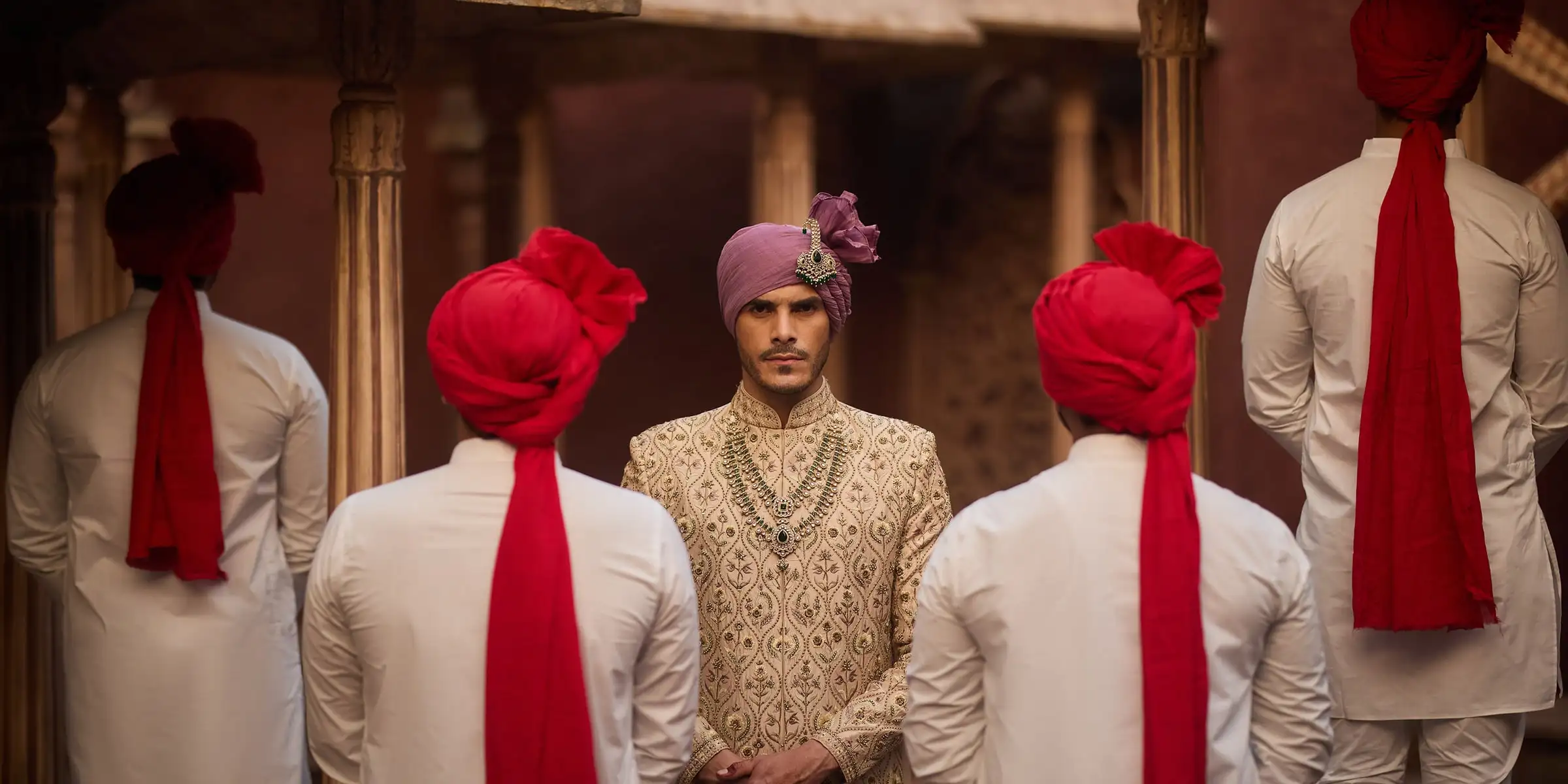
- Do not upstage the groom. The groom’s outfit should be the most elaborate and striking. Choose something well made and elegant, but avoid heavy embroidery on a sherwani in the groom’s colours.
- Avoid white and ivory unless the family has said otherwise. These are common groom colours and, in some communities, carry other associations.
- Avoid all-black for daytime ceremonies, particularly the wedding ceremony itself. Black is common at the reception and cocktail, but in some families it is considered inauspicious for ceremonies.
- Avoid the bride’s colour. Red is usually reserved for the bride in many communities, so it is wise to avoid a bright red outfit.
- Cover your shoulders and knees at religious ceremonies, and be ready to remove your shoes at the entrance of a temple, gurdwara or mandap.
- When in doubt, dress up. An Indian wedding is a celebration, and being slightly overdressed is far better than being underdressed.
The safest male guest outfit: a kurta with a Nehru jacket
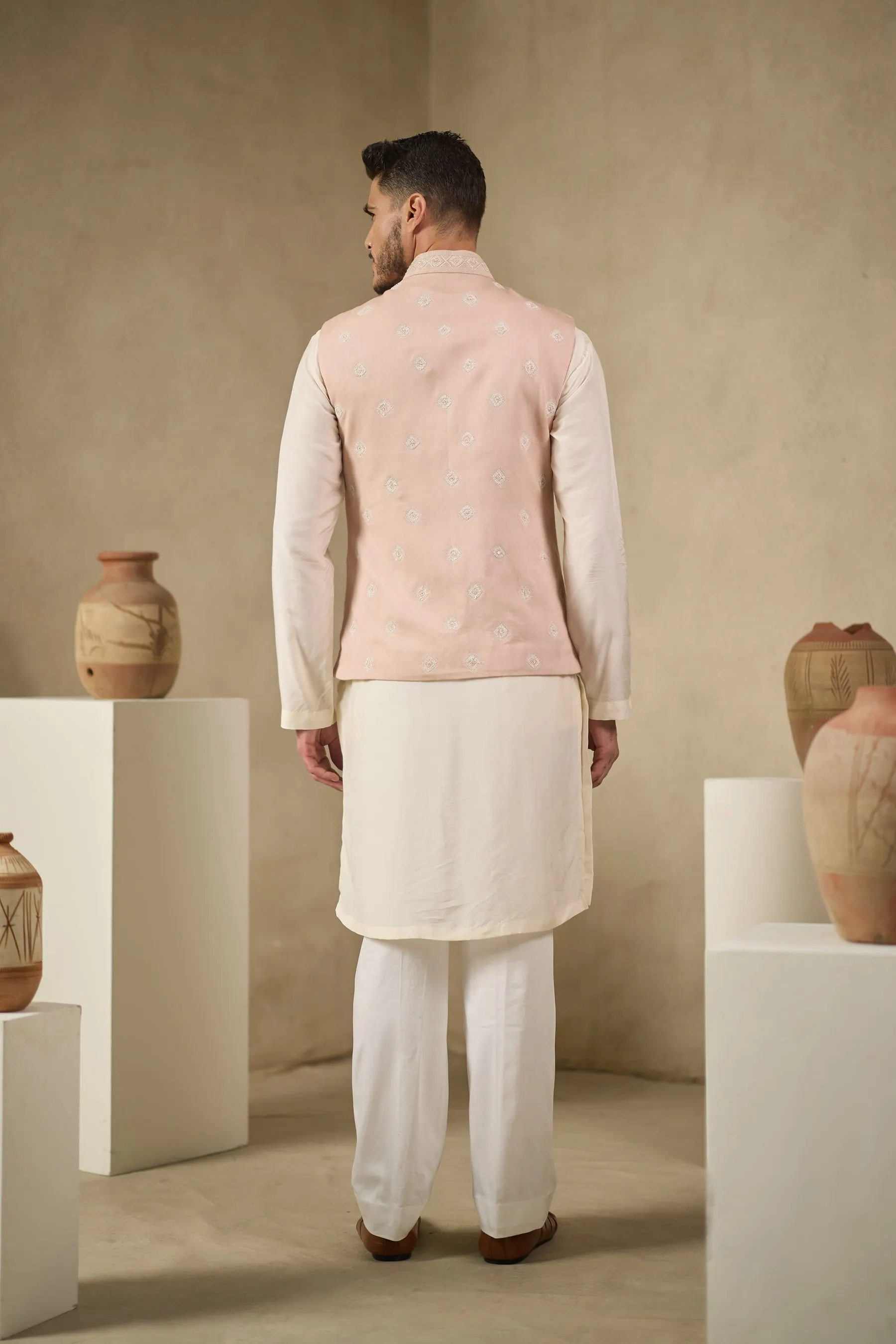
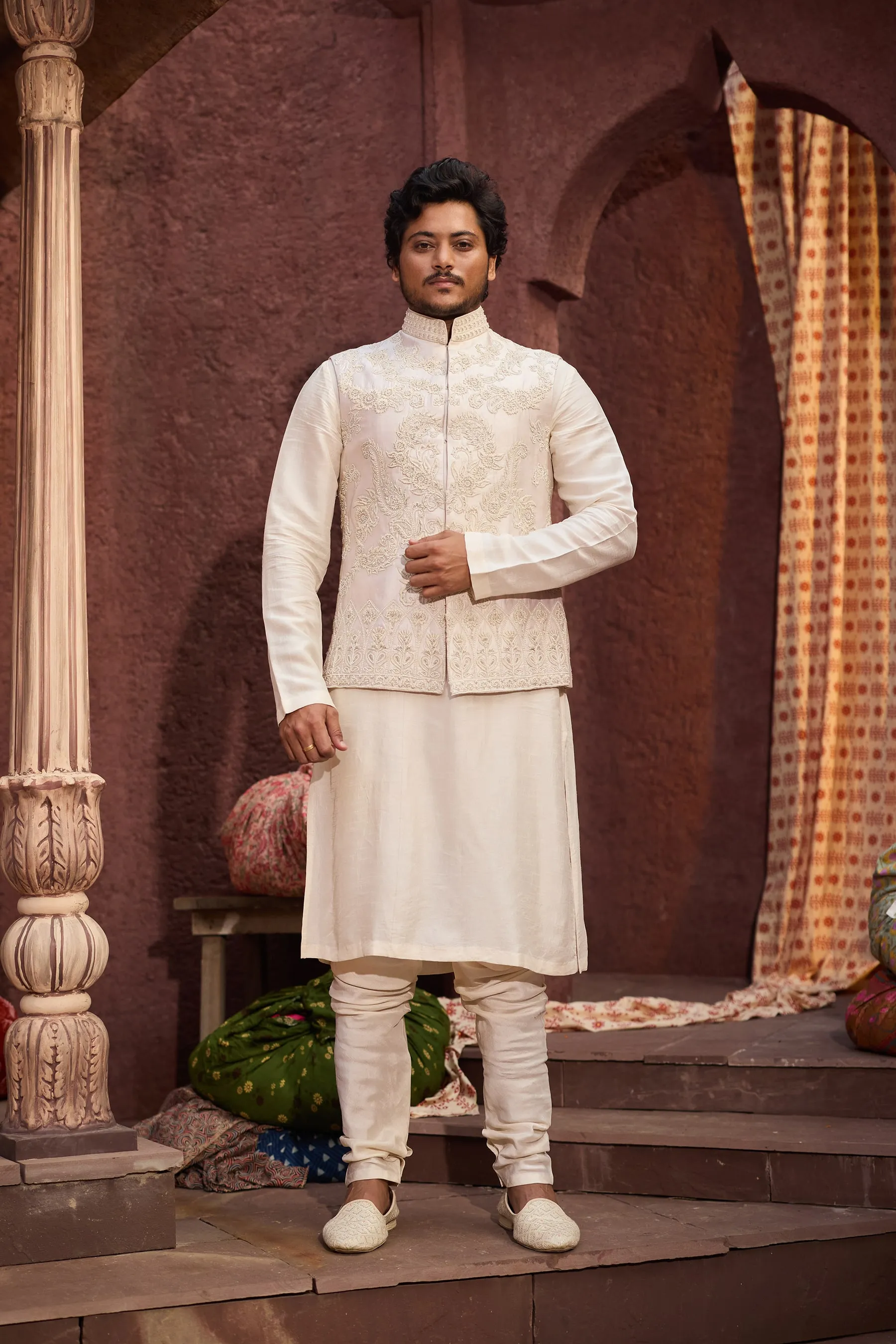
If you want one outfit that works for most functions, choose a kurta with a Nehru jacket. It reads as festive and respectful, it is comfortable in warm weather, it photographs well, and it can be re-worn for other occasions. The kurta provides the base; the jacket adds structure and a touch of embroidery or texture.
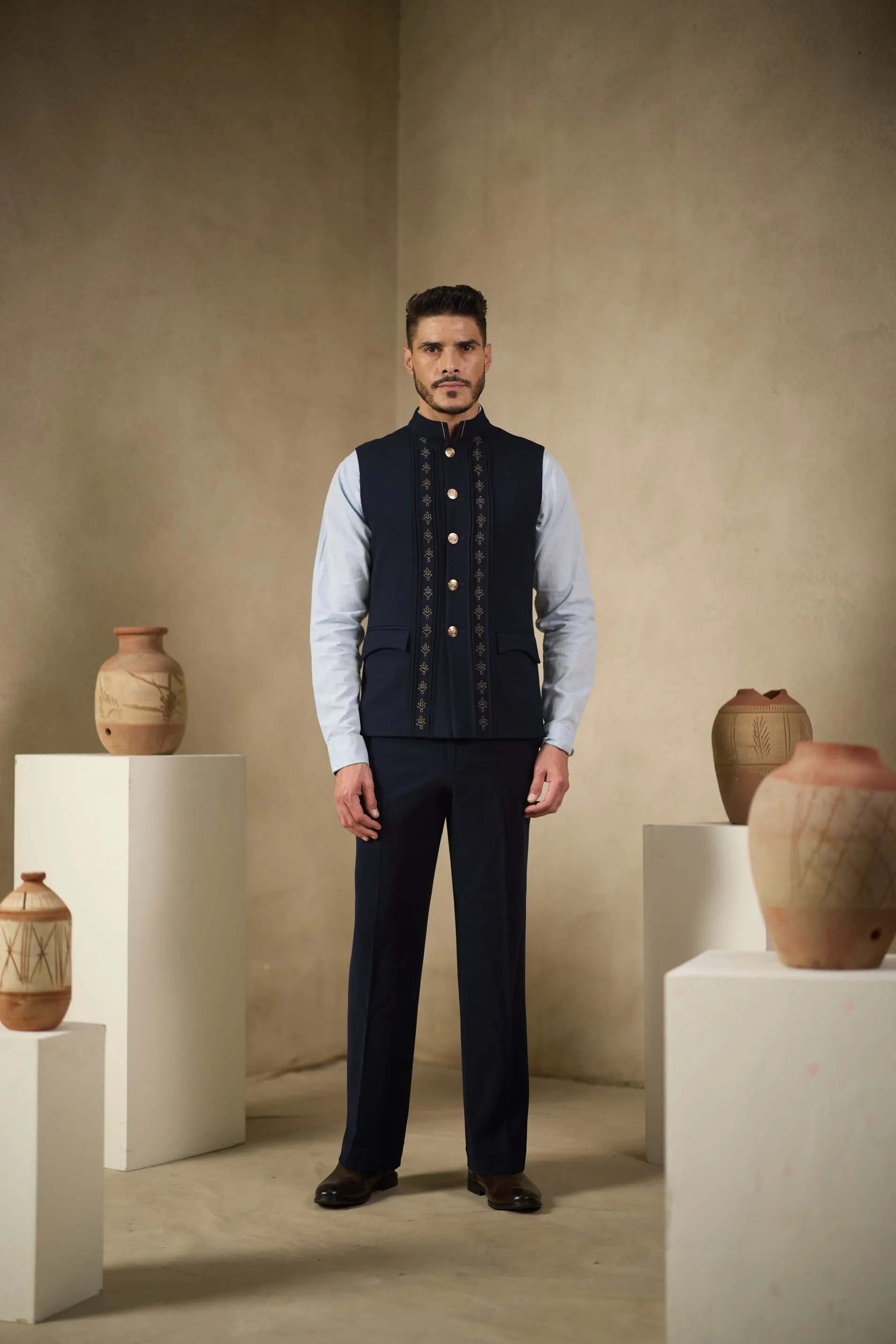
Choose a jacket in a colour that complements the kurta: a deep jewel tone (teal, emerald, burgundy, navy) over a cream or pastel kurta, or a tonal jacket over a matching kurta for a more modern look. Our Nehru jacket collection includes the Moti Jaal in ivory for a refined daytime look, the Gulbahar in blush for a softer palette and the Nawab in navy for evening. As a guest, you may prefer to avoid ivory and choose the navy or a coloured piece.
Function-by-function guide
Roka, sagai and engagement
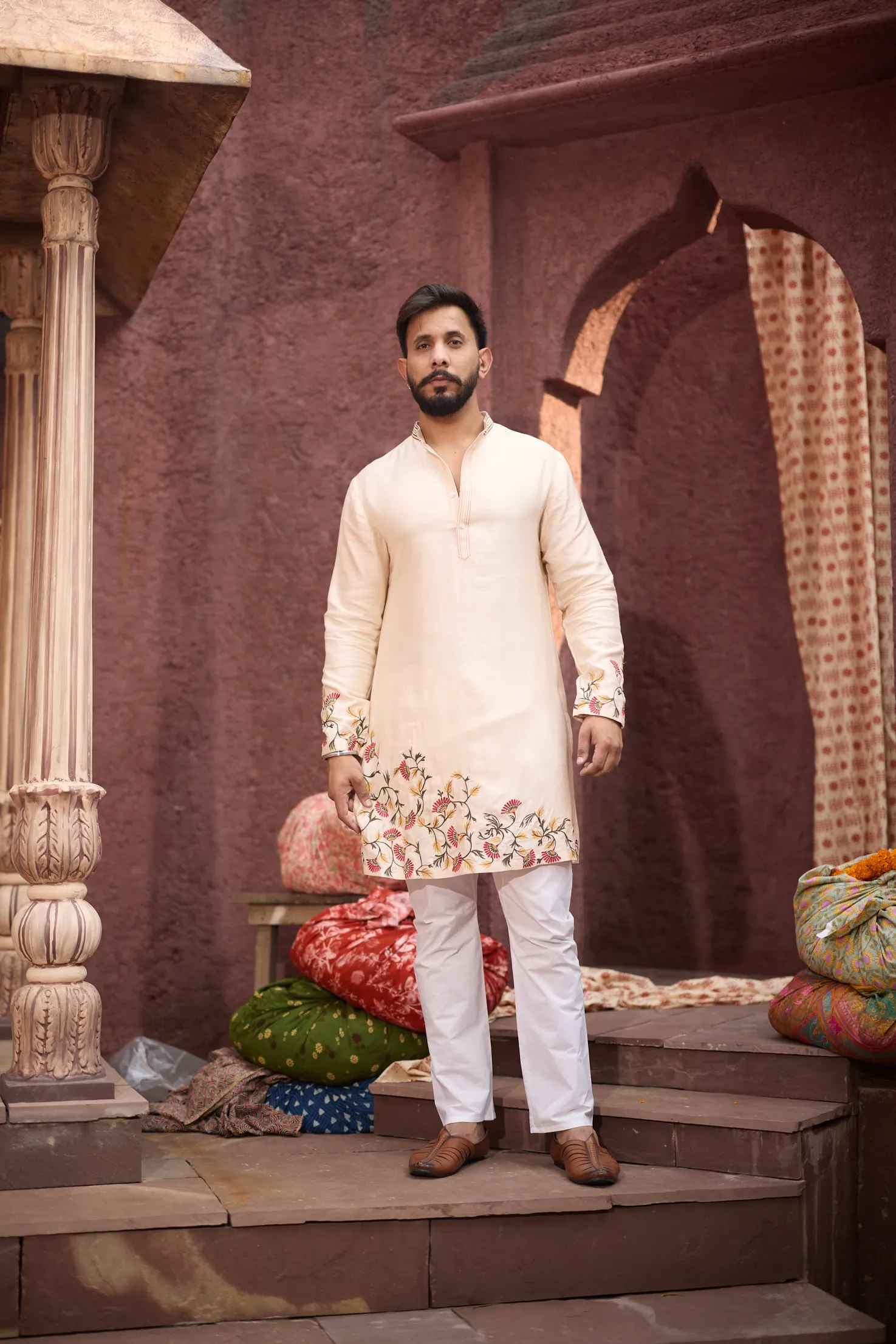
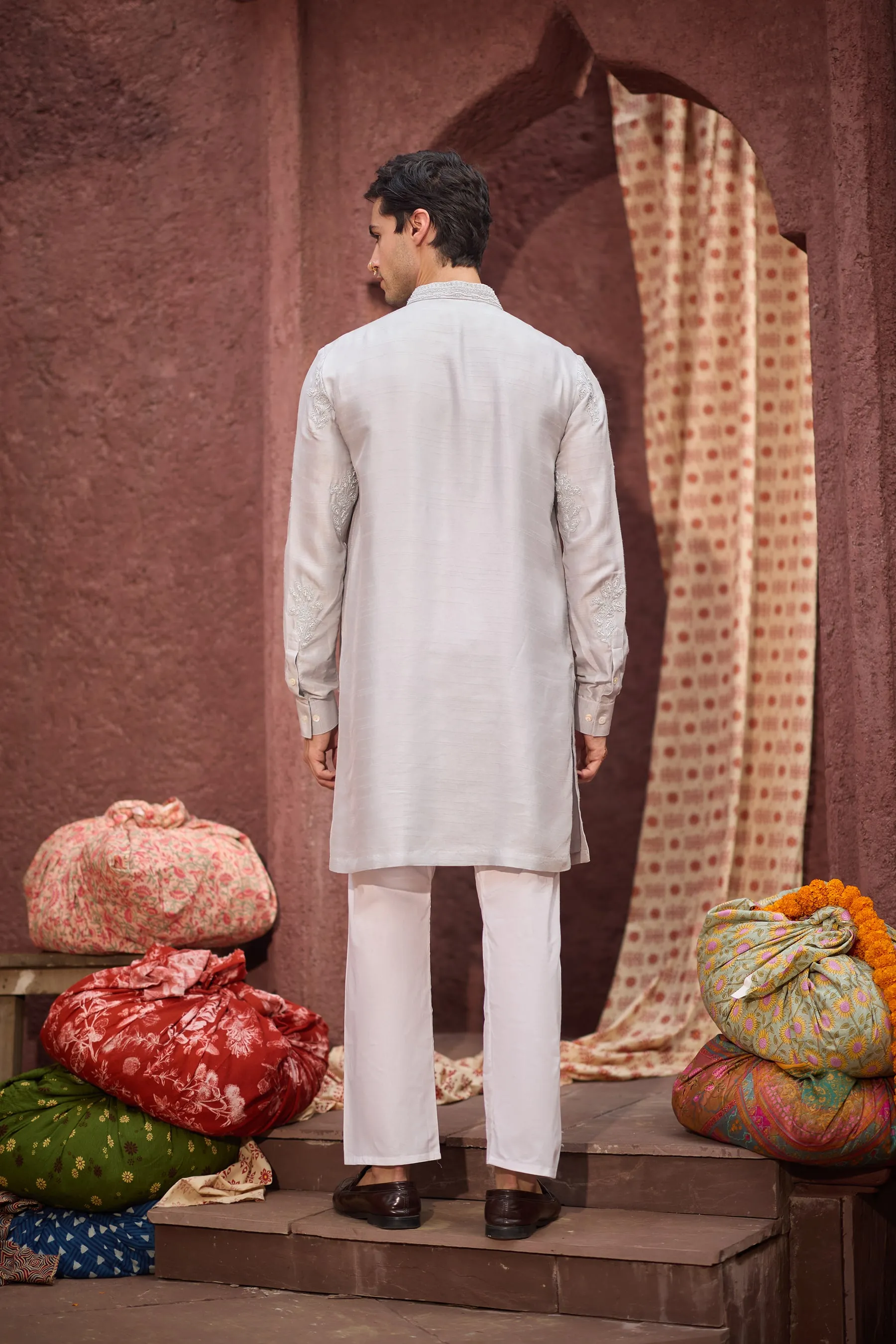
These ceremonies are family-focused and relaxed. A kurta set in a light or medium colour, perhaps with a Nehru jacket, is ideal. Think soft pastels, dusty blues, sage or champagne. Our Kinara kurta set in cream and Seemab in silver grey are examples of understated pieces that work well. For more ideas, see the roka and sagai edit.
Haldi and mehendi
Daytime, outdoors, warm and messy. Wear light, breathable fabric in yellow, mint, pastel or cream, and be ready to be marked by turmeric or henna. A light kurta, possibly with a printed stole, is perfect. Avoid anything dark or delicate. If you are unsure, our haldi outfit guide and mehendi outfit guide explain colours and fabrics in detail, and the principles apply equally to guests.
Sangeet and cocktail
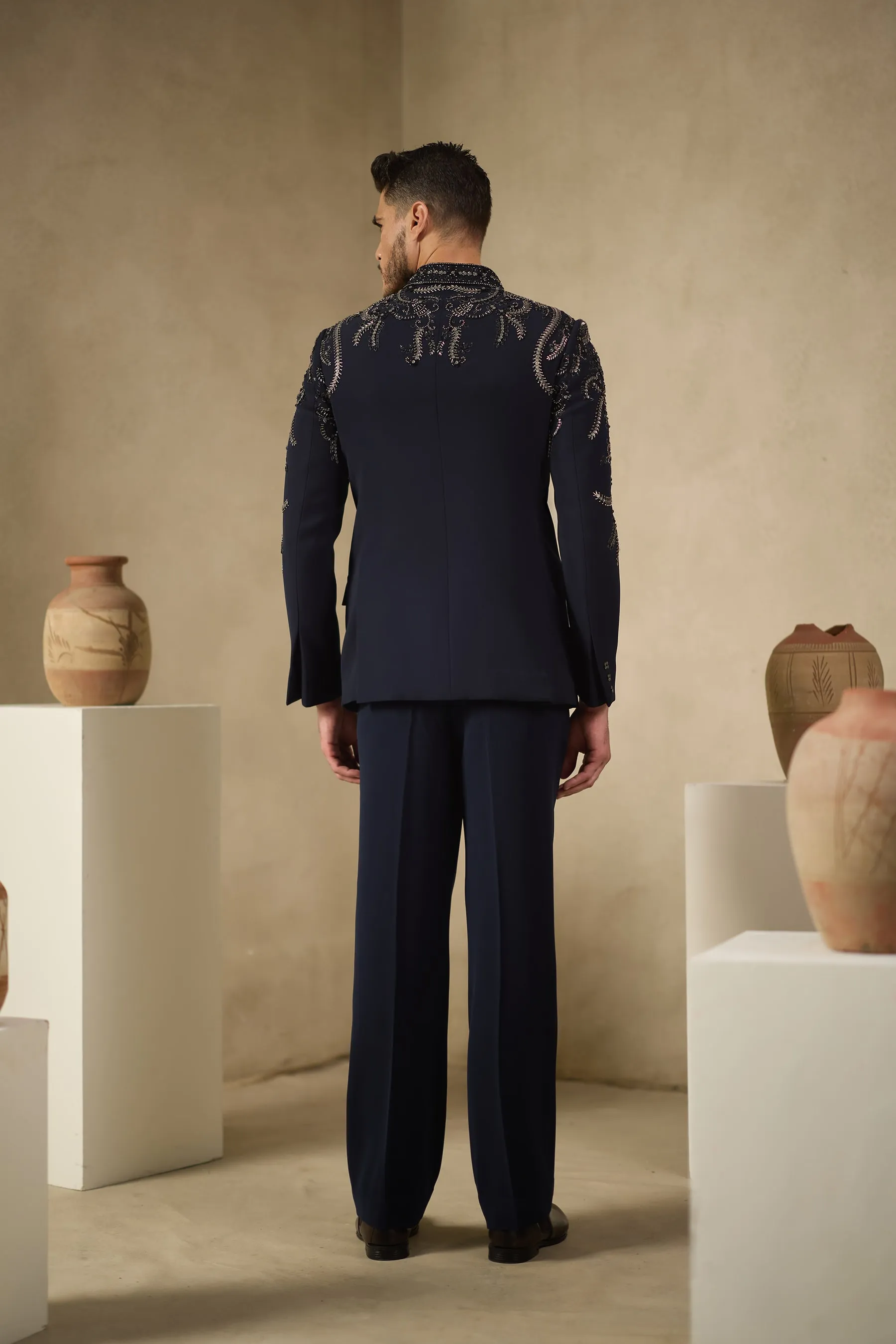
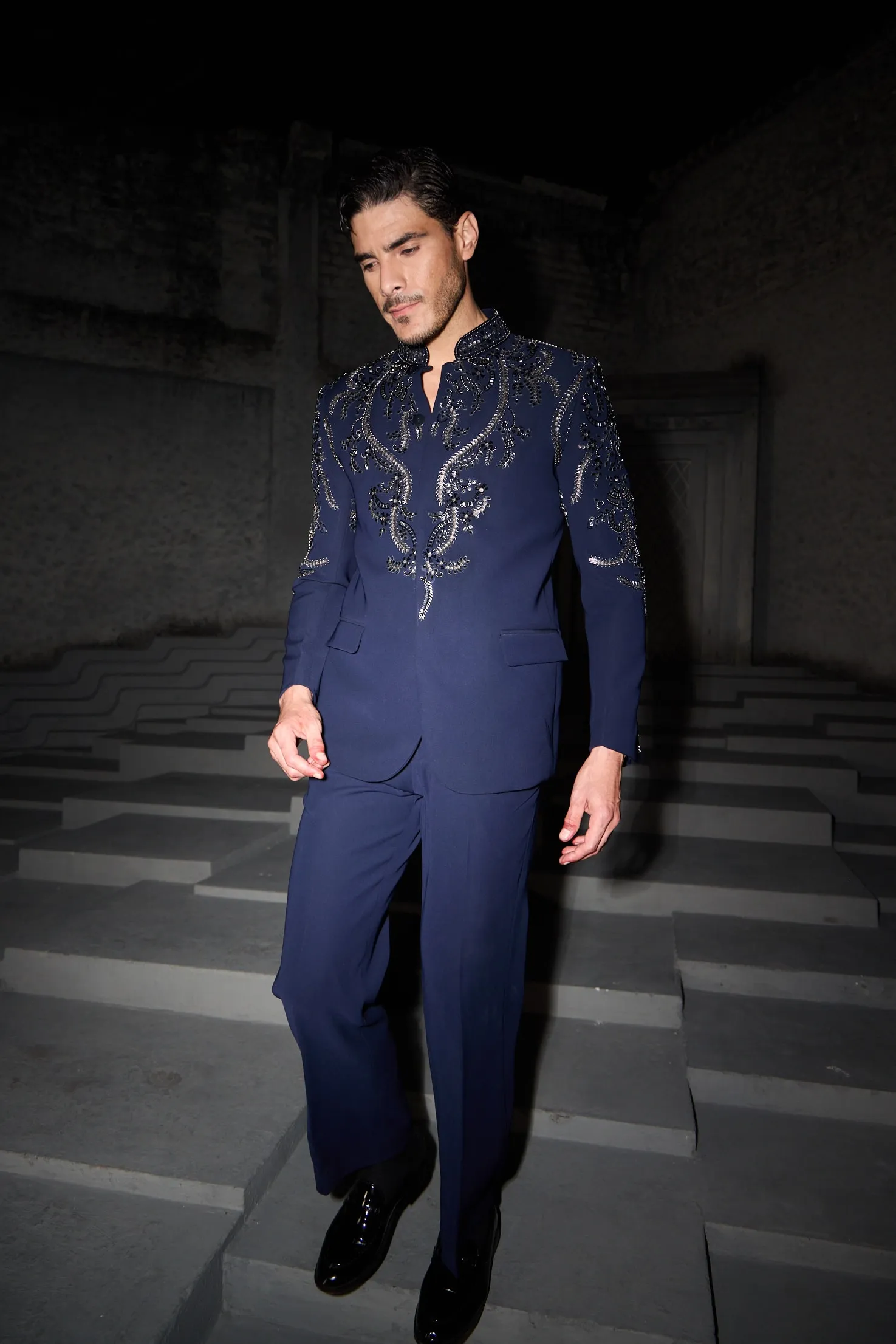
The sangeet is a party. Expect music, dancing, performances and a long evening. This is where you can dress with flair: a bandhgala in a deep colour, a velvet jacket in winter, an Indo-Western set, or a kurta with a richly embroidered jacket. Make sure you can move: you will be dancing. Our sangeet and cocktail edit includes pieces designed for this, and our sangeet outfit guide covers colour and fabric choices that work for guests as well as the groom.
The wedding ceremony (baraat, pheras, nikah, anand karaj and others)
This is the formal heart of the wedding, and the dress is traditional. A kurta with a Nehru jacket, a bandhgala or a lighter sherwani or achkan in a muted, rich colour is appropriate. Avoid ivory, white and bright red. If the ceremony is religious, cover your head where required (a handkerchief or scarf at a gurdwara, for example) and remove your shoes where asked. For community-specific guidance, see our guides to the Sikh wedding groom outfit, the nikah and walima outfit, Bengali wedding attire and South Indian wedding attire, whose notes on what is appropriate apply to guests too.
Reception
The reception is often the most formal evening function. A bandhgala in midnight navy, a black tuxedo or a dark suit with a pocket square suits it well. If the invitation says black tie, a tuxedo is correct. If it says Indian formal, a bandhgala is perfect. See the reception outfit guide for pairing and styling ideas, and the bandhgala collection, including the Aftab in midnight navy.
Colours: what works and what to avoid
Colours that work
- Jewel tones: emerald, sapphire, teal, burgundy and plum are rich and photograph well.
- Soft neutrals: champagne, taupe, stone and sand for daytime.
- Navy and charcoal: reliable for evening and formal events.
- Pastels: powder blue, sage, dusty rose and mint for daytime and relaxed functions.
- Earth tones: terracotta, olive and mustard, in subtle shades.
Colours to avoid
- White and ivory, often the groom’s.
- Bright red, often the bride’s.
- All-black for ceremonies, particularly in daytime.
- Neon shades and loud prints, which look out of place.
- Exactly matching the groom’s colours, if you know them.
If you are close to the family, ask whether there is a colour theme. Many weddings now share a palette with guests, and following it is a gracious gesture.
Fabrics and comfort
Indian weddings are long, and weather matters. Choose fabric for the climate and the length of the event.
- Summer or tropical weather: cotton, linen, cotton-silk and lightweight silk. Avoid heavy brocade and velvet. See our guide to the summer wedding groom outfit for fabric ideas that apply to guests too.
- Winter: wool, wool-silk, velvet and heavier silks. A shawl or stole adds warmth and style. See the winter wedding groom outfit guide.
- Indoors versus outdoors: a hall may be air-conditioned and an outdoor ceremony may be hot. A jacket you can remove helps.
- Dancing: choose a fabric and a cut that let you move. Jackets that bind at the shoulder are a poor choice for the sangeet.
Footwear and accessories
- Mojaris and juttis are traditional, comfortable and suit kurtas and sherwanis.
- Kolhapuris work for daytime and casual functions.
- Leather loafers or oxfords suit bandhgalas, suits and tuxedos.
- Avoid sneakers unless the event is explicitly casual.
- Pocket squares, stoles and brooches add polish without bulk.
- A watch should be understated. Avoid oversized or flashy pieces.
- Perfume: a light scent is fine; a heavy one is not, in a crowded hall.
Since you may remove your shoes at religious venues, wear clean socks and shoes that are easy to slip off.
Buying, renting or tailoring
Guests have three options, each with merits.
- Buy ready-to-wear. Good for a single event or if you are short on time, but fit may be imperfect.
- Rent. Suitable for one-off events, but availability and fit are variable.
- Made-to-measure. The best fit and quality, and a piece you can re-wear for other weddings, festivals and formal events. If you have eight to ten weeks, our atelier can make a bandhgala or Nehru jacket to your measurements. See made-to-measure timelines for how the process works.
If you attend several weddings a year, a good bandhgala and two Nehru jackets in different colours will cover almost every function with a change of kurta and accessories.
Destination and international weddings
If the wedding is a destination event, such as a beach, a palace or an overseas venue, dress for the climate and the setting. Light fabrics, breathable cotton-silk and linen, and a lighter palette are good for beaches. Palaces and formal gardens suit richer fabrics and structured jackets. Our guide to the destination wedding groom outfit discusses travel, fabric and packing, and everything in it applies to guests.
For weddings abroad where the dress code is more Western, check with the hosts. Many families invite guests to wear Indian outfits; others prefer a suit for the reception.
Etiquette: small things that matter
- Arrive on time, or slightly early for ceremonies. Indian weddings often run late, but the key rituals have auspicious timings.
- Greet the elders first, with a namaste or a respectful nod, and touch feet if the family does so and you feel comfortable.
- Follow the family’s lead on ritual participation, photography and seating.
- Keep your phone silent during ceremonies.
- Bring a gift or an envelope (shagun) if appropriate; ask a family friend for local norms.
- Do not wear shoes into the mandap, temple or gurdwara unless instructed.
- Be gracious about food and drink. Dietary rules vary, and the hosts will have planned carefully.
Packing and care
If you are travelling, pack your outfits in a garment bag, with tissue between folds. Hang them in a steamy bathroom or use a travel steamer. Carry a lint roller, a stain pen and safety pins. Pack a spare shirt for the reception, particularly if you plan to dance. A small bag with mints, tissues and a phone charger will make the day easier.
Regional and religious differences guests should know
India’s weddings differ widely, and a little awareness goes a long way.
- Punjabi and Sikh weddings are lively and colourful. Guests commonly wear kurtas, Nehru jackets and bandhgalas. At the gurdwara, cover your head with a clean scarf or handkerchief, remove your shoes, and avoid leather items inside the prayer hall if asked.
- Gujarati and Marwari weddings often involve several festive days with bright colours and rich fabrics. Guests may wear a kurta with a jacket in jewel tones, and an angavastram or stole is welcome.
- Bengali weddings favour a panjabi, often in white or cream, with a dhoti for the groom and elders. As a guest, a panjabi or kurta in a colour other than the groom’s is appropriate.
- South Indian weddings are often held in the morning and are traditional. A veshti with an angavastram or a silk shirt is common; a kurta with a light jacket is acceptable at most weddings, and many guests wear a silk shirt with a mundu or veshti.
- Muslim weddings (the nikah and walima) call for modest, elegant dress. A sherwani, achkan or kurta with a jacket is appropriate, and a topi is common at the nikah.
- Interfaith and international weddings often blend traditions; ask the hosts for guidance.
When you do not know the community’s customs, a kurta with a muted jacket in a rich but quiet colour is respectful in every setting.
Three complete guest outfits to copy
If you would like a ready answer, here are three outfits that work well.
- The daytime guest: a cream or pastel kurta with churidar, a tonal Nehru jacket and tan mojaris. Light, comfortable and appropriate for roka, haldi, mehendi and a morning ceremony.
- The evening guest: a midnight navy or deep teal bandhgala with a crisp shirt, dark trousers and polished loafers. Suitable for the sangeet, cocktail and reception.
- The ceremony guest: a rich-coloured kurta with an embroidered Nehru jacket in a muted tone, matching trousers and mojaris. Respectful for the baraat, pheras and religious ceremonies.
With these three, and a couple of changes of shirt or accessory, you can attend a multi-day wedding with only three outfits and look considered at every event.
A final practical note: try every outfit on a few days before you travel, with the shoes, belt and shirt you plan to wear. Sit down in it, raise your arms, and walk a flight of stairs. Small problems, such as a loose button or a trouser hem that drags, are easy to fix a week before and stressful to fix on the morning of the wedding.
Common mistakes to avoid
- Wearing white or ivory, which is usually reserved for the groom.
- Wearing a heavy sherwani as a guest, which can outshine the groom.
- Choosing the wrong fabric for the weather.
- Skipping a rehearsal of the outfit. Try it on days before the event.
- Leaving it late. Good tailoring needs time, and ready-to-wear sizes run out near the wedding season.
- Overlooking shoes. An excellent outfit is undone by uncomfortable shoes.
Frequently asked questions
What should a male guest wear to an Indian wedding?
A kurta with a Nehru jacket is the safest choice; a bandhgala or Indo-Western set suits the evening; avoid white, ivory and bright red.
Can I wear a suit?
Yes, for a reception or cocktail. For the ceremony, an Indian outfit is more appropriate.
Do I need an outfit for each function?
Ideally, but you can re-style a piece with a different shirt or accessories.
What if I am unsure about the dress code?
Ask the host or a family friend. It is entirely acceptable and shows that you care.
Final thoughts
Dressing as a guest at an Indian wedding is a way of joining a celebration. A well-chosen kurta and jacket tells the hosts that you took the invitation seriously, and it lets you relax and enjoy the day. Choose a rich but respectful colour, dress one level below the groom, and pick shoes you can dance in. If you would like help choosing or tailoring a piece, book an appointment with our atelier.
Shop the looks
Browse the Nehru jacket collection, the bandhgala collection and the kurta set collection, or start with the sangeet and cocktail edit and the reception edit.