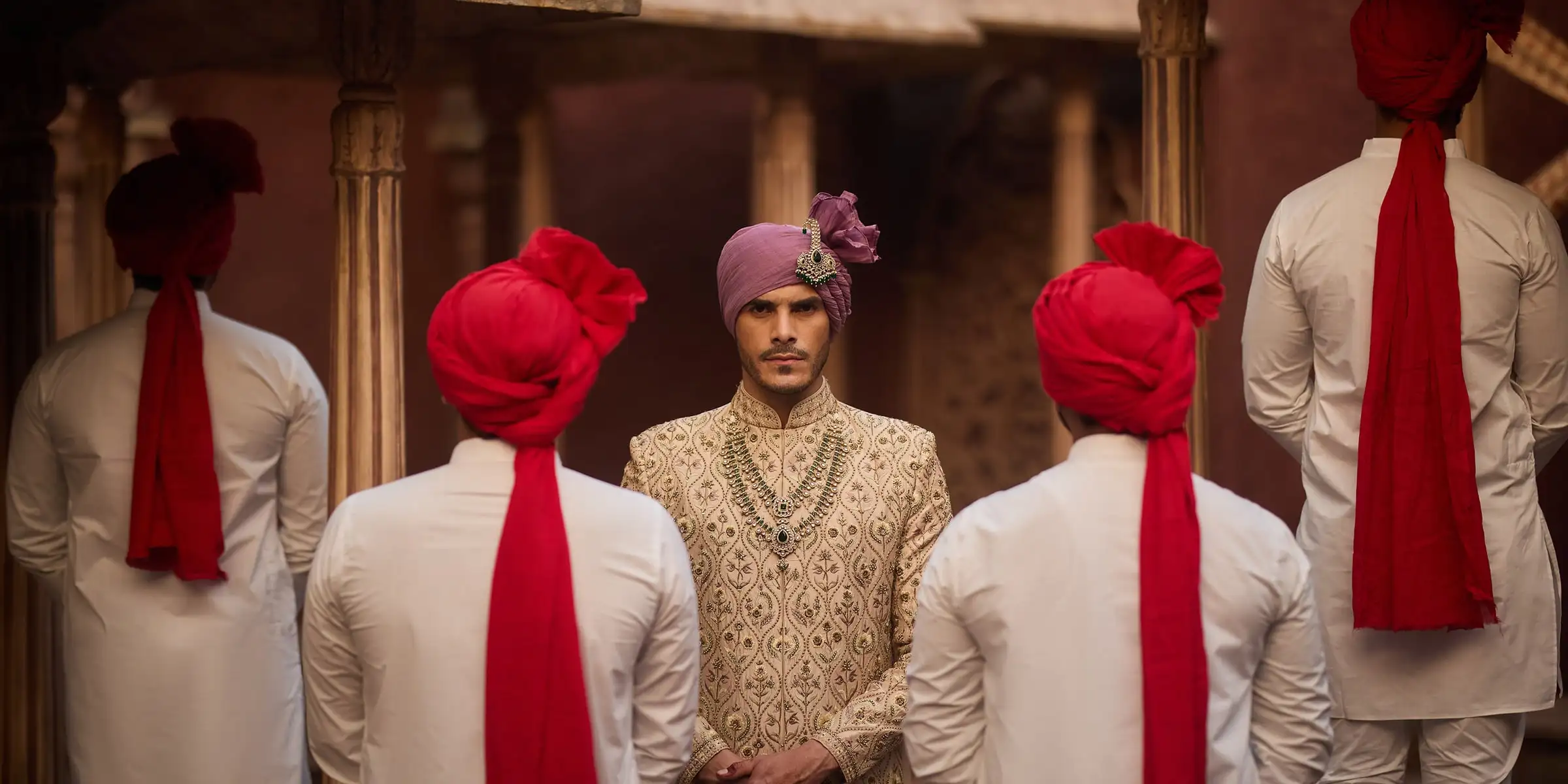
A destination wedding changes everything about dressing the groom. The venue is no longer a familiar banquet hall but a palace in Rajasthan, a beach in Goa, a lake in Udaipur, a hill station in Uttarakhand or a resort in Kerala. The weather is a variable, the schedule is crowded and your outfits have to travel. The wrong fabric can wilt in humidity; a beautiful sherwani can arrive creased; a missing safety pin can feel like a disaster at a remote resort. This guide explains how to choose, pack and care for a groom’s outfits at a destination wedding in India, with advice for palaces, beaches, hill stations and gardens, and a practical timeline.
If you are still shaping the wardrobe overall, our overview of what the groom wears at each ceremony is a good starting point. For seasonal fabric advice, see our guides to the summer wedding groom outfit and winter wedding groom outfit.
What makes a destination wedding different?
A destination wedding concentrates the celebration into a few days in one place. Guests travel, stay together and attend every function. A few features affect your outfits.
- More events in less time. Roka, haldi, mehendi, sangeet, baraat, pheras and reception can happen in three days, so outfits have to be ready and well sequenced.
- A defined setting. The backdrop is part of the photographs: a palace courtyard, a beach, a garden. Your outfit should work with it.
- Climate and terrain. Heat, humidity, sand, cobblestones, cold nights and sudden rain all matter.
- Limited access to a tailor. You may not find a good tailor or dry cleaner nearby, so your outfits must arrive in good condition.
- Group dynamics. Family and friends are present all the time, so coordinating palettes is more important.
The result is that planning, packing and care matter as much as the choice of outfit.
Start with the venue and the season
Before choosing any outfit, answer two questions: where, and when?
Palace and fort weddings (Rajasthan, Madhya Pradesh, Gujarat)
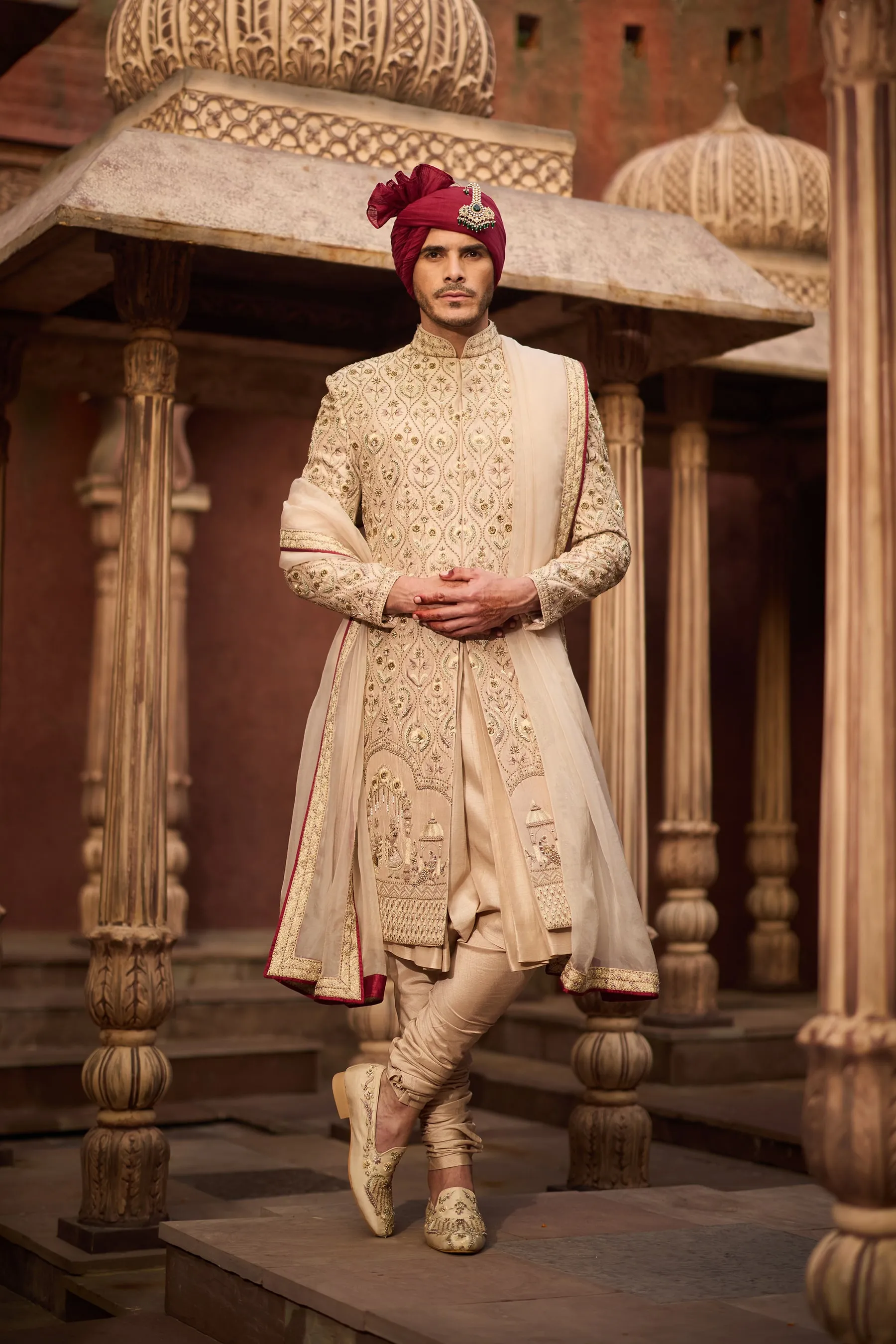
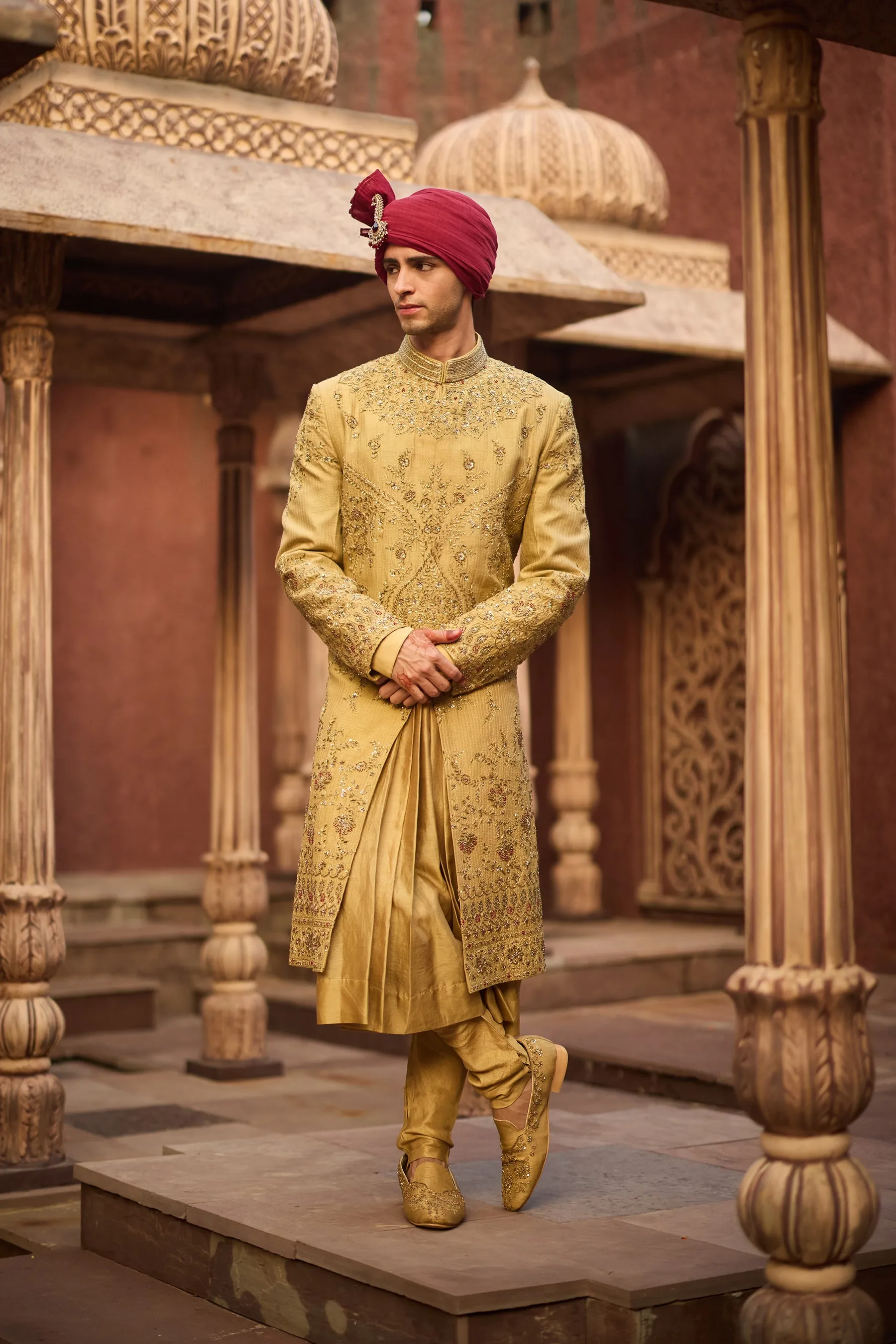
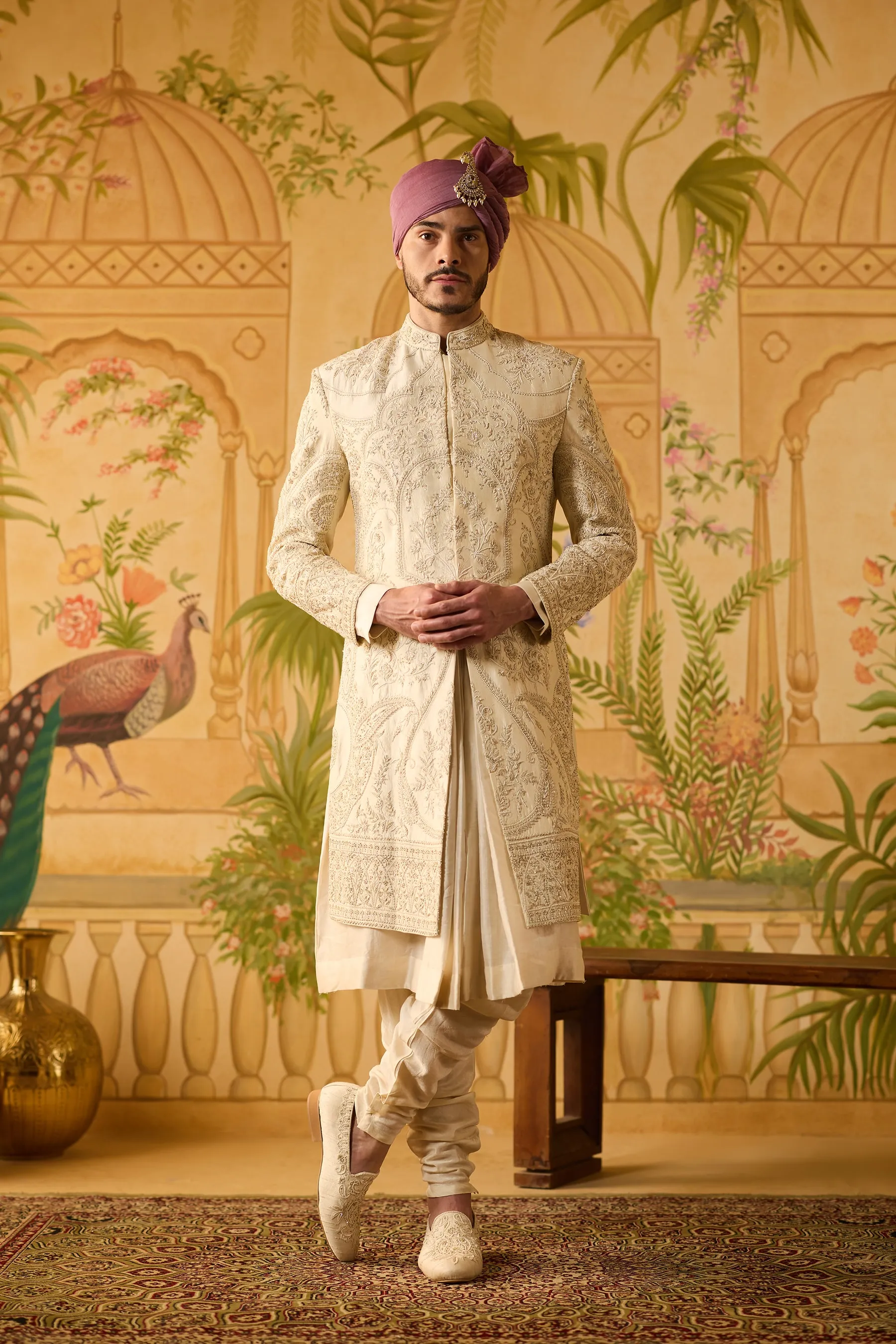
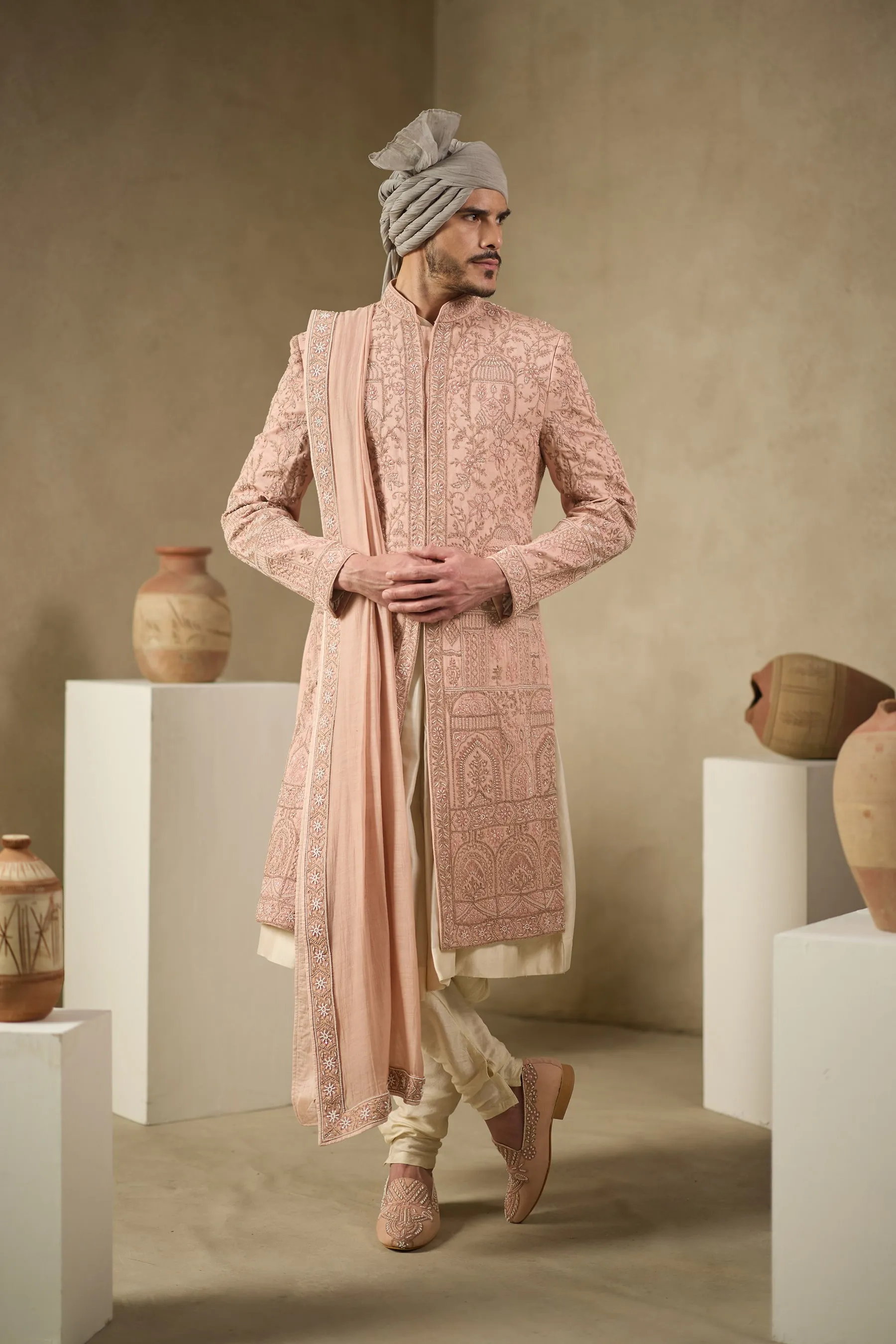
Palaces and forts call for regal outfits. A structured sherwani or achkan in ivory, gold, champagne or a rich jewel tone suits the carved stone and marble. A safa or turban completes the look. The temperature varies by season: heat in summer, cool nights in winter, so plan layers. See our sherwani collection, including the Parinda in ivory and beige, the Parinay in ivory and the Sarson in mustard gold.
Beach weddings (Goa, Kerala, Andaman)
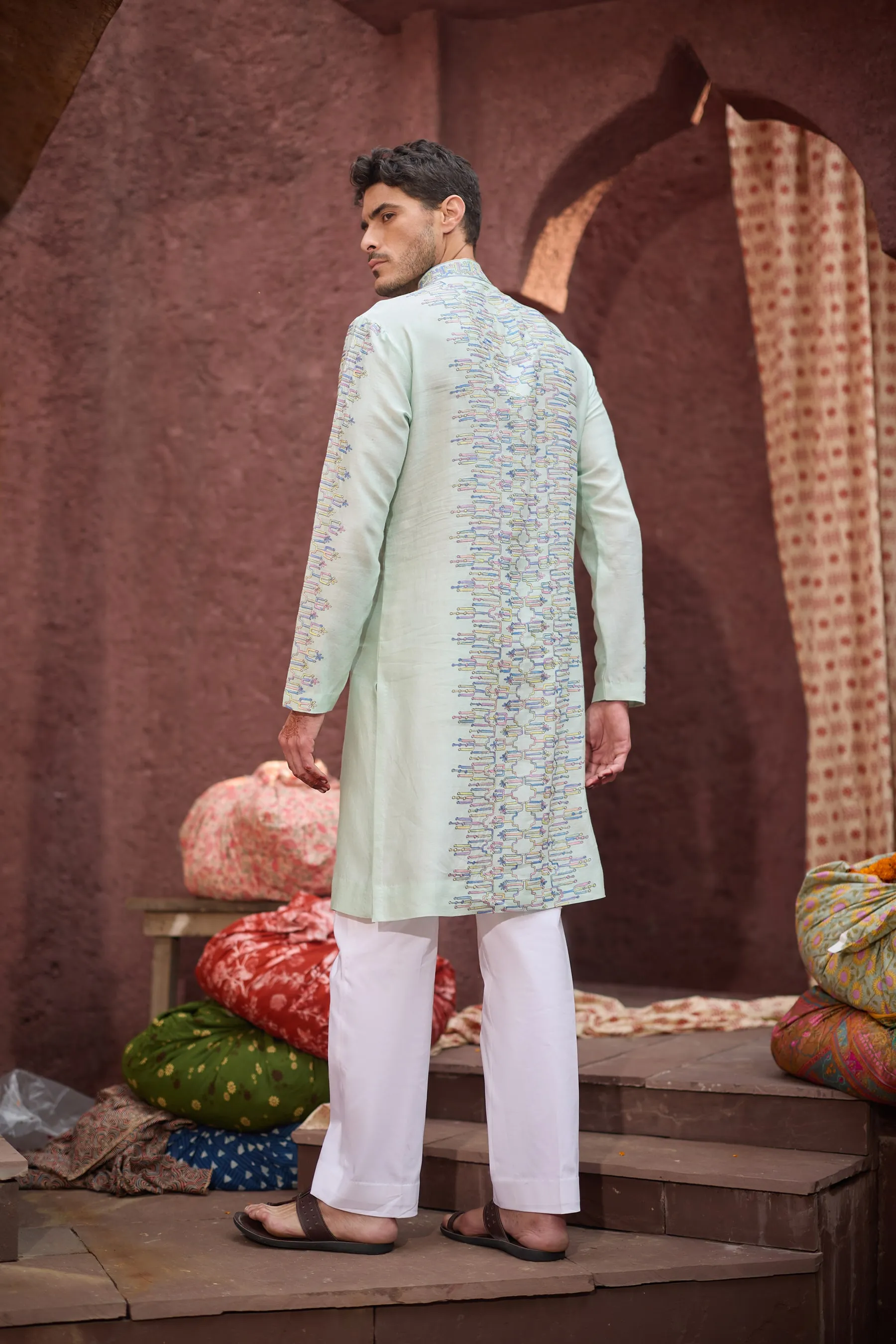
Beaches mean heat, humidity, sand and wind. Choose light, breathable fabrics (linen, linen-silk, cotton-silk) in pastel, ivory or sand, with simple silhouettes: a kurta set, a lightweight Nehru jacket or an unlined bandhgala. Avoid heavy embroidery and velvet. Footwear should handle sand: leather sandals, kolhapuris or barefoot for the ceremony, with a pair of mojaris for the evening. See the Pudina in mint in our kurta set collection for an example of a light, airy beach-friendly piece.
Hill-station and lake weddings (Uttarakhand, Himachal, Udaipur, Kashmir)
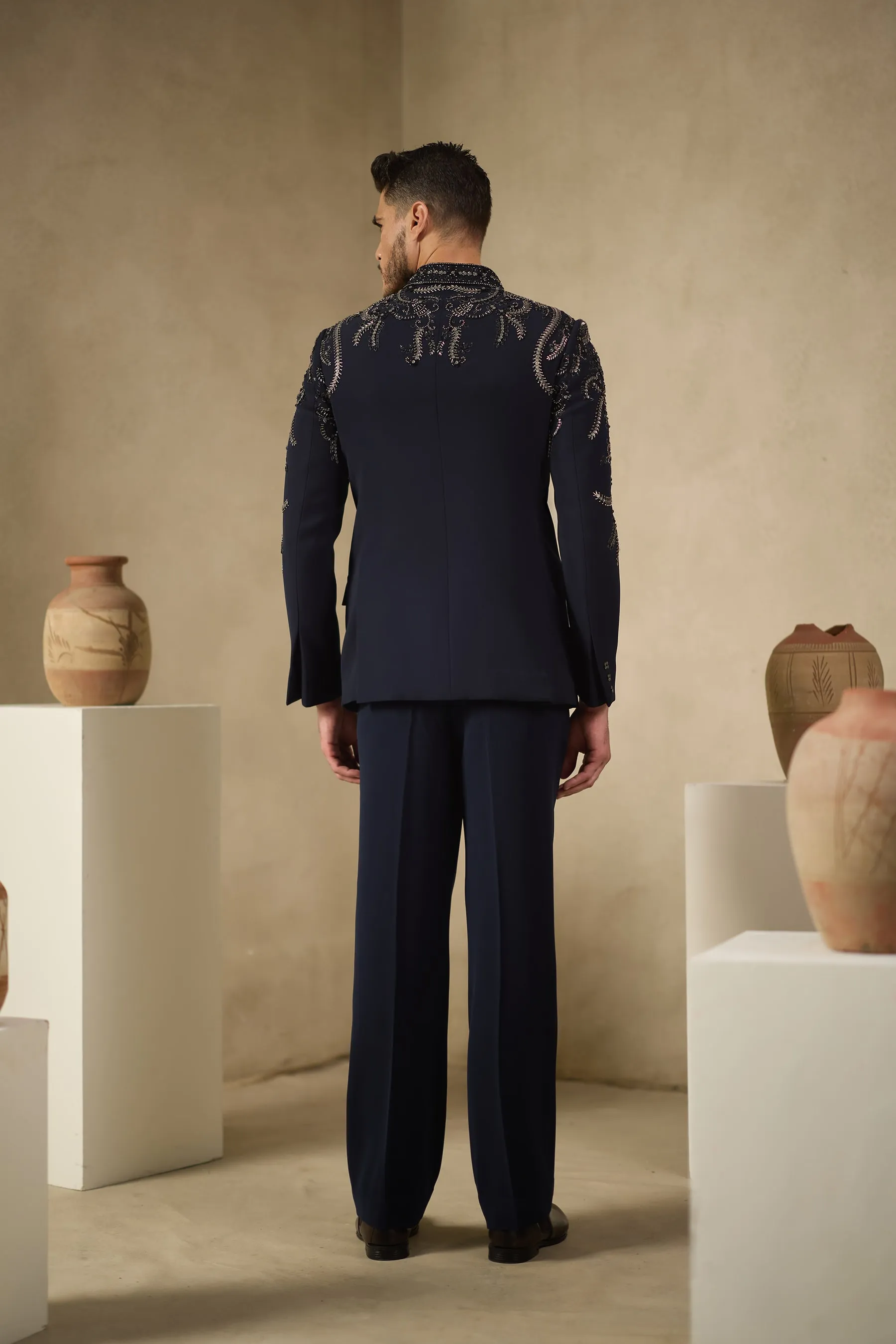
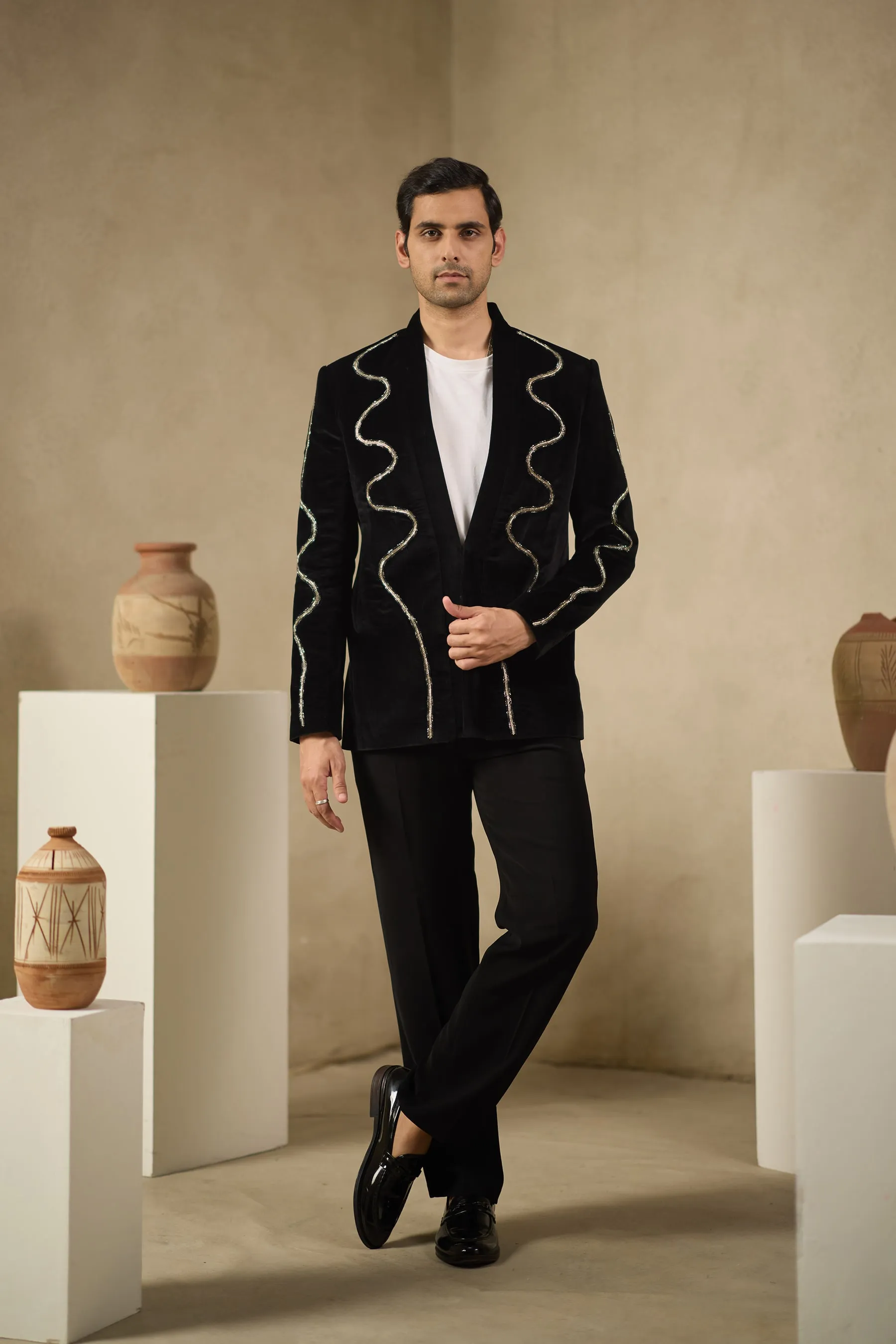
Cool air and mountain light call for richer, warmer fabrics. A wool-silk sherwani, a velvet jacket or a bandhgala in deep colours (navy, emerald, burgundy) looks beautiful against green hills and still water. Pack a stole or shawl for cool evenings. See our bandhgala collection, including the Aftab in midnight navy.
Garden, vineyard and resort weddings
Gardens and resorts suit a softer palette: sage, blush, ivory and champagne. Choose fabrics that do not mark easily, and consider the lawn when selecting shoes. A cotton-silk sherwani or a light bandhgala works well.
The season matters as much as the place
A wedding in Jaipur in January is a different proposition from one in June. Check average temperatures, humidity and rainfall for your dates, and ask the venue about indoor and outdoor arrangements. If the wedding is during the monsoon, plan for rain: a covered walkway, an umbrella and quick-dry fabrics.
Choose a capsule: three to five outfits that work together
A destination wedding rewards a capsule wardrobe: a small set of outfits that share colours, accessories and shoes.
- Daytime function (haldi, mehendi, welcome lunch). A light kurta set or a kurta with a Nehru jacket. See the haldi outfit guide and the mehendi outfit guide.
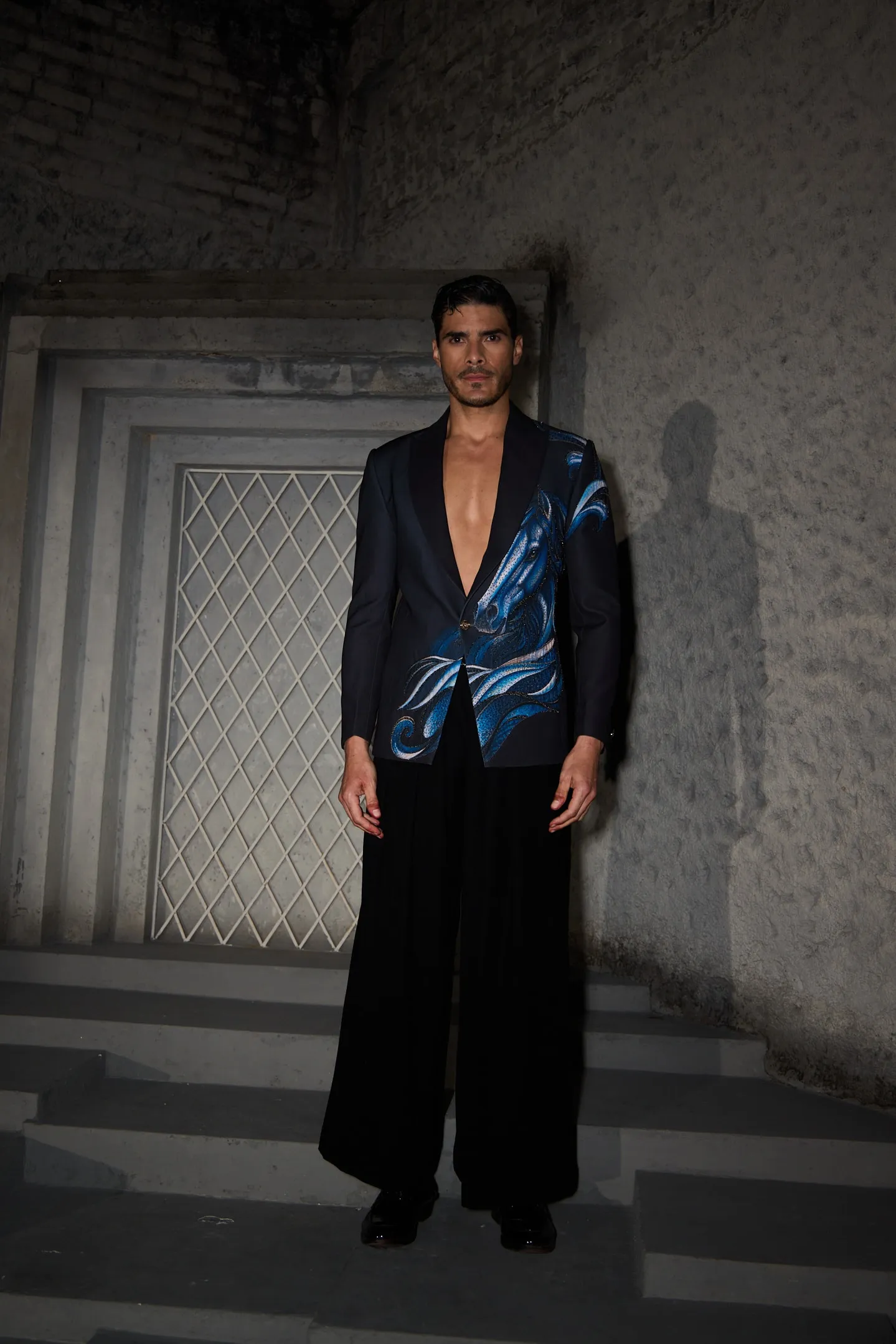
- Sangeet or cocktail evening. A bandhgala, Indo-Western set or velvet jacket. See the sangeet outfit guide and the cocktail party outfit guide.
- Baraat and pheras. A sherwani or achkan with a safa. See the baraat outfit guide and the pheras outfit guide.
- Reception. A bandhgala, tuxedo or a second sherwani. See the reception outfit guide.
- A spare. A kurta set or Nehru jacket for welcome events, a pool party or an impromptu photo shoot.
Choose a base palette (for example, ivory and navy) and a single accent (gold or burgundy), and let the outfits repeat accessories: the same stole, brooch, watch and shoes. This reduces packing and keeps photographs coherent.
Fabrics for travel
Fabric is the secret of a destination outfit. Choose fabrics that resist creasing, breathe in heat and recover after packing.
- Silk blends and wool-silk: hold their shape and drape well, and recover from folds.
- Cotton-silk and linen-silk: light and breathable, but crease; steaming restores them.
- Raw silk: structured, holds embroidery and resists creases moderately.
- Velvet: crushes if folded badly; pack it hung, and steam it from the reverse.
- Heavy brocade: beautiful but heavy to pack and warm to wear; reserve for palace venues in winter.
- Linen: very breathable, but creases easily; embrace the relaxed look.
Choose a lining that breathes, such as cotton or cupro, and ask for reinforced seams at stress points such as the underarm and the seat. A well-made outfit travels better.
Order early, and plan fittings around the trip
Made-to-measure outfits take time, and destination weddings have fixed dates. A reasonable schedule is:
| When | What to do |
|---|---|
| 14 to 16 weeks before | Confirm venue, season and event list; choose the capsule. |
| 10 to 12 weeks before | Choose fabrics and silhouettes; take measurements. |
| 8 to 10 weeks before | Place the order; confirm delivery date. |
| 4 to 5 weeks before | First fittings; adjust. |
| 2 weeks before | Second fittings; test with shoes and accessories. |
| 1 week before | Final check; collect, steam and pack. |
| At the destination | Steam, hang and touch-up; schedule a local tailor if needed. |
See made-to-measure timelines for a fuller walk-through. Ask the atelier for delivery at least a week before you travel, so that any alteration can be done without panic.
How to pack outfits so they arrive perfect
Packing is a craft. Follow these steps.
- Carry the key outfits on board. Your baraat sherwani and the reception outfit should travel in the cabin, in a garment bag. Checked luggage can be delayed or lost.
- Use a garment bag or a hanging case. Hang the sherwani or fold it carefully, with the jacket turned inside out, with sleeves tucked in.
- Stuff sleeves and shoulders with tissue to hold their shape.
- Place tissue between layers, particularly over embroidery and between the lining and the outer fabric.
- Pack accessories separately. Keep safas, stoles, brooches and mojaris in pouches and a small box.
- Roll, do not fold, casual kurtas and shirts to minimise creases.
- Carry a small emergency kit: safety pins, a lint roller, a stain pen, a needle and thread, spare buttons, double-sided tape and a small steamer.
- Photograph your outfits before you pack, so that you can reassemble them correctly.
If you must check an outfit, use a rigid case, wrap it in tissue and a breathable cover, and insure it if possible.
On arrival: steam, hang and rest
On arrival, unpack immediately.
- Hang the outfits in the wardrobe, with space between them.
- Steam each piece, from the inside, with a handheld or hotel steamer. Avoid direct contact between the steamer and embroidery.
- Ask the hotel for a steamer, an iron and an ironing board, and for a laundry service you trust.
- Keep outfits away from damp walls, open windows during rain and sunlight.
- Do a trial run of each outfit the day before its event, including shoes and accessories.
If something has gone wrong, such as a torn seam or a missing button, find the local tailor early. Many resorts and wedding planners have a tailor on call.
Dealing with heat, humidity, rain and cold
Climate is the unpredictable guest.
- Heat: choose light fabrics, a lining that breathes and a lighter colour. Carry a spare shirt or kurta, a small towel and water. Plan outdoor photographs for morning and late afternoon.
- Humidity: linen and cotton-silk manage better; avoid velvet and heavy brocade. Keep outfits in a dry, cool room.
- Rain: carry an umbrella and a quick-dry stole; avoid pale fabrics that show water marks if the weather is uncertain. Keep a backup plan for the baraat.
- Cold: layers help, such as a shawl, a wool-silk jacket and warm shoes. See our winter wedding groom outfit guide.
- Sand and mud: choose a hem that does not drag, and shoes that clean easily.
Shoes, accessories and the groom’s kit
Shoes and accessories complete the capsule.
- Two pairs of shoes cover most needs: mojaris or juttis for ceremonies and leather loafers or oxfords for the evening.
- A stole or shawl that works for several outfits.
- A safa or turban for the baraat, carried in a box or worn in a tied form.
- A brooch or kalgi, a watch and cufflinks in a compact pouch.
- A small kit: safety pins, a lint roller, a stain pen, a mirror, a comb, breath mints, plasters and sunscreen.
- A power bank for your phone: you will be photographed constantly.
Coordinating with family and the wedding party
At a destination wedding, family and friends are together for days, so coordination matters. Share your palette early with the groom’s father, brother and groomsmen, so that colours work together. Our guides to the father of the groom’s outfit, groom’s brother’s outfit and groomsmen outfits explain how to coordinate. Guests will want guidance too; our male guest outfit guide is a useful link to share in your welcome message.
If your wedding follows a particular community tradition, see our guides to the Sikh wedding outfit, Bengali wedding outfit, South Indian wedding attire and nikah and walima outfit.
Venue-by-venue ideas: five destinations, five looks
Concrete examples make planning easier. Here are five popular destinations and a look that suits each.
- Udaipur or Jaipur palace, winter. An ivory or champagne sherwani with zardozi, a brocade stole, a safa in a rich colour and embroidered mojaris. The stone courtyards and lamplit terraces reward gold and ivory. Add a shawl for the cold evening.
- Goa beach, spring. A pastel kurta set in mint or sand, a lightweight Nehru jacket and leather sandals. For the reception on the sand, an unlined bandhgala in navy linen-silk, with the sleeves cut a little looser.
- Jim Corbett or Rishikesh, autumn. A wool-silk bandhgala in forest green or deep navy, a stole in a warm shade and polished boots for walking on uneven ground. Layers matter as the sun drops.
- Kerala backwaters, any season. A cream mundu-style or kurta ensemble with a gold border for the ceremony, and a light, tropical-weight bandhgala for the evening. Keep fabrics breathable; humidity is constant.
- Jodhpur or Jaisalmer fort, winter. A structured achkan in ivory or sand, with a turban in a regional style. Desert nights are cold, so a lined stole or a velvet jacket is welcome.
Each of these looks follows the same logic: choose a base that suits the climate, add richness with embroidery or accessories, and match the formality of the setting.
Photographs, light and the destination backdrop
At a destination wedding, photographs are a major reason for the outfits. A few points help.
- Know the light. Palaces glow in warm afternoon light; beaches are bright and harsh at midday; hill stations have soft, cool light. Choose colours that suit it: ivory and gold in warm light, deeper tones in cool light.
- Avoid colours that vanish into the backdrop. A sand-coloured outfit on a sand beach disappears; a navy or pastel shade stands out.
- Consider texture. Fine embroidery and woven patterns catch light and add depth.
- Share the palette with the photographer. A short conversation about your colours and the venue’s light helps them plan.
- Schedule a portrait session on the first day, when outfits are fresh and the group is relaxed.
One more point on logistics: tell your wedding planner and the venue which outfits you will wear on which day, and ask for a quiet, air-conditioned room for dressing. A dedicated dressing space, with a full-length mirror, good light, a steamer and a place to hang the outfits, makes a surprising difference to how calm and presentable you look. If the baraat will start from a different location, plan the transfer of the outfit, the safa and the accessories as carefully as the transfer of the groom.
A final destination checklist
A week before you leave, tick off the following list.
- All outfits collected, steamed and photographed.
- Garment bags, tissue and hangers packed.
- Accessories (safa, stole, brooch, watch, cufflinks) in labelled pouches.
- Two pairs of shoes, cleaned.
- Emergency kit packed.
- Contact details for the atelier and a local tailor saved.
- Timeline of events with outfit plans shared with family.
- Travel insurance and copies of key documents.
Common mistakes to avoid
- Choosing outfits without checking the climate. A velvet sherwani in a humid beach resort is a mistake.
- Packing outfits in checked luggage. Carry the key pieces on board.
- Skipping a trial run. Try the outfit with shoes and accessories at home.
- Forgetting a steamer. Creases are inevitable; steaming solves them.
- Not planning a local tailor. Emergencies happen.
- Over-packing. A capsule is easier to manage than a wardrobe.
Frequently asked questions
What should a groom wear to a destination wedding in India?
It depends on venue and season: a sherwani for a palace, a light kurta set or linen-silk bandhgala for a beach, wool or velvet for a hill station.
How do I pack a sherwani?
In a garment bag, carried on board, with tissue in the sleeves and between layers.
How many outfits should I pack?
Three to five, designed as a capsule with shared accessories.
When should I order?
Eight to ten weeks before the first event, with a final fitting before you travel.
Final thoughts
A destination wedding gives you a setting that no banquet hall can match, and an outfit that suits it will be remembered in the photographs. Plan around the place and the weather, design a capsule, pack with care and allow time for steaming and touch-ups. If you would like help planning outfits for a destination wedding, book an appointment and we will build the wardrobe with you.
Shop the looks
Browse the sherwani collection, the bandhgala collection and the kurta set collection, or begin with the baraat and pheras edit and the sangeet and cocktail edit.