Winter is the season of Indian weddings. From November to February, the diary fills with receptions, sangeets and baraats, the light turns golden, and the groom gets to wear the richest fabrics of the year. Velvet, wool-silk, brocade and heavy raw silk come into their own, and shawls and stoles become an elegant accessory. A winter groom has the opposite challenge to a summer one: to stay warm without looking bulky, and to keep the silhouette sharp under layers. This guide explains how to dress for a winter wedding, with advice on fabric, colour, layering, shawls, footwear, timing and care.
It pairs with our guide to the summer wedding groom outfit, and with the overview of what the groom wears at each ceremony. For a wedding in the hills, our destination wedding groom outfit guide covers packing and care.
Why winter is the best season to dress the groom
Winter has several advantages.
- Fabric choice is widest. Velvet, wool, wool-silk and brocade are all comfortable and look rich.
- Colour depth. Deep jewel tones and metallics glow in the cool light and lamplit evenings.
- Layering is a feature. A stole, shawl or cape adds drama without discomfort.
- Photographs are crisp. The low sun and clear air give excellent daylight pictures.
It also has its challenges. Mornings and evenings are cold, mandaps and lawns can be chilly, and photography sessions can run long outdoors. A warm, well-planned outfit makes the difference between a groom who is smiling and one who is shivering.
Choose the right winter fabrics
Velvet
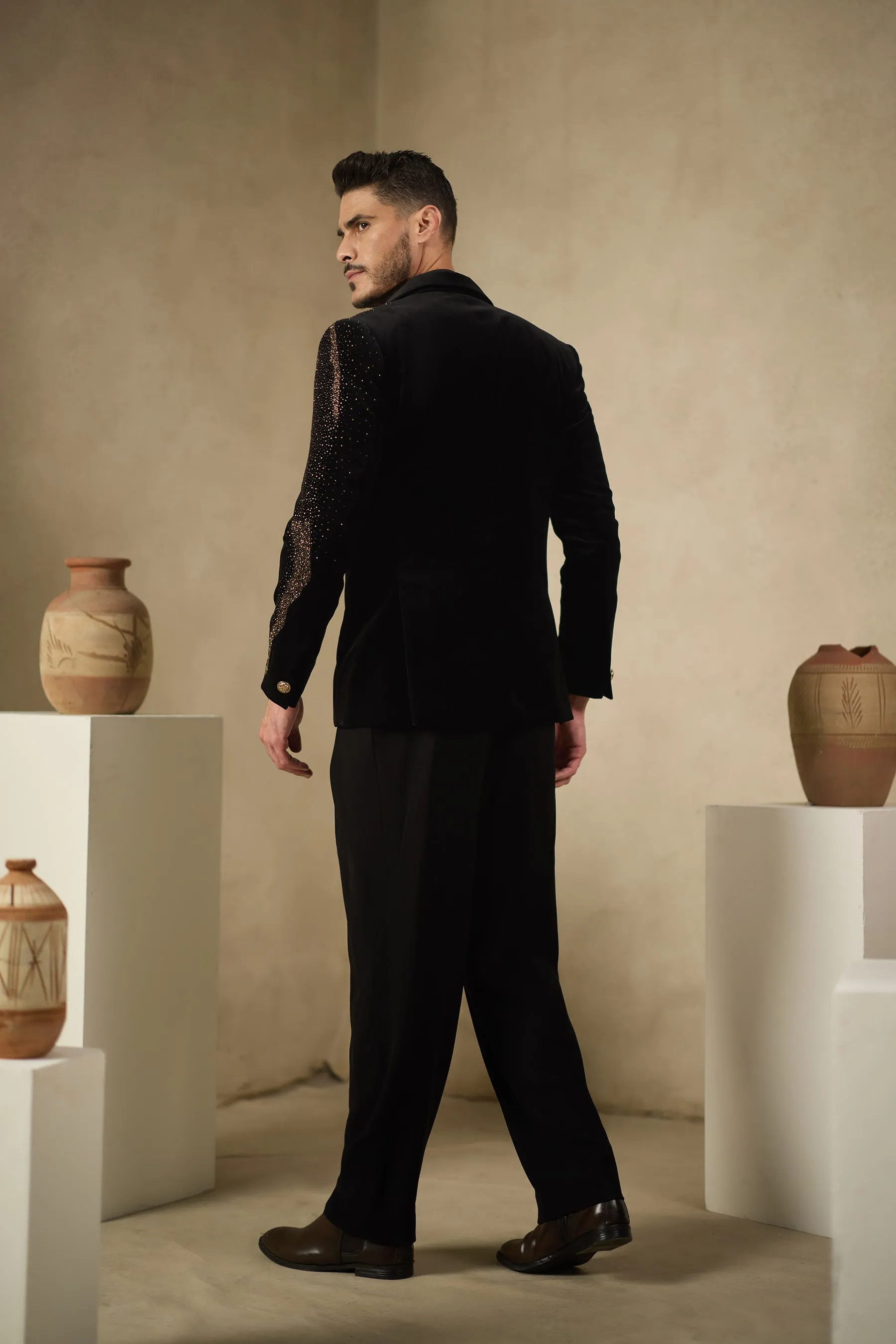
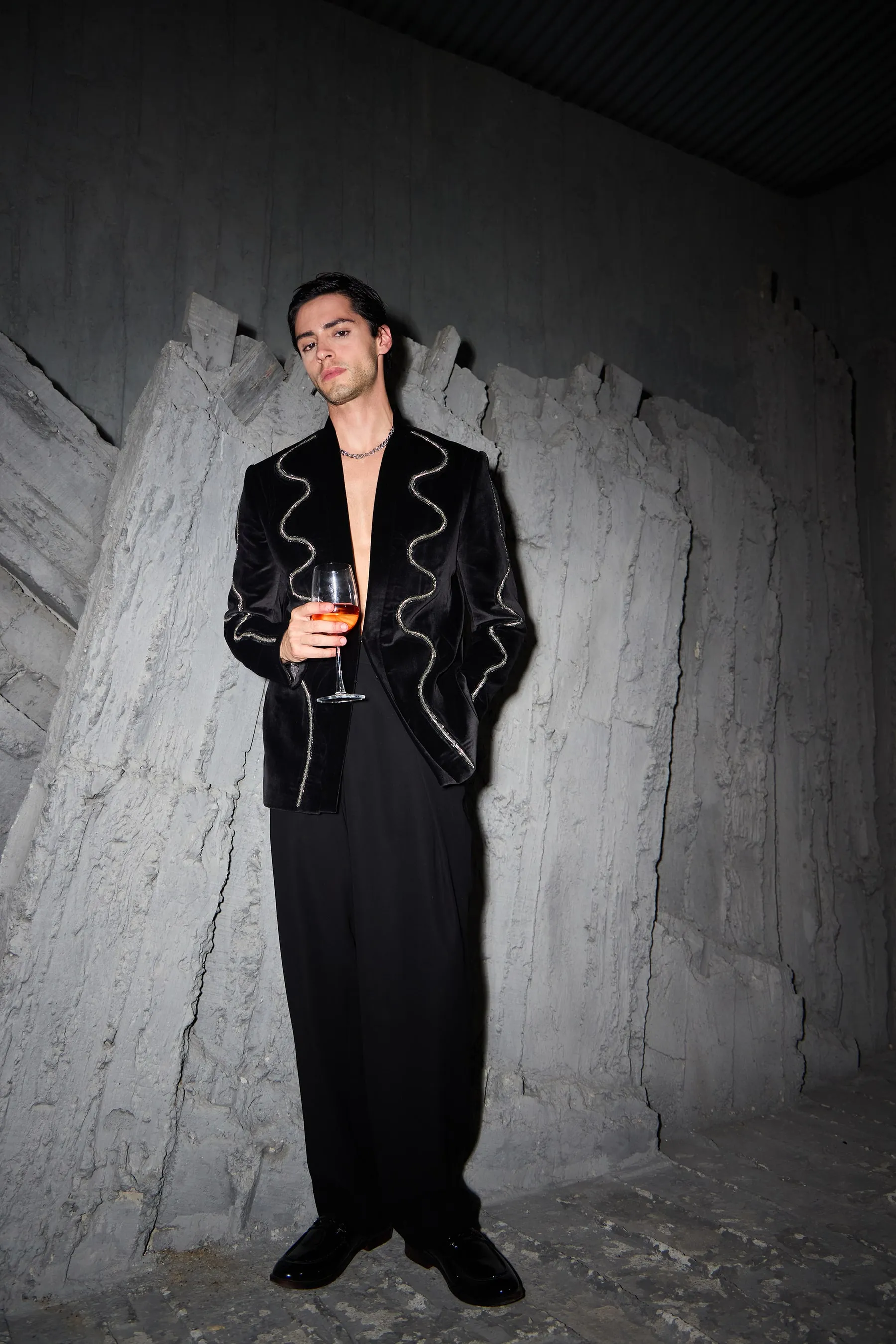
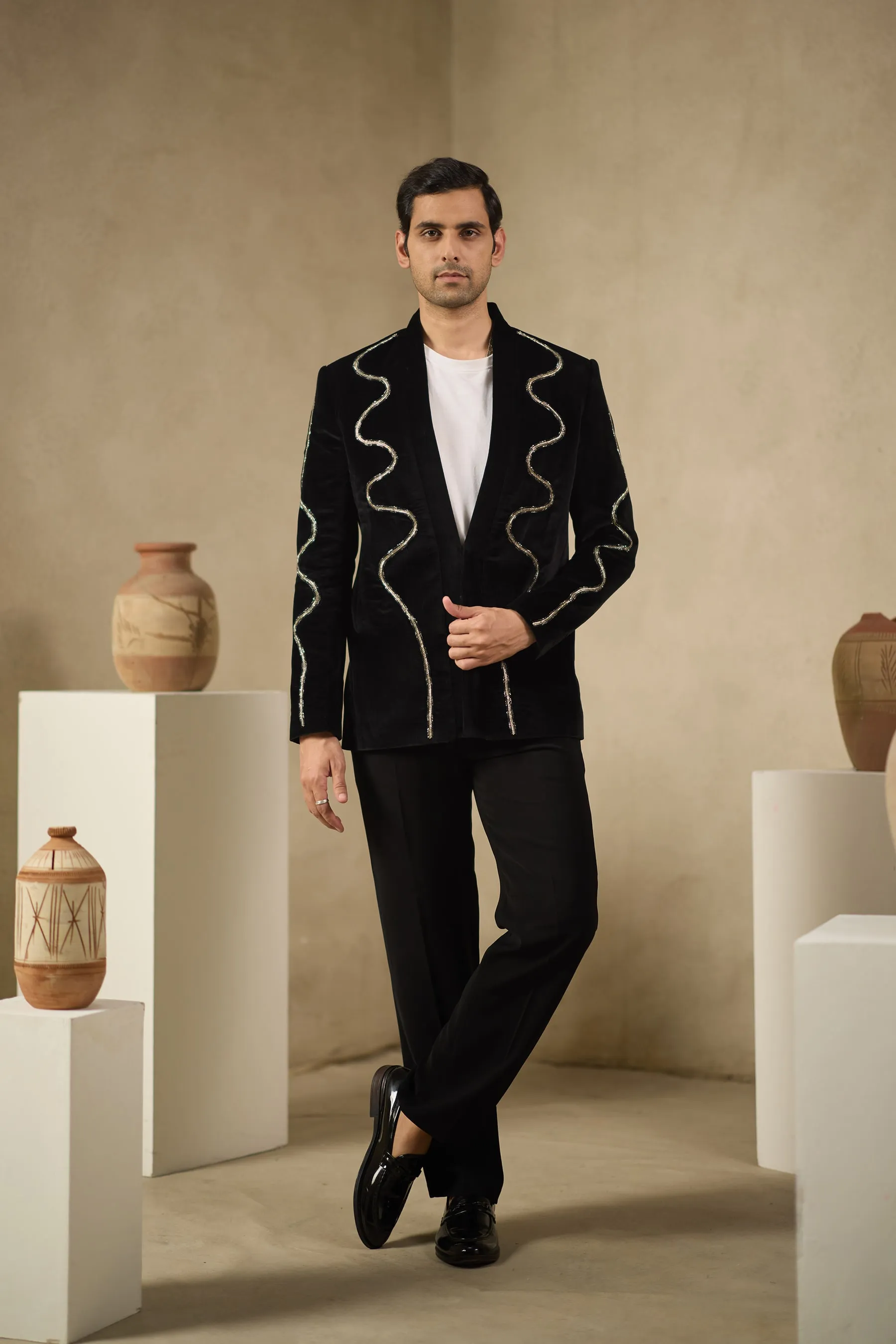
Velvet is the classic winter fabric: deep, rich and warm. It suits sherwanis, bandhgalas, tuxedo jackets and Nehru jackets, and it gives a soft glow in evening light. Choose a quality with a dense pile and a good drape. Black, navy, emerald, burgundy and deep teal are all striking. Our tuxedo collection includes black velvet pieces such as the Bijli, the Zarposh and the Nagin, well suited to a winter reception or sangeet.
Velvet’s caveats: it marks with pressure, it can be warm indoors, and it must be handled with care. Ask for a breathable lining, and avoid dense embroidery on a very hot indoor hall.
Wool-silk and fine wool
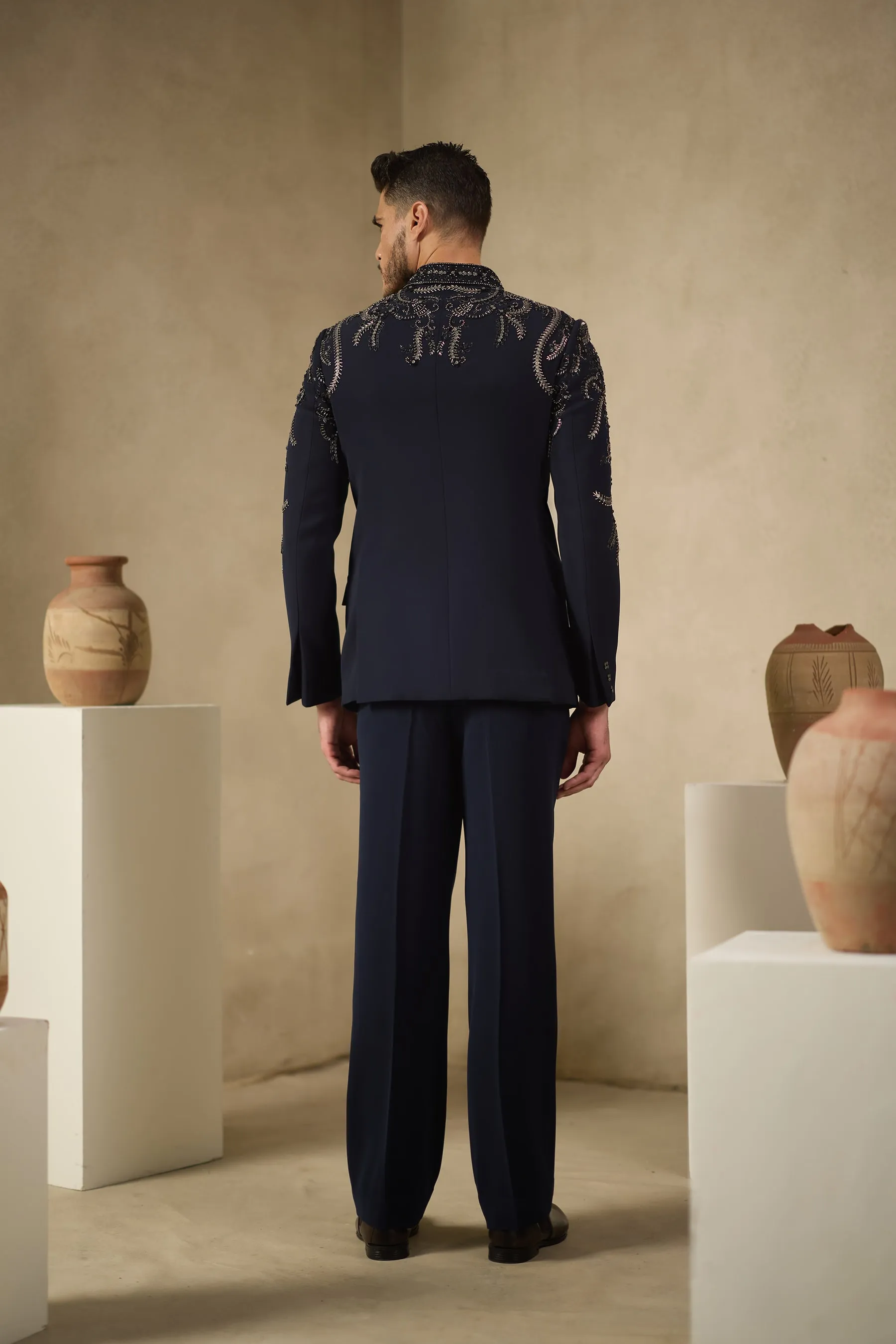
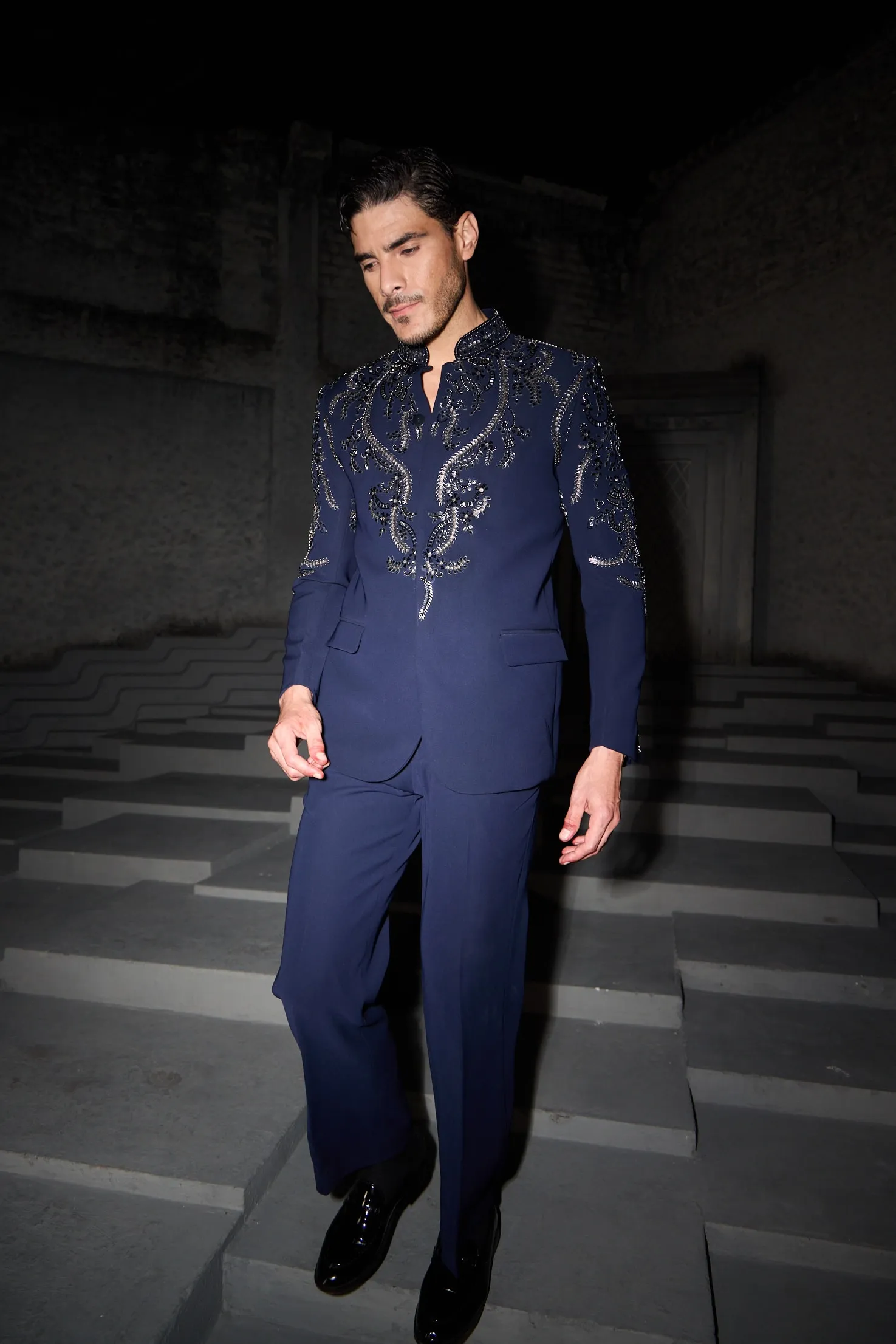
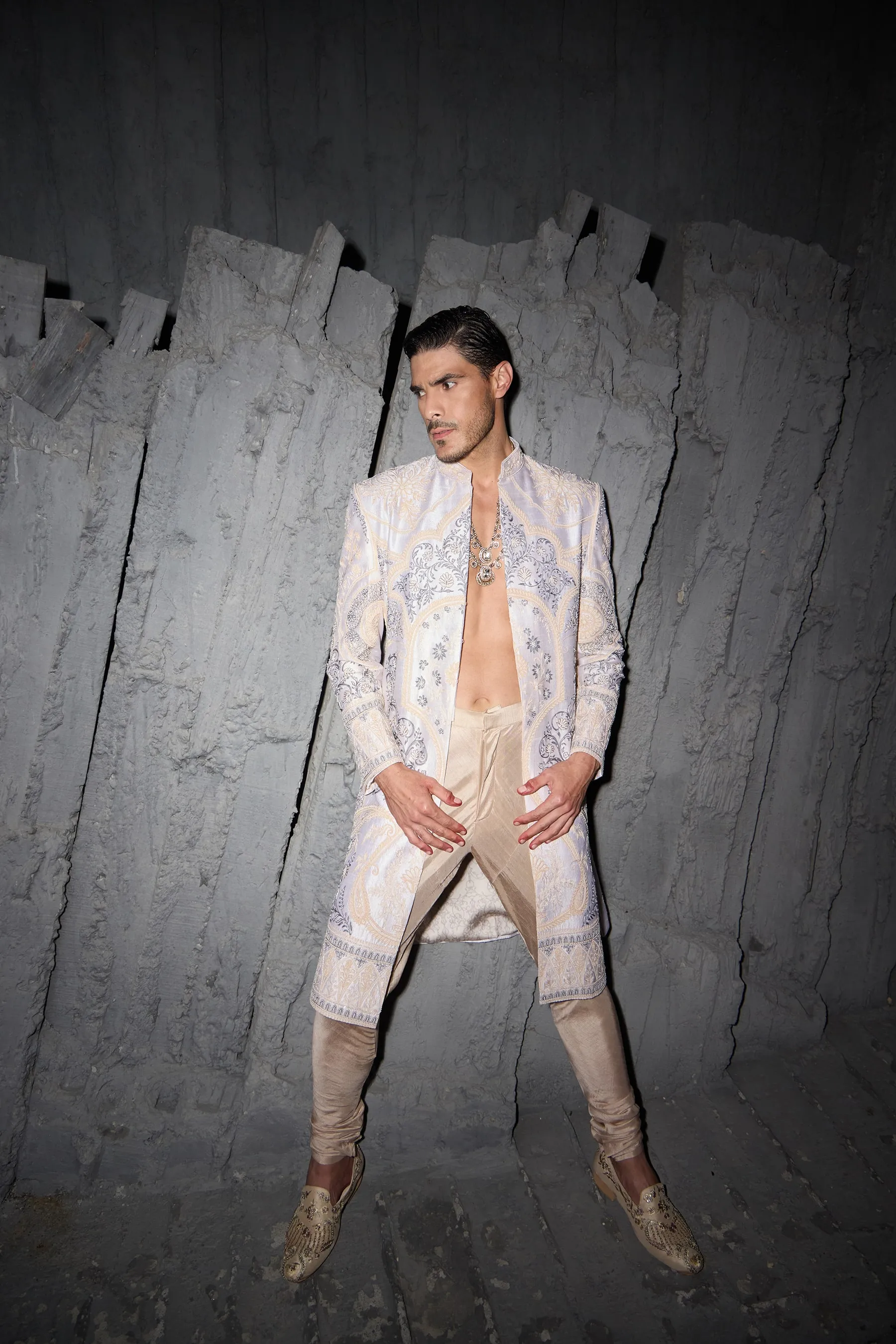
Wool-silk combines warmth with a graceful drape and subtle sheen. It suits achkans, bandhgalas and sherwanis for the daytime and the evening, and it holds its shape well. A fine merino or a wool-cashmere blend is soft against the skin. Our bandhgala collection includes the Aftab in midnight navy and the Samundar in navy, which are ideal in wool-silk for winter.
Heavy raw silk and brocade
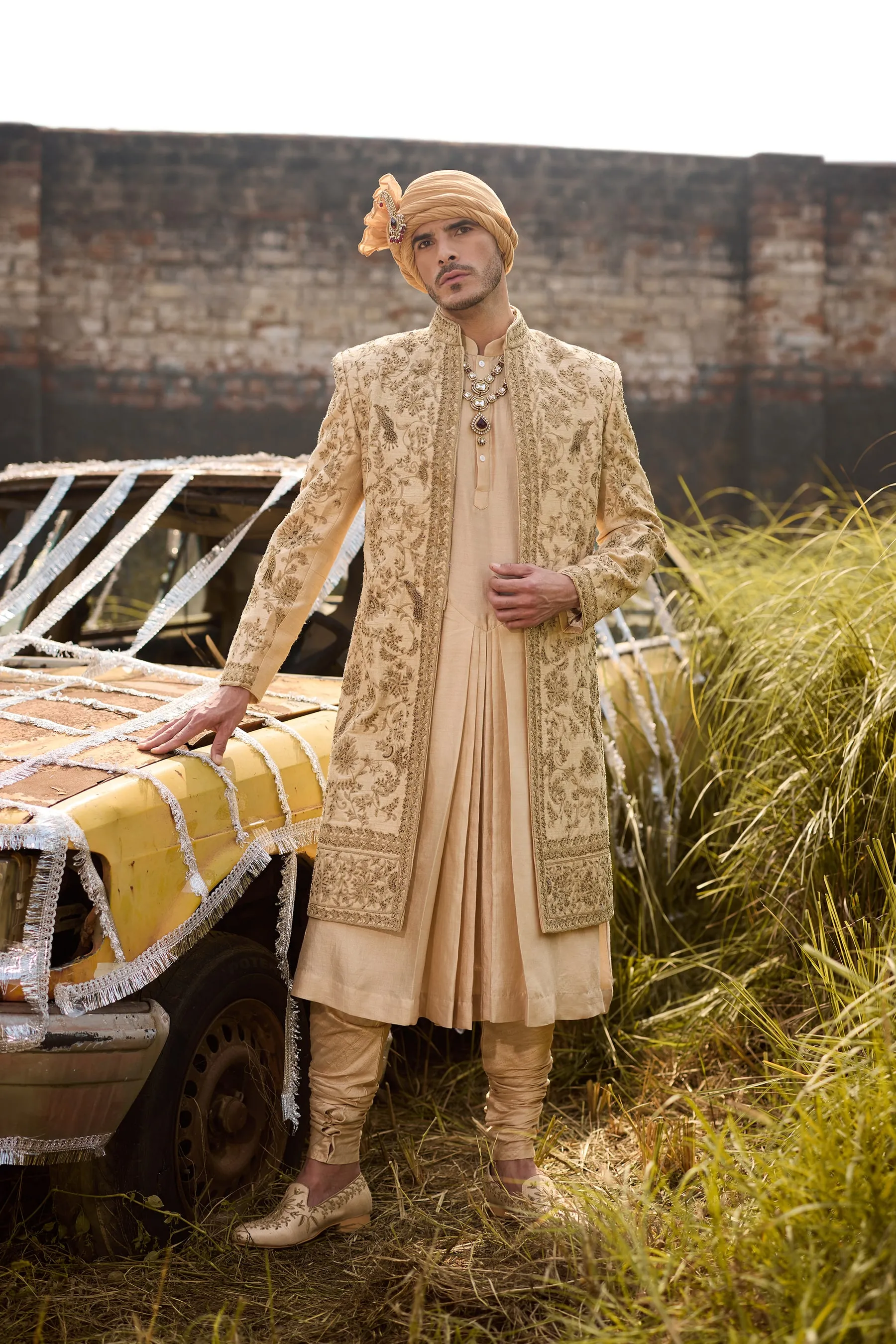
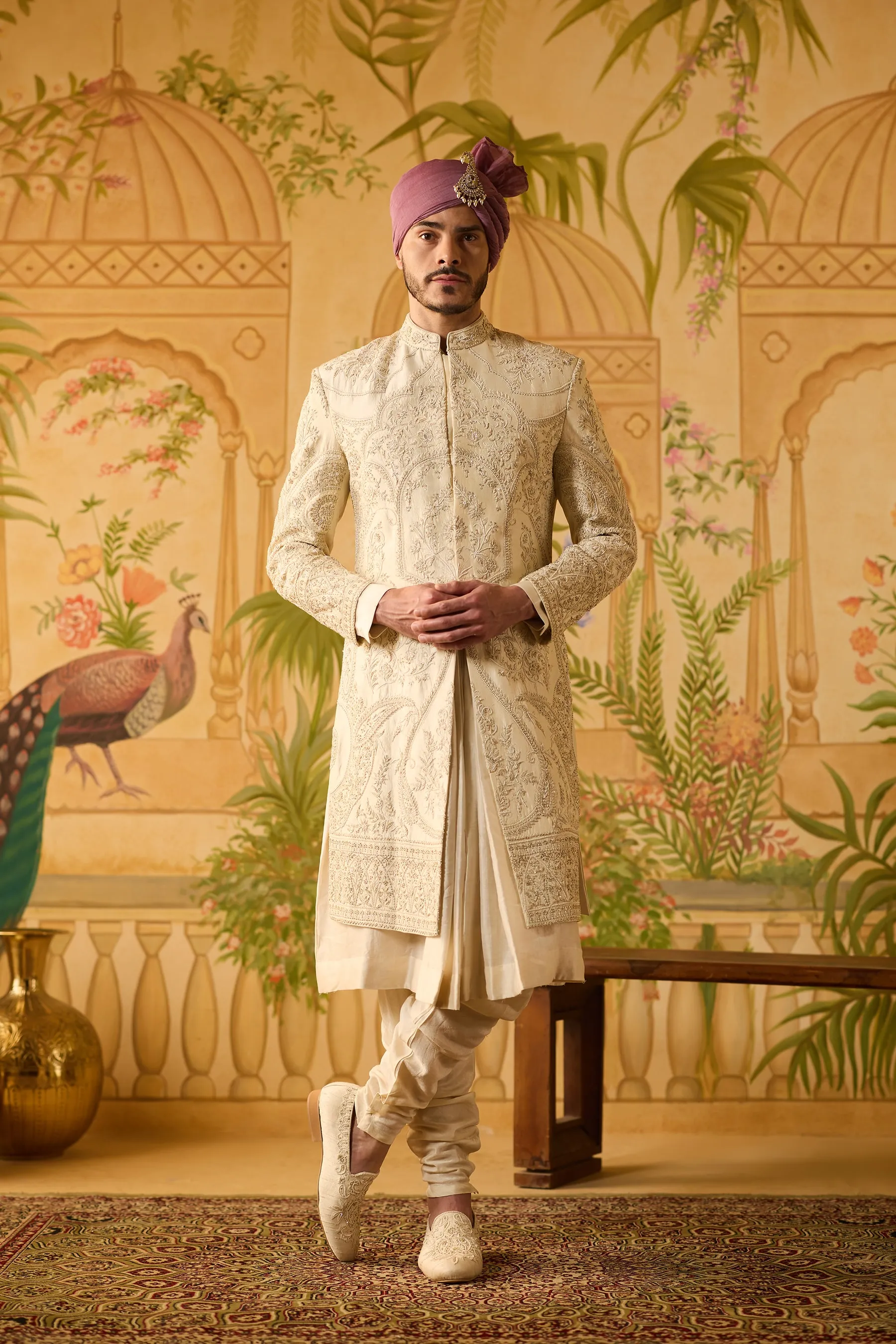
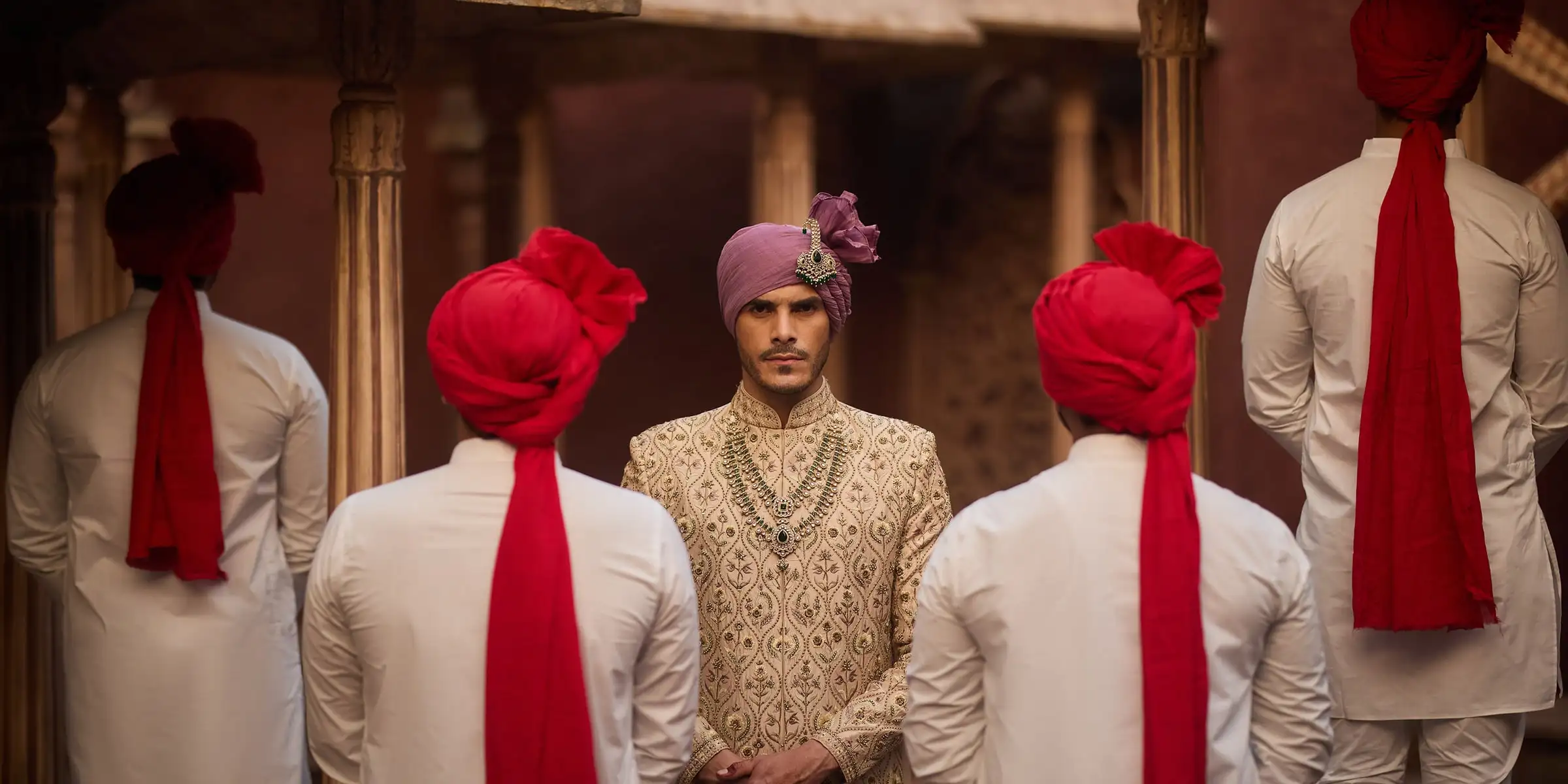
Raw silk with a lining, or a brocade with woven motifs, brings warmth and tradition. They suit the baraat and pheras, particularly in palace settings, with rich embroidery. See our sherwani collection, including the Suvarn in champagne gold.
Tweed, jacquard and textured weaves
A textured weave adds depth and warmth, especially for a groom who wants a distinctive winter bandhgala. Use sparingly and with an eye to formality.
Fabrics to avoid
Thin cotton, chiffon and very light linen offer little warmth. They suit summer, not December mornings.
Colours that glow in winter light
Winter light is cooler and lower, and certain colours come alive in it.
- Midnight navy and sapphire: sharp, modern and flattering on most skin tones.
- Emerald and forest green: regal and festive, especially against gold.
- Burgundy, wine and deep maroon: rich and warm, and traditional for evening events.
- Black and charcoal: elegant and classic for receptions and sangeets.
- Gold, champagne and ivory: luminous in daylight, especially with fine embroidery.
- Deep teal and plum: distinctive and contemporary.
Pastels still work, but they look their best in bright midday sun, not at dusk. If you wear a pale outfit in winter, add warmth with a rich stole or shawl.
Layering: staying warm without bulk
The secret of a winter groom’s comfort is layering, planned with the tailor.
- A thin thermal base layer. A fine, close-fitting thermal in merino or a technical fabric adds warmth without bulk. Choose a colour close to your skin tone, and a neckline that does not show.
- A fine cotton or silk kurta, or a shirt for a bandhgala.
- The main garment: the sherwani, achkan, bandhgala or jacket, with a lining in warm cotton or a wool blend.
- A shawl, stole or cape for extra warmth and style.
- A coat or overcoat for the walk between venues, if needed, in a colour that does not clash.
Tell your tailor which layers you plan to wear, so the garment can be cut with the right ease. A sherwani cut for summer will pinch over a thermal and a kurta in winter. Bring the layers to the fitting.
Shawls, stoles and capes: the winter accessory
A shawl is both practical and beautiful. It can be:
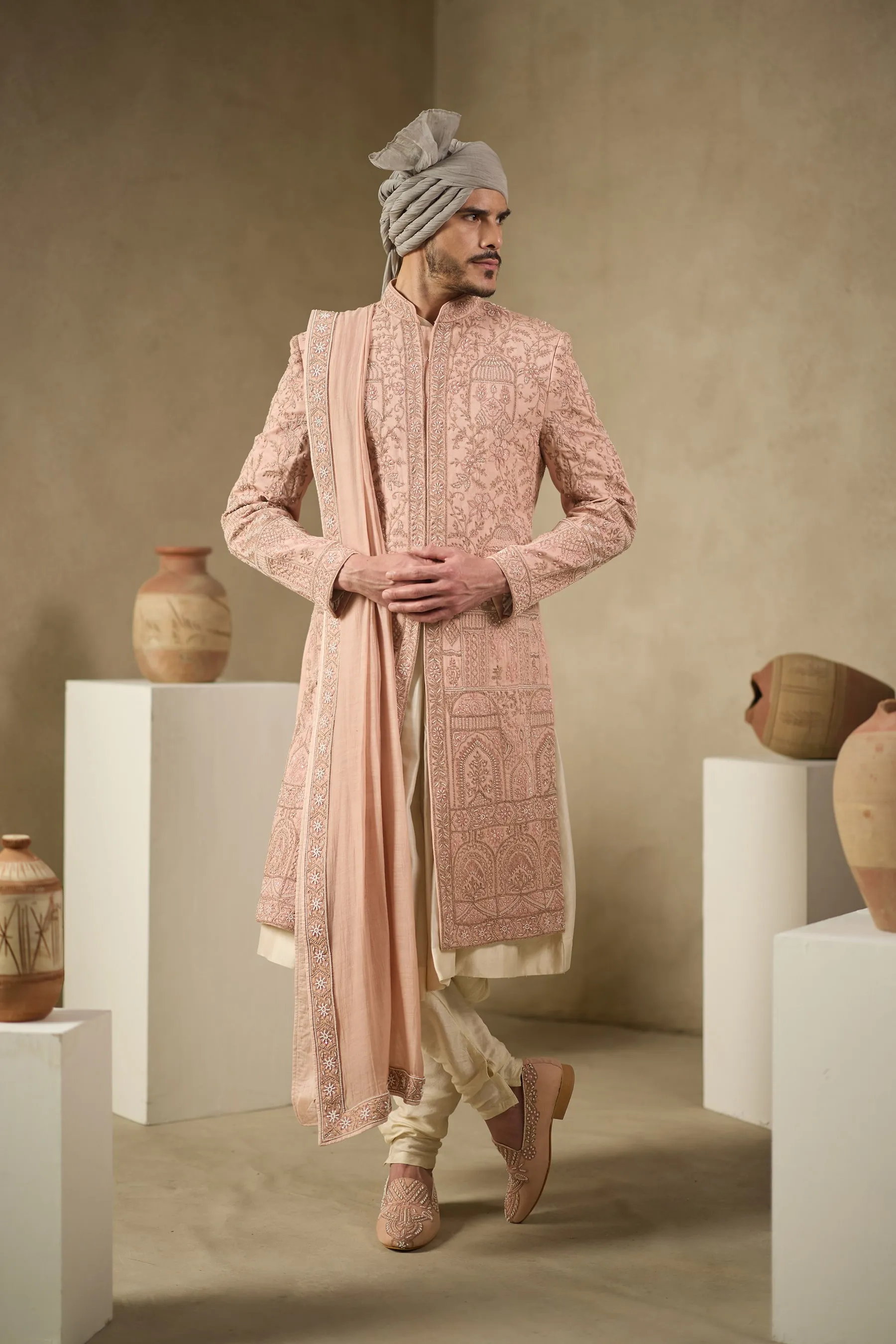
- Draped over one shoulder, as a stole, in a classic Indian style.
- Worn across both shoulders, like a cape.
- Tucked into the belt or secured with a brooch.
- Folded and held for photographs.
Choose a fabric that matches the occasion: pashmina or fine wool for daytime, brocade or embroidered silk for evening, and a velvet or woven shawl for a reception. Colour should echo the outfit: a deeper or contrasting tone adds depth. A shawl in the bride’s colour can be a graceful touch.
Event-by-event outfits for winter
Roka, sagai and engagement
A wool-silk kurta set with a Nehru jacket, or an achkan in a mid-tone, with a shawl. See the roka outfit guide and the engagement outfit guide.
Haldi and mehendi
These daytime functions are often in sunshine, so a light, warm kurta in cotton-silk with a stole works. Add a thermal layer for the morning. See the haldi outfit guide and the mehendi outfit guide.
Sangeet and cocktail
Velvet shines here. A velvet bandhgala, tuxedo jacket or Indo-Western set with a satin lapel looks magnificent under stage lights. See the sangeet outfit guide and the cocktail party outfit guide.
Baraat and pheras
A lined sherwani in raw silk or wool-silk, a safa and a shawl. The baraat may begin in the cold evening, and the pheras may be late at night or at dawn. See the baraat outfit guide and the pheras outfit guide.
Reception
A midnight bandhgala, a black velvet tuxedo or a rich sherwani. See the reception outfit guide.
Footwear, socks and small comforts
- Lined mojaris or juttis with a cushioned sole keep feet warm. Add thin wool socks in a matching colour.
- Leather shoes with a thicker sole are good for evening events and outdoor ceremonies.
- Gloves are rare, but a pair of thin, discreet ones can help on a very cold morning, to be removed for the ritual.
- A small hot-water bottle or heat pack in a pocket warms your hands between rituals.
- A scarf or muffler for the transfer between venues.
- Lip balm and moisturiser: winter dries skin, and you will be photographed constantly.
Timing: winter daylight and the schedule
Winter days are short, and many weddings run late.
- Plan outdoor photographs for midday to mid-afternoon, when the light is warm.
- Keep the baraat in daylight if possible. If it is in the evening, ensure the route is lit and warm.
- Arrange a warm dressing room, with a heater and a quiet space.
- Ask the mandap team about heating, since pheras at midnight in a cold garden need heaters or a covered space.
- Eat and drink warm things such as tea, soup and warm water, between rituals.
Our guide to the baraat outfit describes how to manage a long procession in any season.
Planning and timeline
Winter is the peak season, so atelier calendars fill early.
| When | What to do |
|---|---|
| 14 to 16 weeks before | Choose silhouettes and fabrics; book a fitting. |
| 10 to 12 weeks before | Measurements and fabric choices, including layers. |
| 8 to 10 weeks before | Place the order; confirm delivery. |
| 4 to 5 weeks before | First fitting, wearing the layers. |
| 2 weeks before | Second fitting; test shawls and accessories. |
| 1 week before | Final fitting; steam and pack. |
For a December or January wedding, start in September or October. See made-to-measure timelines for details.
Velvet in detail: choosing, wearing and photographing it
Because velvet is the signature winter fabric, a closer look is worthwhile.
Types of velvet
- Silk velvet is the most luxurious, with a deep, liquid sheen. It is delicate and expensive, and best for a special reception outfit.
- Cotton velvet is matte, sturdy and soft, with a vintage feel. It wears well and suits a bandhgala or a Nehru jacket.
- Viscose and rayon velvet gives a deep colour at a lower cost and drapes well, but can crush more easily.
- Stretch velvet adds comfort for fitted garments.
- Crushed velvet has a textured, shimmering surface; it can look dramatic but less formal.
Wearing velvet well
Velvet looks best with a clean, structured cut and minimal fuss. Pair a velvet jacket with a plain shirt or a fine kurta, and let the fabric be the focus. Add a satin or grosgrain lapel for a tuxedo effect, or a fine zardozi border for a sherwani. Avoid piling on embroidery, which competes with the pile.
Because velvet shows pressure marks, avoid leaning against rough surfaces, and ask someone to hold the jacket if you remove it. Sit with care, and lift the jacket behind you to avoid crushing the back.
Photographing velvet
Velvet absorbs light, so it needs careful lighting to show its depth. Evening light, stage lights and warm lamps flatter it. In flat midday sun, velvet can look dull. Talk to your photographer about angles that catch the sheen, and consider a satin accent to give the eye a point of contrast.
Warming the mandap: practical tips
The mandap, whether in a hall, a garden or a palace courtyard, is often the coldest place in the venue. Winter grooms and families benefit from a few precautions.
- Ask for heaters or a covered, enclosed mandap. Outdoor ceremonies at night can be very cold.
- Keep shawls ready for the groom and the bride, and fold them in a convenient place.
- Stagger the schedule so that the groom is not standing in the cold for long periods.
- Keep a warm room nearby for rest and changes.
- Offer warm drinks to the groom’s party.
A few small adjustments make the ceremony more comfortable for everyone, and that comfort shows in the photographs.
A sample winter wardrobe for the wedding week
To make the advice concrete, here is a sample plan for a four-day winter wedding in North India.
- Day one, roka and mehendi (daytime). A wool-silk kurta in pale gold or sage with a tonal Nehru jacket and a light stole. A thermal base layer for the morning.
- Day one, sangeet (evening). A midnight navy or emerald velvet bandhgala with a satin-trimmed lapel, a crisp shirt and polished loafers.
- Day two, haldi (morning). A cotton-silk kurta in yellow or cream, with a warm shawl for the first hour.
- Day two, baraat and pheras. A lined sherwani in ivory or champagne with zardozi, a safa, a brocade stole and embroidered mojaris, with thin thermals underneath.
- Day three, reception. A black velvet tuxedo jacket or a charcoal wool-silk bandhgala, with a pocket square in the bride’s accent colour.
Five outfits cover the whole week, and the accessories (a stole, a brooch, a watch and two pairs of shoes) are shared across them. It is the capsule approach we describe in our guide to destination weddings, and it works as well at home as away.
Fog, rain and the unexpected
Winter in the north brings fog, and in the south, the occasional shower. A few contingencies are worth planning.
- Fog delays travel. If the baraat or the family is travelling in the early morning, allow extra time, and carry the outfit rather than dressing at home.
- Unseasonal rain can ruin an outdoor baraat. Ask the venue for a covered route and carry a large umbrella. Quick-drying fabrics and dark hems cope better with splashes.
- A cold snap may arrive in the week of the wedding. Keep a heavier shawl and a warmer base layer in reserve.
- Smog or dust in some cities can mark light fabrics; carry a lint roller and a soft brush.
- Heaters and fires near the mandap can dry out fabrics and skin. Keep a moisturiser and water at hand.
With a little planning, the weather becomes a backdrop to the day, not a threat to it.
Care for velvet, wool and silk
Winter fabrics need specific care.
- Velvet: hang it, never fold it. Steam from the reverse, with the pile facing away from the steamer. Avoid pressing.
- Wool-silk: brush gently, air it between wears and dry clean sparingly.
- Embroidered silk: store in a breathable bag with tissue, away from damp.
- Shawls: fold with tissue, and store with a cedar block or lavender to deter moths.
After the wedding, have the outfit cleaned by a specialist before storage, and check for moth damage in the following months.
Coordinating family and friends
The father, brother and groomsmen can also benefit from winter planning. Share the palette and the layering advice. Our guides to the father of the groom’s outfit, groom’s brother’s outfit and groomsmen outfits will help, and guests may find our male guest guide useful.
For communities with distinct winter traditions, such as the Punjabi groom’s pagri and phulkari stole, see our Sikh wedding outfit guide, or the nikah and walima outfit guide.
Common mistakes to avoid
- A summer-weight outfit in winter.
- A fit that ignores layers.
- Heavy velvet in a hot hall. Check the venue.
- Forgetting shoes and socks.
- Leaving it late. Winter is the busiest season.
- Not planning warmth for the pheras.
Frequently asked questions
What should a groom wear to a winter wedding?
A velvet or wool-silk sherwani, achkan or bandhgala, a stole or shawl and warm layers.
Is velvet suitable?
Yes, with a breathable lining, particularly for evening events.
How do I stay warm without bulk?
Thin thermal layers, a lined garment and a shawl.
When should I order?
Eight to ten weeks before, earlier for peak season.
Final thoughts
A winter wedding is a chance to dress with richness and depth. Choose fabrics that feel as good as they look, plan layers with your tailor and keep warmth in mind for the long hours. If you would like help building a winter wardrobe, book an appointment and we will plan it with you.
Shop the looks
Browse the tuxedo collection, the bandhgala collection and the sherwani collection, or explore the sangeet and cocktail edit and the reception edit.